



































In the 4th and final edition of Isle of Wight place names, Island Echo seeks out some of the Island’s more unusual sites.
Have you ever wondered whether America Wood comes from the other side of the Atlantic, if there are Simians resident on Apes Down, or whether the apples taste sweeter in Appuldurcombe?
The truth will be revealed in the article below…

America Wood (west of Shanklin)
It has been claimed that the name comes from oaks in the wood cut down to build ships during the American War of Independence.
Apes Down (2 miles west of Carisbrooke)
Sadly, there are no primates resident on the down. The name means ‘the down belonging to the Abbess’. The word ‘abbess’ was – at 1 time – spelt with a ‘p’.
Appuldurcombe (near Wroxall)
As the name suggests, this means ‘the valley where apple trees grow’, from the Old English apuldor and cumb (valley).

Betty Haunt Lane (a road leading to the Blacksmith’s Arms on the Middle Road)
Legend informs us that Betty was a smuggler’s daughter, who fell in love with a revenue man, and was murdered at this very spot.
Burnt House Lane (leading from Newport to Downend)
According to local folklore, the house of Michael Morey – who murdered his grandson – was situated along this lane, and Morey burnt his house down to hide the evidence.

Bleak Down (near Godshill)
This name – which sounds as if it came from a Bronte novel – means (as might be imagined) ‘a hill devoid of vegetation’, from the Old English blaec and dun.
Bloodstone Copse (near Ashey)
Apparently, Bloodstone Copse gets its moniker from the blood-red colour of the stones in the nearby Bloodstone Well.
Centurion’s Copse (near Bembridge)
It has nothing to do with Roman soldiers. The name is a corruption of St Urian’s Copse. It is also said to be the location of the legendary lost town of Wolverton.
Deadman’s Brook (east of Newport)
It is believed to have been named after a corpse once found in the stream.
Devil’s Chimney (near Ventnor)
In former times, curious natural features were believed to have been the work of malign ‘evil’ forces – hence the name of the fissure in the Undercliff.
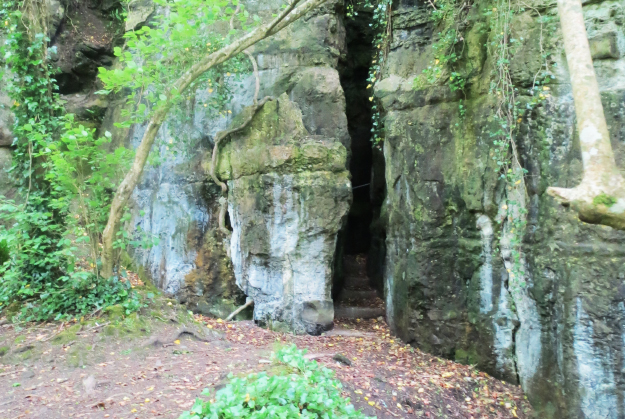
Fairy Hill (near Nettlestone)
It was given its whimsical appellation by the Rev. Henry Oglander – vicar of St Helens – when he had Fairy Hill House built in 1783.
Firestone Copse (near Wootton)
‘Firestone’ was a popular name for iron pyrites that were found in this wood.
King’s Quay (near Whippingham)
It is said to have got its name from a legendary visit of King John to the creek after signing the Magna Carta.
Pan (East Newport)
Pan has not been named after the Greek God of War but is rather an old, local pronunciation of a pen for animals.
Puckaster Cove (south of Niton)
Puckaster means ‘the rocky hill haunted by a goblin’. From puck meaning ‘goblin’ and tor meaning ‘rock’.
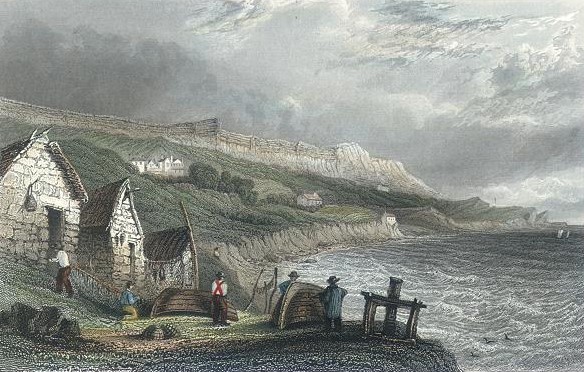
Puckpool (east of Ryde)
The goblins must have been very active on the Isle of Wight in bygone times. This name apparently means ‘goblin’s pool’.
Scratchell’s Bay (near the Needles)
‘Scratch’ is an old dialect word for the Devil, and the bay was no doubt named after Old Nick on account of the numerous ships wrecked in the vicinity. It is believed that Tennyson Down was once known as Scratch Hill.
Stag Rock (off Freshwater Bay)
It was said to have been named after a deer which leapt from the nearby cliff onto the rock when chased by hounds.
The Wilderness (south of Rookley)
This area of land on the bank of the Upper Medina gets its name – as might be imagined – for being a ‘desolate spot’.
Winkle Street (in Cabourne)
Winkle Street gets its moniker from the Old English wincel, meaning ‘nook or corner’ and not from the shellfish. The official name for Winkle Street is ‘Barrington Row’.

This ends our series on Isle of Wight place names. We hope you have enjoyed reading. If there are any names not included worthy of mentioning, please let us know in the comments below…






Really enjoyed reading these articles!
More local history please!
The photo has the incorrect caption. It shows the ‘ARCH’ rock with beyond it the ‘STAG’ rock.
Very enjoyable series. Thank you
Very interesting articles but could you stop using numbers instead of words, it is just lazy.
Yes, using figures for numbers below ten is extremely poor style and contradicted by every English style guide. Island Echo is setting a very poor example to an already barely literate audience.
Canteen Road is unusual. Why is it named so?
That would be because Island Roads take so long to fill in any pot holes they have to build a catering facility for their ‘workers’!