



























































In this week’s Secret Isle of Wight, we examine the Culver cliff cave known as Hermit’s Hole and the folklore associated with it.
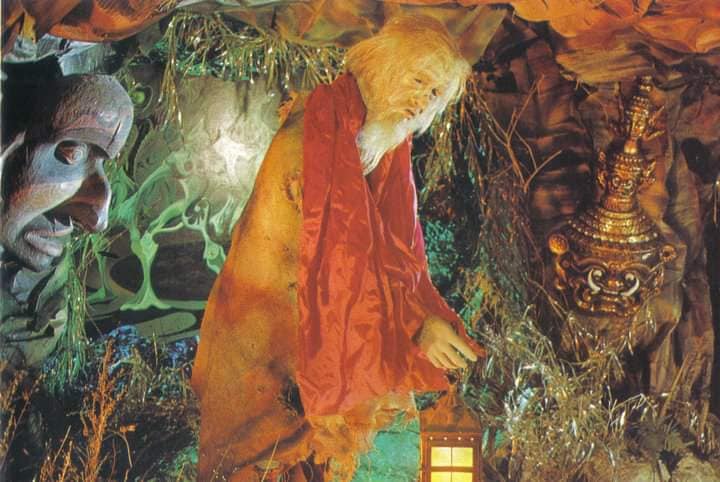
Do you remember the waxwork figure of the hermit from Brading’s now sadly defunct waxwork’s museum?
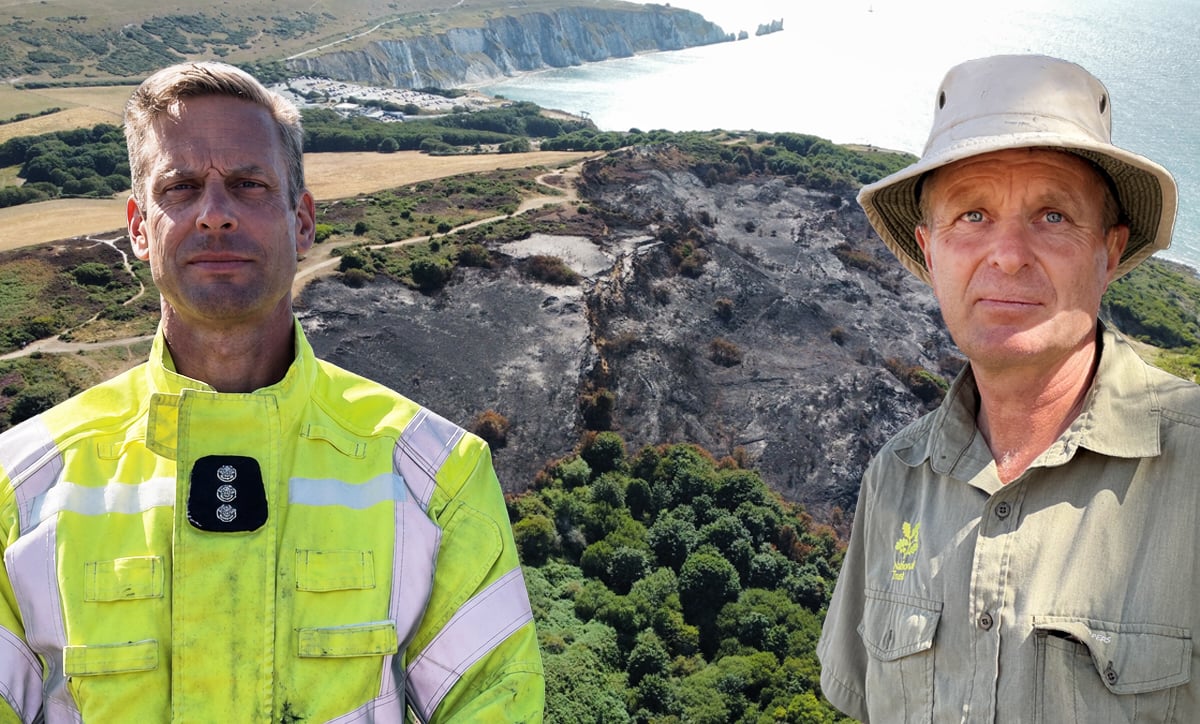
That legendary figure supposedly lived in a fabled cave known as Hermit’s Hole halfway up the 500-foot drop of Culver cliff between Brading and Sandown.


That cave no longer exists, and we do not recommend anyone takes the risk of attempting to locate it. However, until the cliff was eroded in recent years, Hermit’s Hole most certainly existed together with the precipitous path along the cliff face leading to it.
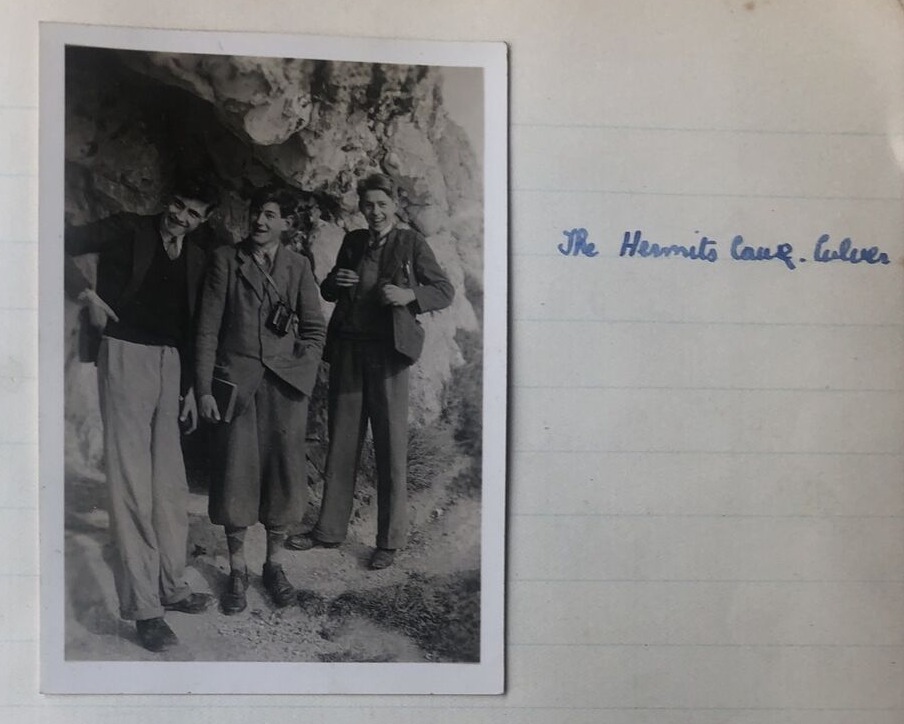
Hermit’s Hole is marked on 19th century Ordinance Survey maps. It was still very much in existence when it was visited by a group of Bembridge schoolboys in the 1930s.
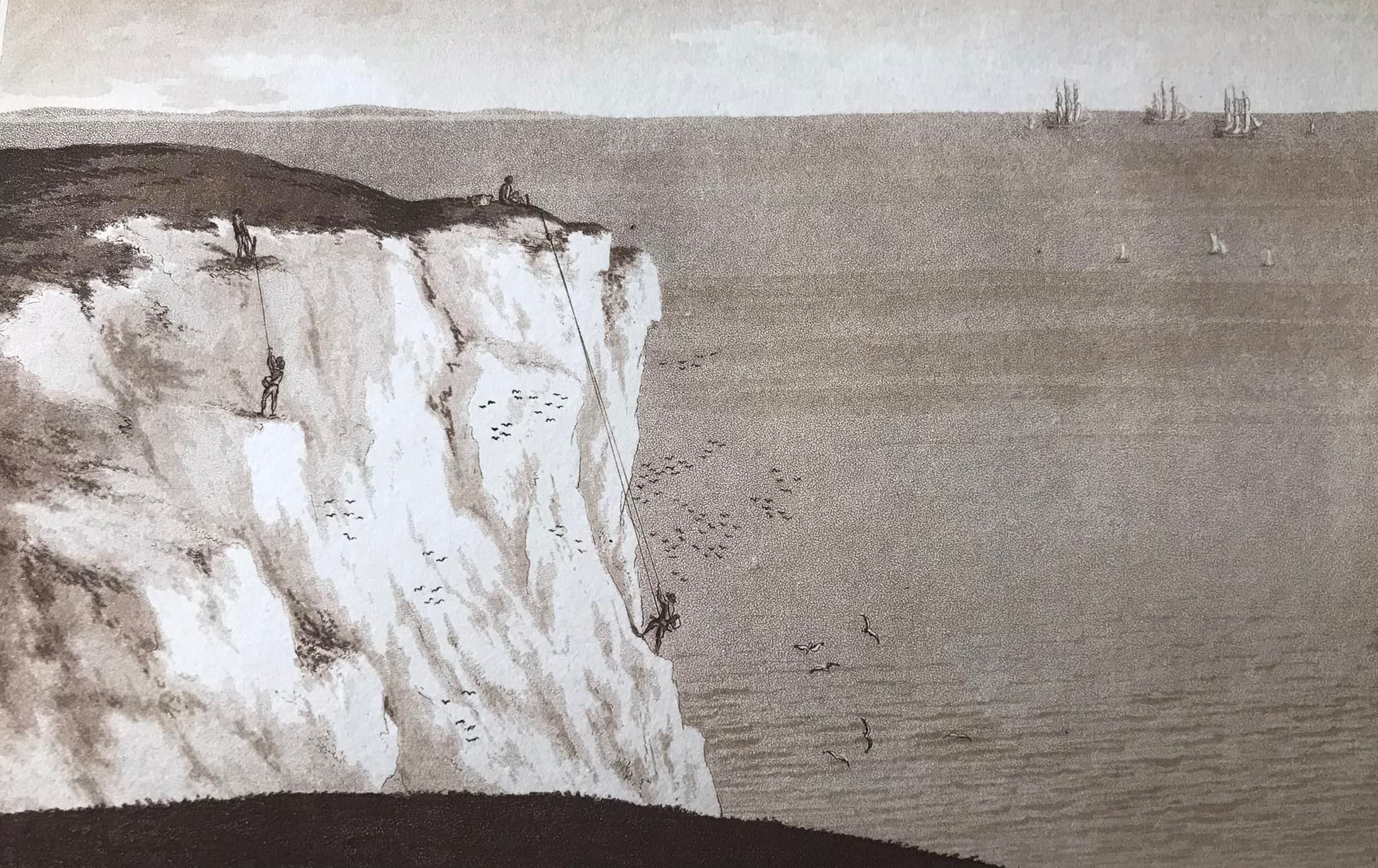
In Tomkins 18th century tour book to the Isle of Wight, it is written:
“The path to Hermit’s Hole, is fit only to be explored by those who are in the habit of climbing these tremendous Cliffs; for, besides the narrowness of the path, which in many places is not more than a foot wide, a dreadful precipice of five hundred feet beneath, presents to the eye a fearful prospect, which may so bewilder the imagination of the person who ventures to tread these dangerous passes, that he may miss one necessary step, and then no return of recollection can save him from destruction.”
Hermit’s Hole is associated with the legend of the lost town of Wolverton, that lay between Sandown and Bembridge, where Centurion’s Copse is currently located. Although the tale is fanciful, there is no doubt that Woolverton existed and that it was sacked by the French in the Middle Ages.

The story of the hermit who lived there is as follows:
“A few years before the sack of Wolverton, a pedlar had come to the town and had been noted for the cheapness of his wares; he had reappeared at intervals and had always departed in the direction of Culver Cliff.
“Attempts were made to follow him, but he contrived to elude his pursuers, and his residence was never discovered. The Hermit of the Cliff, for so he came to be called, had an uncanny knowledge of every one’s grievances, real or imaginary, and never failed to urge to urge them to seek redress by spiteful or even criminal methods.
“In spite of this, his character was regarded by most as unimpeachable, for he was ever to alleviate distress by any means in his power. His visits to the town became more numerous as time went on; he was for ever warning them against the mischievous propensities of a certain old man in a grey cowl, who, he said, was responsible for the misfortunes of all in the district, but whom nobody had ever seen.
“One day, he informed the town that this mysterious enemy was coming at eventide to poison the holy well. Accordingly, a large crowd assembled at dusk, and great was the excitement when in the distance an old man in a grey cloak and cowl was perceived. He advanced slowly up the road and, taking no notice of the onlookers, sat down on the edge of the well.
“A bystander, fearing that he was about to defile the water as the Hermit had predicted, threw a stone. It struck the old man on the head, killing him. He fell forwards and his blood dripped into the well.
“At this moment, a friar, who lived in the district, came upon the scene. As soon as he saw the body, he uttered a cry of horror, and informed his hearers that this was a great saint, and by murdering him they had defiled the water; Wolverton was doomed.
“As, however, the town did not immediately burst into flames, the inhabitants recovered somewhat from their fright and began to look about for the Hermit. He had disappeared. Next day he was treated, as may be imagined, with some coldness.
“A young fisherman named Edgar was invited by him to spend the evening at his home. He led his guest to the edge of Colvert’s Nass, an overhanging ledge at the top of Culver Cliff. There, he stamped on the ground, which opened, and a stairway was revealed. They descended, and Edgar found himself in a huge cavern cut in the chalk.
“A number of curious dwarfs appeared, followed by eleven or twelve beautiful damsels, one of whom paid marked attention to the young fisherman. He noticed, however, that two of the dwarfs had begun to fight in a corner and saw with horror that each had a great black tail which had previously been concealed by a short kilt or petticoat which they wore.
“At supper, before beginning to eat, he stood up and, in accordance with his habit, repeated a Latin Grace. As he proceeded, the cavern grew darker and darker, and at the last word a roar like a thunderclap was heard.
“Edgar sank down unconscious. A small cave, still known as the Hermit’s Hole, may be seen in the face of Culver Cliff, though the path to it has disappeared in recent years. It was here that Edgar recovered consciousness.
“Colvert’s Nass had fallen to the beach below. He scrambled down and was proceeding homewards when he saw a French fleet sailing for the shore. He hurried back and recounted his story to the incredulous inhabitants of Wolverton, who refused to believe any part of it.
“They paid dearly for their scepticism. The French landed, stormed and sacked the town, although driven back soon afterwards by a troop from Brading.”
The ghost of the murdered saint is said to haunt the scene of his death.









These historical items are very interesting
I have read that a stone cased well was discovered when the sea was drained from what is now the marshes near the site of Woolverton.
I think that there is now a little brick built building on the site, which is a pumping station for to gain freshwater supplies for Bembridge or elsewhere.
There is a lady I met who worked for the RSPB who swears she has seen a grey figure of a ghost in the woods.
I have been back in the 80’s down to the remains of the Culver Cliffcave, but the path back then was steep and very narrow, and only a large depression in the cliff showed where the cave was, So not worth the risk even back then, and now, to attempt it would likely bring the Police, two coastguard launches, the air ambulance etc
Yes, I have been told about the brick pumping station as a well too. Apparently, the brick building was cobstructed ti protect the well from the world wars. I also believe that an ancient Druid grove was connected to the well?
The problem is accessing the site of the well – no one seems to want to talk to me about it (says a lot in itself)
It’s called St Urians, not Centurions
I also understood that it was St Urian after the supposed chapel there but it’s been so misrepresented as Centurion for years that that is now what is printed on all the maps.
Absolutely fascinating. Love these articles.
Interesting story but the school boys look a little old to be school boys
Yeah and I was in church littern yesterday and saw bigfoot and a bunch of space aliens and ghosts having a party elvis was there for the entertainment hahahaha what a load of guff
I was at Bembridge School in the 1960s and was one of a few who were foolish enough to venture down this narrow path over the cliff edge to the Hermits Cave as we called it. The path was indeed only a foot wide in places and could only be seen as a path by looking over the edge of the sheer chalk cliff. The cave was small and had a few schoolboy names carved on the wall, mine included. After the tragedy of a boy falling to his death the school banned everyone from going near the cliff.