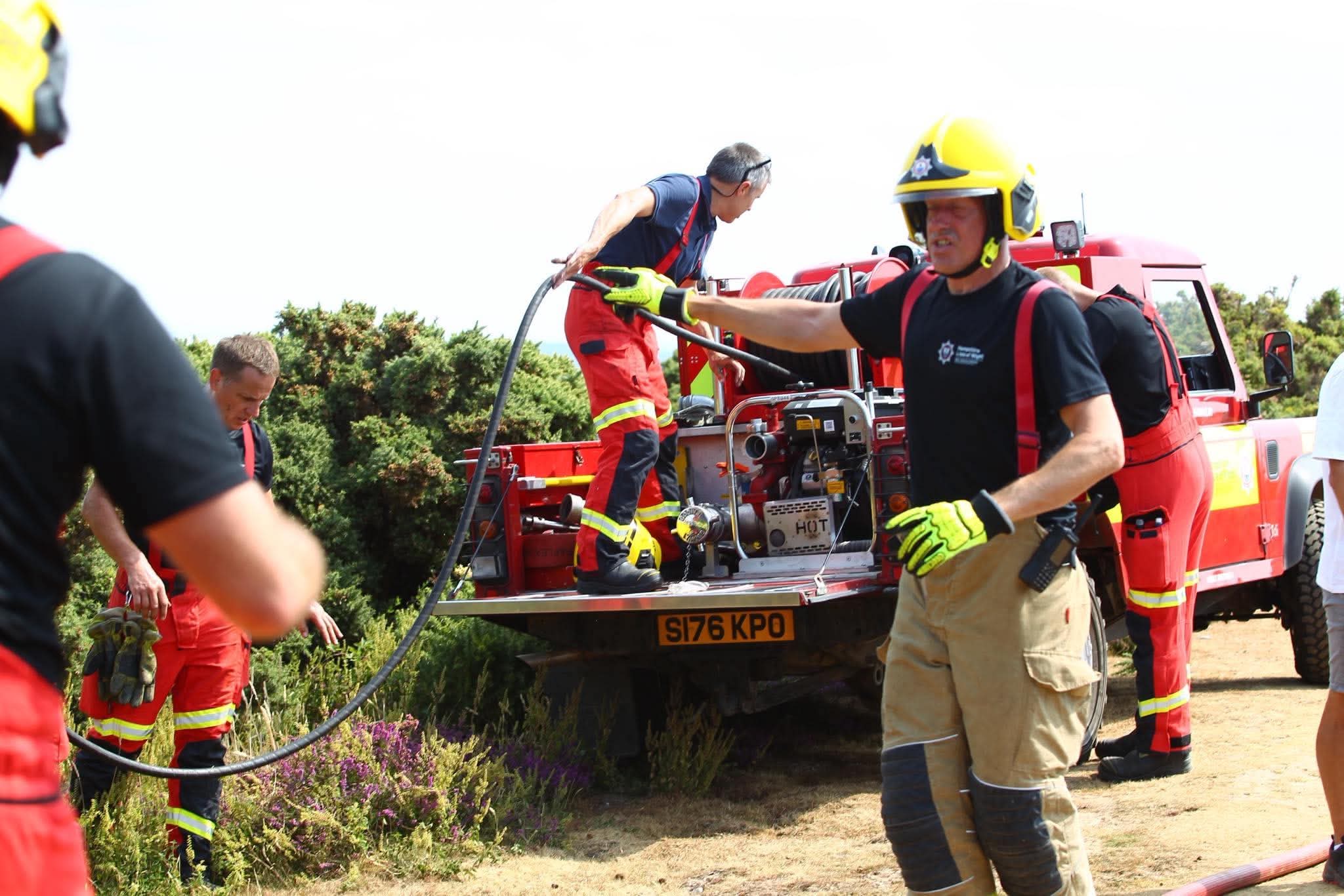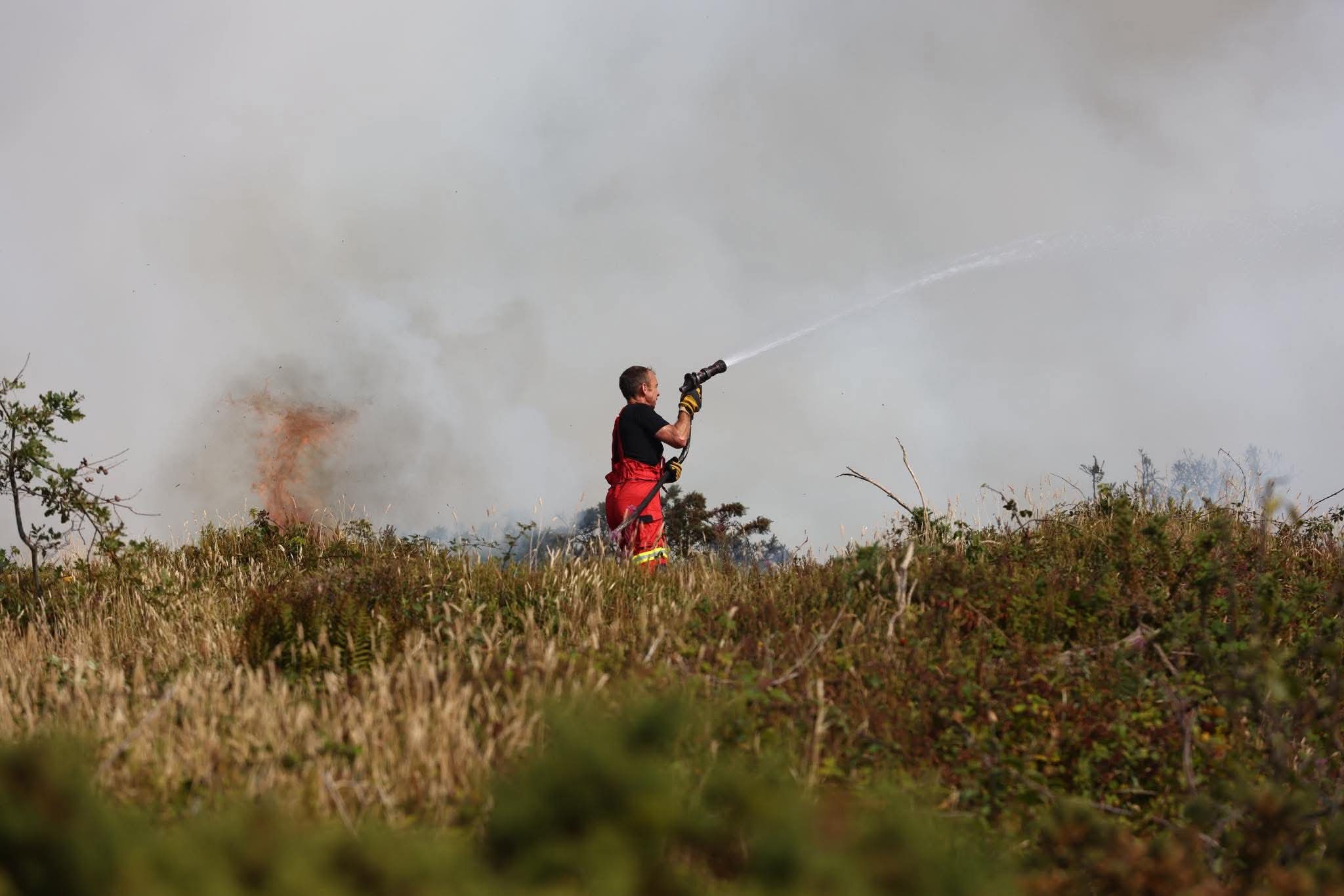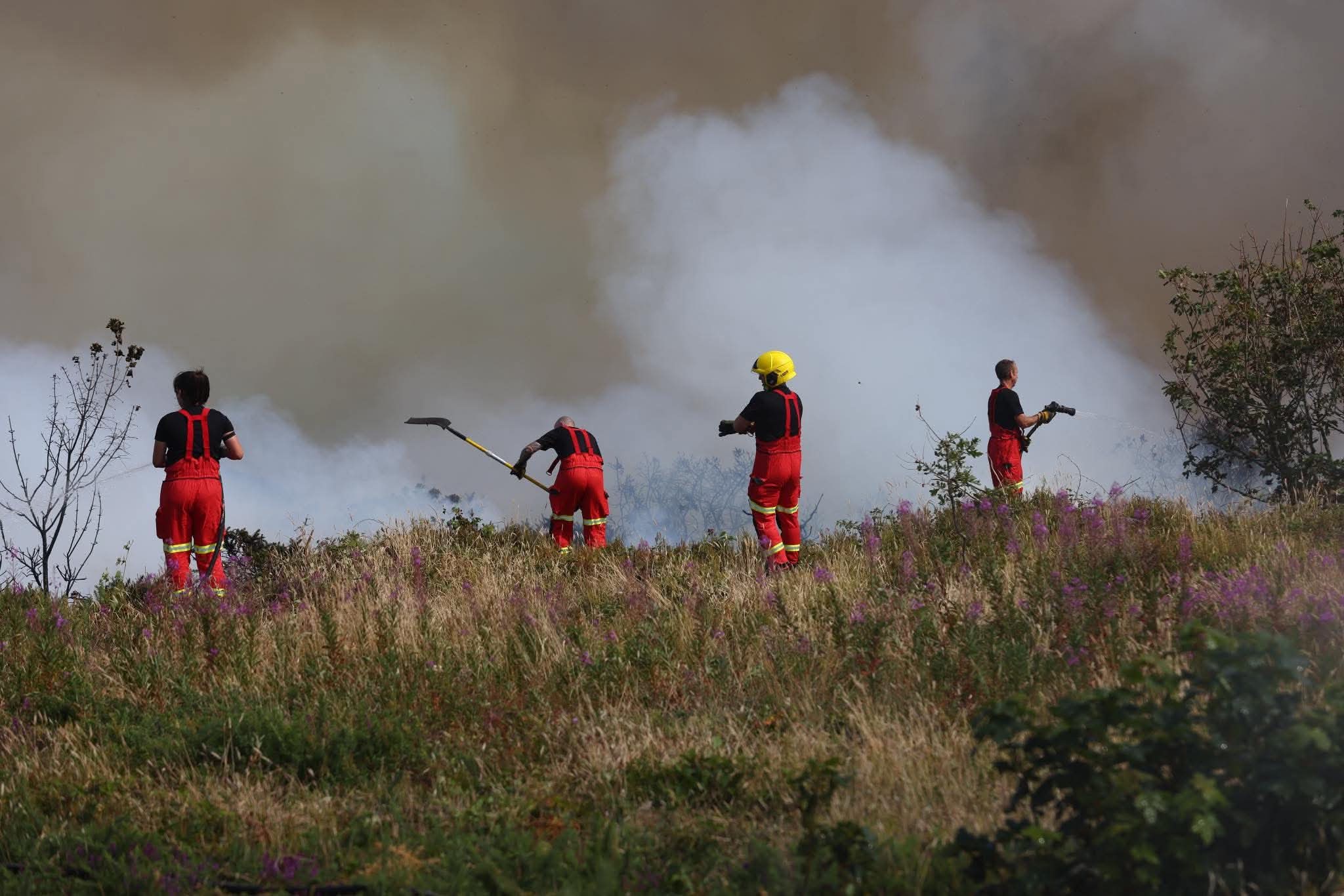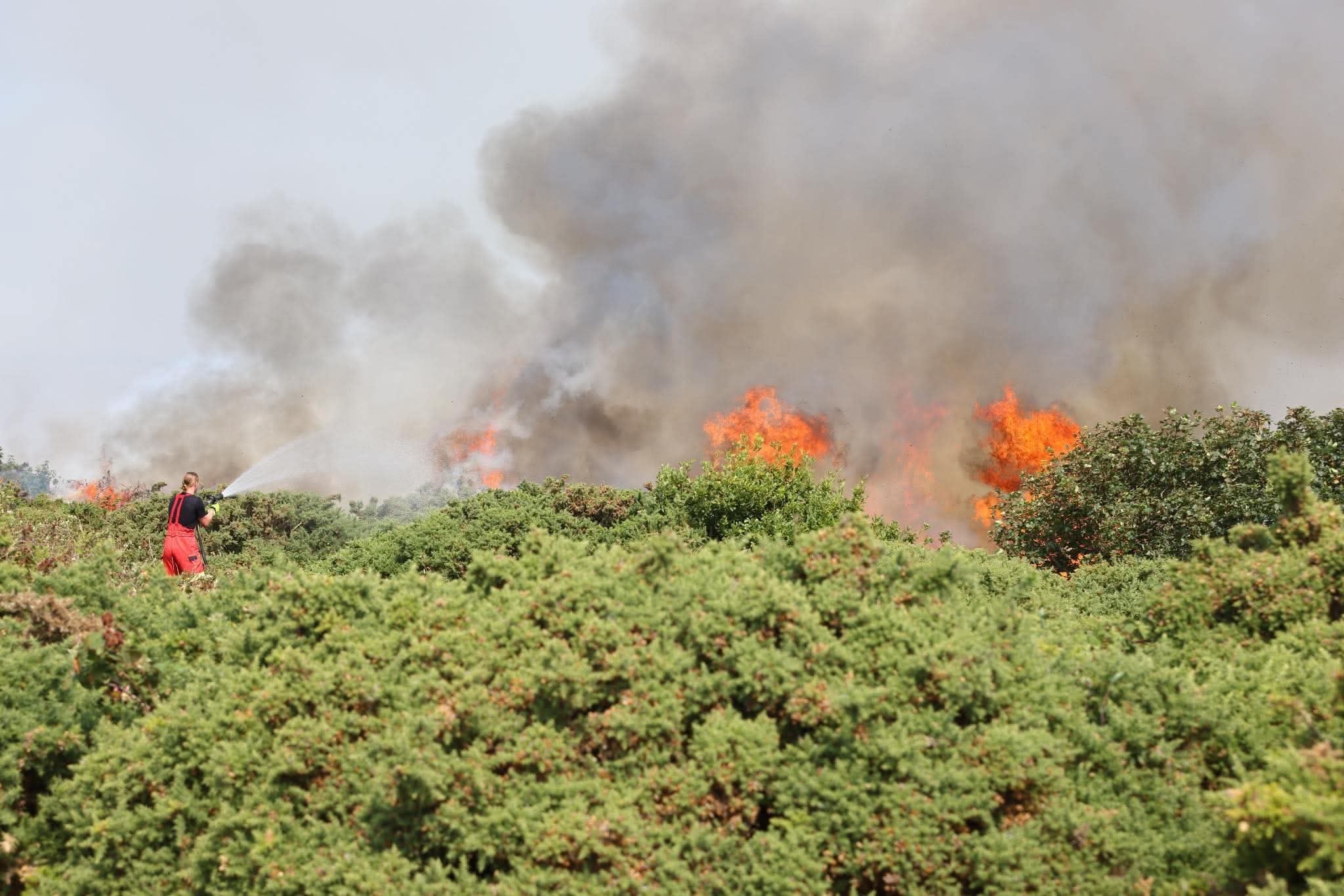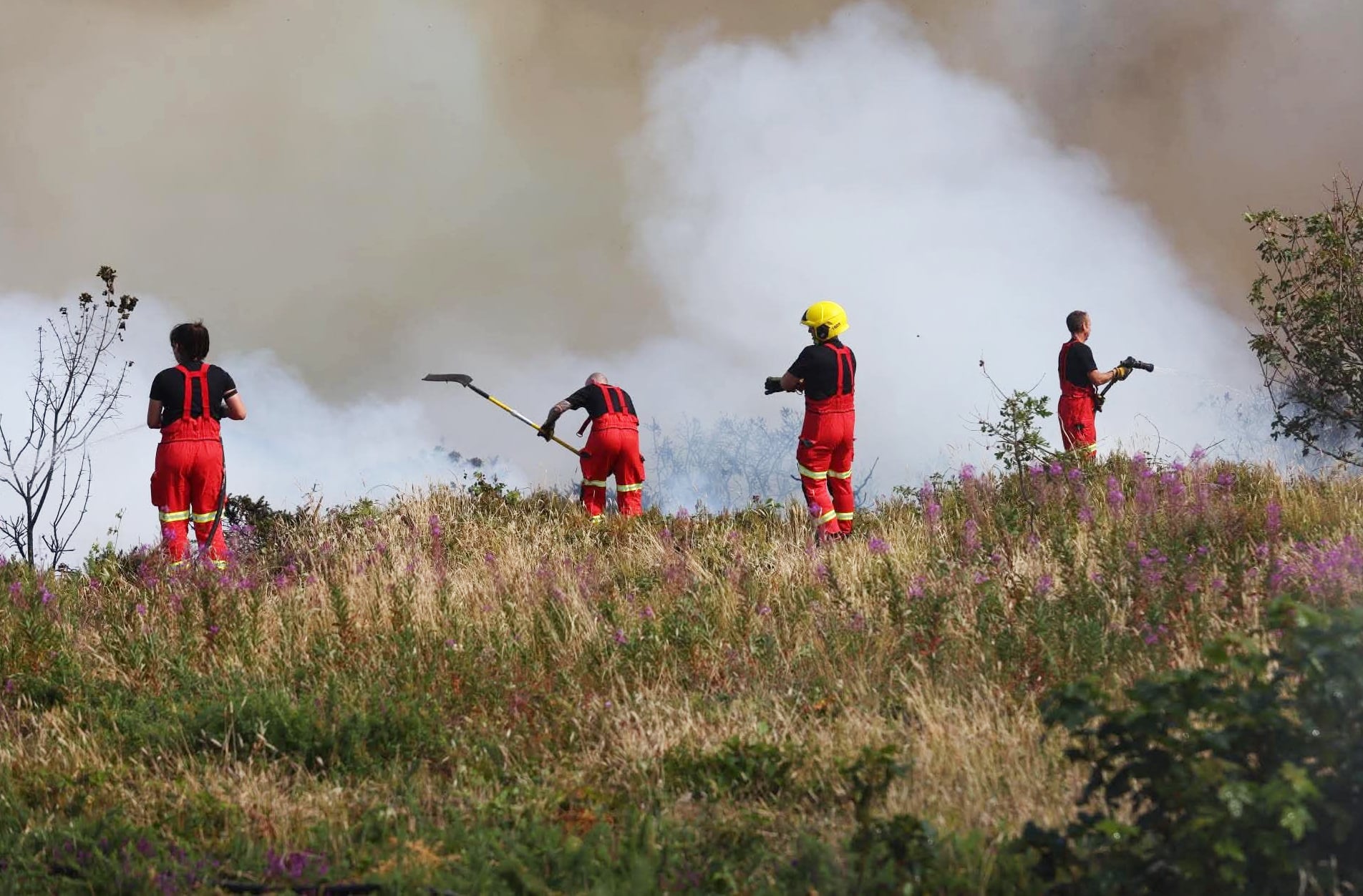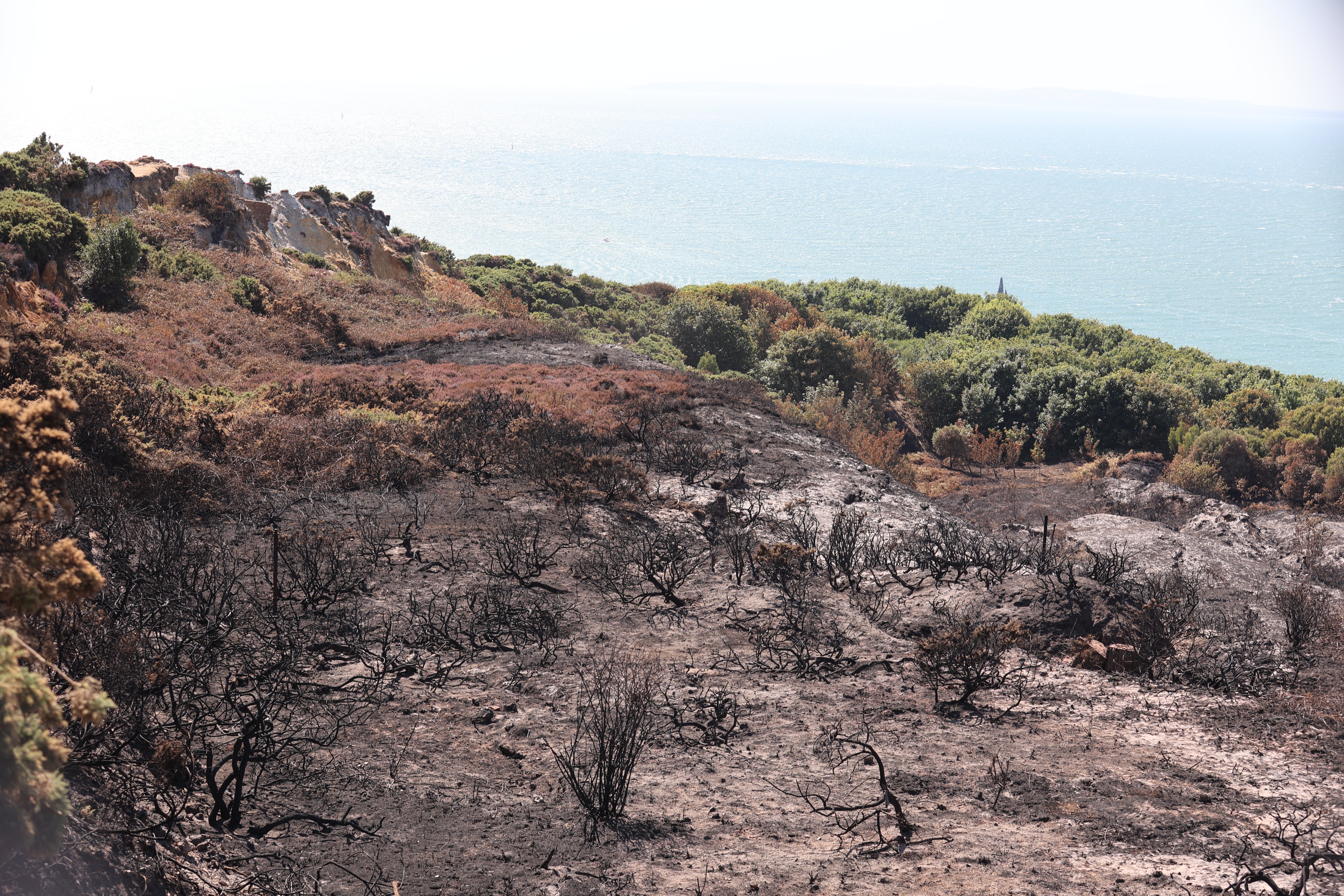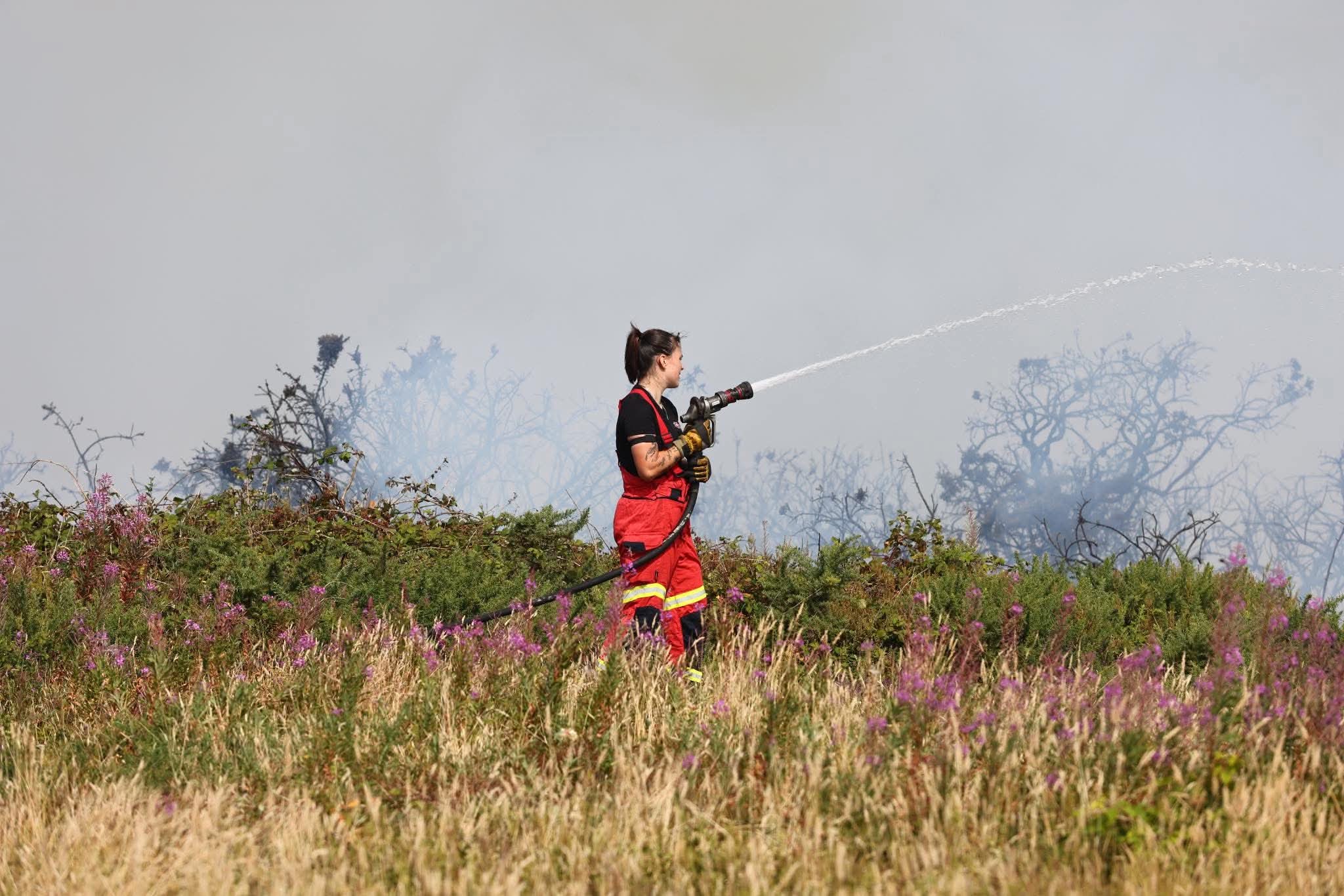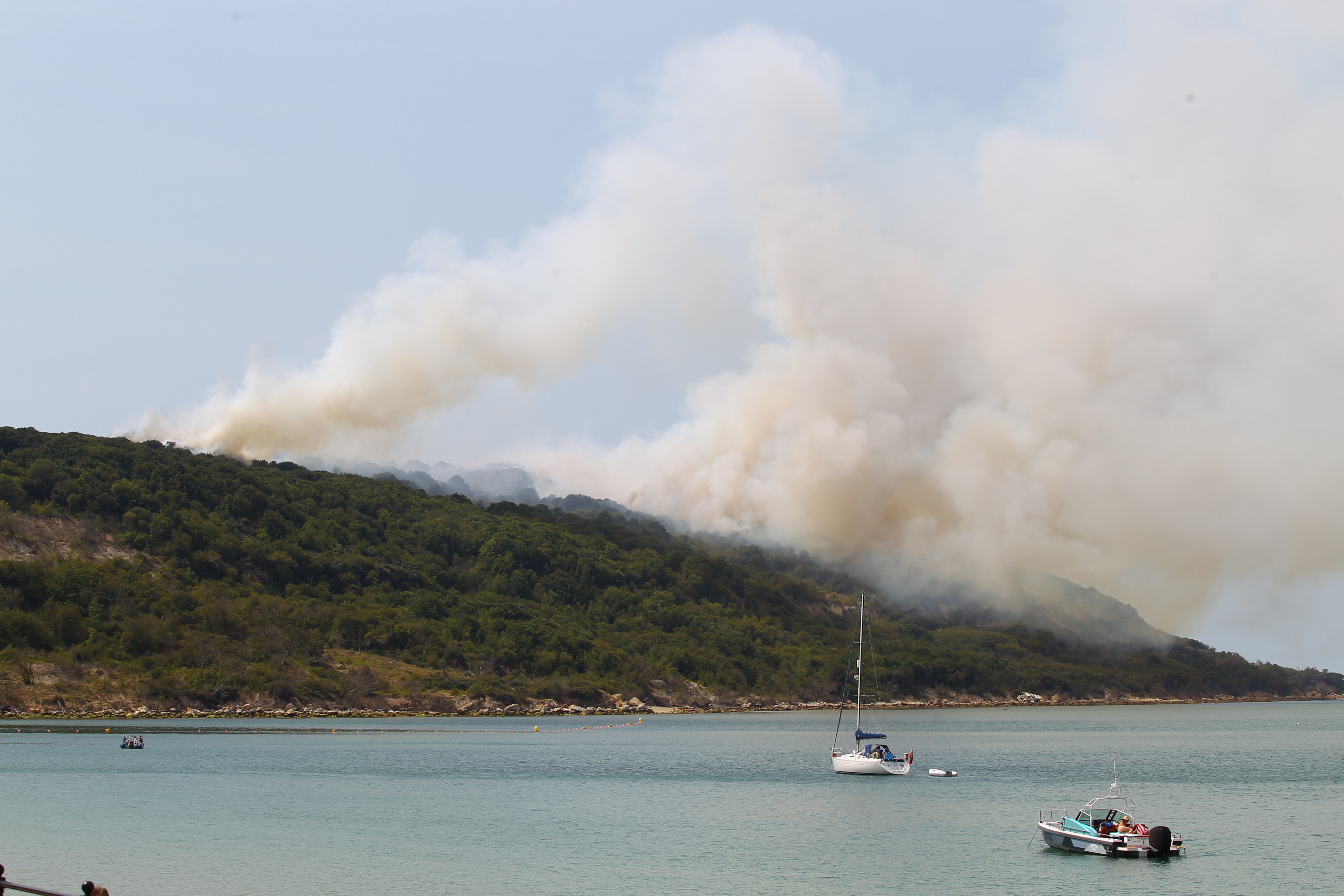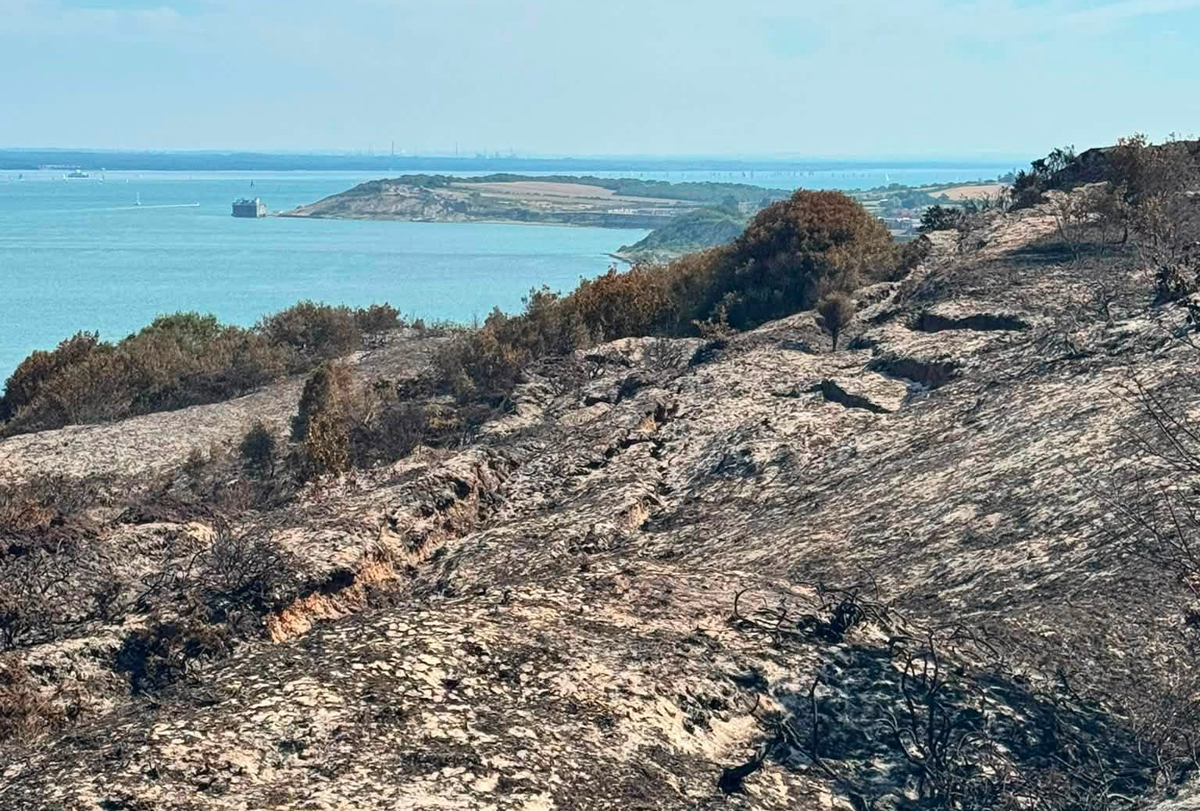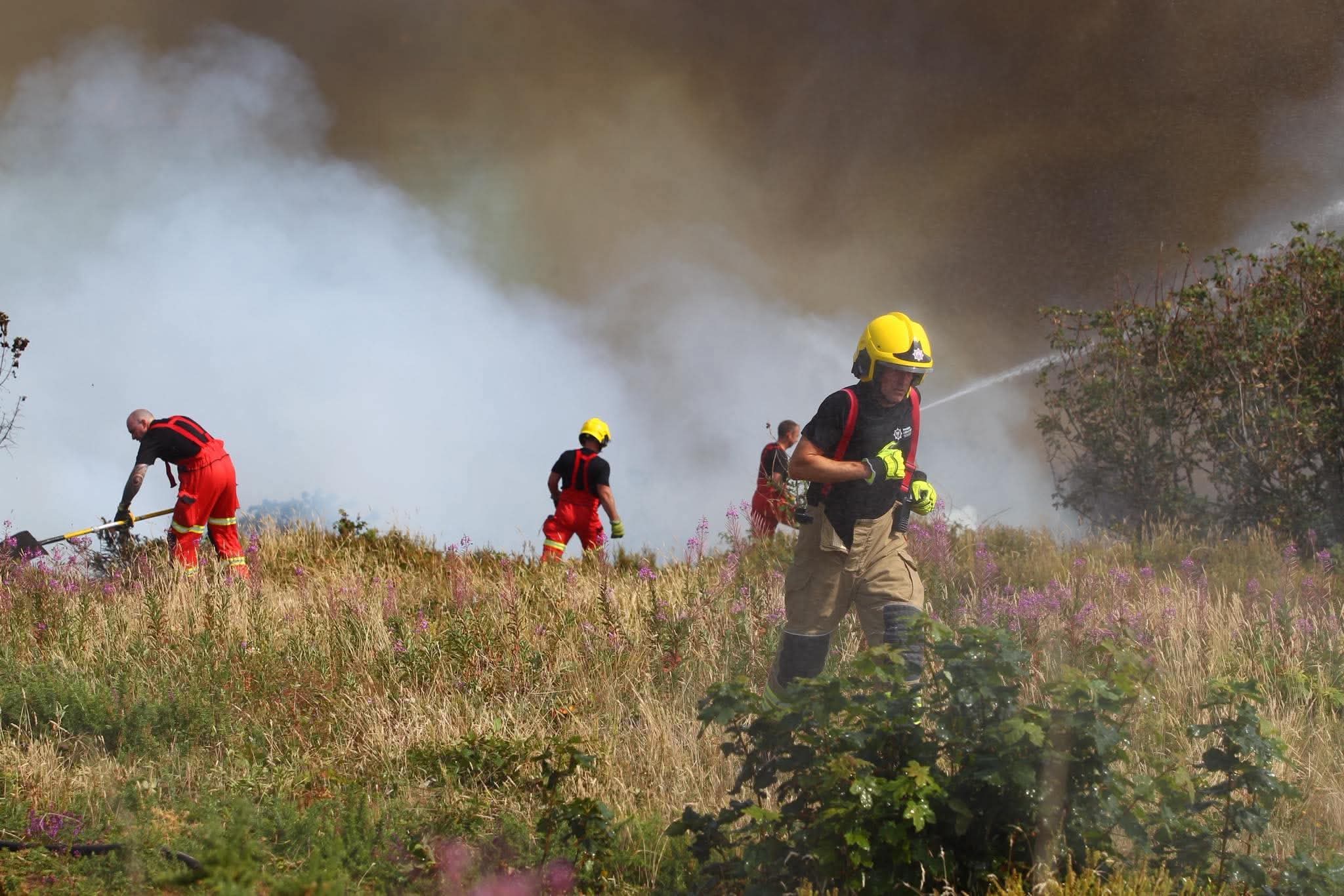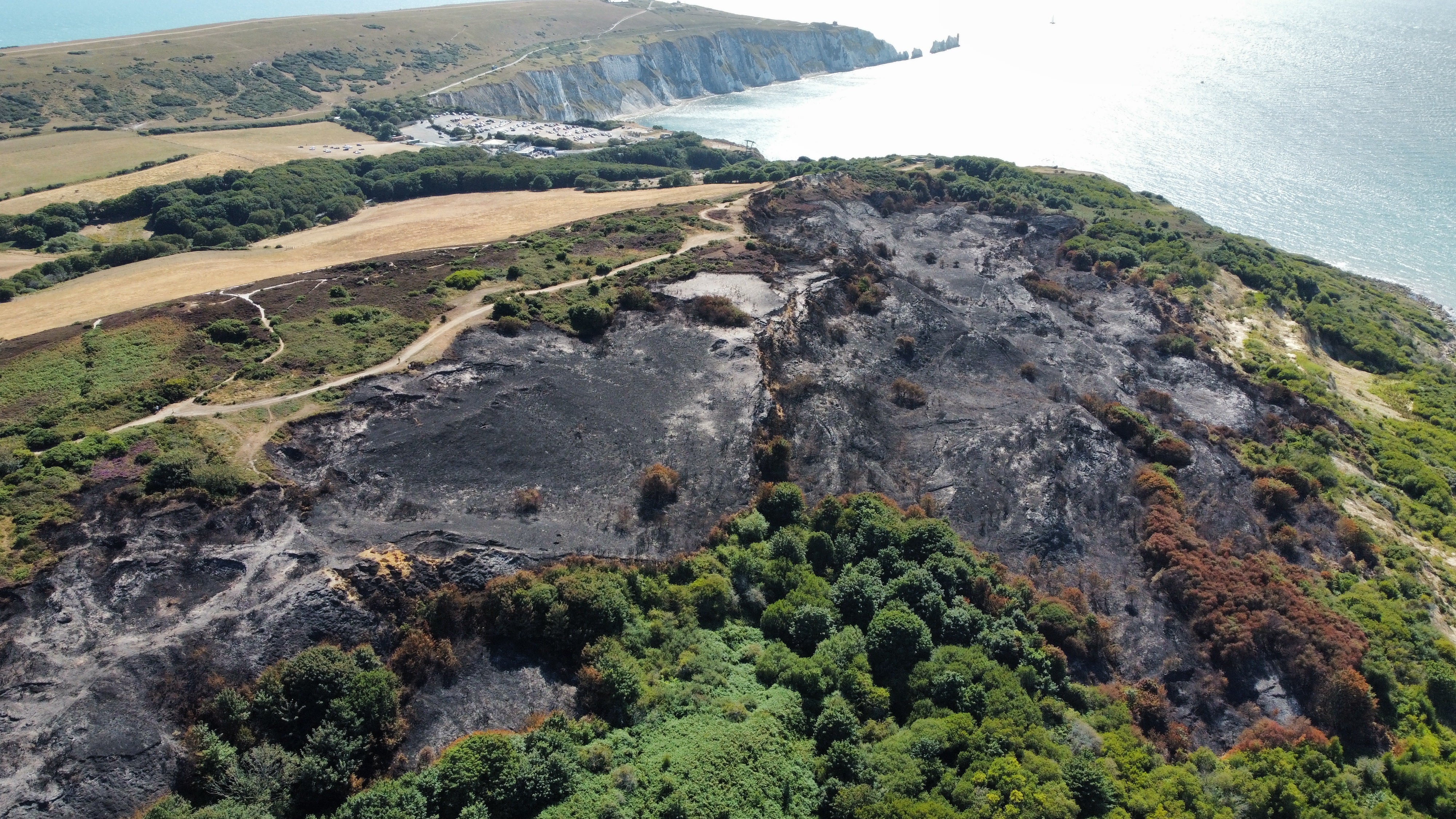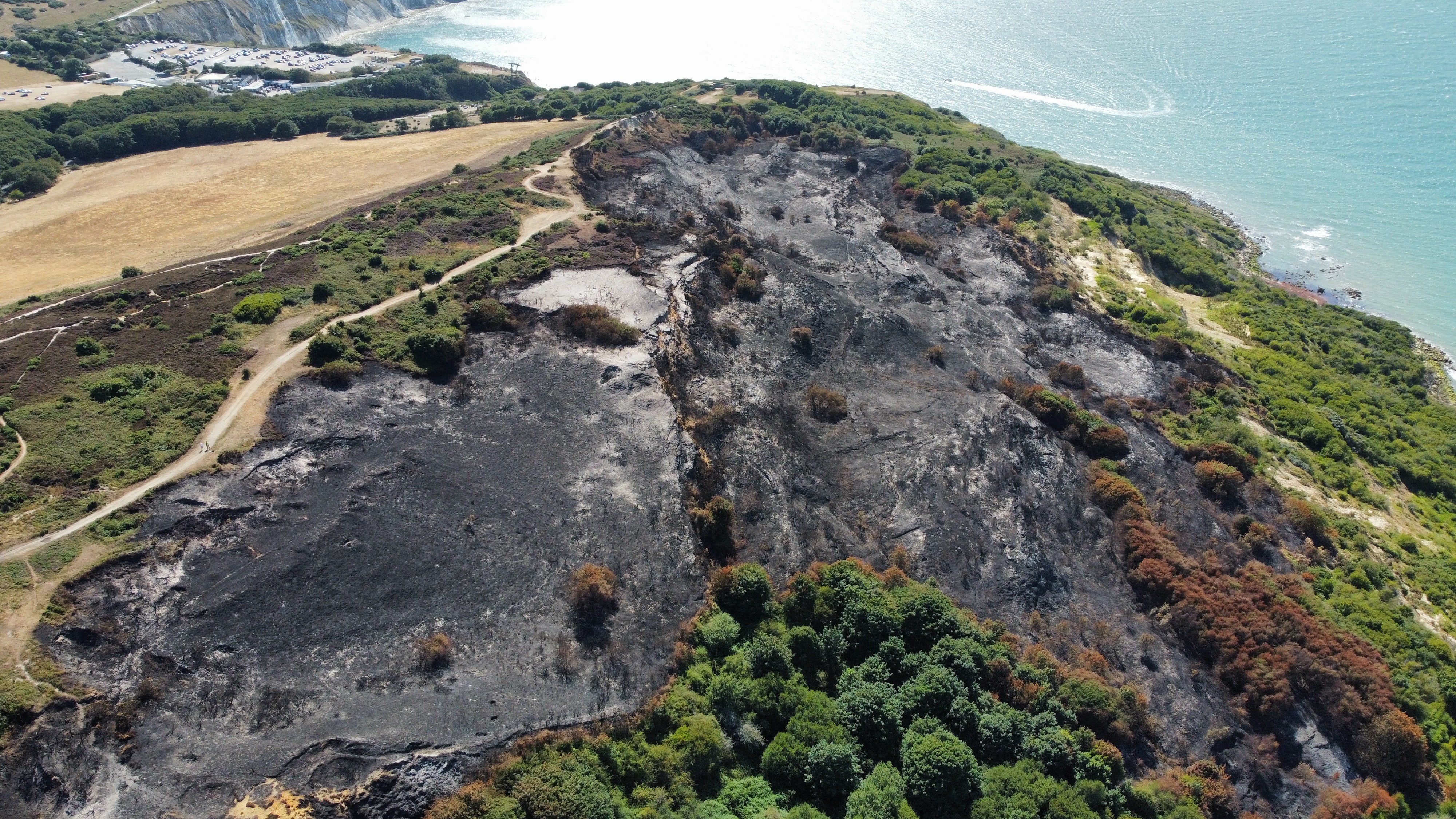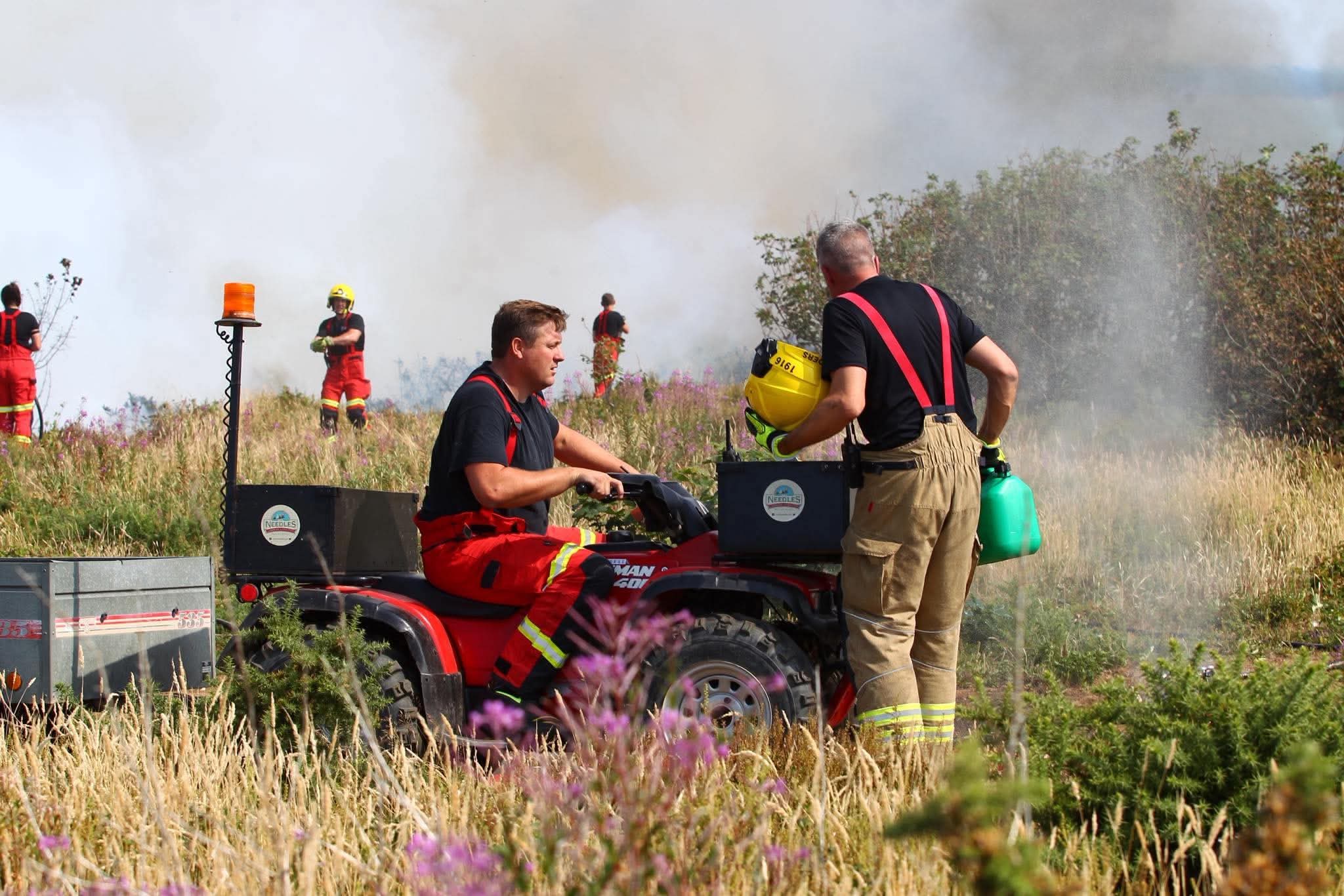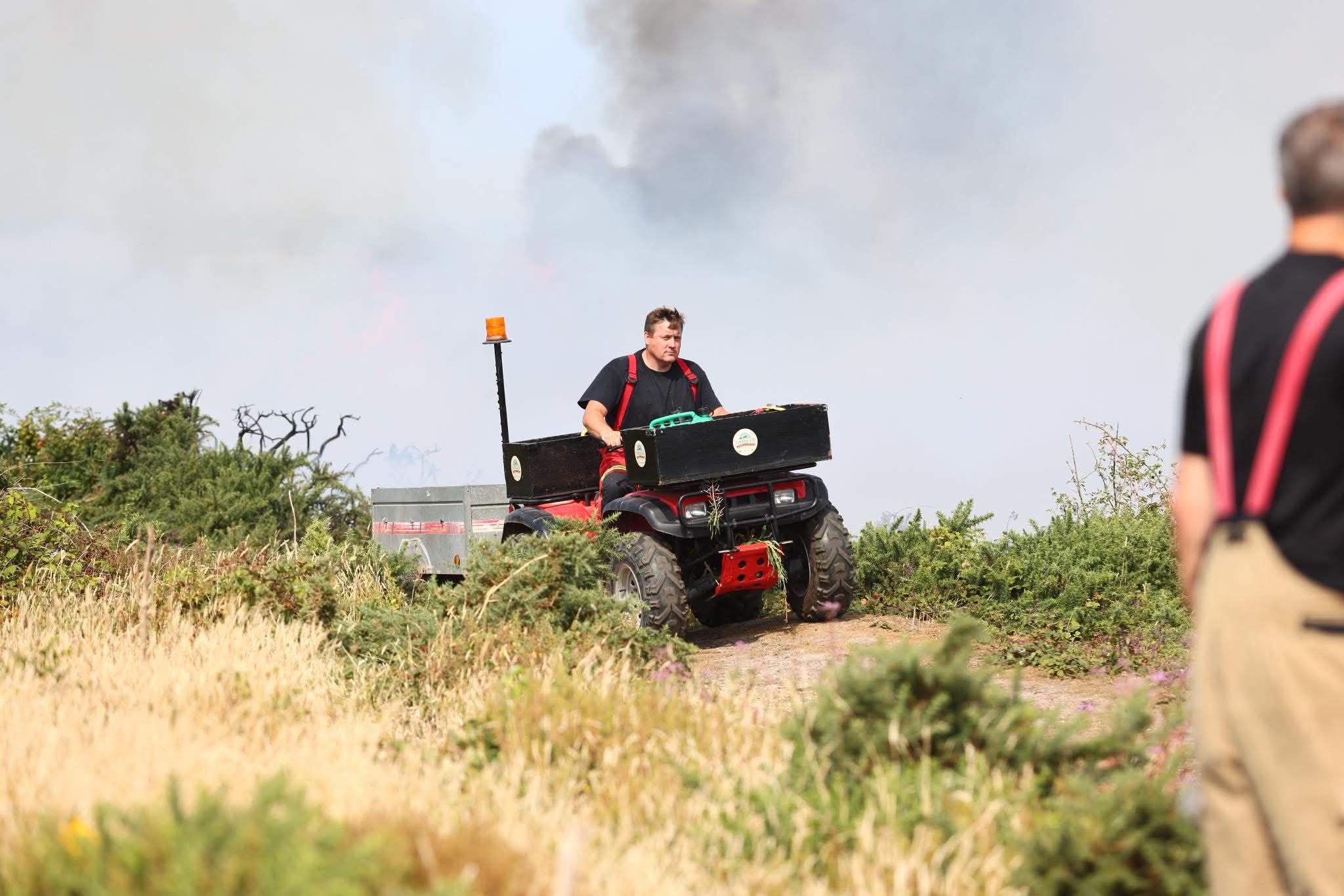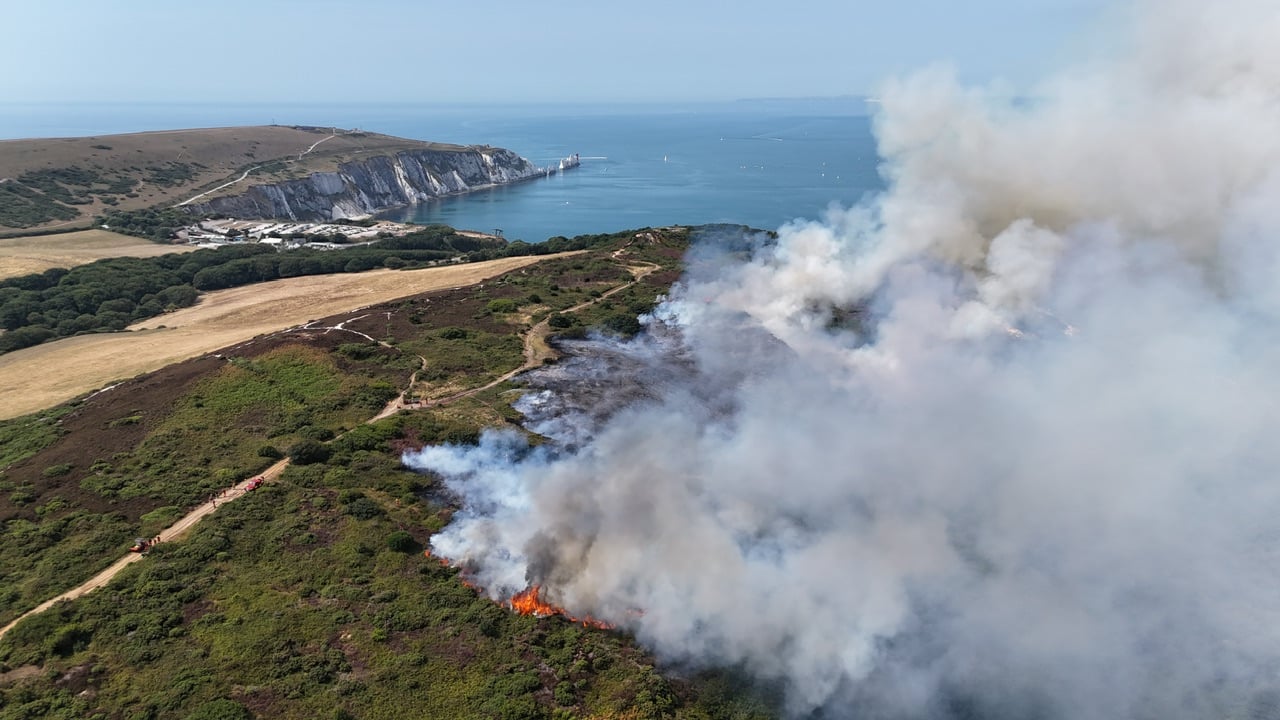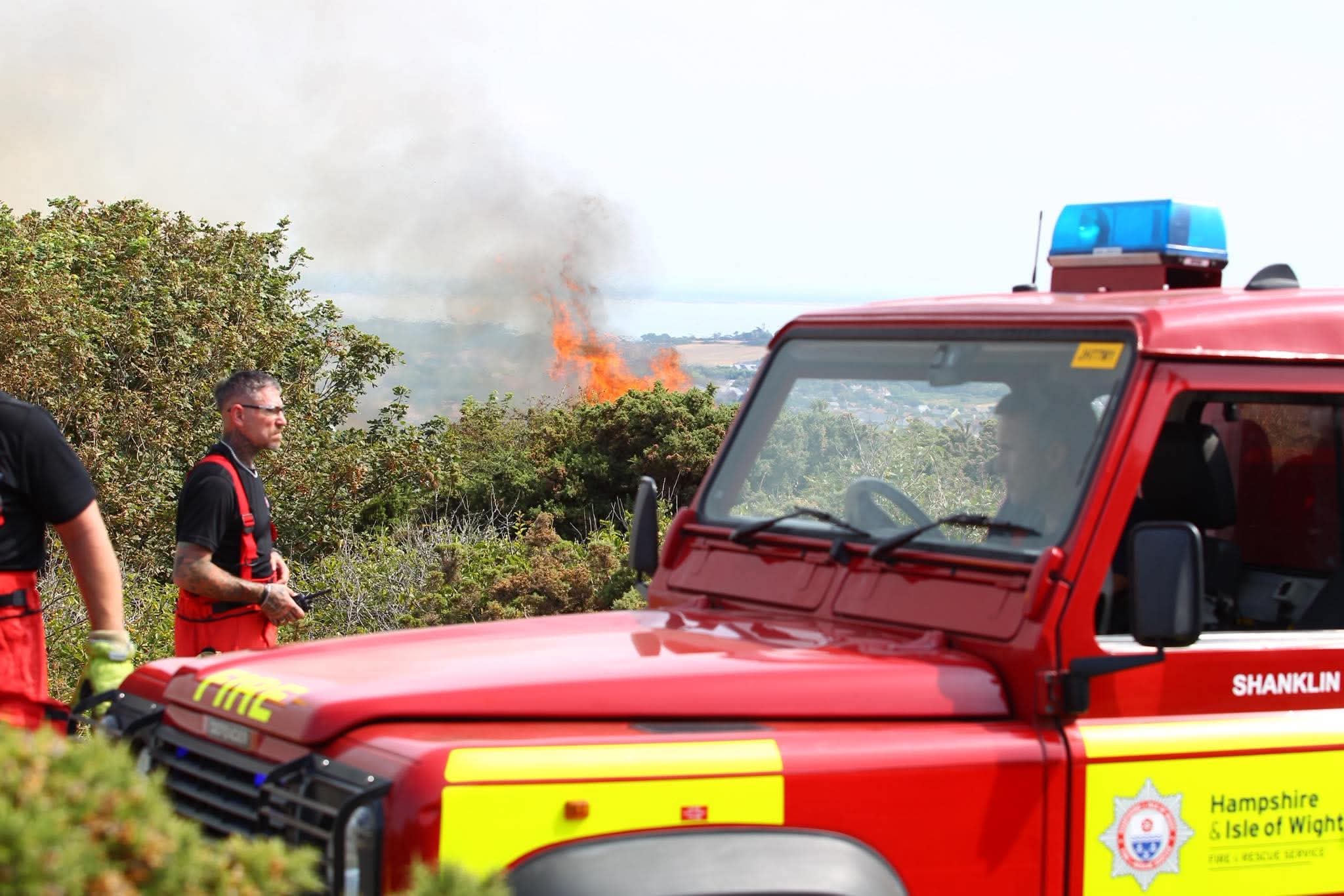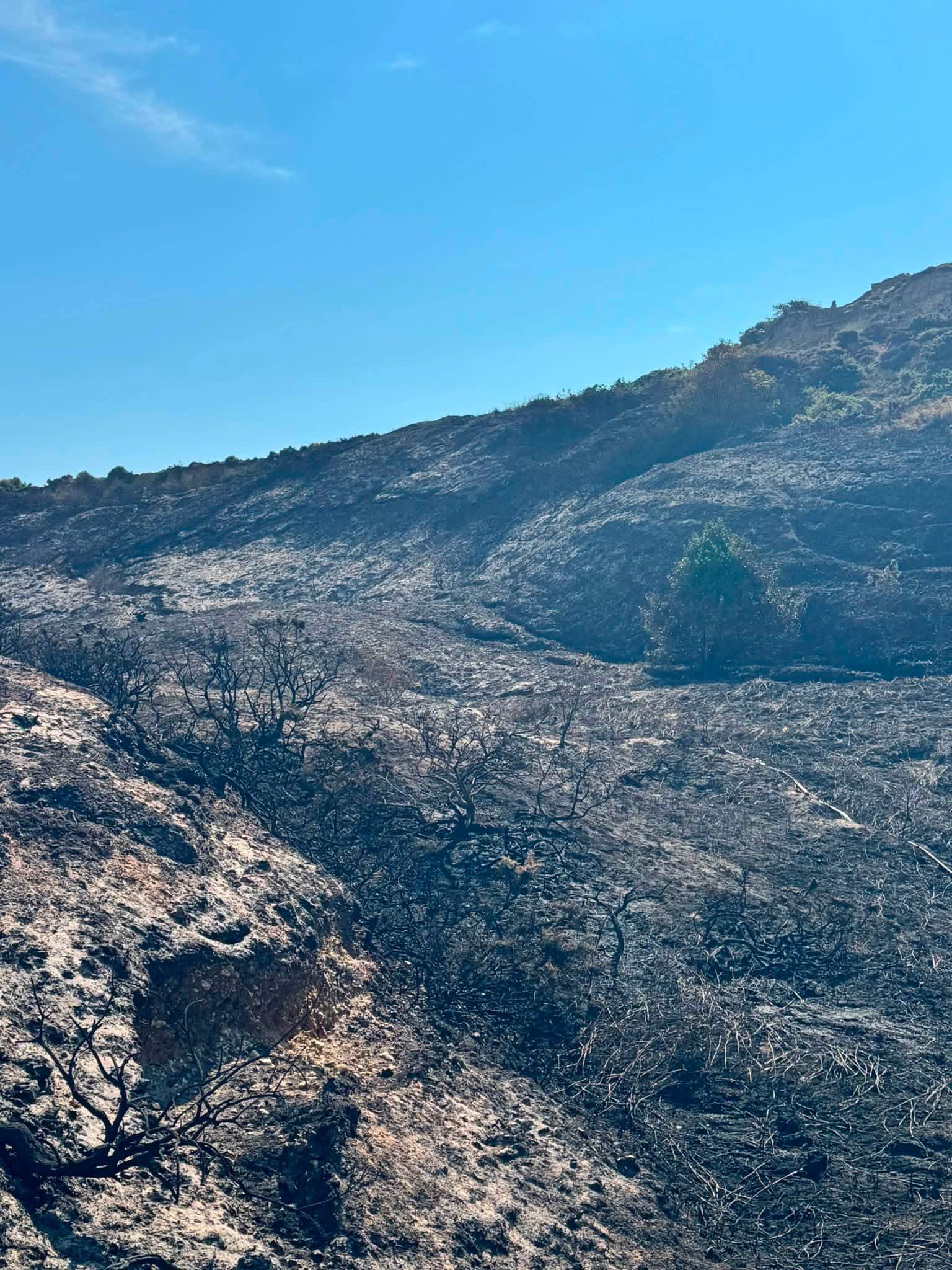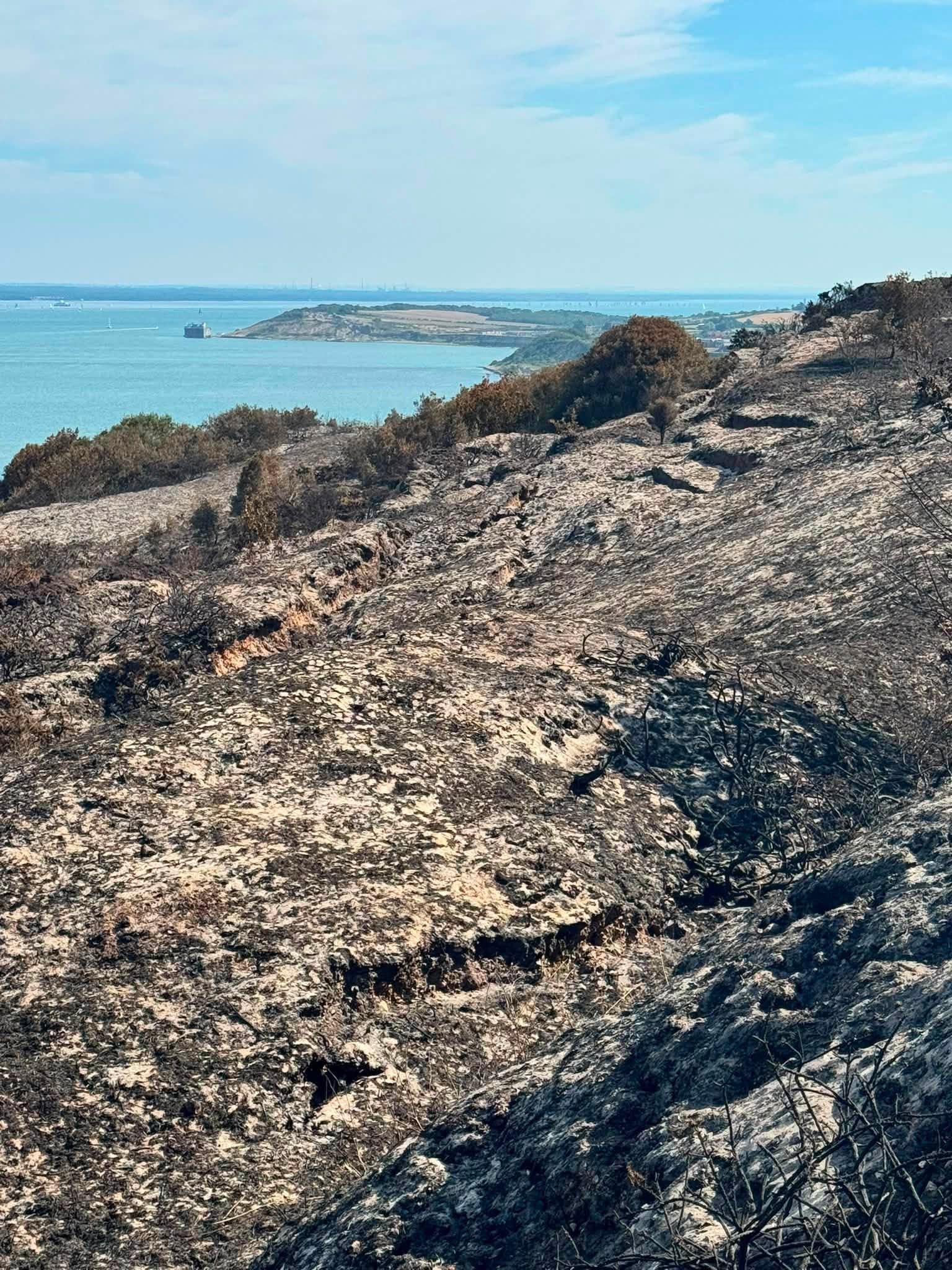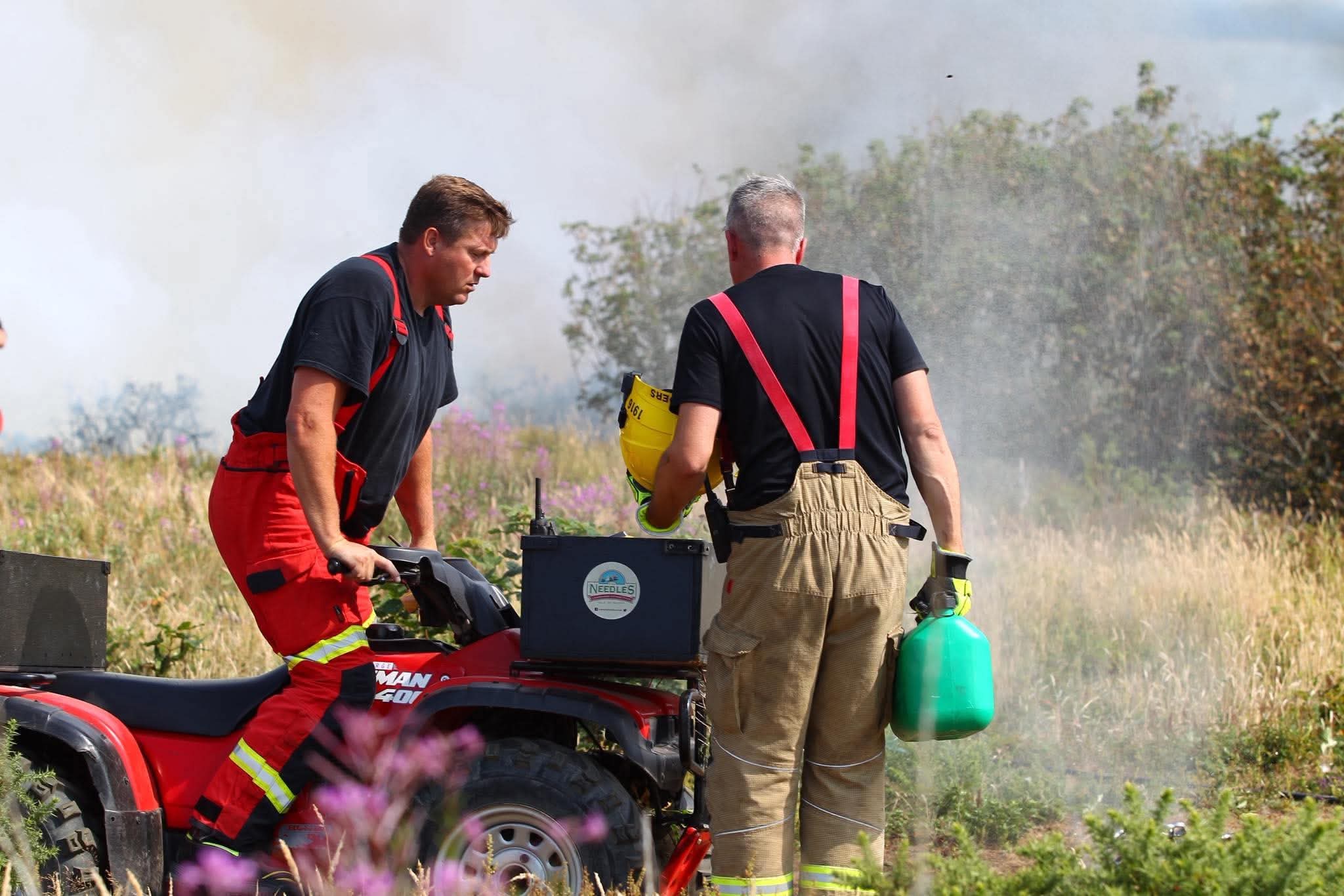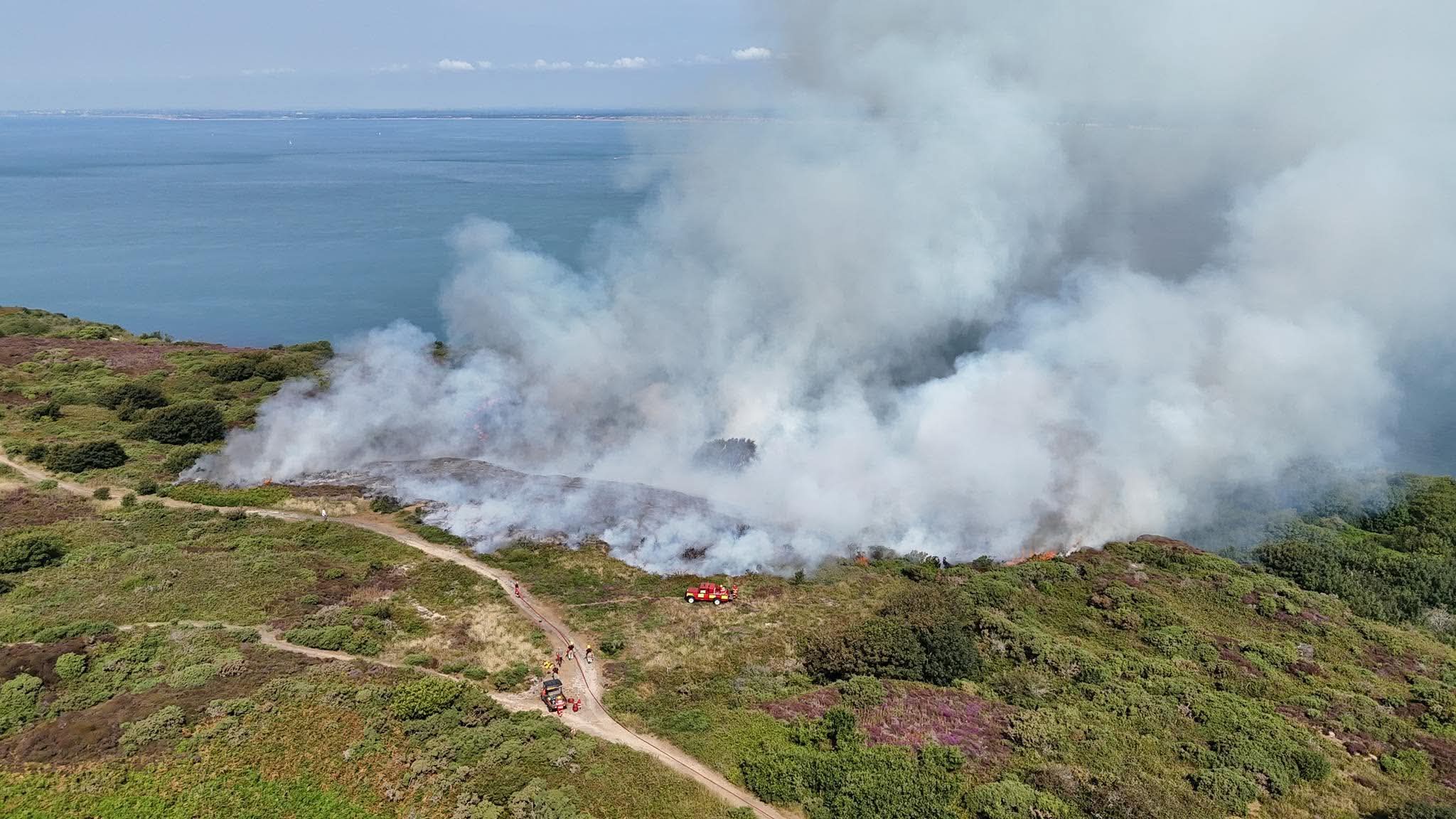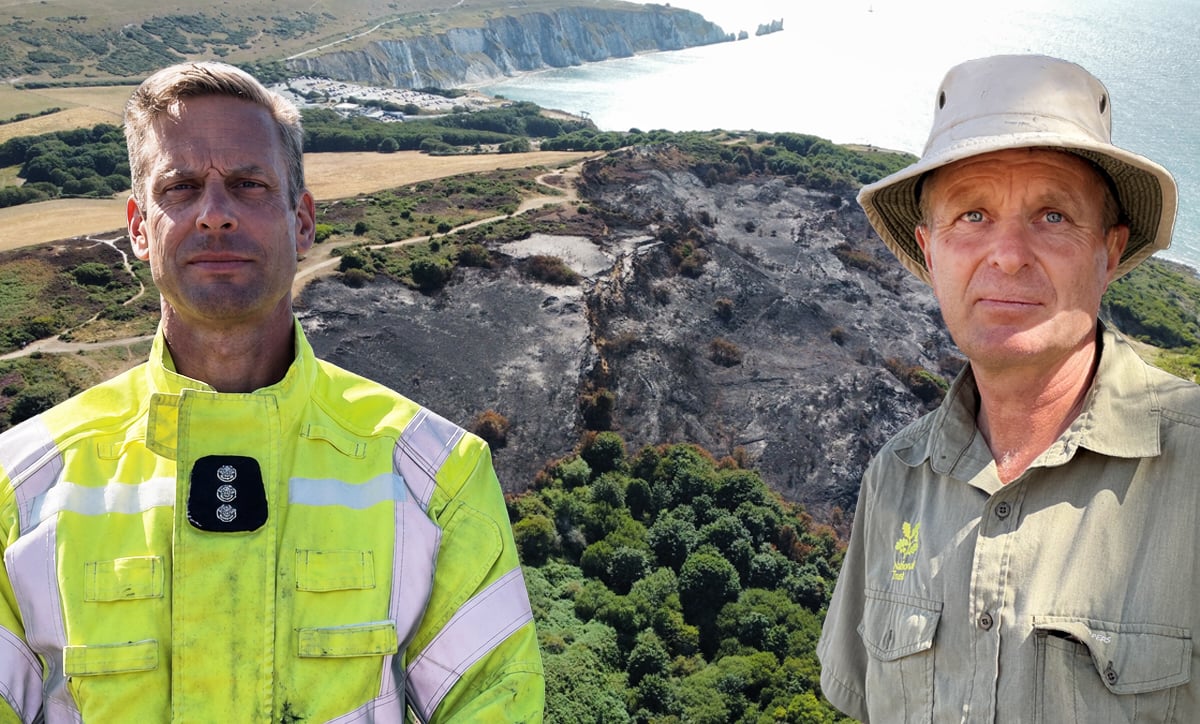




































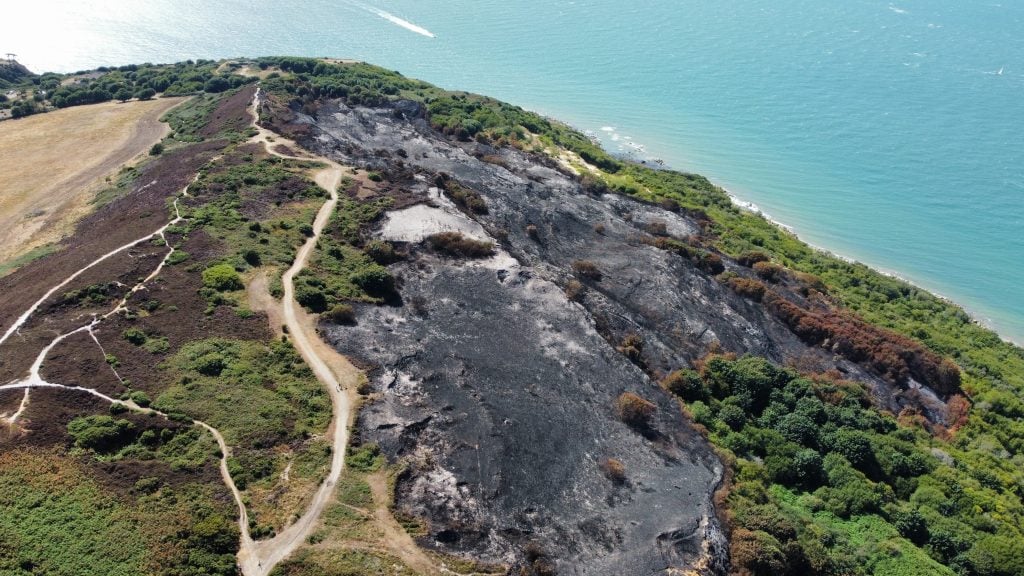
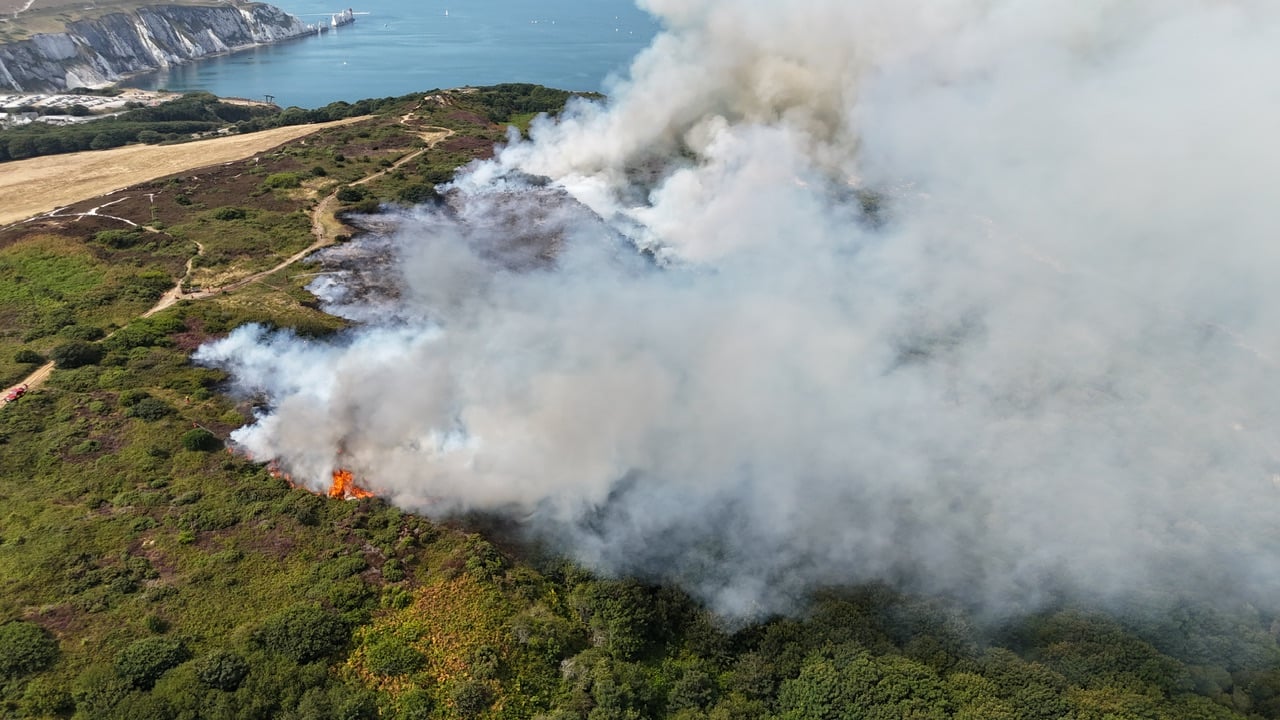
Nearly a week on from the devastating Headon Warren wildfire, which destroyed around 40% of the nationally important heathland, firefighters and the National Trust have spoken exclusively to Island Echo about the battle to contain the blaze – and the long road to recovery.
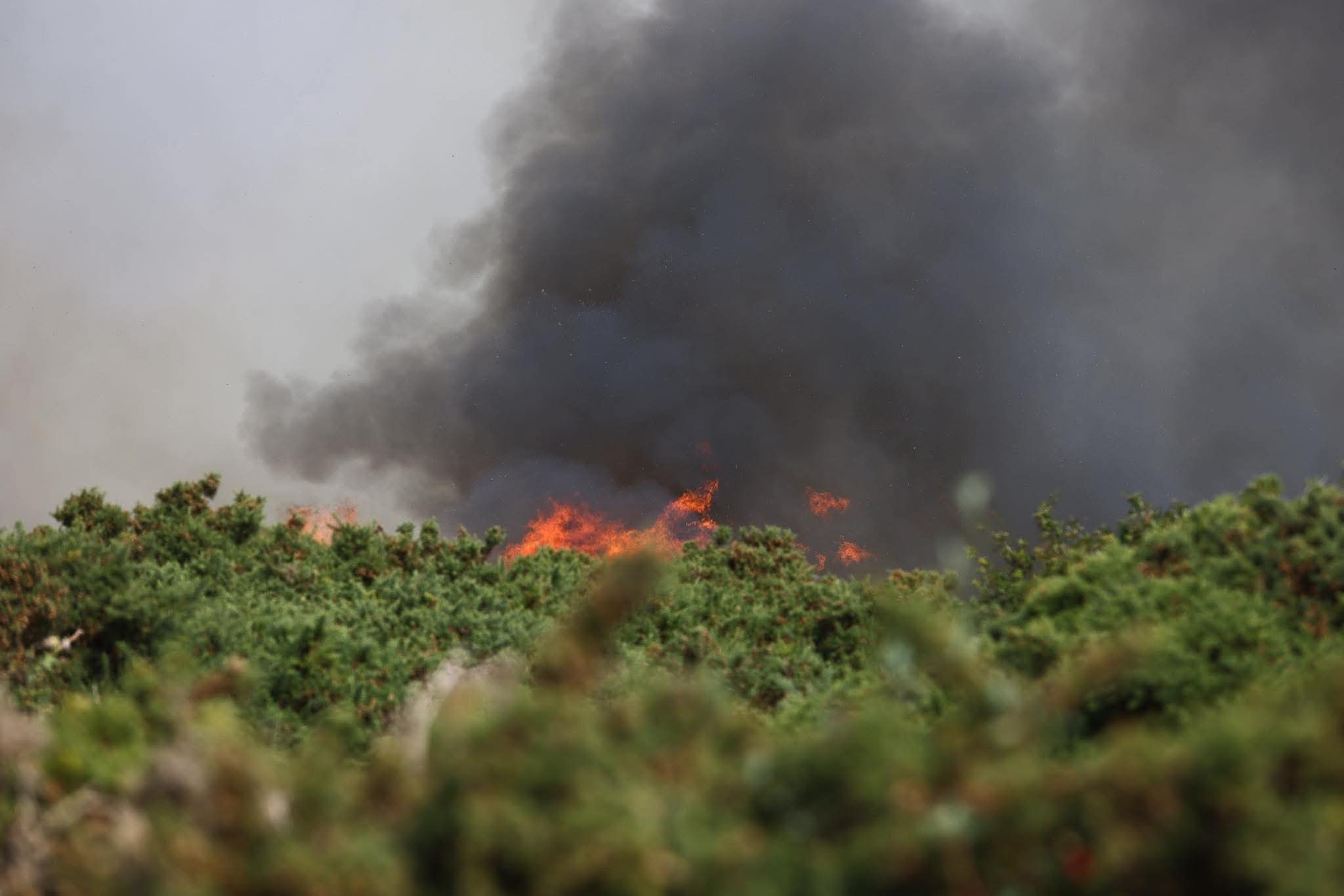
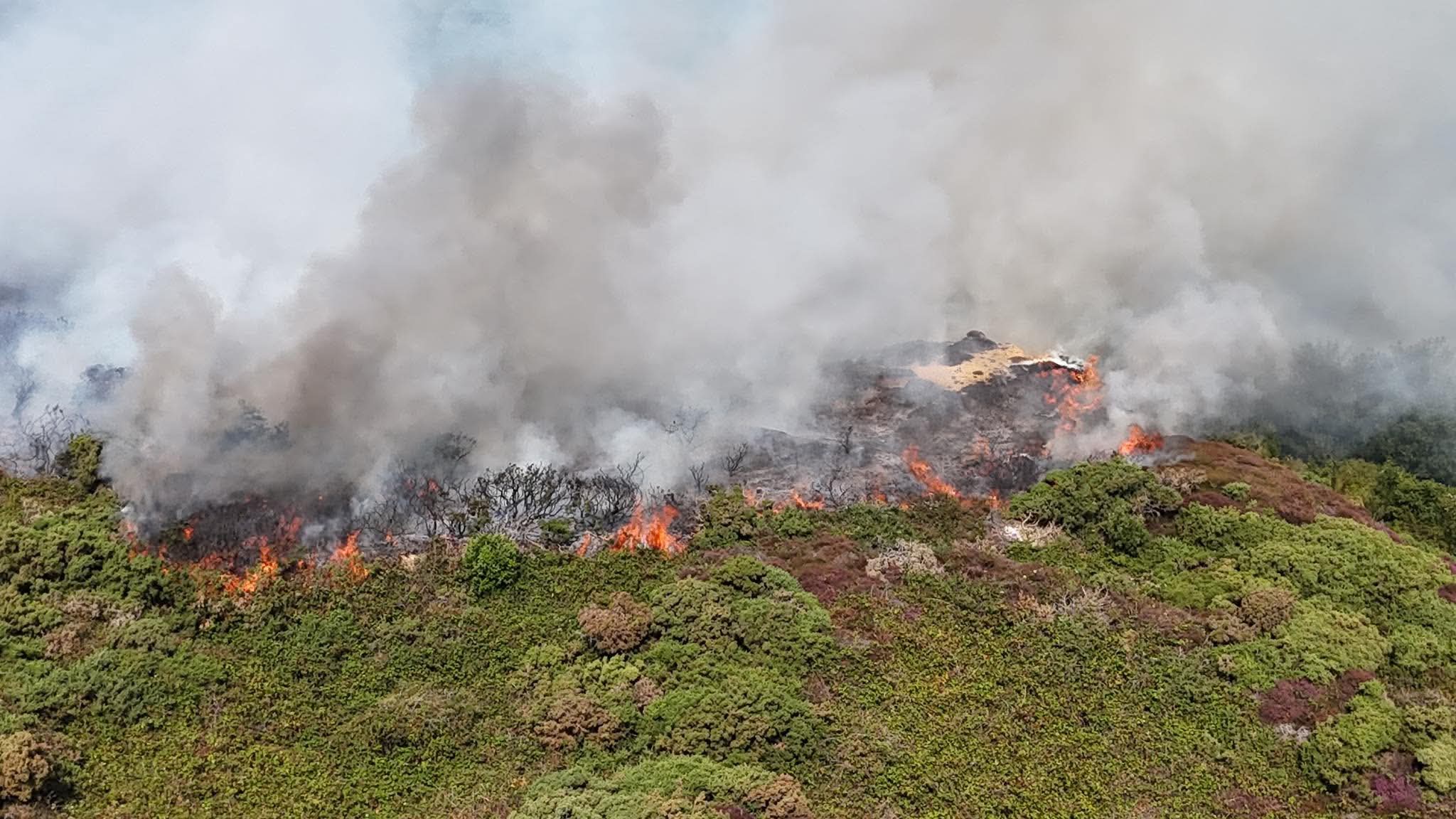
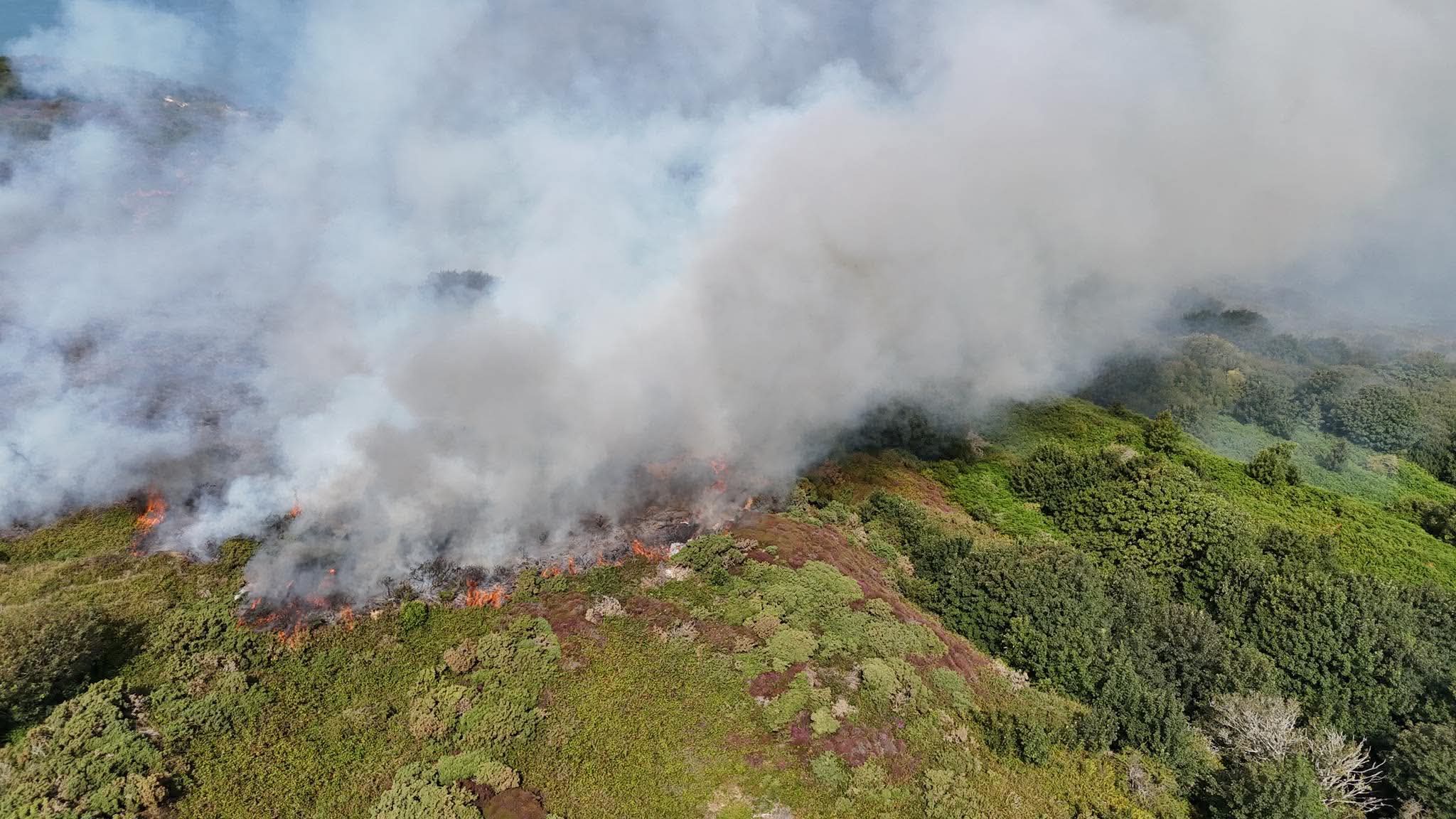
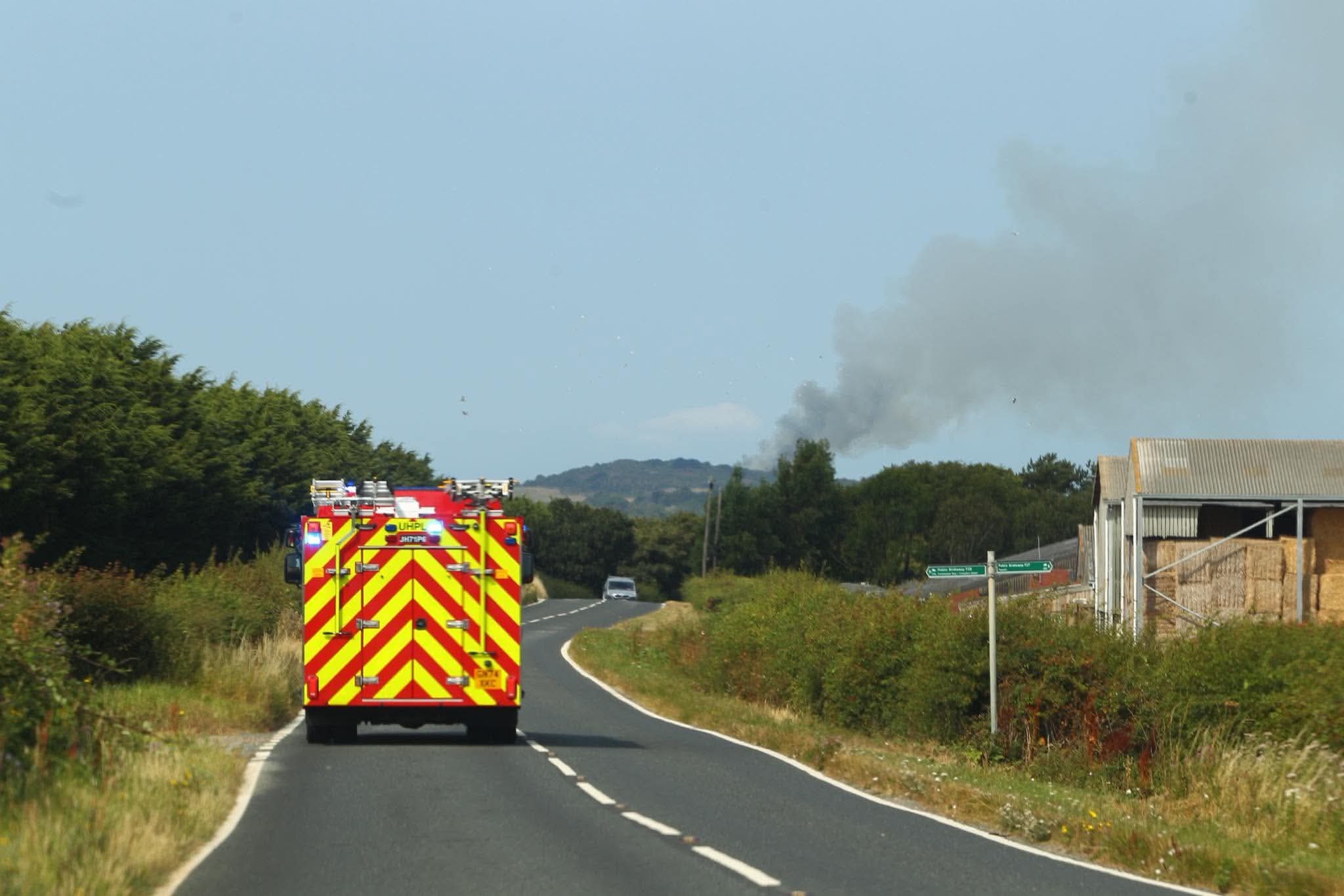
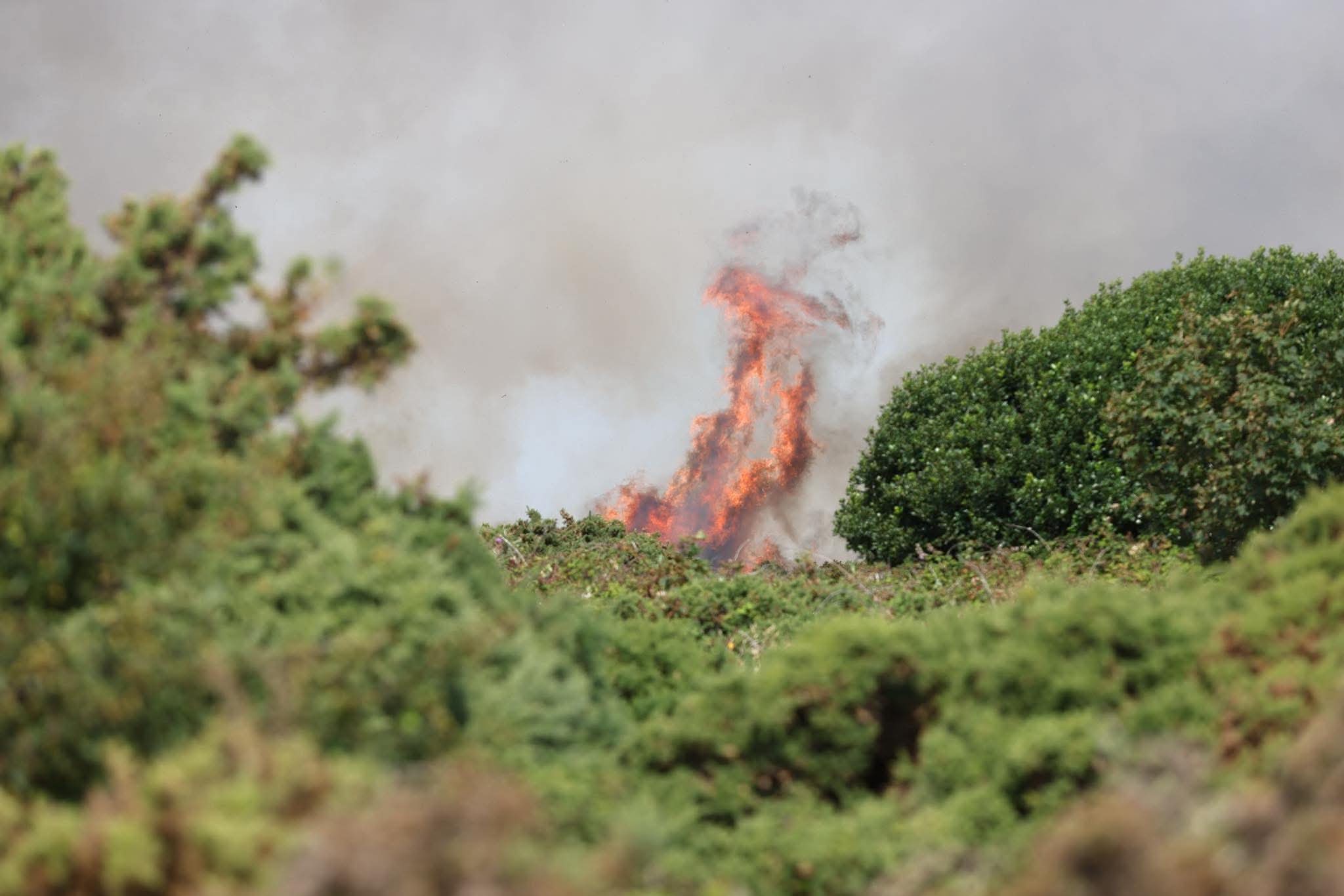
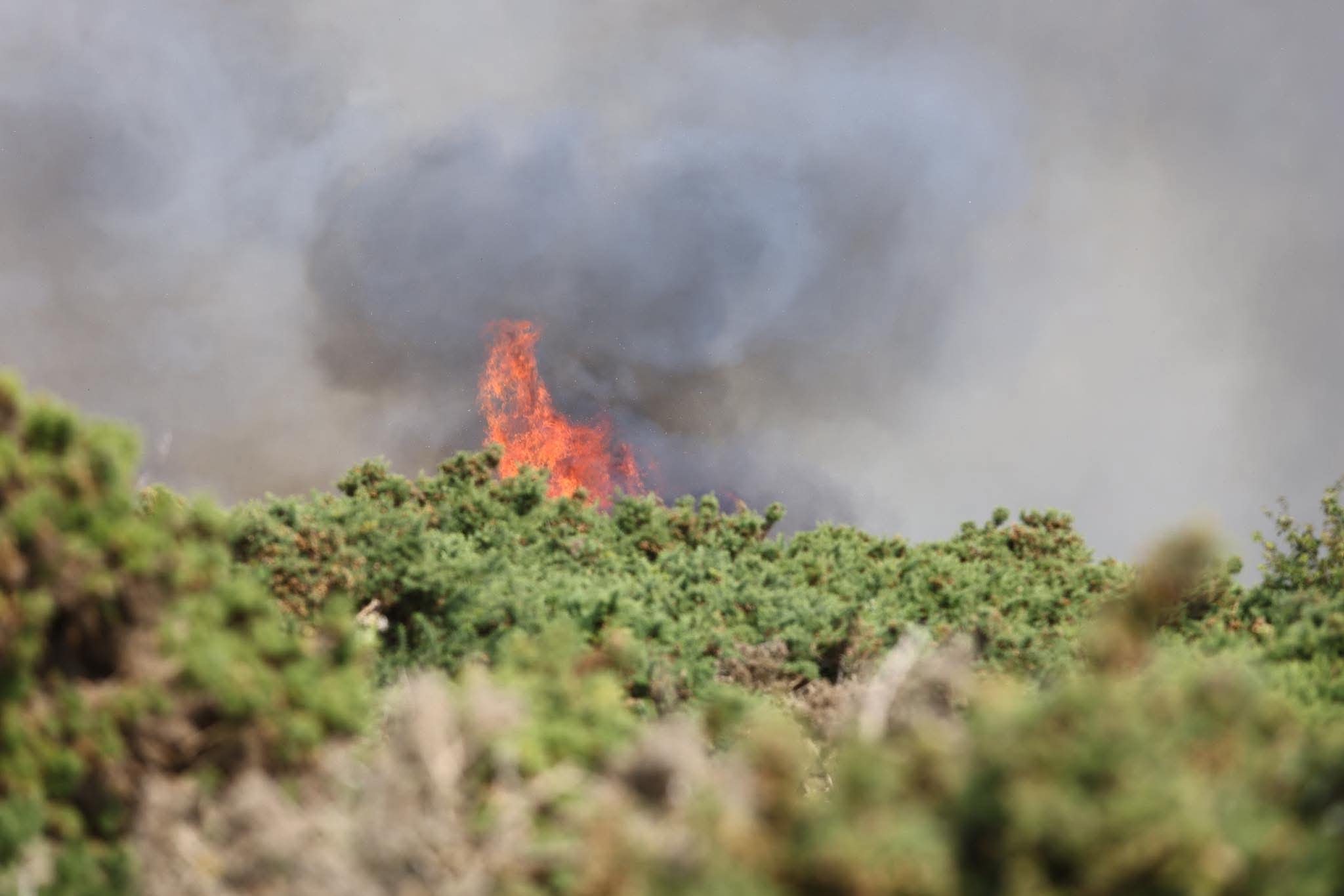
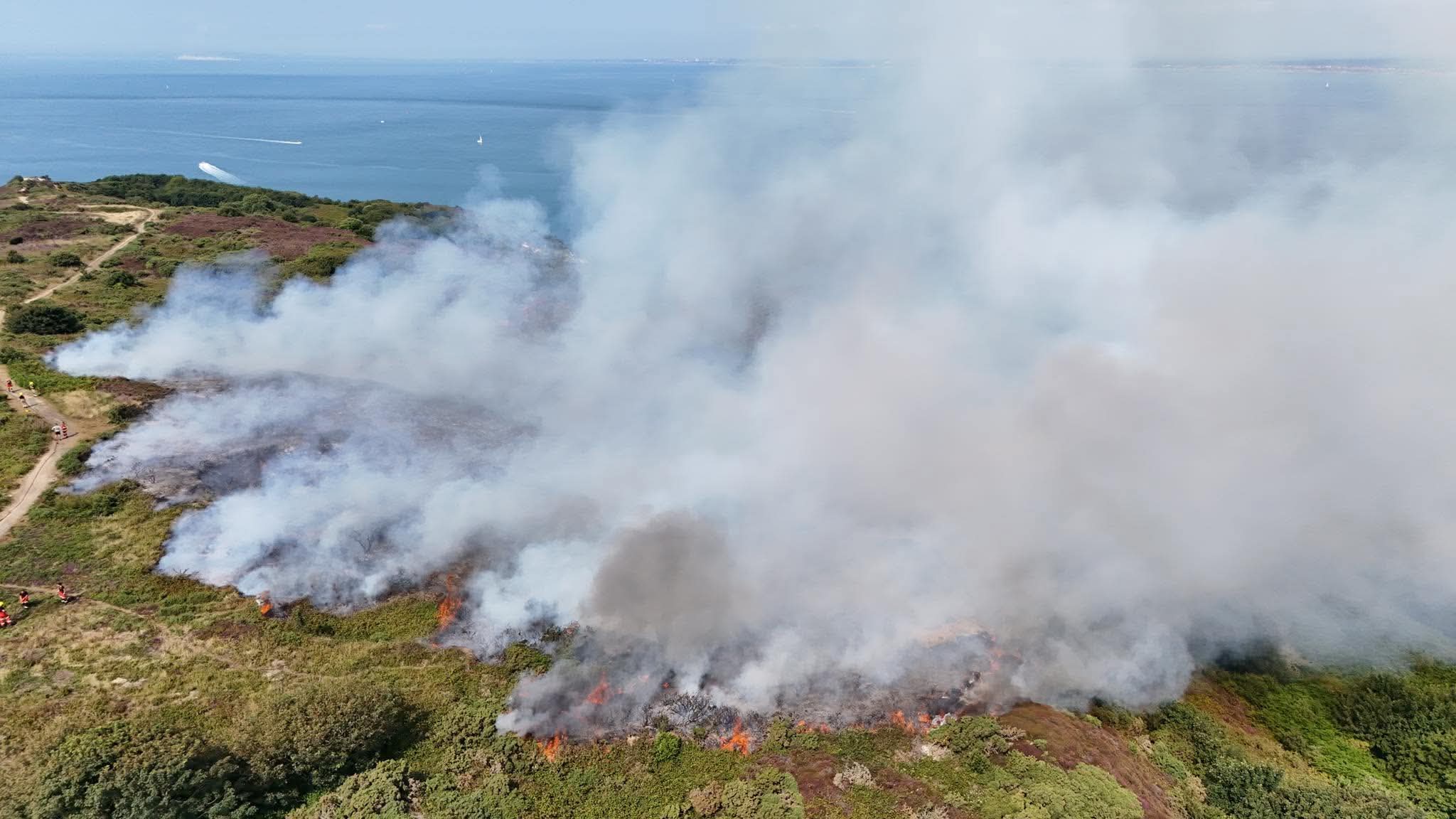
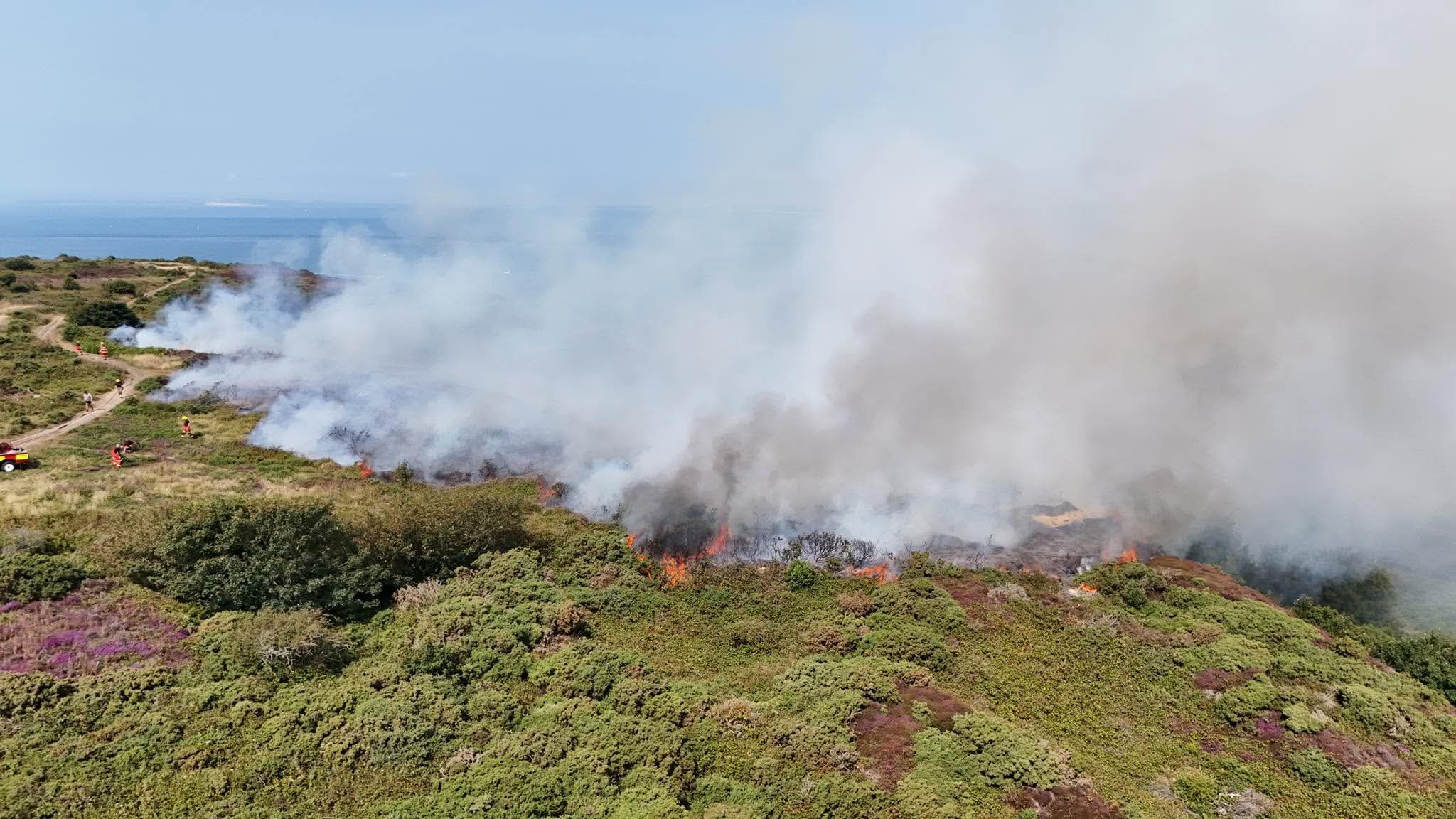
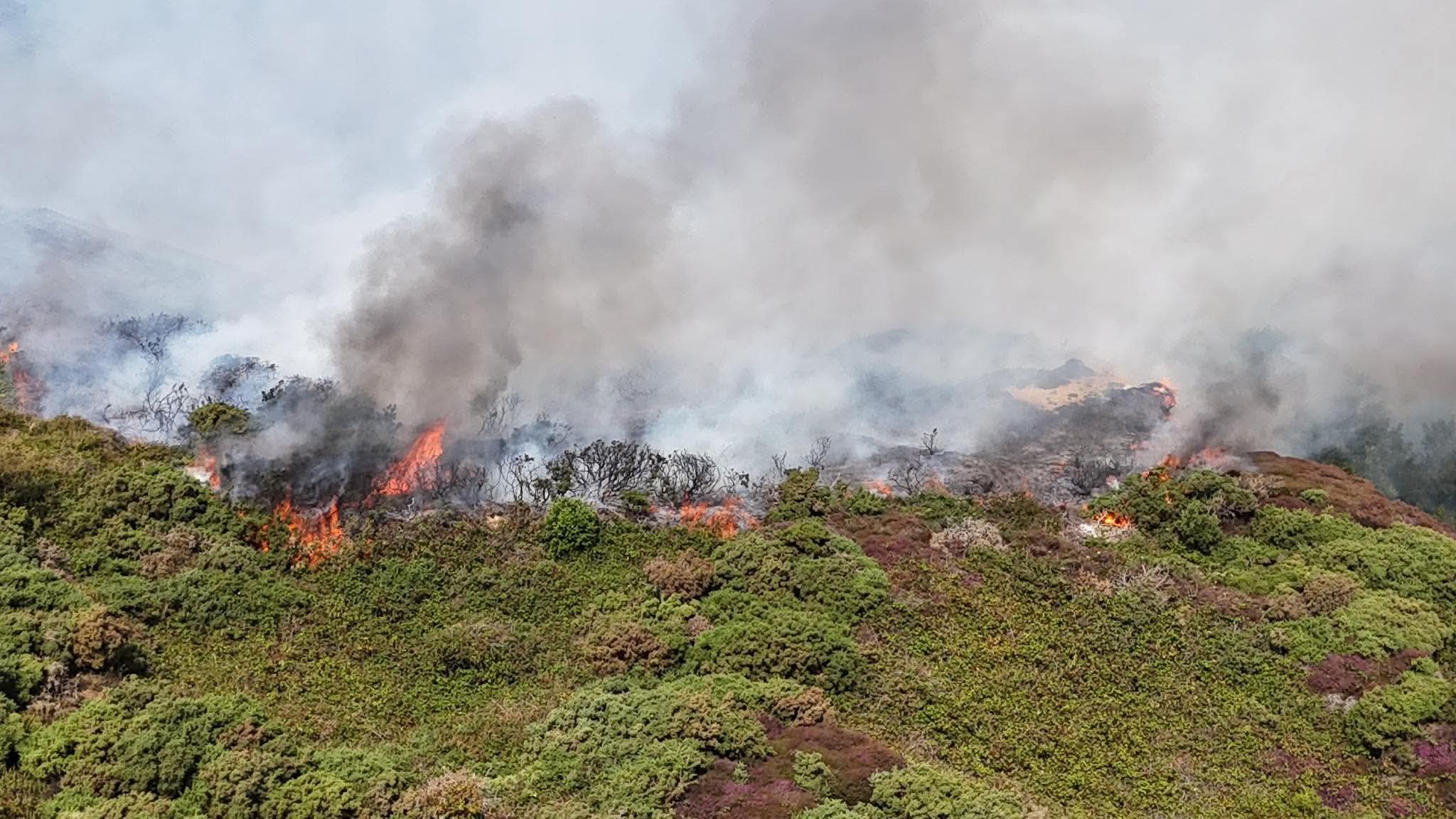
As first reported by Island Echo, it was at around 09:15 on Thursday 23rd July that crews from across the Isle of Wight were called to the West Wight beauty spot following reports of a rapidly-spreading gorse fire.


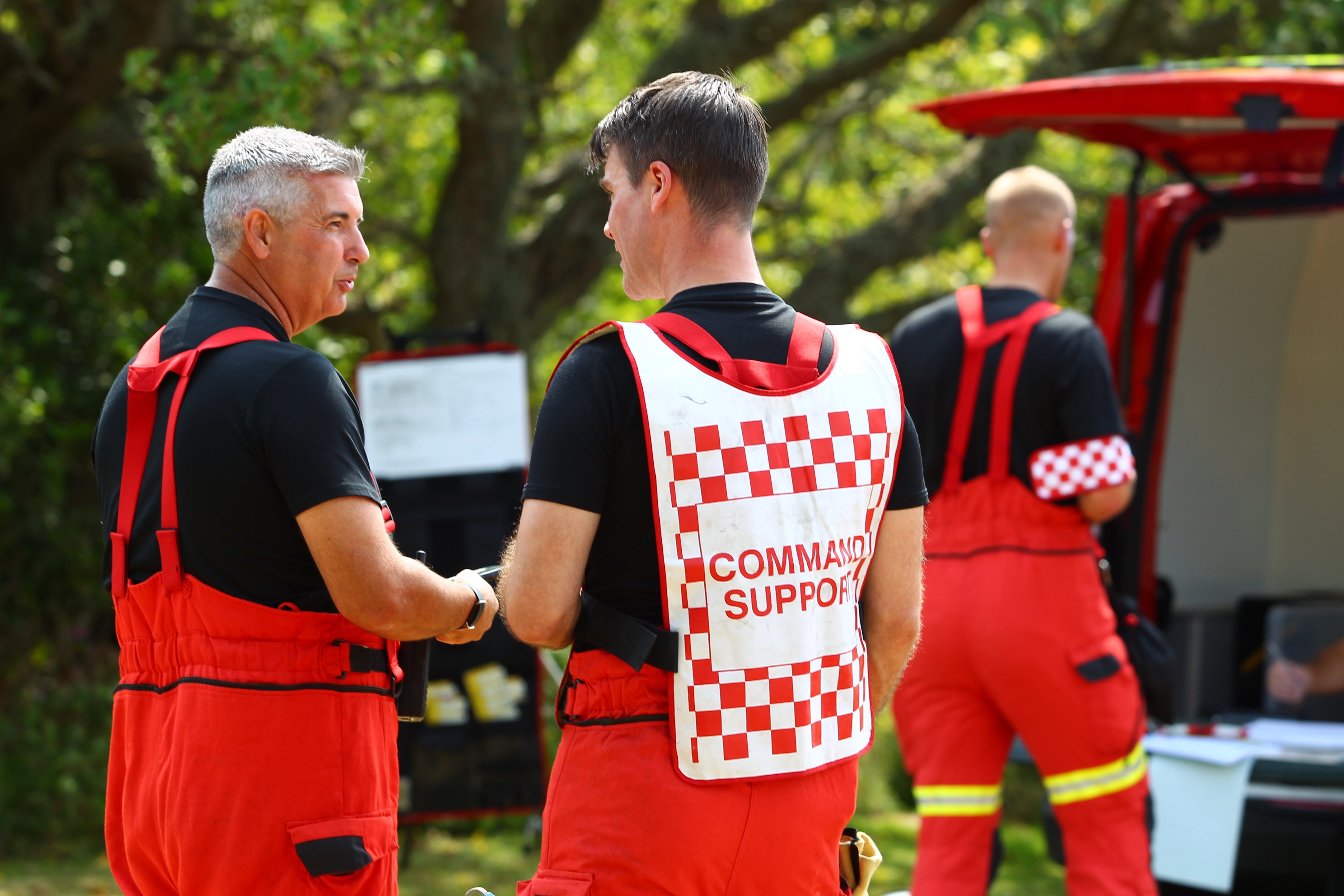
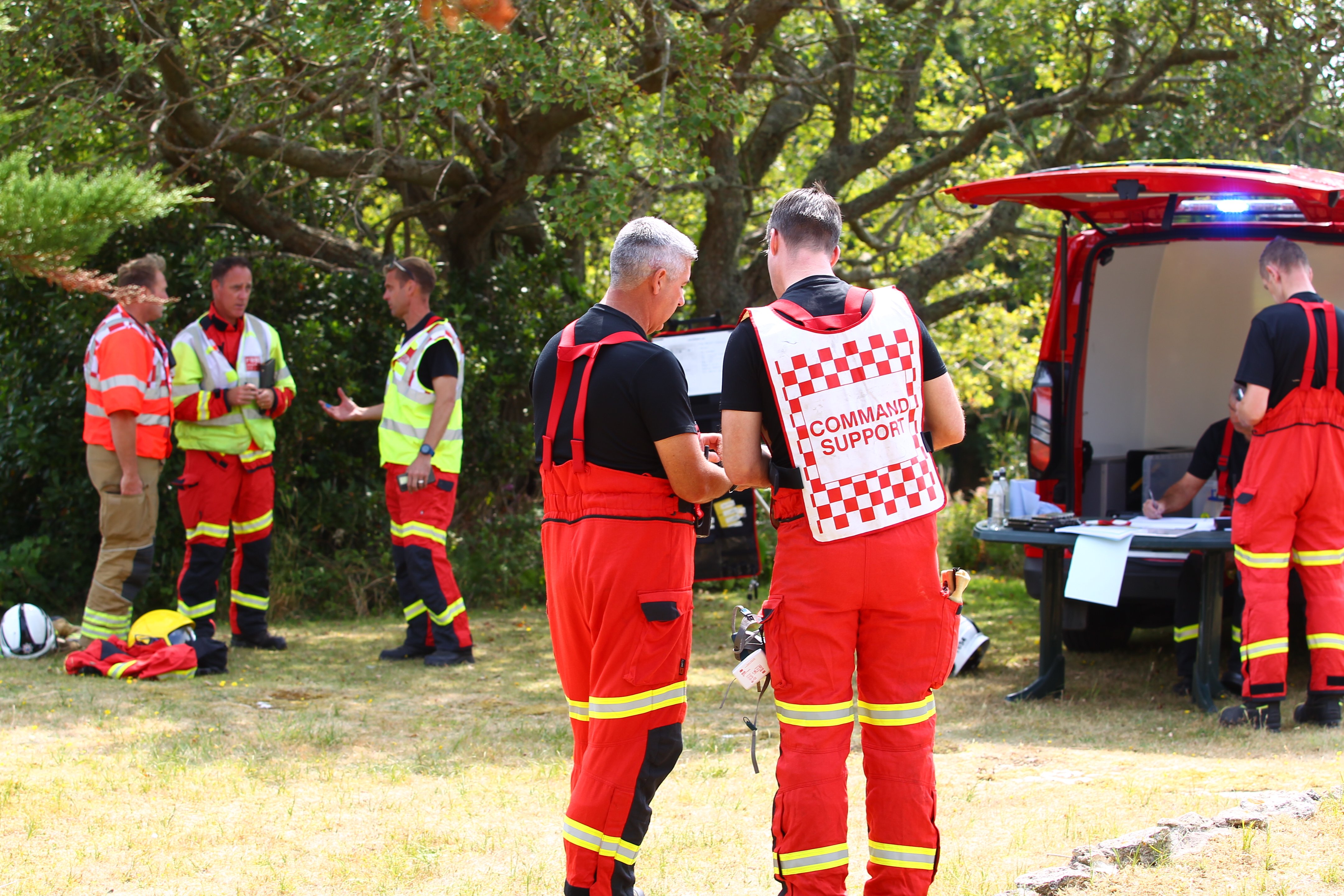
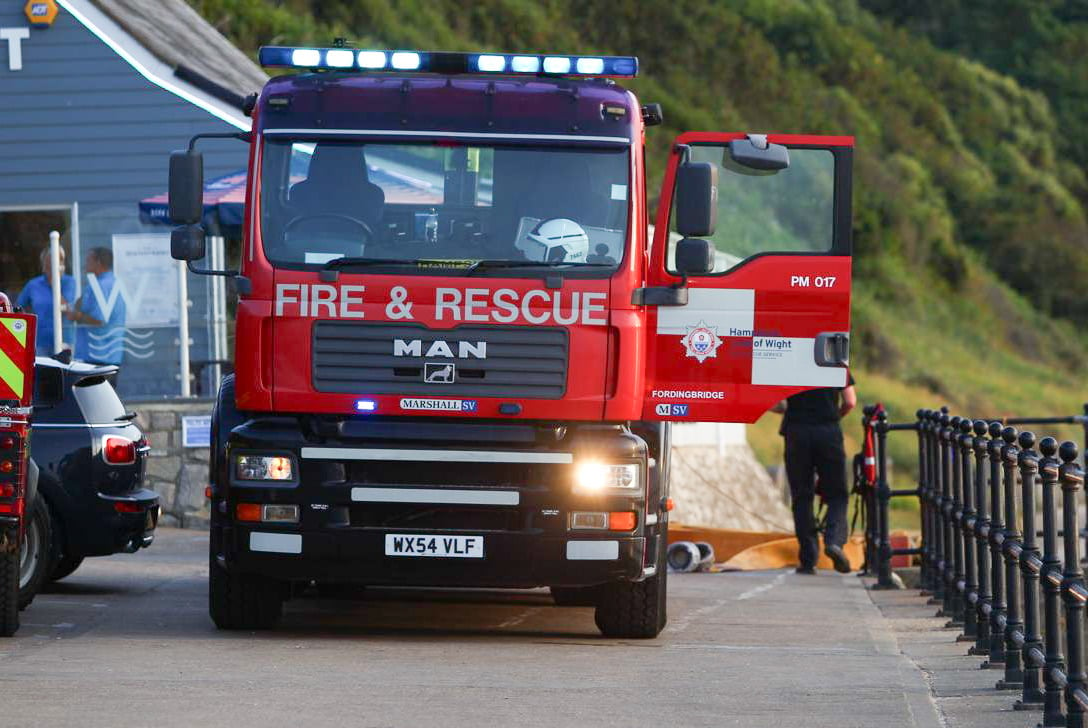
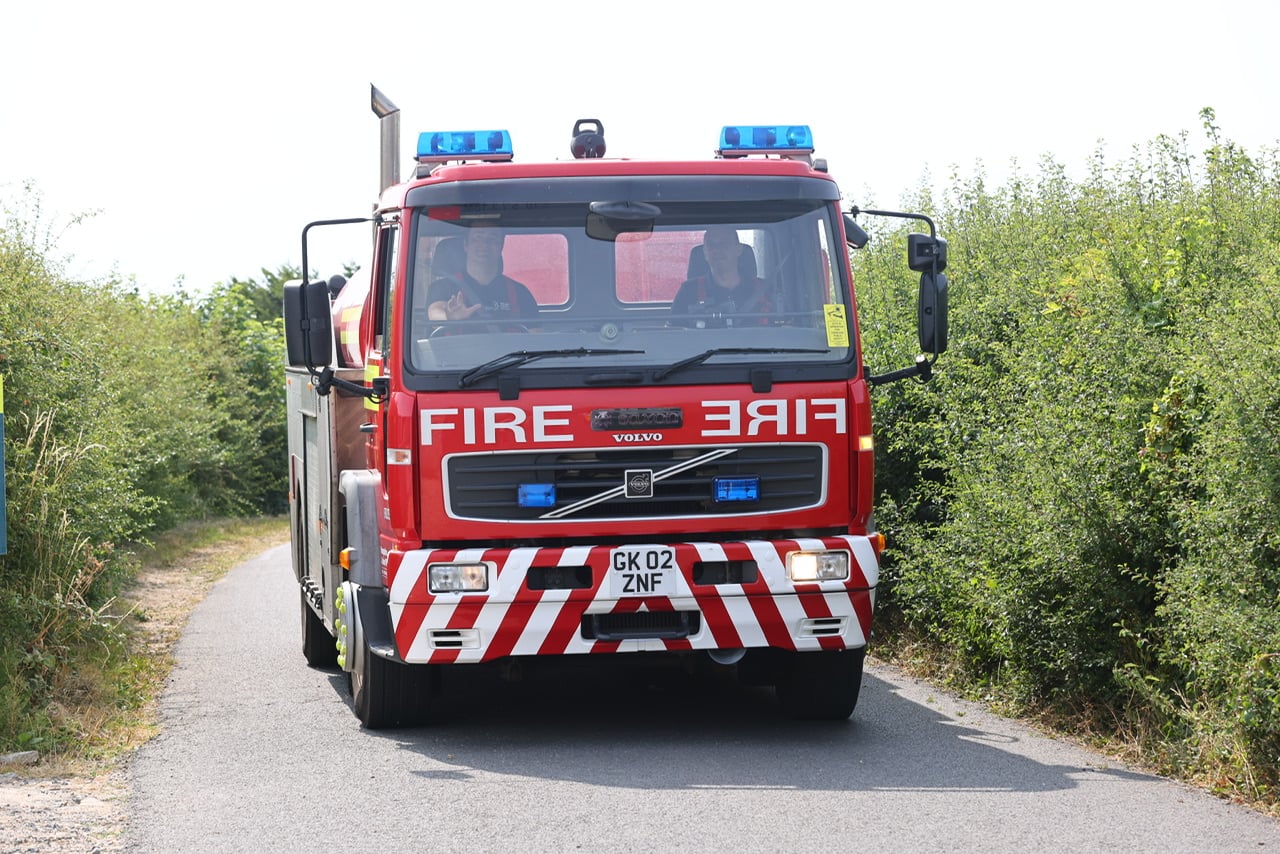
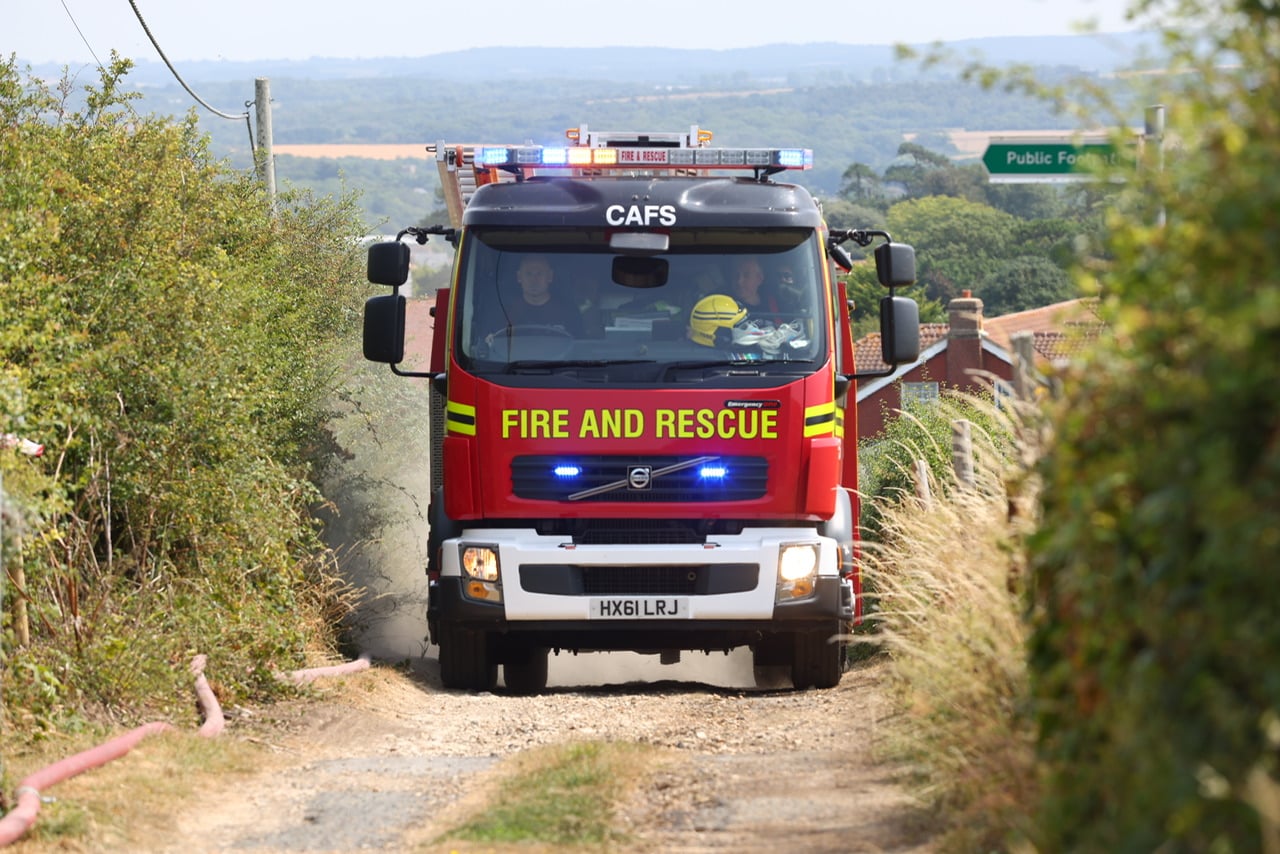
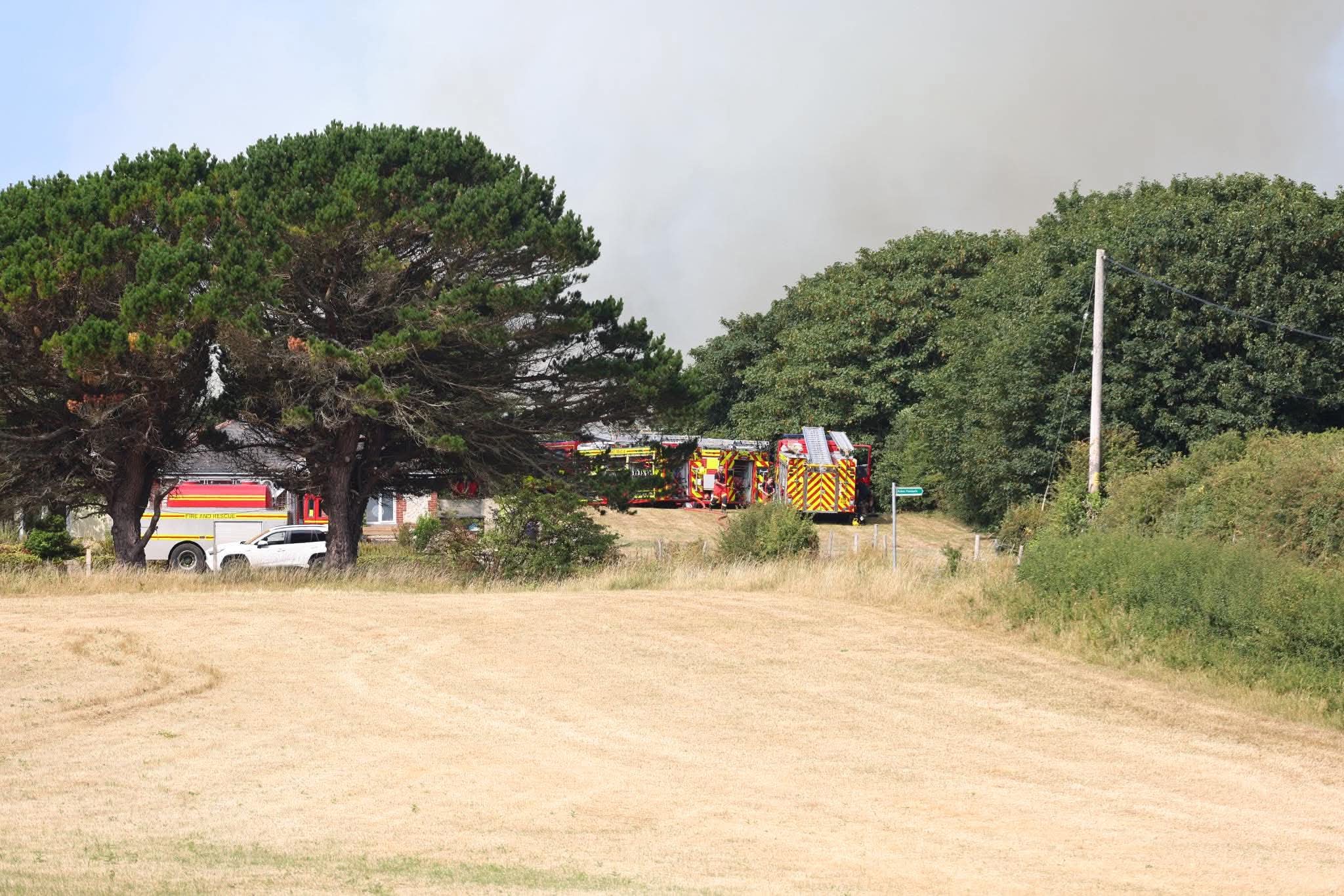
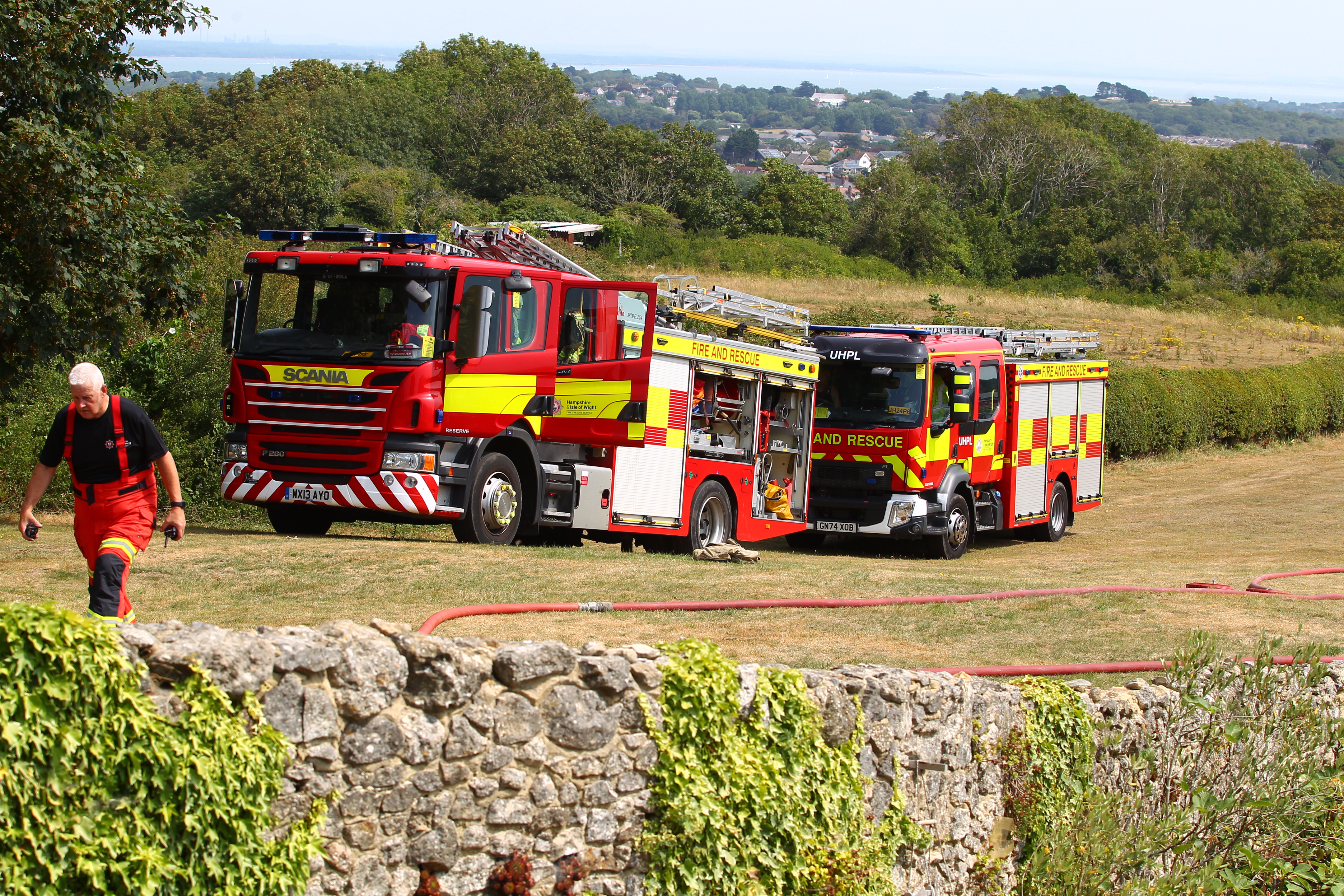
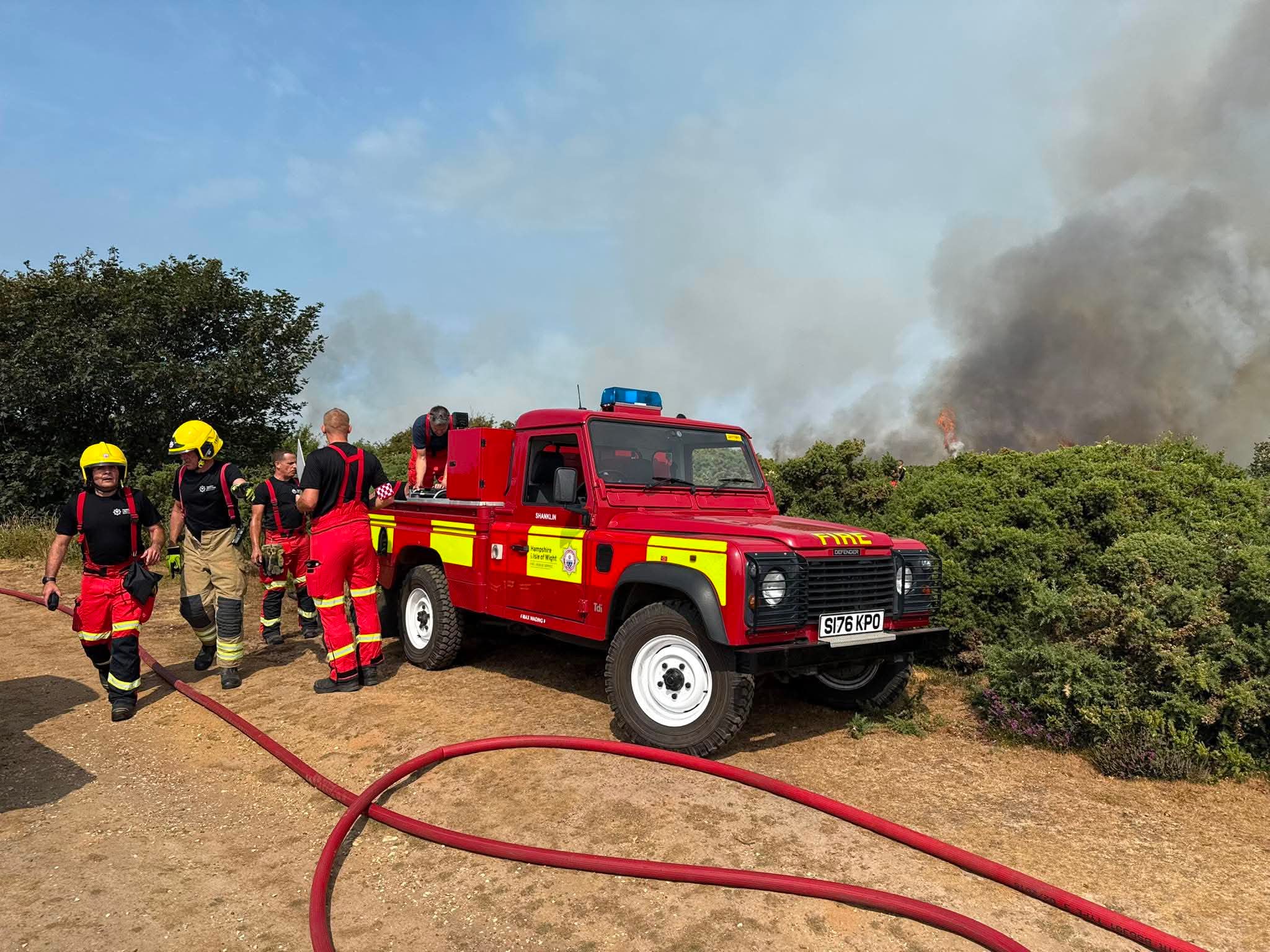
Since the initial call, Hampshire & Isle of Wight Fire and Rescue Service (HIWFRS) has maintained an around-the-clock presence at Headon Warren as crews initially worked to tackle what is thought to be one of the largest wildfires on the Isle of Wight in decades, before damping down and now keeping a watchful eye on the charred land.
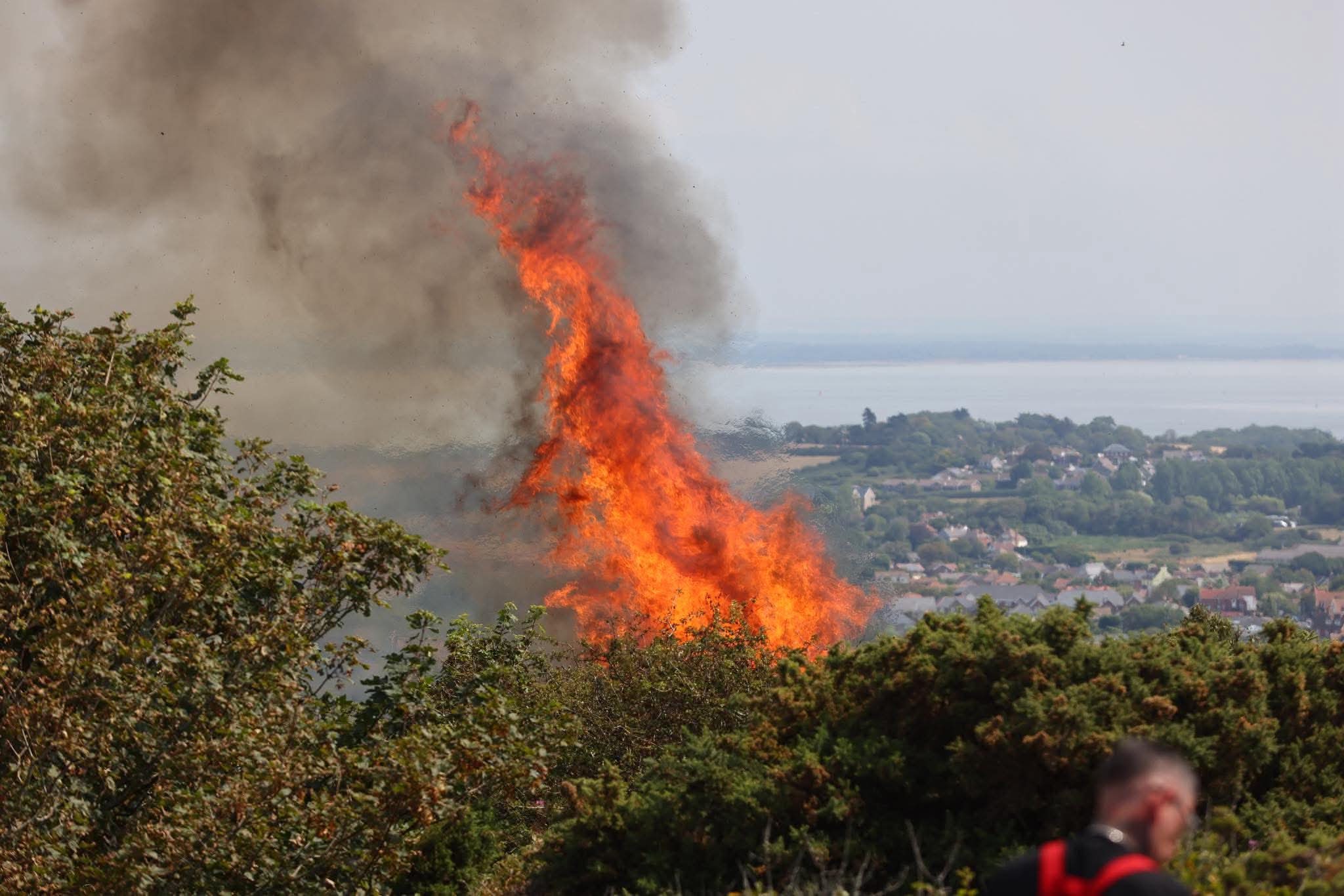
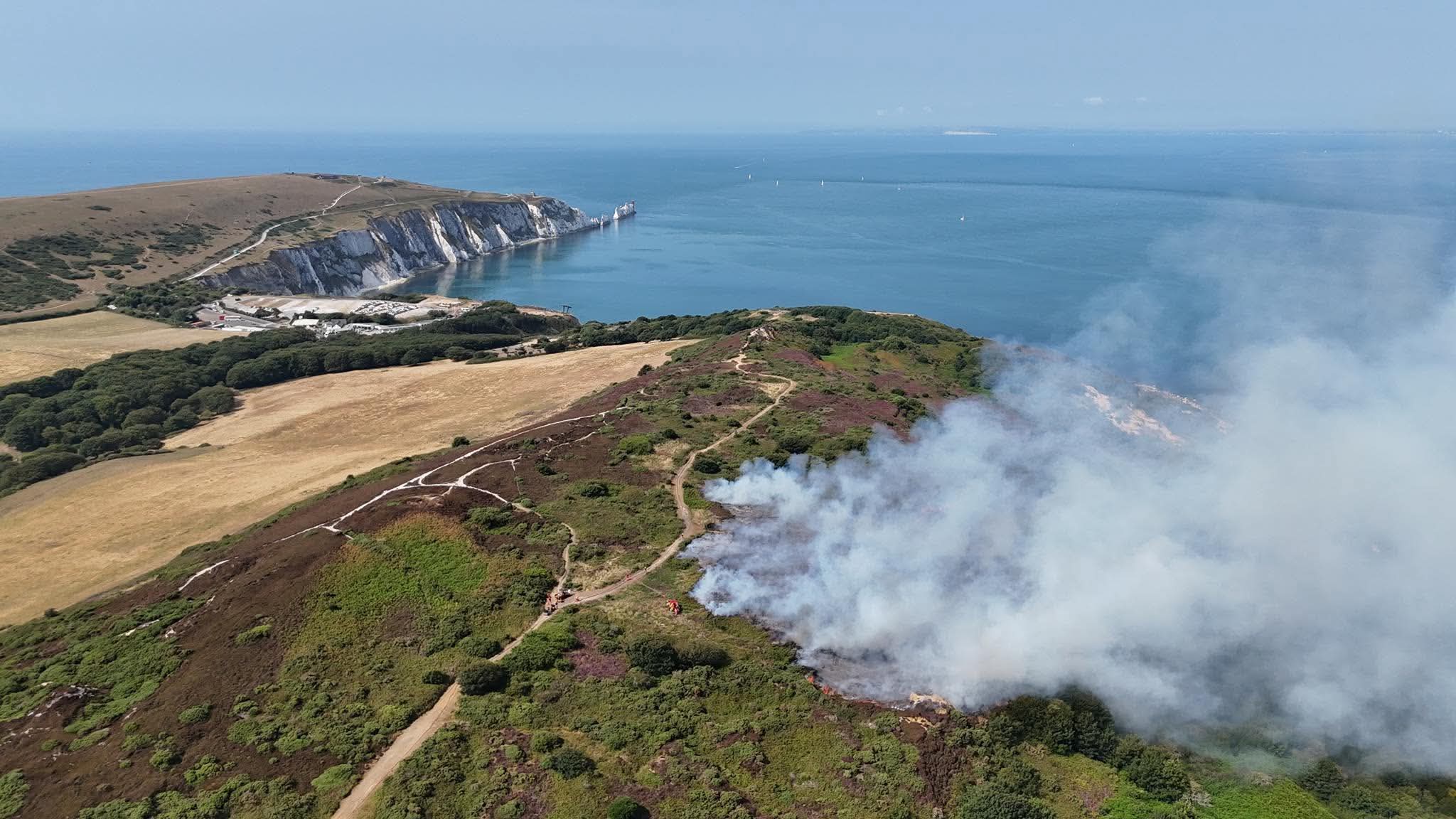
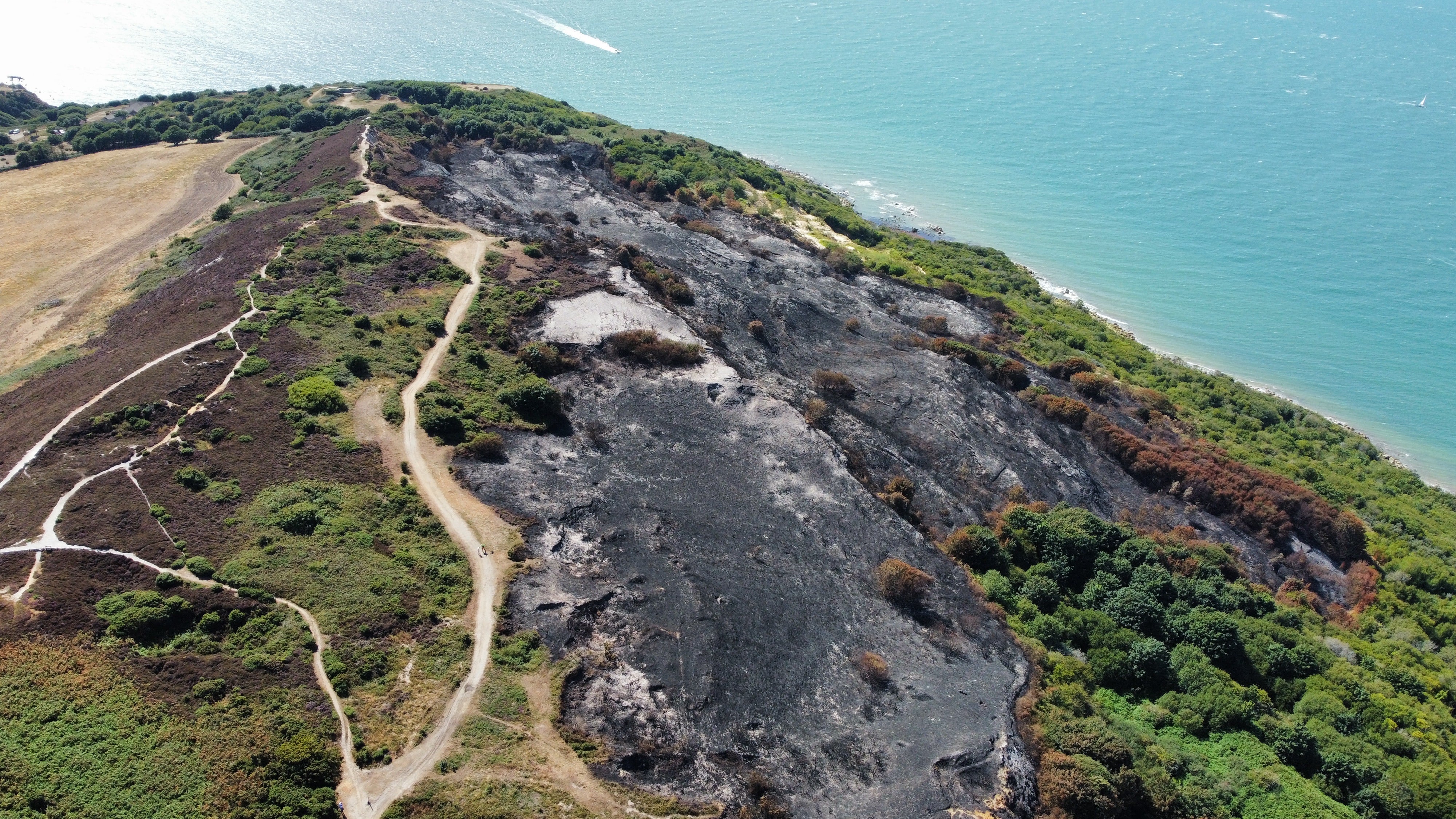
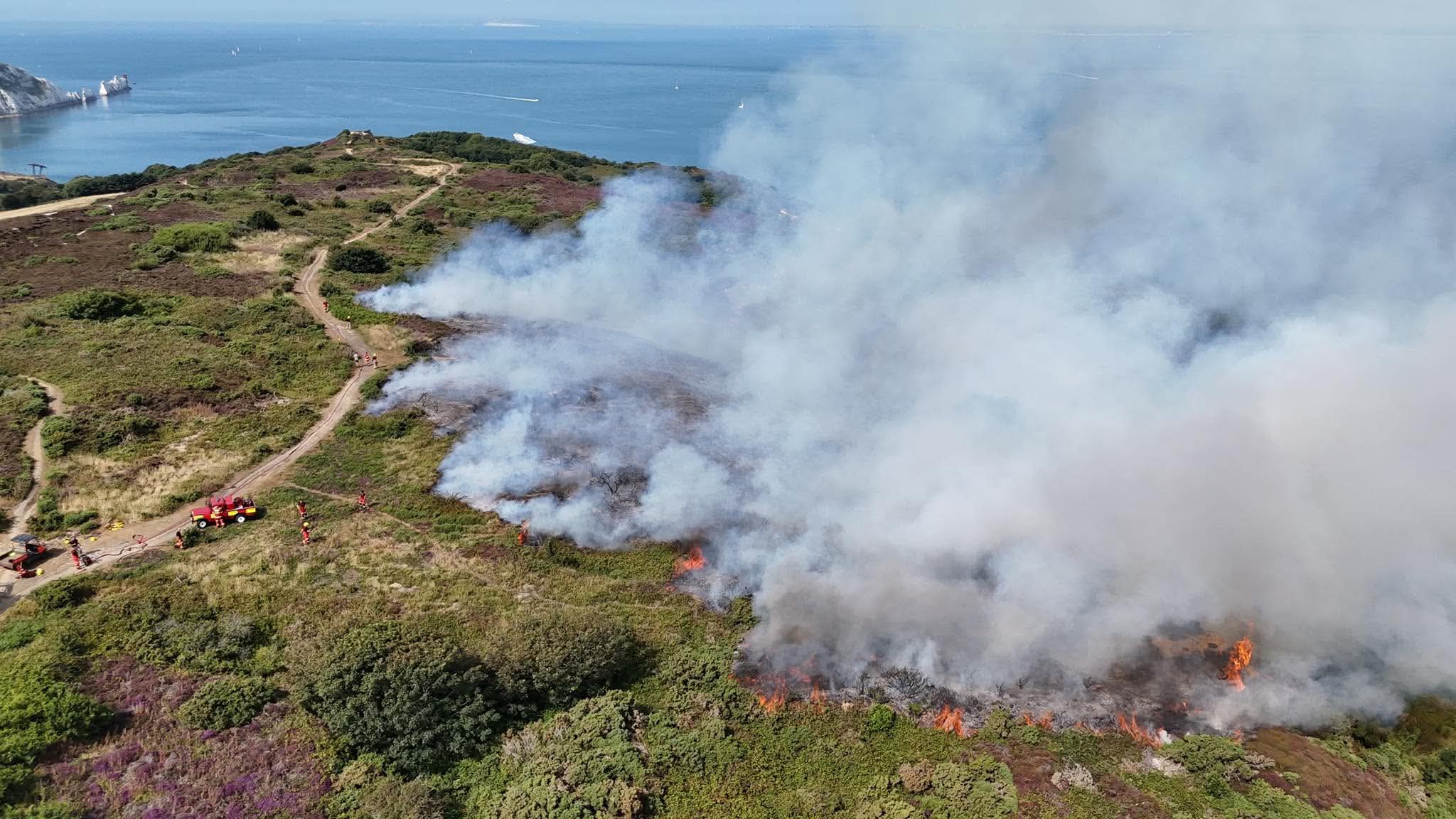
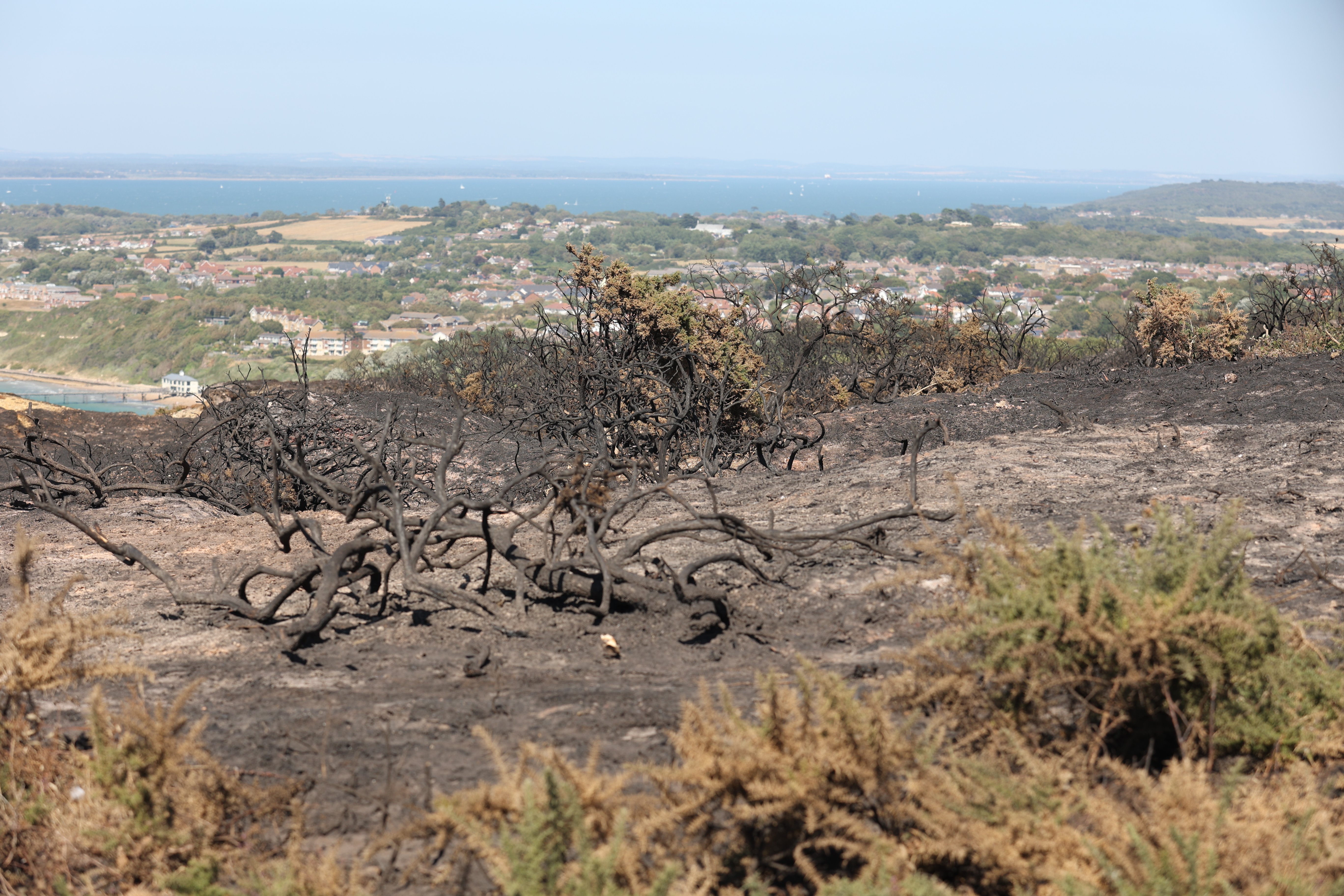
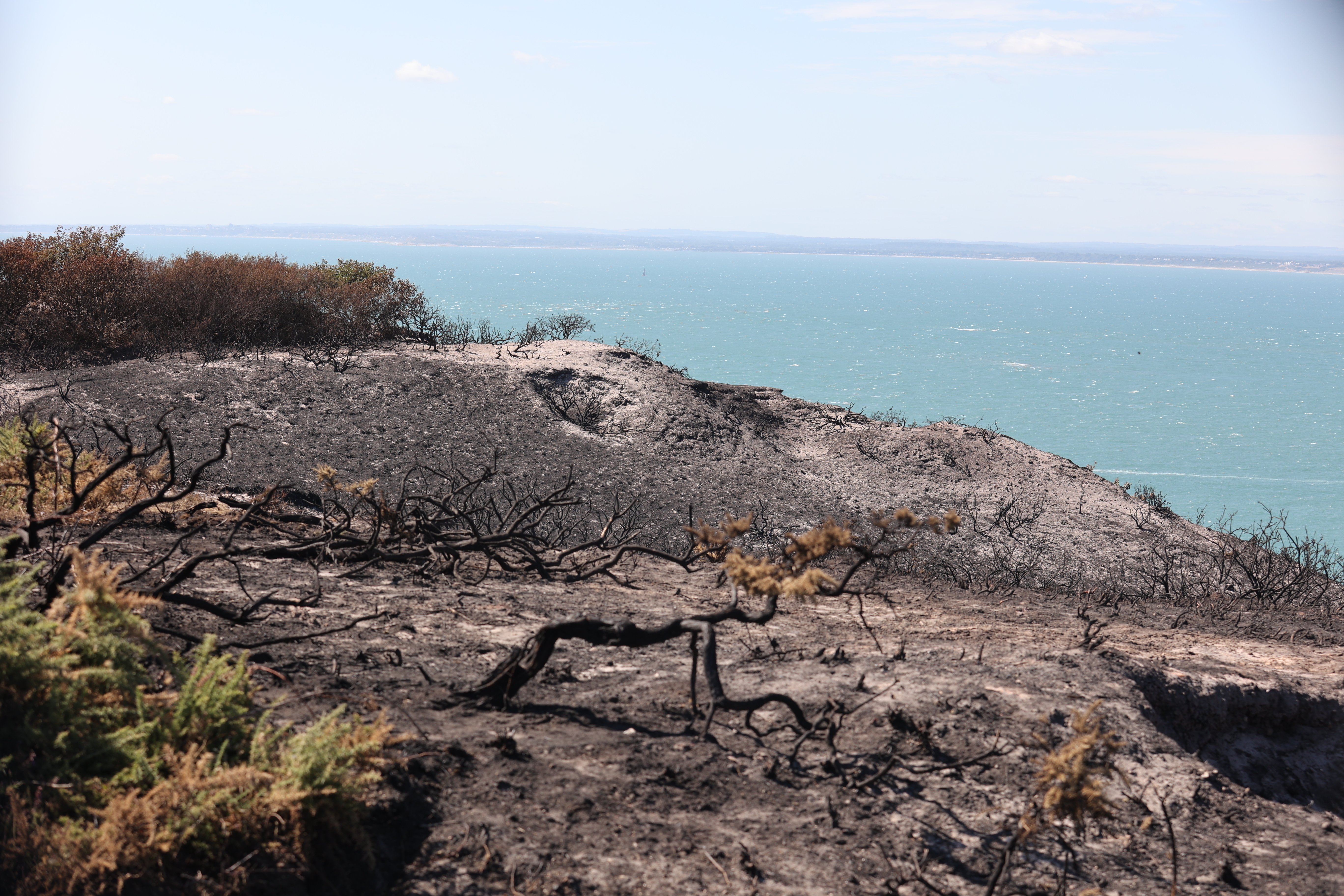
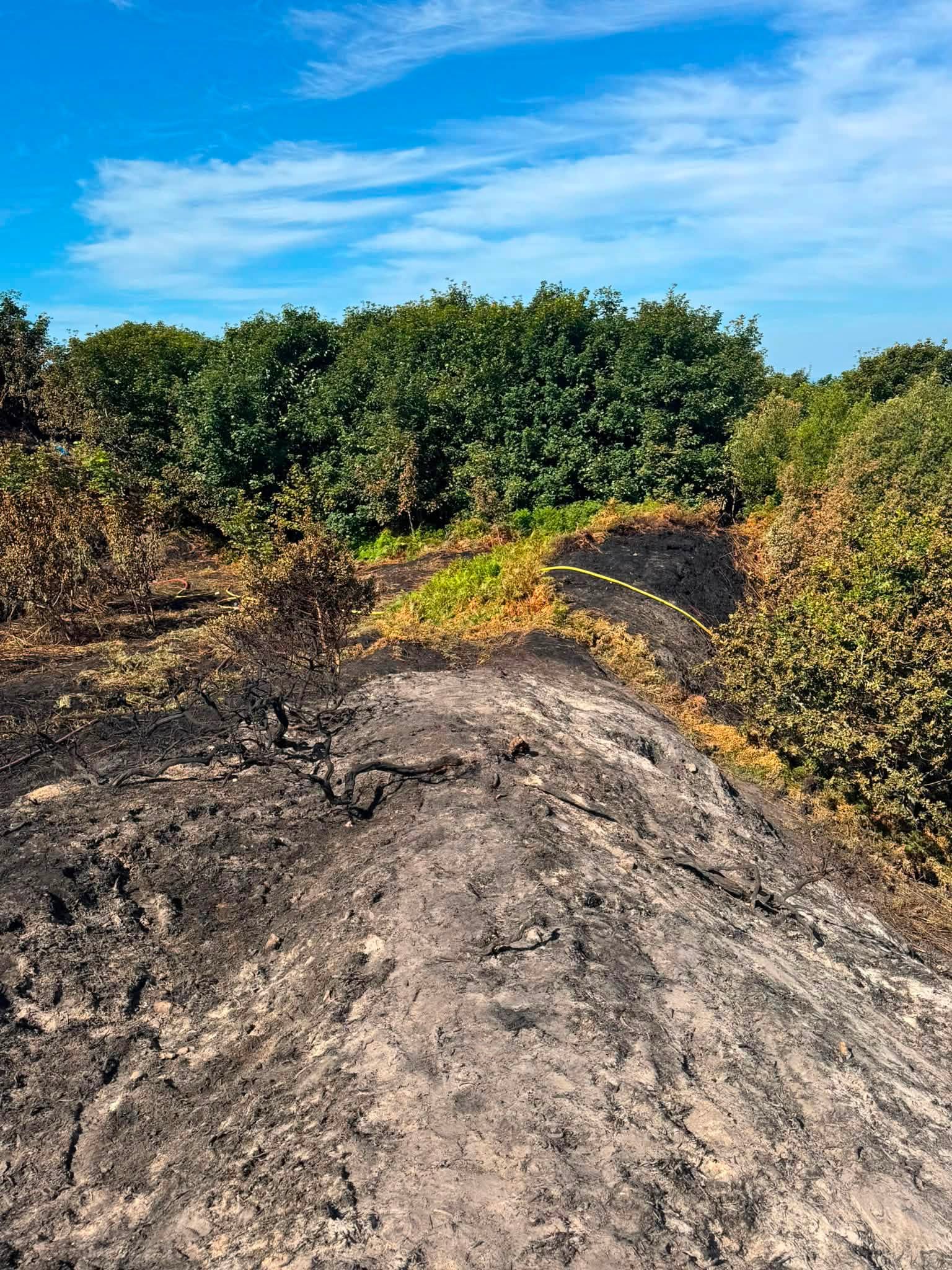
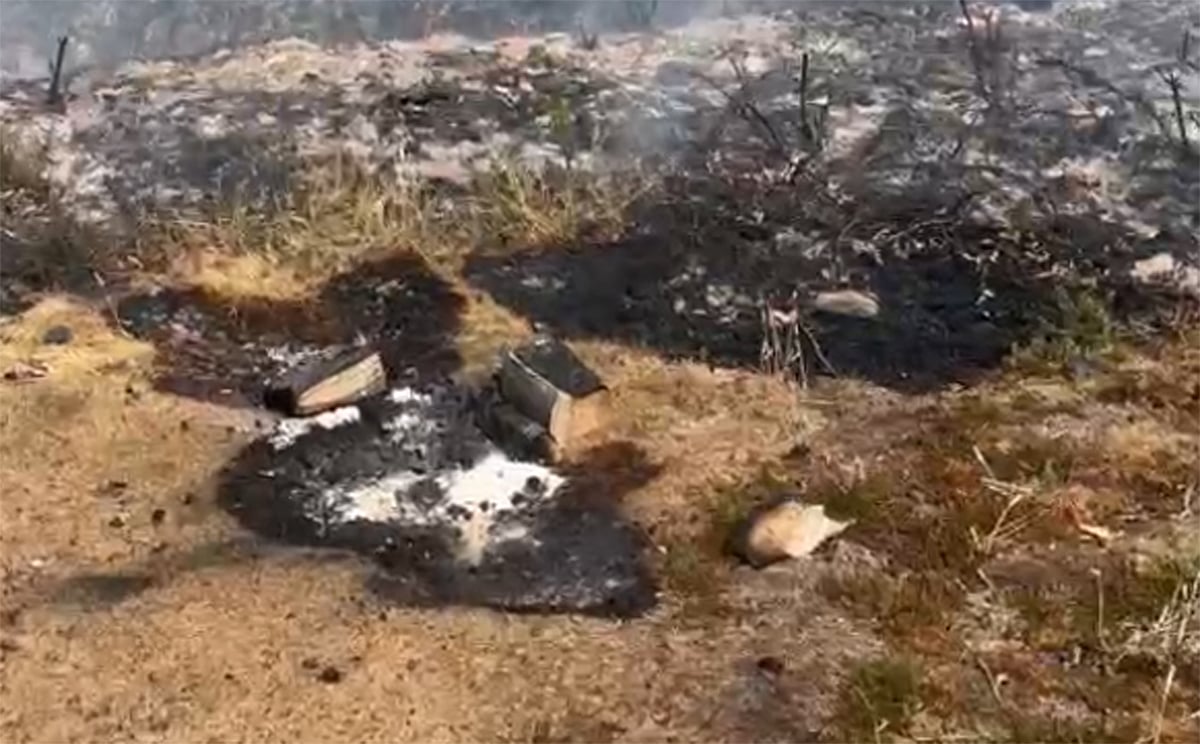
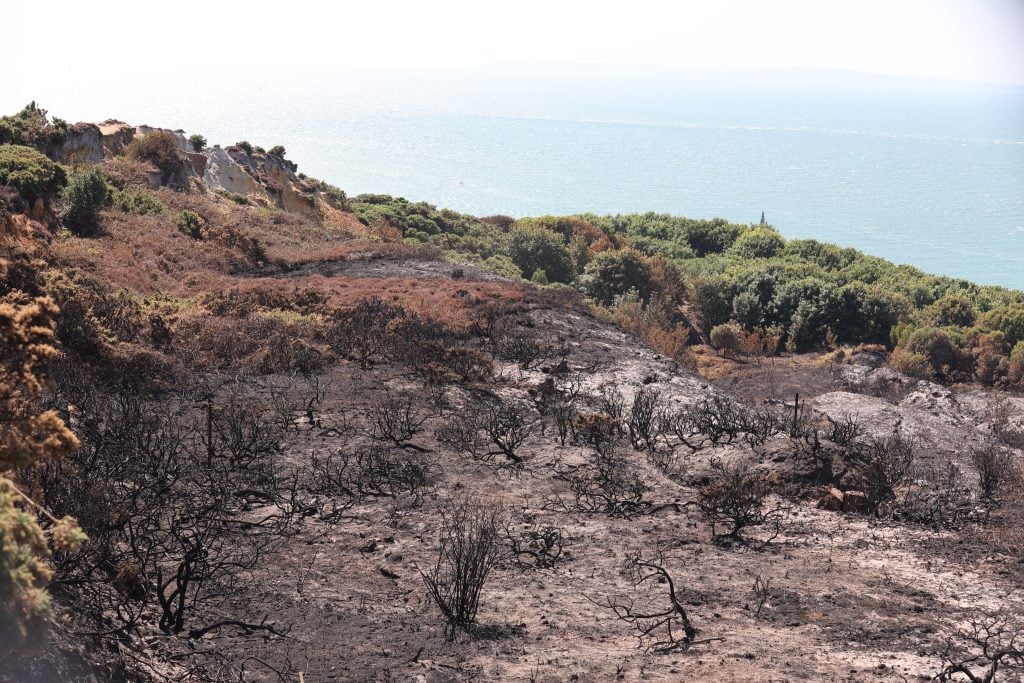
After yesterday’s (Monday’s) announcement that the fire had been officially extinguished and the stop message relayed, it was confirmed that the blaze destroyed around 22 acres of nationally important heathland overlooking The Needles landmark.
Headon Warren, a part of a Site of Special Scientific Interest (SSSI), is owned by the National Trust and managed in partnership with Warren Farm. The area is home to several species of plants and wildlife including: adders, slowworms, lizards, nightjars and Dartford warblers – a species that was close to extinction just a few years ago.
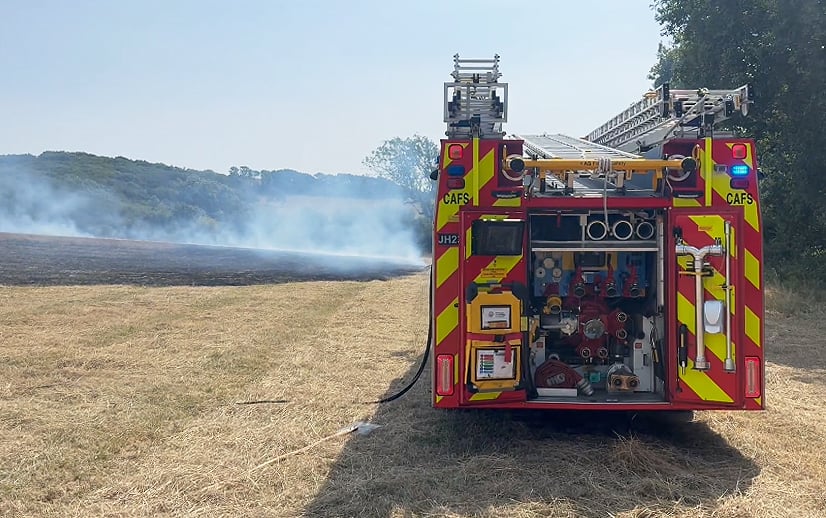
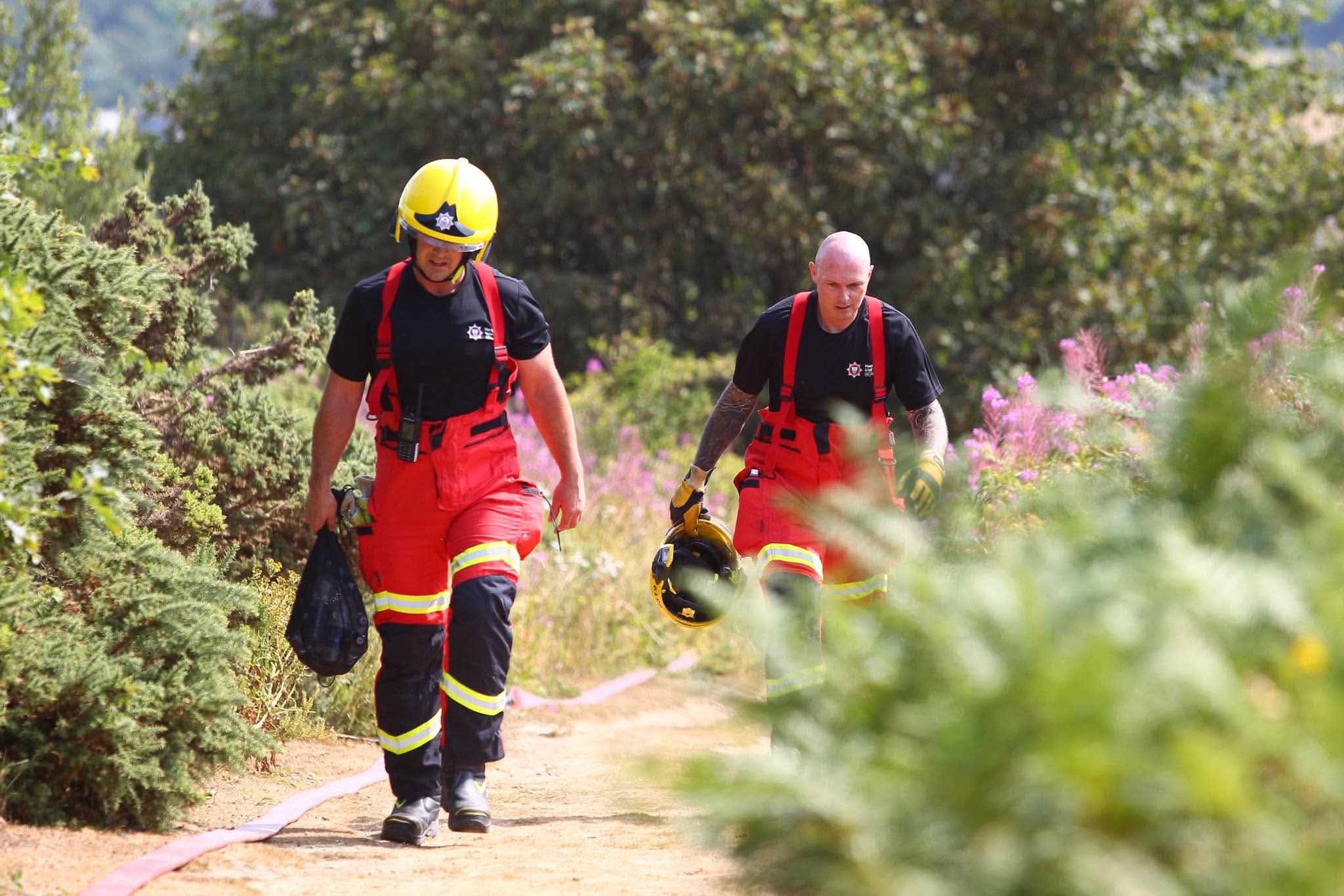
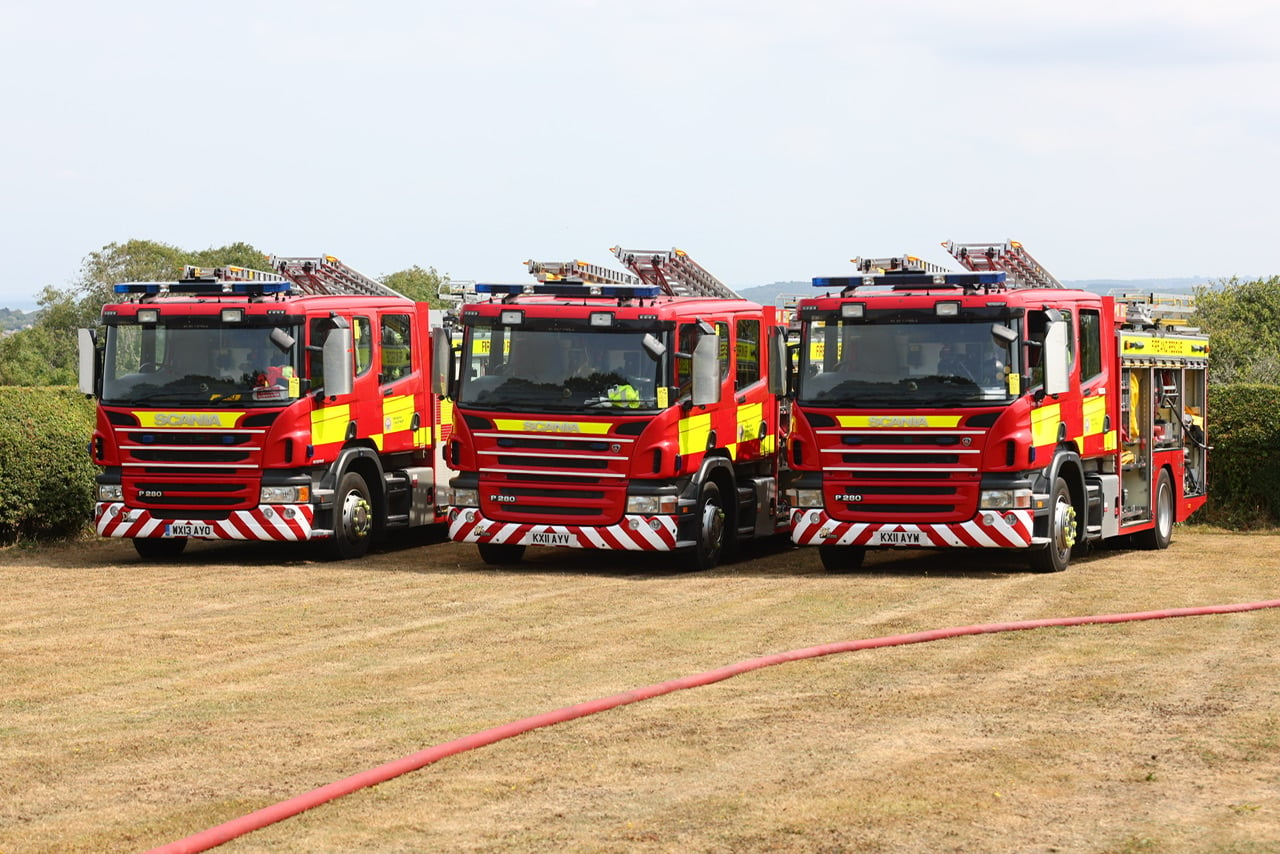
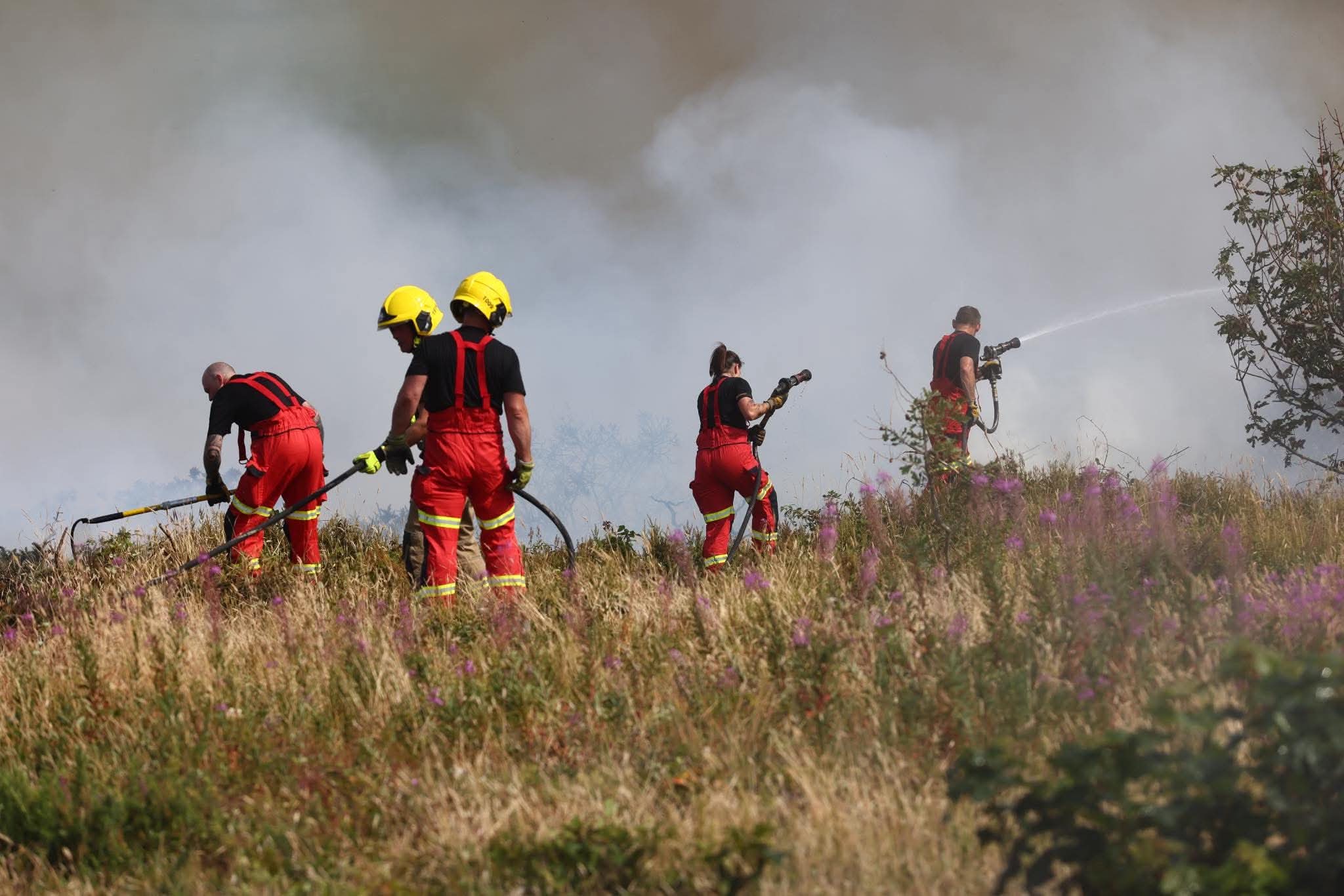
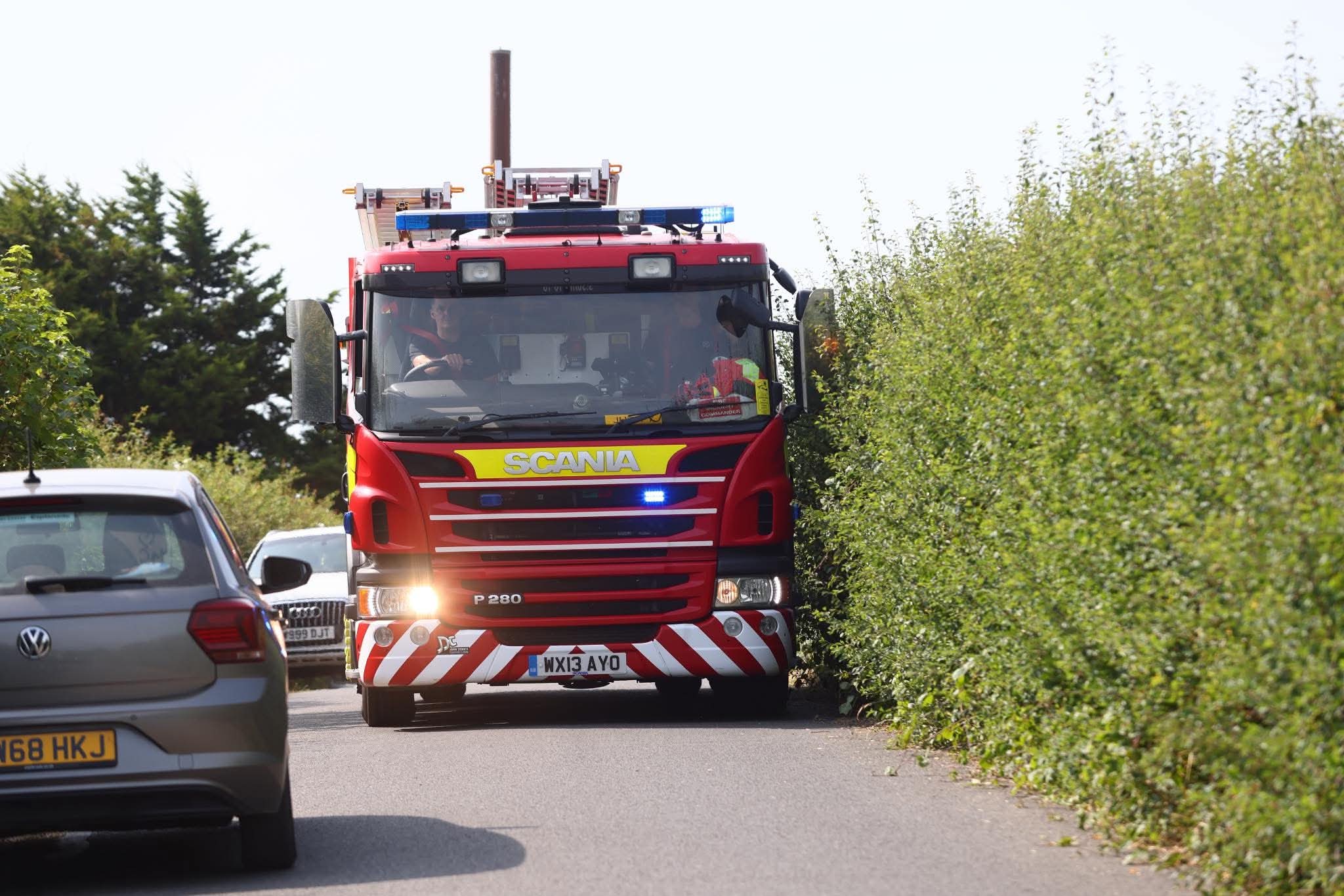
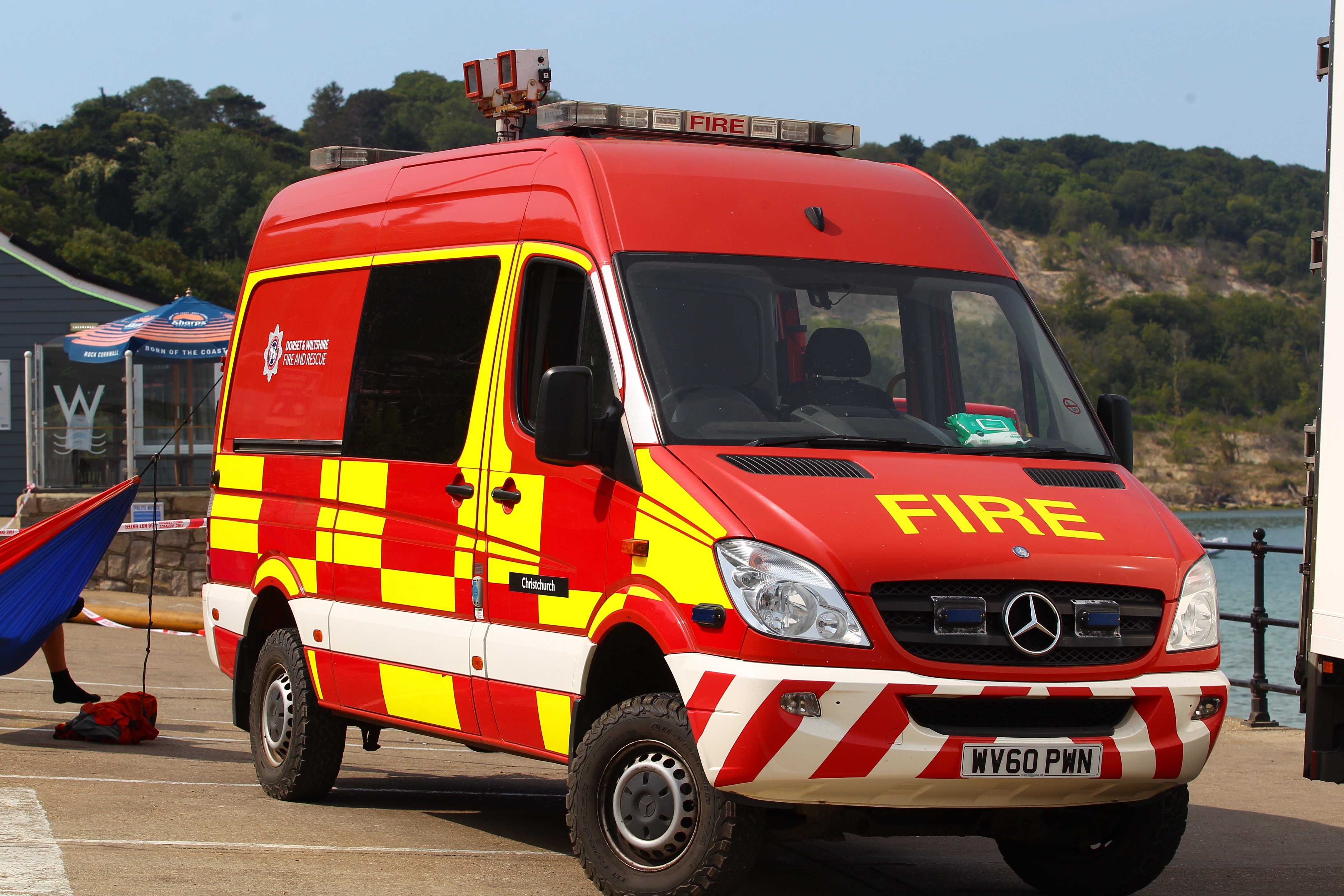
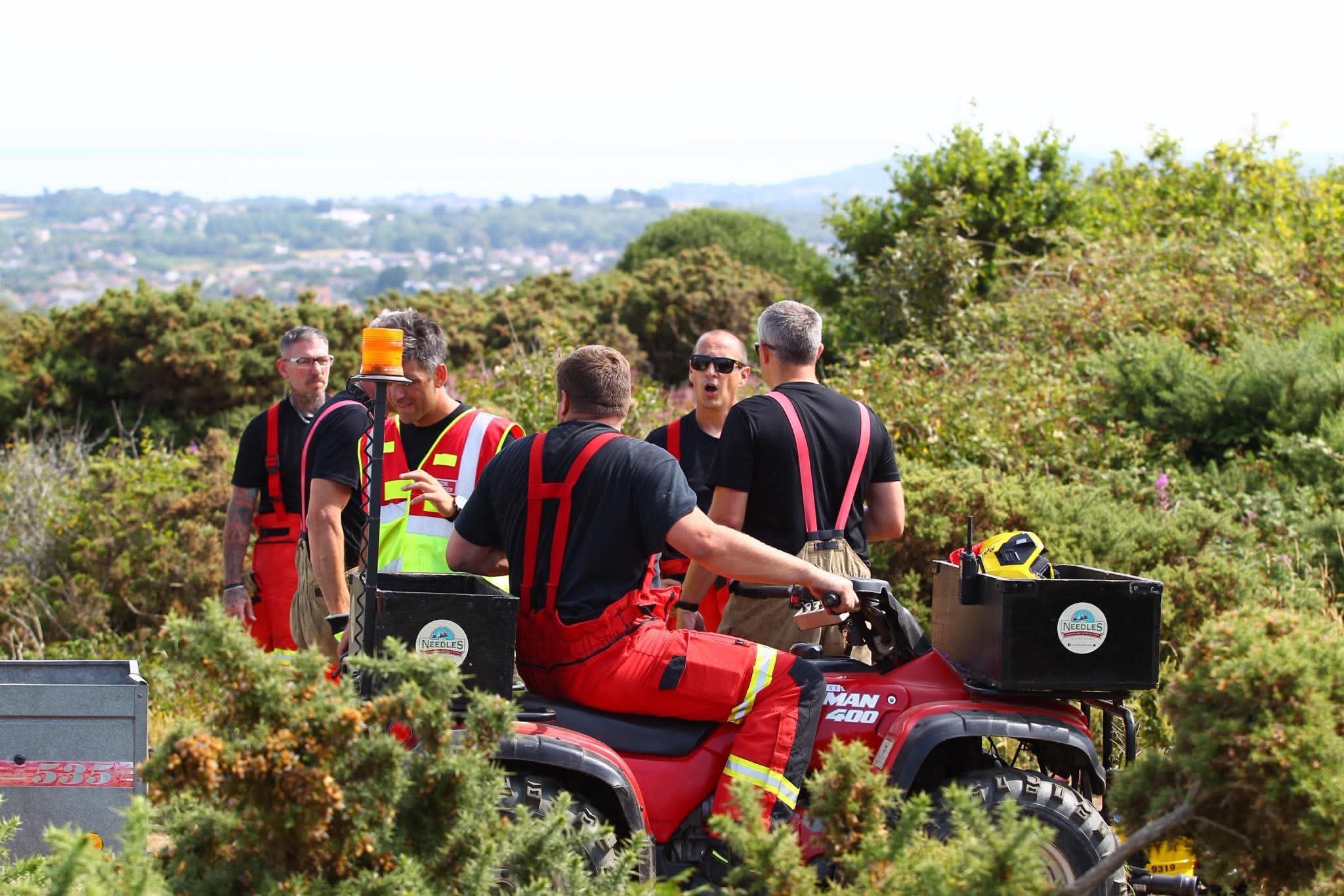
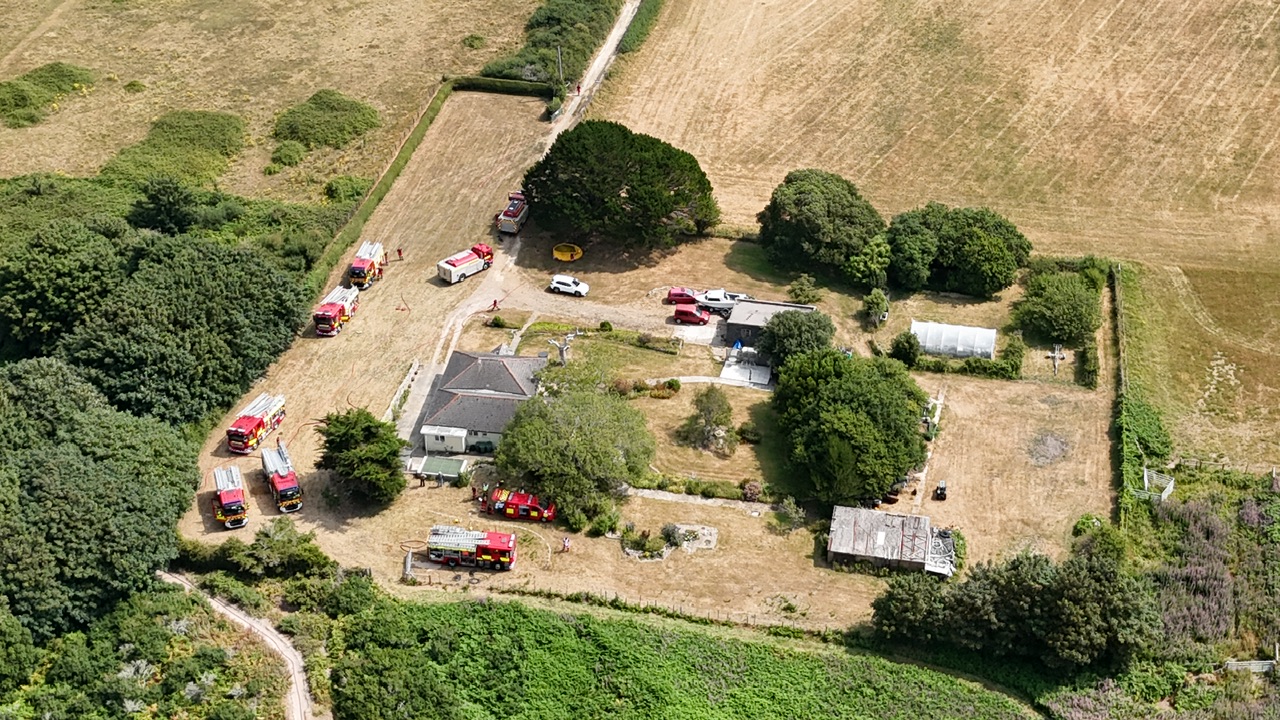
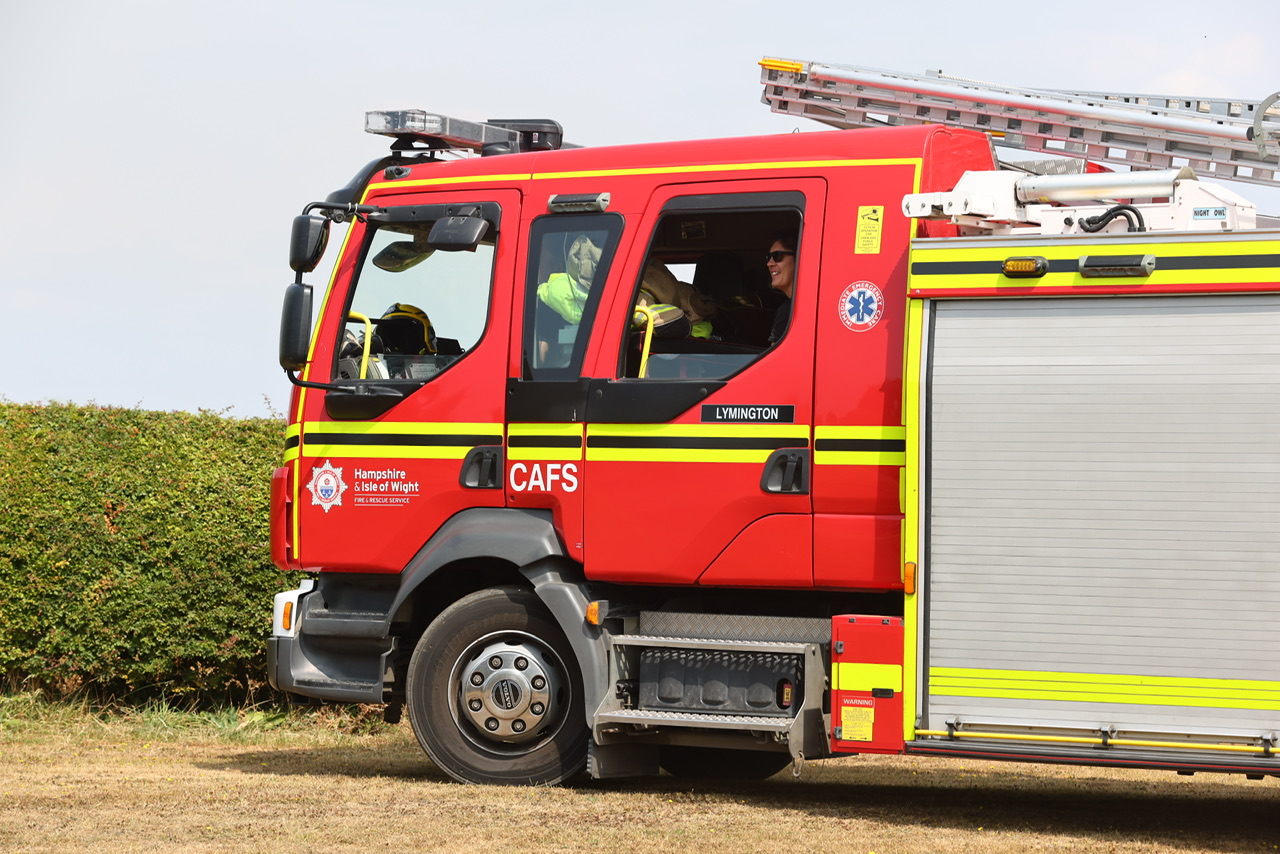
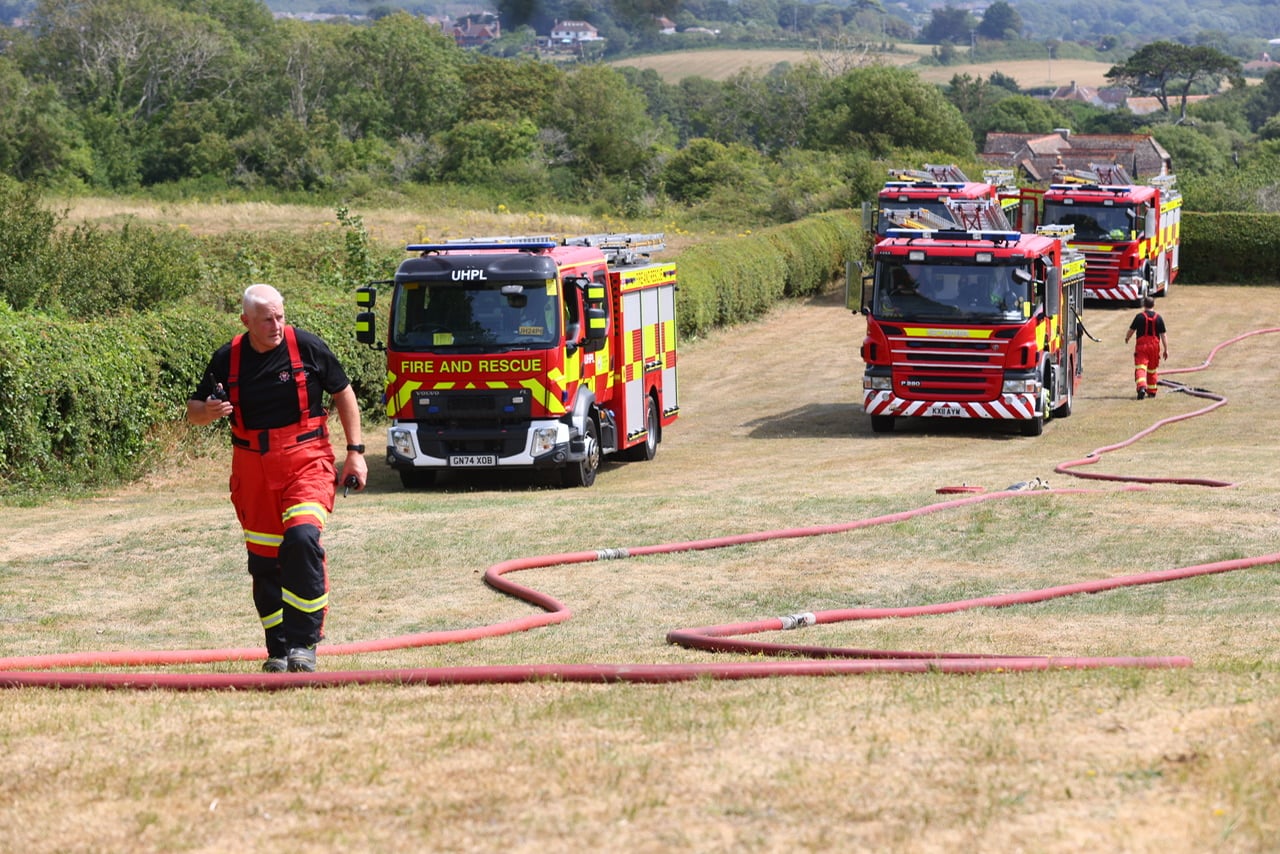
Protecting this vibrant area of countryside was of utmost importance, with around 80 firefighters on scene at the height of the incident. Crews from Devon & Somerset, Dorset & Wiltshire, West Sussex and Avon were drafted in to assist the Isle of Wight crews who were first to respond, alongside Hampshire-based colleagues.
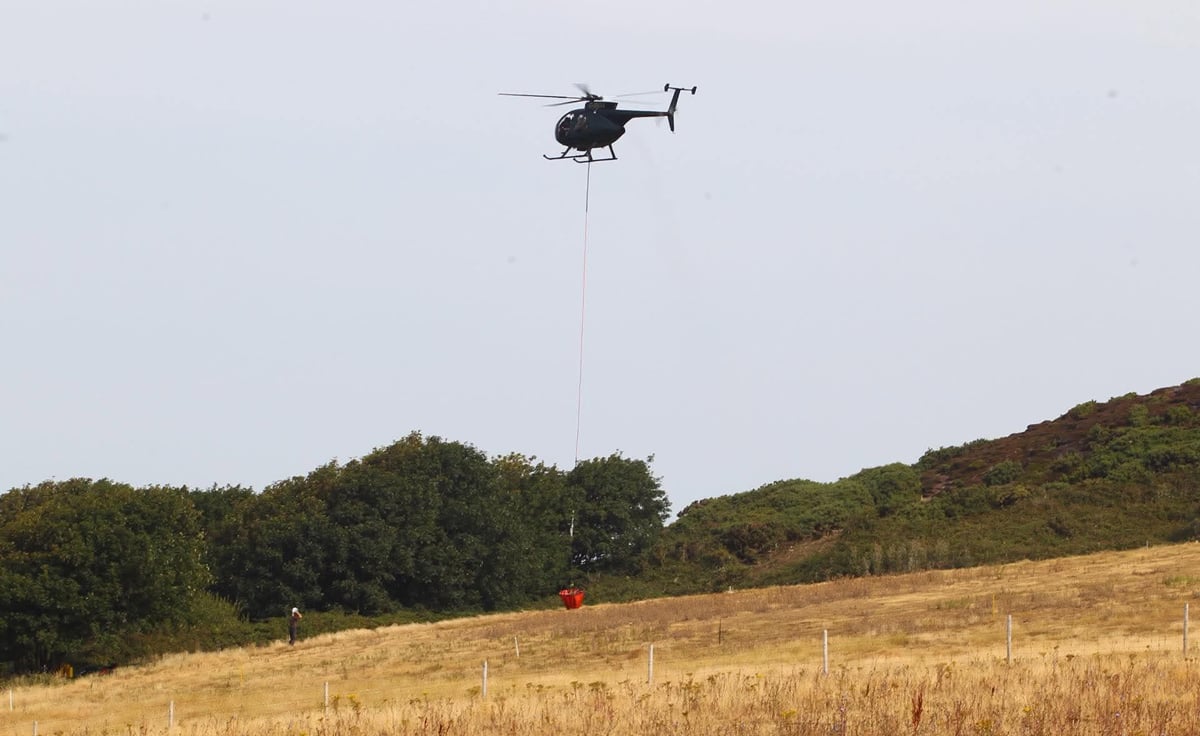
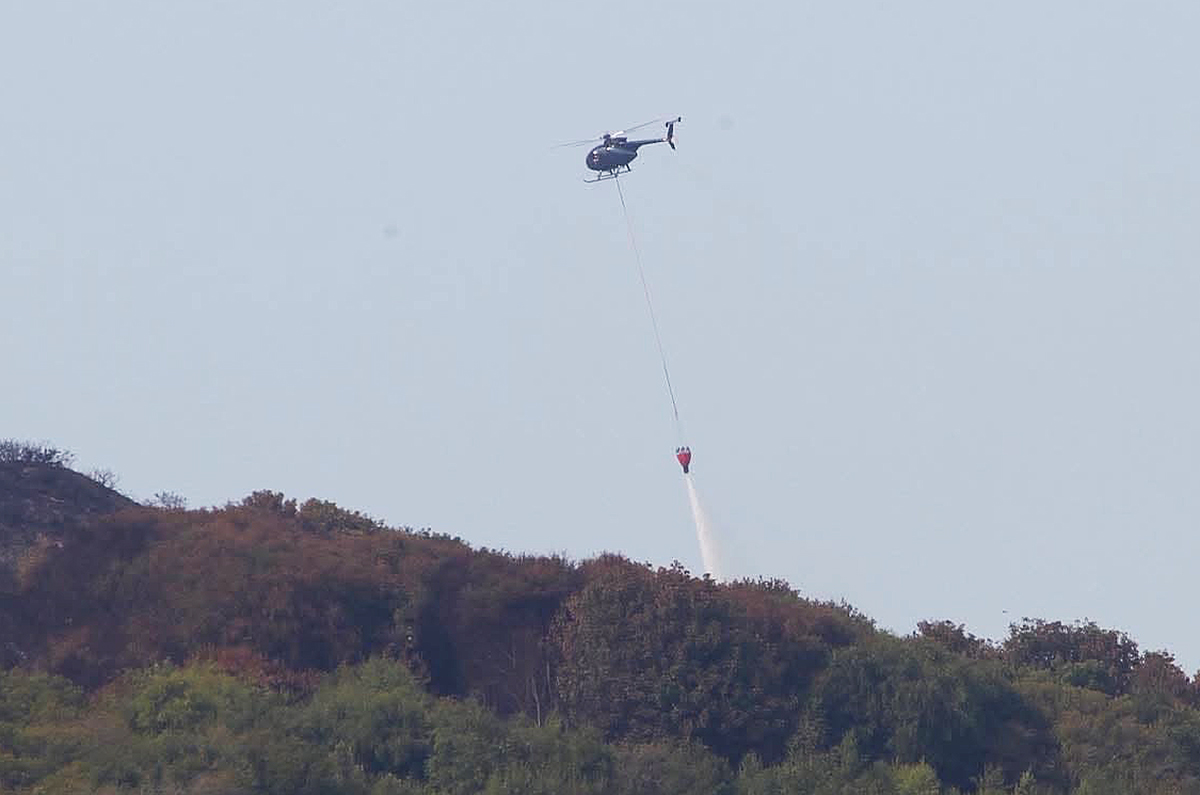
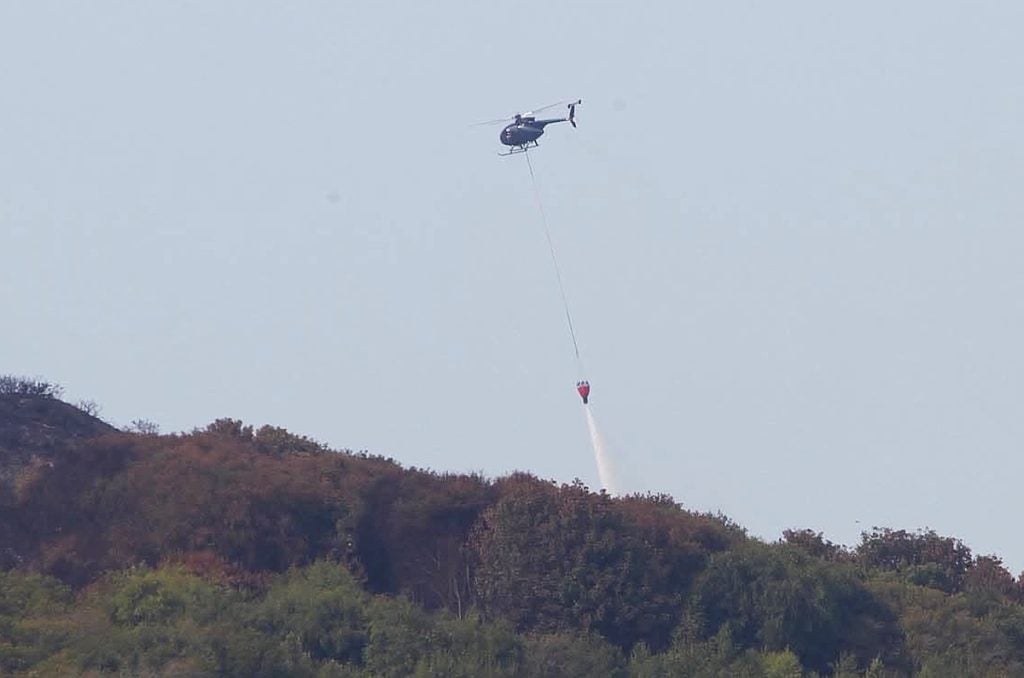
Firefighters worked day and night on Thursday to contain the blaze, but it wasn’t until Friday morning, when an MD Hughes 500 helicopter – fitted with an underslung Bambi Bucket – arrived in the skies overhead that control was truly wrestled back.
Speaking to Island Echo about the challenges firefighters faced, Station Manager Ant Westbrook of HIWFRS said:
“The terrain is very tricky in places. The topography is undulating and it falls away, so it was very limited access in relation to where we can actually stand.
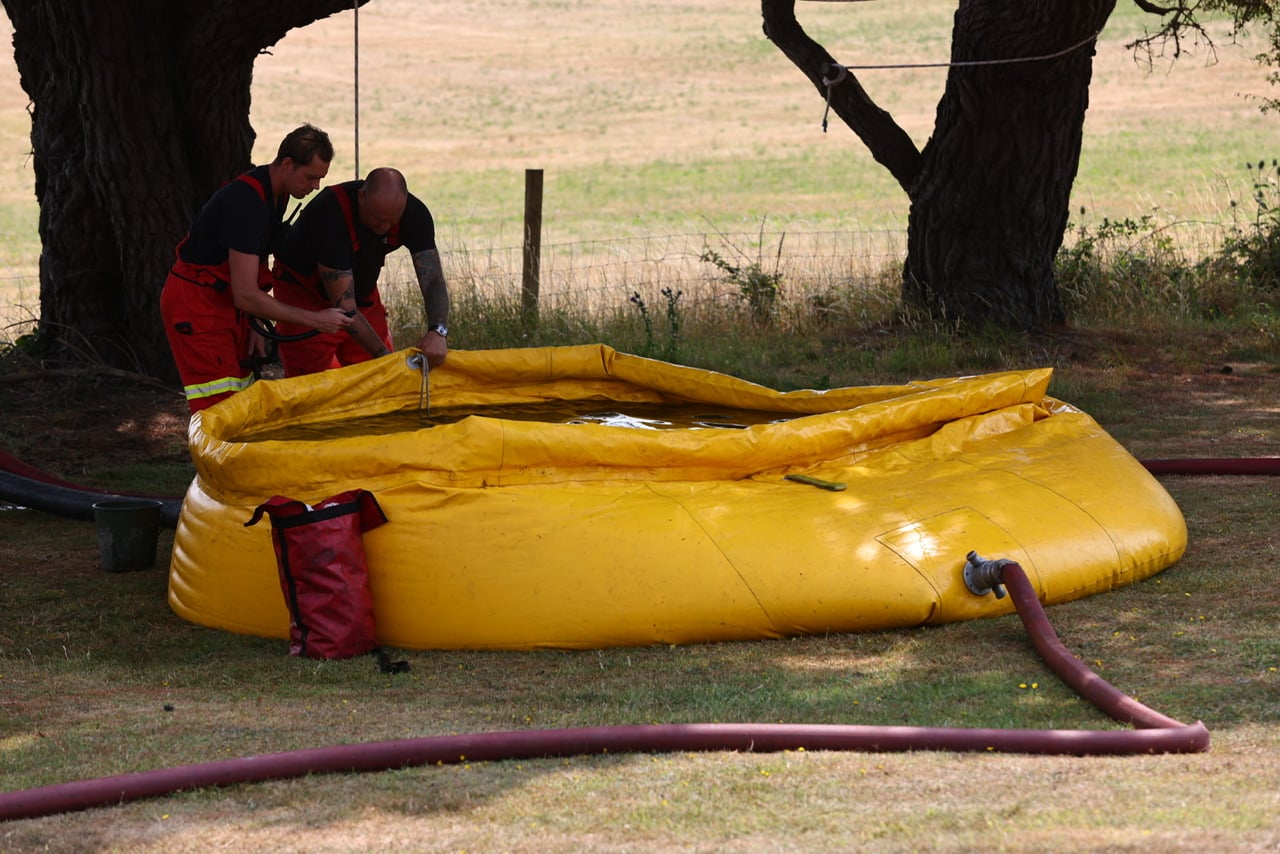
“A lot of the fire was fought from wherever we could get water to – and there were some issues with that.
“Through the National Trust, the helicopter was drafted in and that supported our firefighting actions on Friday, helping get to the inaccessible areas that we on the ground couldn’t reach.
“It (the helicopter) was brilliant for us, it had a massive impact. It made great progress and supported the actions we were taking on the ground. Without the helicopter we would probably still be firefighting today. It was a real asset to us.”
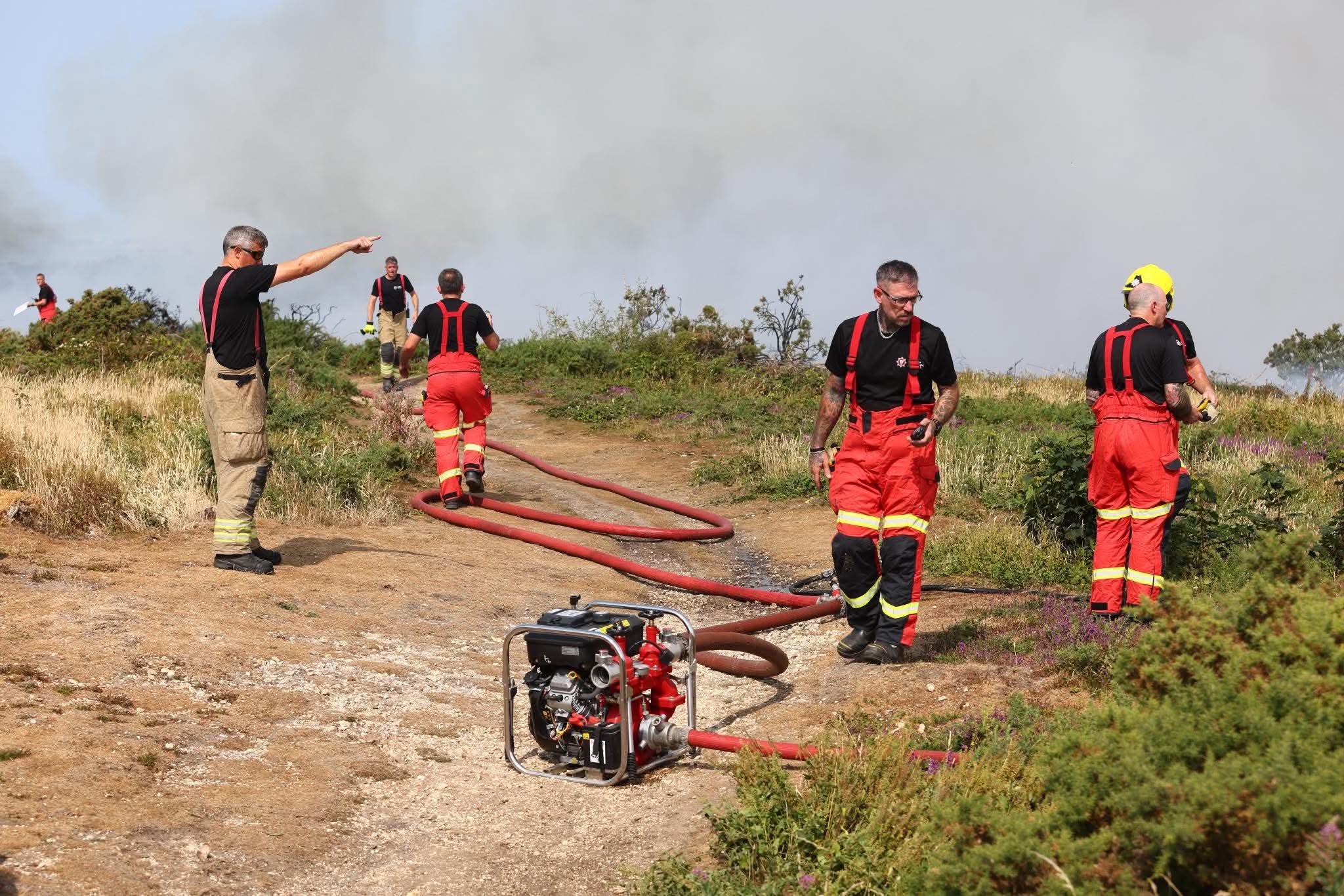
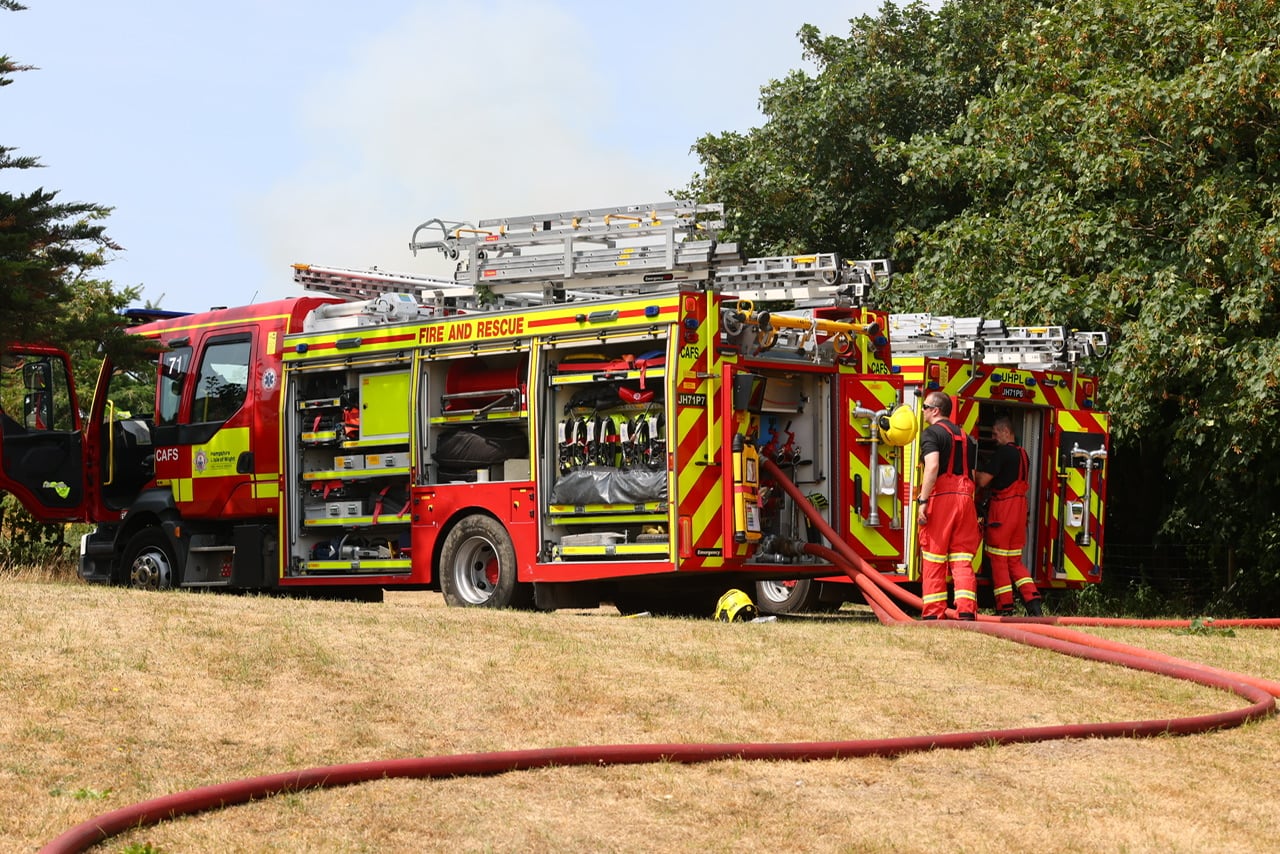
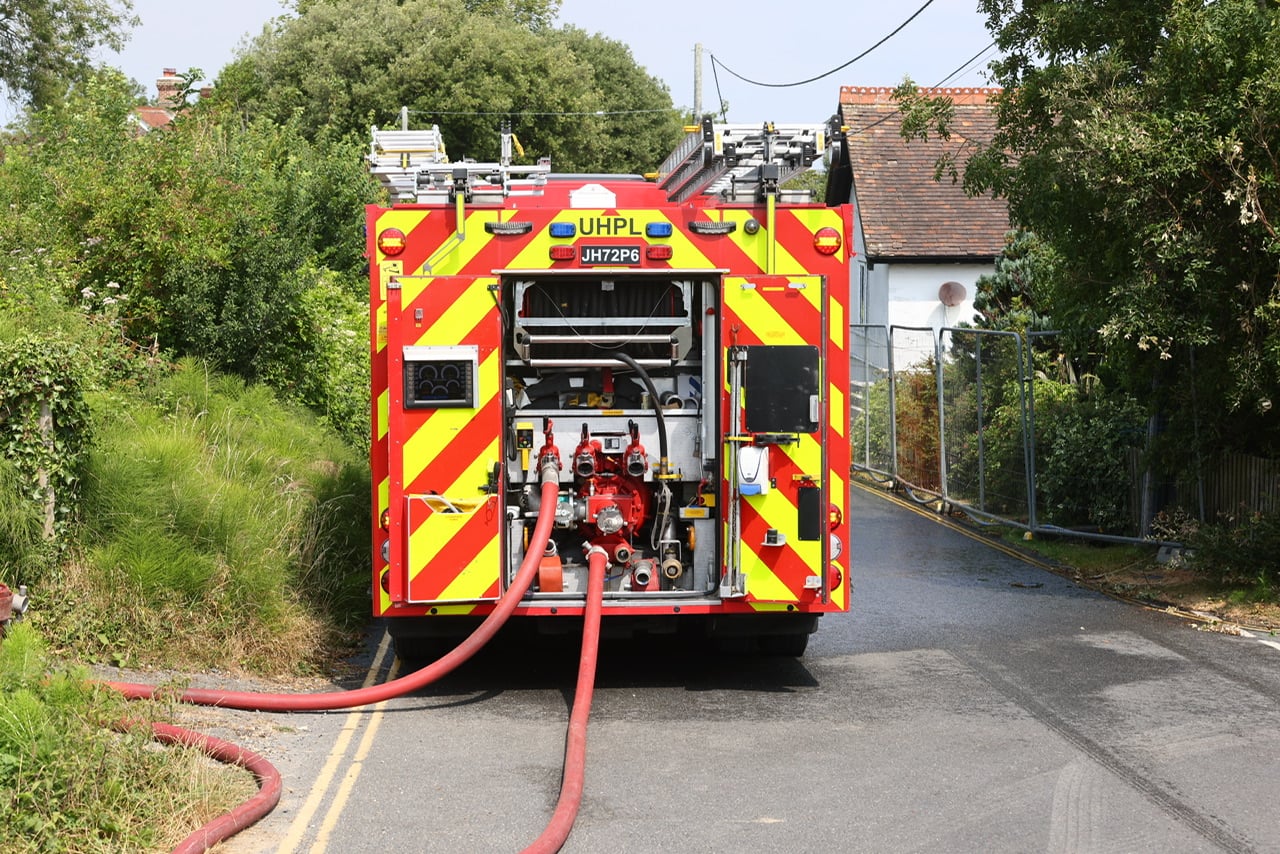
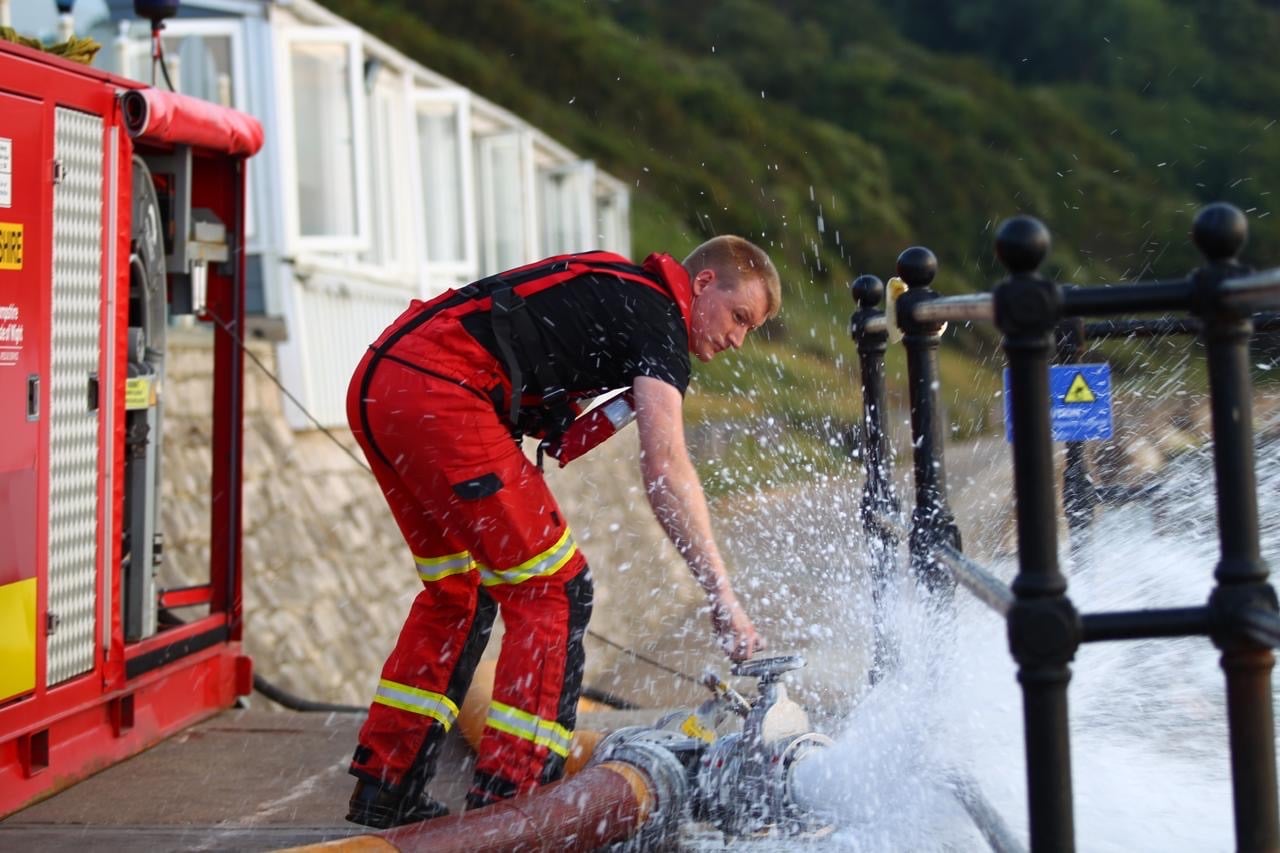
Alongside the helicopter, several High Volume Pumps (HVP) – all brought over to the Island from the mainland – were used to extract seawater for use on the fire ground.
A HVP uses extra-large hoses and submersible pumps to deliver between 7,000 and 8,000 litres of water per minute. They are rarely deployed on the Island.
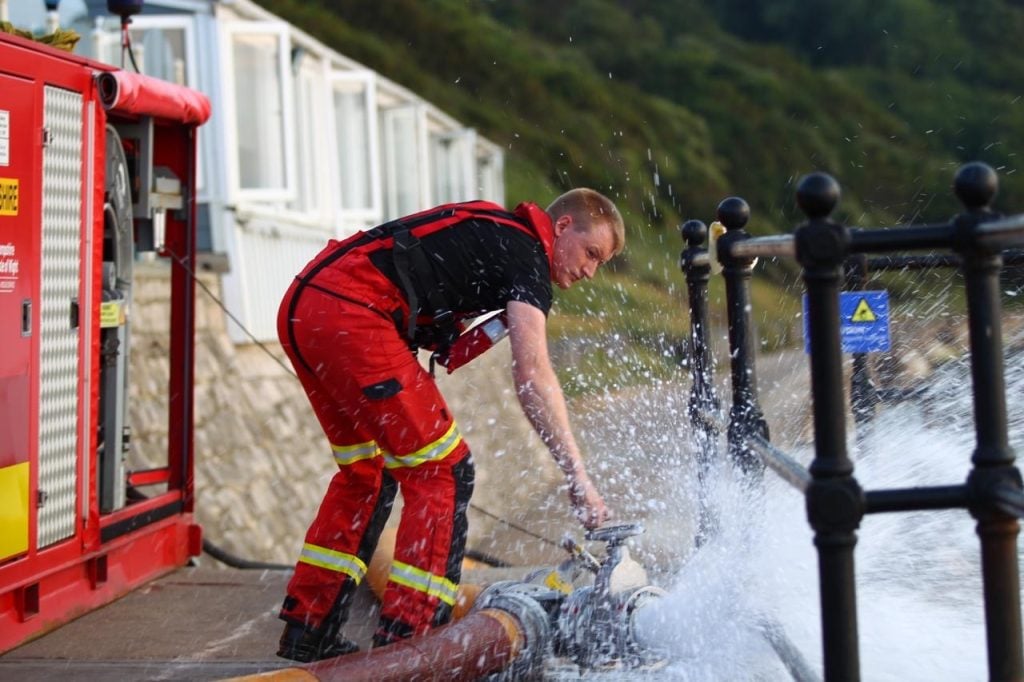
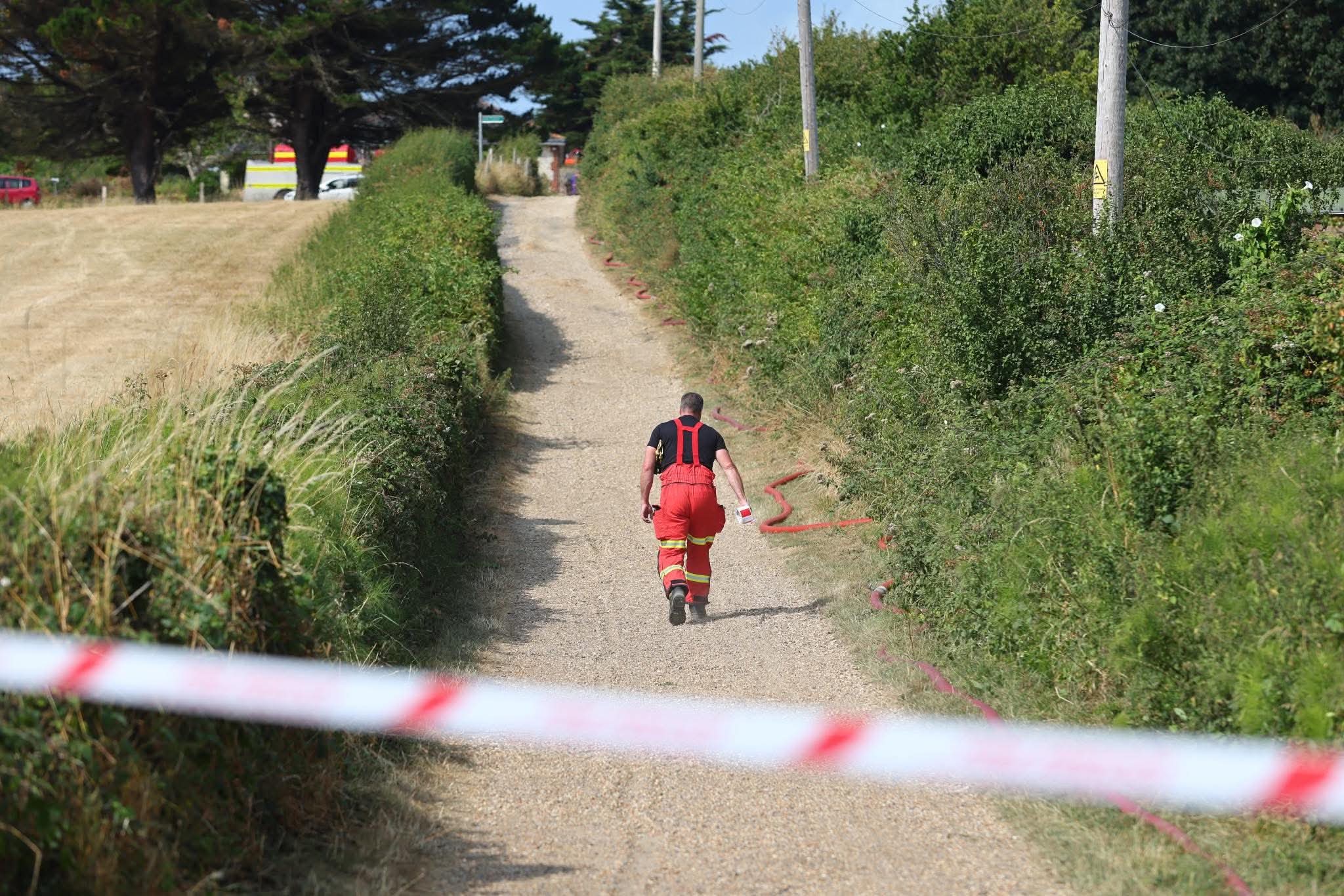
As many as 3 HVPs were being used at any one time to pump seawater around 3000m uphill toward the incident ground. Anyone out and about in the area over recent days has probably spotted an extremely long – sometimes more than 150mm-wide – firefighting hose running to and from the incident.
Touching on how the decision was made to use seawater to tackle the fire, SM Westbrook said:
“We had water carriers on scene but they draw from a Southern Water hydrant which supplies houses. So we needed to find an efficient way to put the fire out.
“This wasn’t a decision we were just going to make, so we liaised with the National Trust and the Environment Agency to ensure what we were doing was within their guidelines. It wasn’t simply a decision we could make ourselves.”
Speaking about the role of the community in the firefighting effort, Ant Westbrook said:
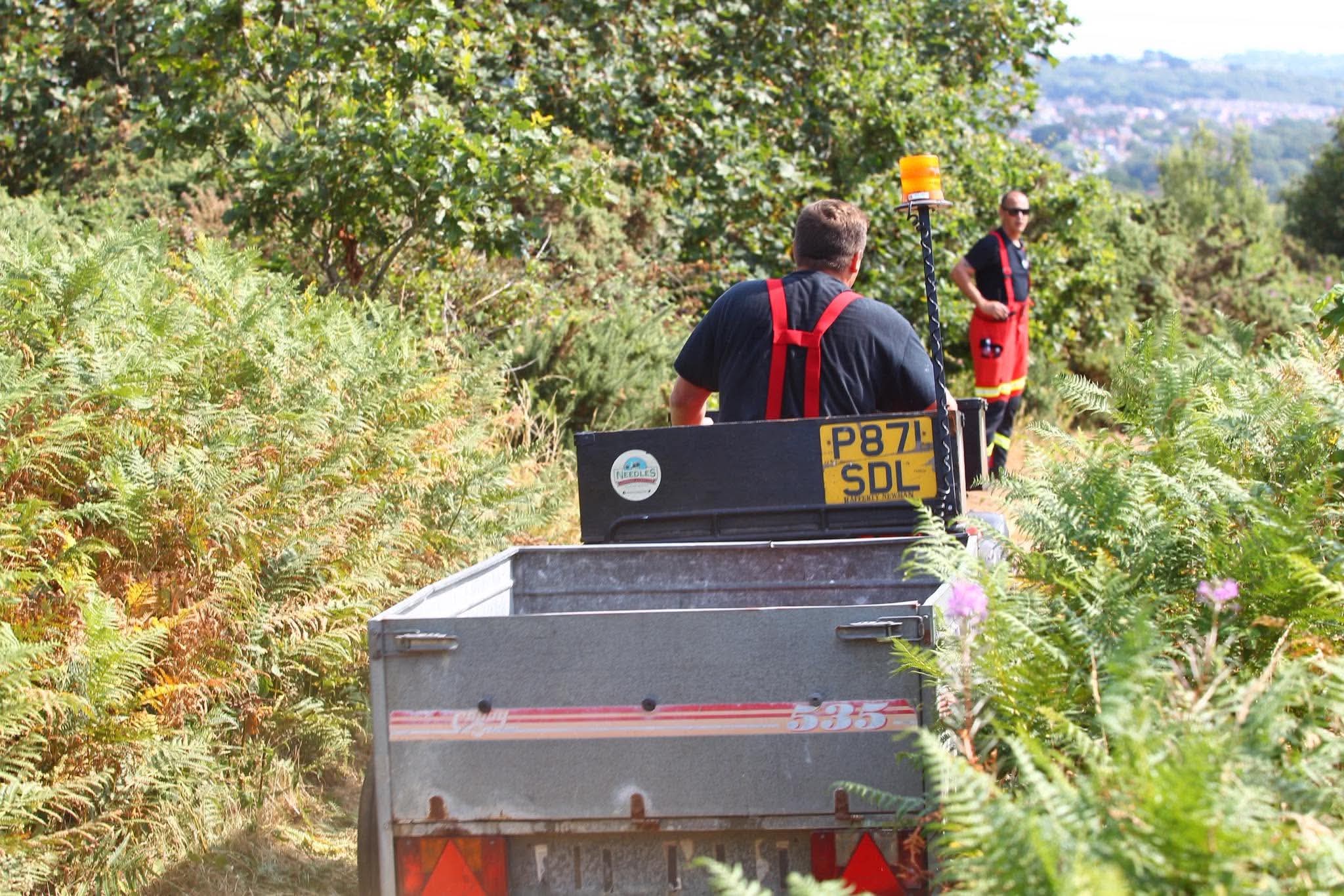
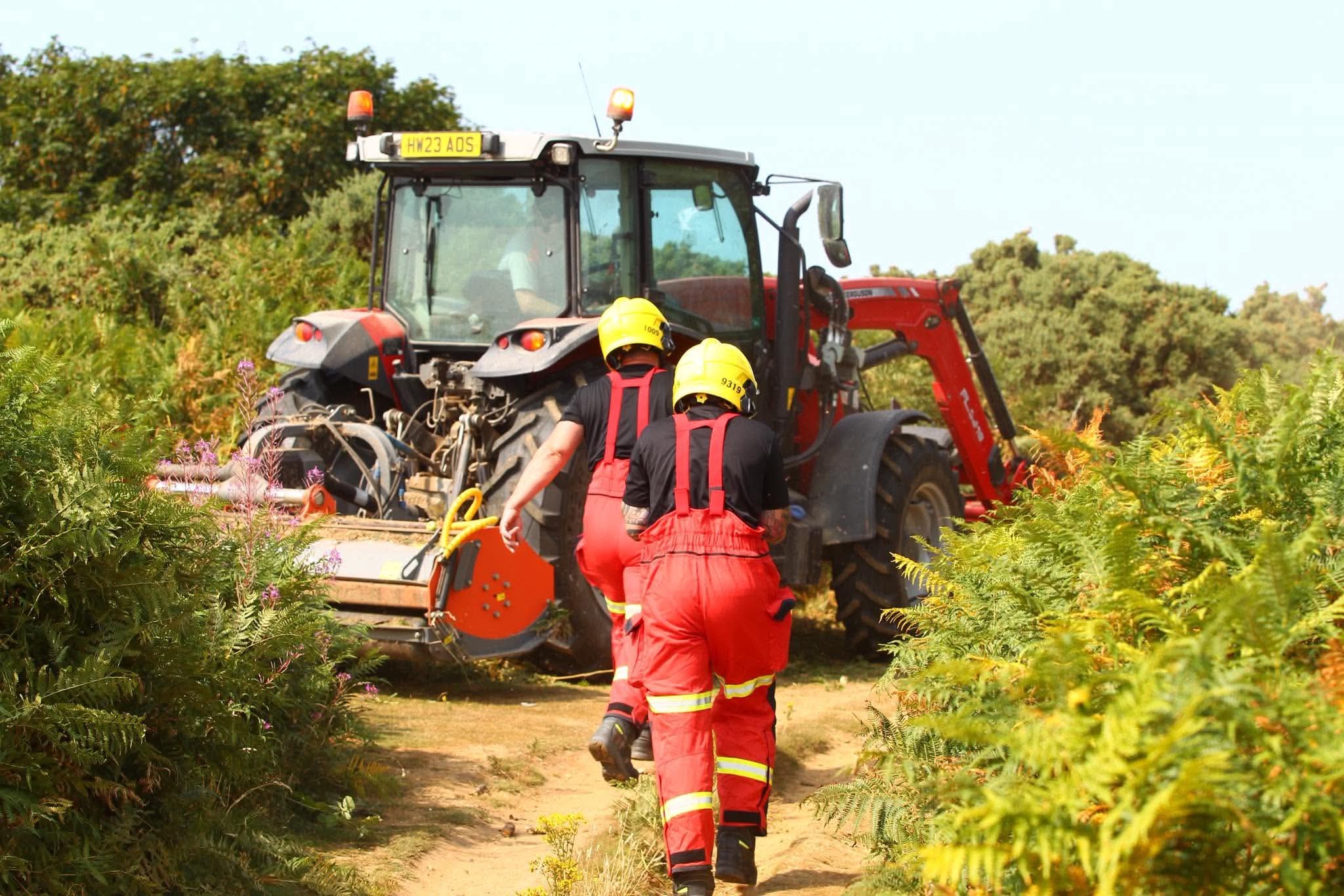
“The local farmers have been brilliant in helping us bring gear up to incident ground and to repatriate kit, as have the National Trust. The local community, who have been helping us at both ends of Headon Warren, have been fantastic in supporting us.”
Just a few hours after Island Echo visited the site on Monday afternoon, a flare-up occurred. However, the remaining crews on scene were quickly able to extinguish the smouldering gorse before it could reignite a larger area.
With the firefighting efforts over, attention now turns to the impact on the land – and its recovery.
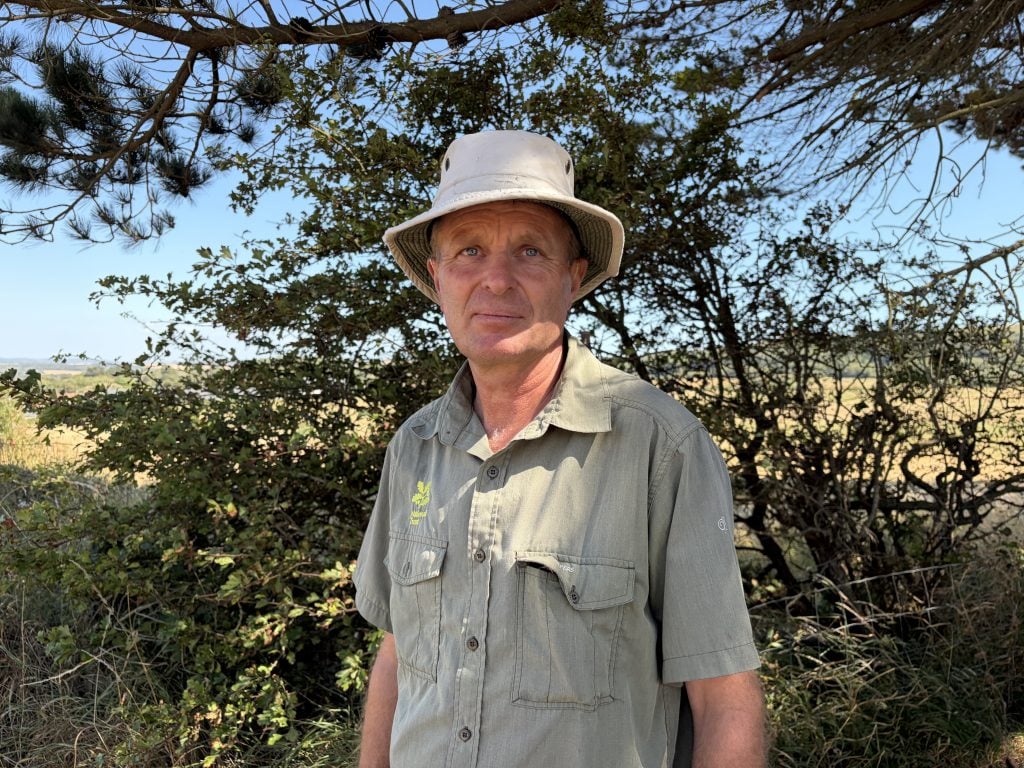
Paul Davies, National Trust’s Countryside Manager for the Isle of Wight, has explained what we can now expect.
He’s told Island Echo:
“Sadly, we have lost about 8 hectares of the 20 hectares of heathland, that’s around 40% lost. Lowland heath is nationally important habitiat and is massively rich in inverterbrates and other wildlife. It is also a scarce habitat – on the Island there is only 2 larger heathland sites.
“It is a site of Special Scientific Interest (SSI) along with the adjacent chalk grassland and it is also a very important undercliff habitat.
“We think that within 3-4 years we will start to have heather growing back over the site but there is going to be a fair ammount of bare ground for some time.
“That isn’t bad news for some things like bees and wasps who like exposed soil but it’s going to be a long time until vegetation is covering the whole area.”
A fire service presence is expected to remain in place until later this week.