



































































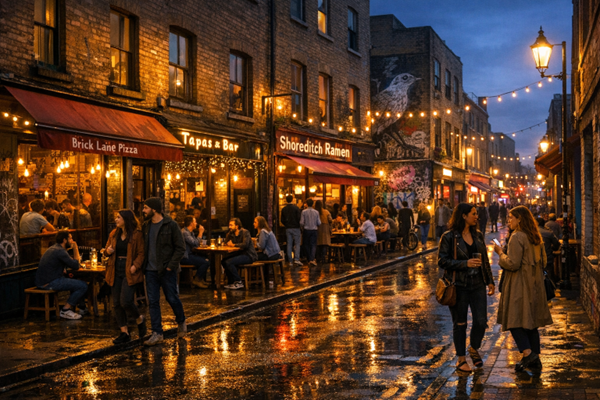

Walk around Shoreditch today and food feels like part of the street scene. Cafes sit beside galleries, and restaurants spill into busy side roads. That mix did not happen overnight. It grew out of how the area changed over the last two decades.
Creative workspaces, late nights, and new residents all played a part. As the crowds grew, so did the choice of places to eat. Street food concepts arrived, then pop ups, then bigger dining rooms. Shoreditch became a place where new ideas could be tested quickly.
How Shoreditch became a food destination
Shoreditch’s food story follows its wider reputation for reinvention. When artists and small businesses moved into older buildings, the area started to attract visitors. Nightlife then added a second wave of footfall, which helped more food places survive. Later, office growth and better transport brought a daily crowd with spending power.


When creativity started filling empty spaces
In the early 2000s, Shoreditch still carried an edge from its industrial past. Old warehouses and studios offered room for small creative teams. That drew a crowd that valued informality and variety. Food places began to match that mood with simple menus and flexible spaces.
As more people came in, eating out became part of the reason to visit. A guide to restaurants in Shoreditch shows how varied the local dining scene has become. The bigger point is that food grew alongside the area’s creative identity. A place that welcomes new art often welcomes new cooking too.
This early period also shaped how Shoreditch eats now. Smaller sites encouraged compact kitchens and fast service. Shared tables and counter seating suited groups who arrived without plans. That casual style still defines many spots in the neighbourhood.
How nightlife and street food changed habits
As Shoreditch’s bars and clubs drew larger weekend crowds, food had to keep up. People wanted something quick before a night out and something filling after it, a trend documented in the London at Night report. That demand helped street food traders and short term kitchen residencies. It also made late opening hours more common than in quieter areas.
The mix of late openings and informal venues encouraged certain formats. Street food markets let groups mix and match dishes, while pop ups trial new menus for a few months. Small plates suit sharing over long evenings, and global comfort food fits quick decisions. Dessert and coffee spots also stay open later than most neighbourhoods.

This variety also made Shoreditch a place to try trends without much risk. A new idea can start as a stall, then move into a permanent site. As a result, the local food scene often changes faster than many parts of London.
Why young professionals raised the stakes
During the 2010s, the area saw more offices and more weekday diners. That shift changed the rhythm from mainly nights and weekends to busy lunchtimes too. More residents also moved into nearby streets, which supported regular local trade. Restaurants responded with polished interiors and menus designed for repeat visits.
Transport played a quiet role in this growth as well. Better links made it easier to meet in Shoreditch from across the city, including around Transport for London’s Shoreditch High Street station. When travel becomes simpler, dinner plans become more spontaneous, which helps areas with dense clusters of venues. It also spreads demand beyond weekends, which supports weekday trading.
Innovation stayed part of the local brand, but it looked different as the scene matured. Chefs leaned into seasonal cooking, modern twists on classic dishes, and thoughtful drink lists. Social media also amplified what looked new and photogenic. Shoreditch kept its appetite for the next thing, but it paired it with more stable, established restaurants.
The pattern shows how creative areas can build food scenes quickly, because visitors like to experiment. Nightlife pushes later hours and casual eating, while offices and new residents provide steady trade. Trend culture rewards places that refresh menus and ideas, which keeps the scene in motion. Shoreditch keeps changing, but its food culture remains tied to curiosity and movement.
What Shoreditch’s food story shows
Shoreditch became a food hotspot by stacking different crowds on top of each other. Creative workers set the tone, nightlife brought the energy, and office growth added steady demand. Each phase left something behind, from casual counters to more ambitious dining rooms. The result is a neighbourhood where choice feels almost endless within a short walk.
For visitors, the lesson is to look beyond a single “best place” idea. Shoreditch works because it offers many formats for many moments. That can mean a quick bite before a show or a longer meal that feels like an event. The same streets can serve both without losing their identity.