



































In the 1st part of our new series on Isle of Wight place names, Island Echo examines the derivation of the obvious and not-so-obvious names of the 8 Isle of Wight towns and that of the Isle of Wight itself.
Ever wondered about where the name of your place of birth and residence comes from? Read on …
Wight (Isle of): The earliest certain references to the Isle of Wight come from Roman times when it was referred to by its Latin name: Vectis. The Island was named Insula Vecta by the Roman historian Suetonius in an account of its capture in AD 43 by the future Emperor Vespasian.


Suetonius wrote:
“[Vespasian] proceeded to Britain where he fought thirty battles, subjugated two warlike tribes, and captured more than twenty towns, besides the entire Isle of Vectis.”
Pliny the Elder called the Isle of Wight Vectis in his Natural History published in AD 77; Ptolemy also referred to our Island as Vectis in his famous Geographia of around AD 150.
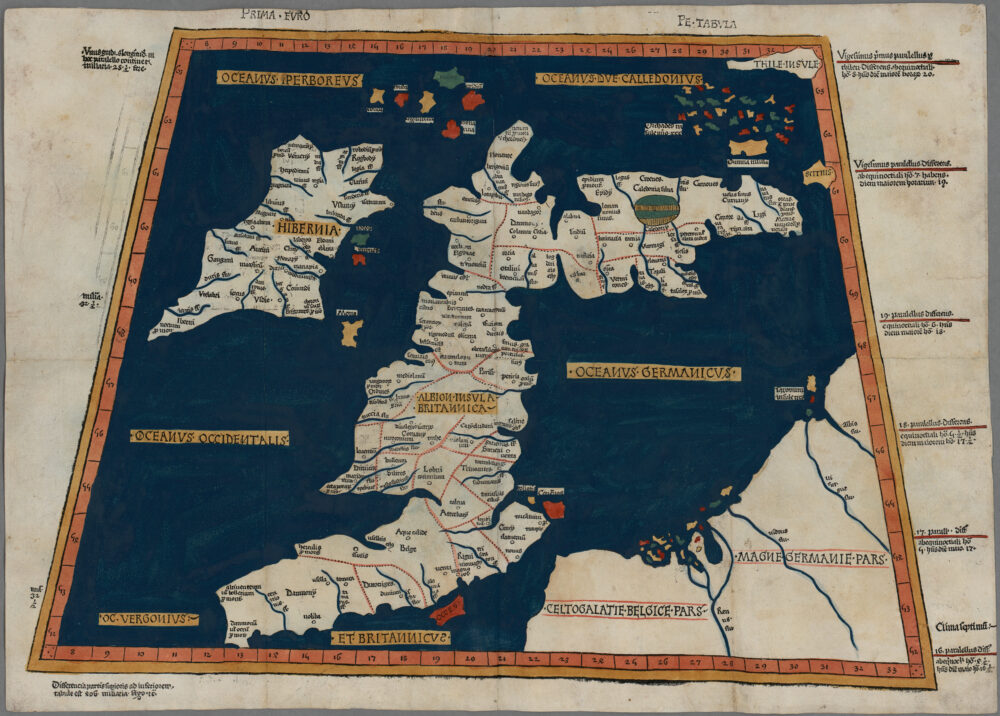
The name Wight has been thought to derive from Celtic roots from the Welsh word gwaith (meaning work). The Wesh name for the Isle of Wight is Ynys Wyth.
However, in 2010, it was suggested that the word ‘Wight’ originates from the proto-Germanic word wextiz meaning ‘something small’. In German, wicht means ‘dwarf’ or ‘imp’; in Dutch wicht is ‘little girl’. The suggestion is that the meaning of ‘Wight’ is something like ‘daughter island’.

If Germanic languages were not widely spoken in Roman times, then the derivation of the Latin Vectis and the modern ‘Wight’ from the proto-Germanic wextiz would appear unlikely; however, it has recently been argued that the inhabitants of Southern Britain may have been Germanic at that time.
Medina: The River Medina has been variously known as Medine (1200), Medeme (13th century), Medme (1279), Medome (1299), Medene (1769).

The origin of the name is simple: it comes from the Old English word medume or meodume meaning ‘middle’ and simply references the middle of the Island.
Newport: The origin of the County Town’s name is self-explanatory – a new harbour. However, there have been various historical variations of the name. It has previously been known as Novo Burgo, Neweport, Neuport, Niweport and Newporte.
Further Newports are to be found in Cornwall, Devon, Yorkshire, Essex, Gloucestershire, Shropshire and Somerset. There is a further Newport in Caithness in Scotland and – of course – 1 in South Wales. Further afield, there are at least 38 Newports in the United States, 4 in Canada, 4 in Australia and I in New Zealand.
The Newport in South Wales sometimes gets confused with our County Town, leading to supermarket signs on the Isle of Wight appearing in Welsh.

Brading: The name ‘Brading’ means ‘the settlement of the dwellers on the hillside’. It derives from the Old English word brerd (hillside, ridge). This refers to Brading Down on the slopes of which the town is situated.
Brading has formerly been known as Brerdinges (Saxon times), Berardinz (Doomsday Book), Brardinge, Brerdinge and Bradyng (16th century).
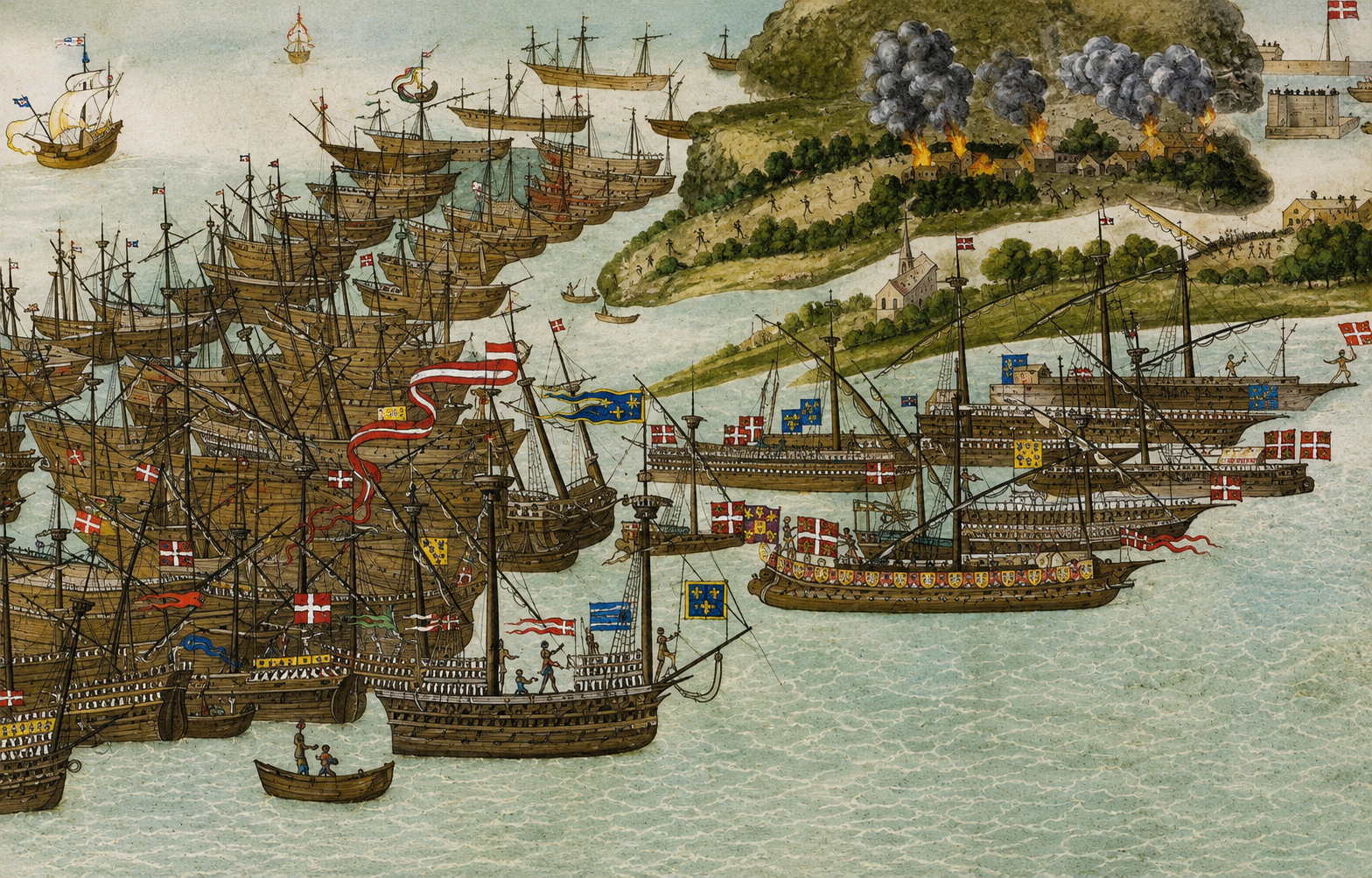
Cowes/East Cowes: The twin towns at the mouth of the Medina were named after 2 sandbanks off the shoreline – Estcowe and Westcowe – their shape was believed to resemble that of the farm animal. In 1539, Henry VIII had 2 forts built to defend the North Wight coast: these came to be known as the Est Cow and the West Cow. Subsequently, the name was transferred to the settlements on either side of the river estuary.
The modern names of East and West Cowes were 1st recorded on a 1769 map; previously, Cowes was called Shamelord – the old name is still to be found in the name Shamblers Copse.
Ryde: The name ‘Ryde’ means ‘the place at the small stream’. It derives from the Old English rith. Previous spellings include la Ride (1257), Ride (1265), Rythe (1420). The modern form ‘Ryde’ was 1st used in 1274.

Sandown: The original name for Sandown was Sandham, from the Old English sand and hamm, meaning the ‘sandy river meadow’. Sandown was called Sande in the Doomsday Book (1086), following which it was known as Sandome, Sandham, Sandeham, Sandam, Sandeham, Sandam and Sanden. The modern name of Sandown 1st appeared in 1759.
Shanklin: The name Shanklin means ‘the bank by the drinking cup’, referring to Shanklin’s famous chine. It comes from the Old English words scenc and hlinc. The town has previously been known as Sencliz and Selins in the Doomsday Book, and has also been called Shenclyng, Shenclyn and Chynklyn. The modern name ‘Shanklin’ was 1st used in 1611.
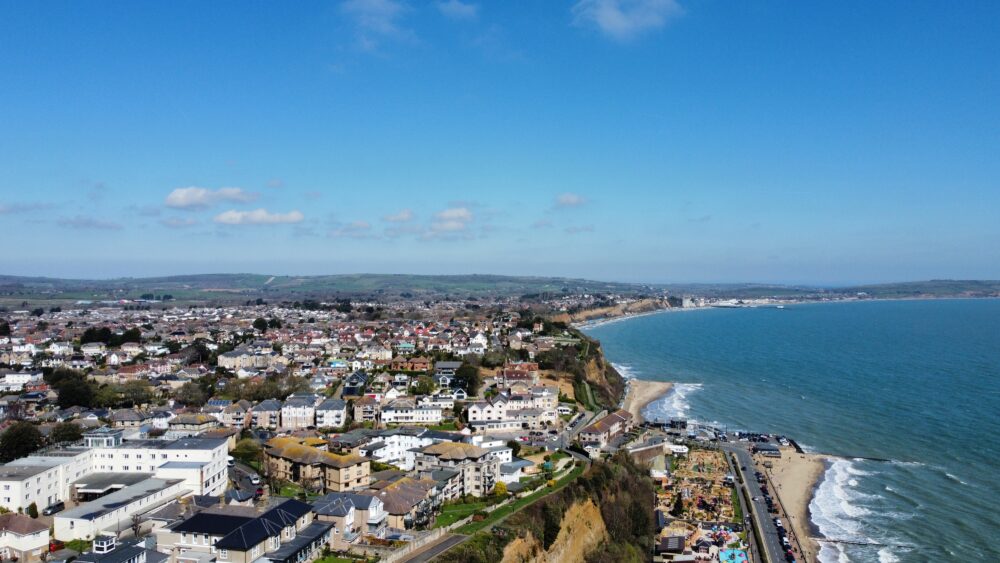
Ventnor: Ventnor is named after an estate owned by the Vintner family. The surname Vintner derives from the Middle English word vintener, meaning ‘military officer in charge of 20 men’.
Its present name was 1st used in 1769. The old name for Ventnor – used in the Middle Ages – was Holeweia, meaning ‘the way of the hollow’, which referred to the road running north of Ventnor.
Yarmouth: Yarmouth means ‘the gravelly or muddy river-mouth’. It comes from the Old English earen and muth. Previous versions of the town’s name have included Ermud (Doomsday Book, 1086), Hernemue, Ernemuth. Aremuthe and Yaremuth.







Binstead – I read once that it was originally Beanstead, literally the place where beans are. Probably from when agricultural land.
I believe that is correct. Our next article in this series will be on Isle of Wight villages (including Binstead).
Articles like this are very interesting.
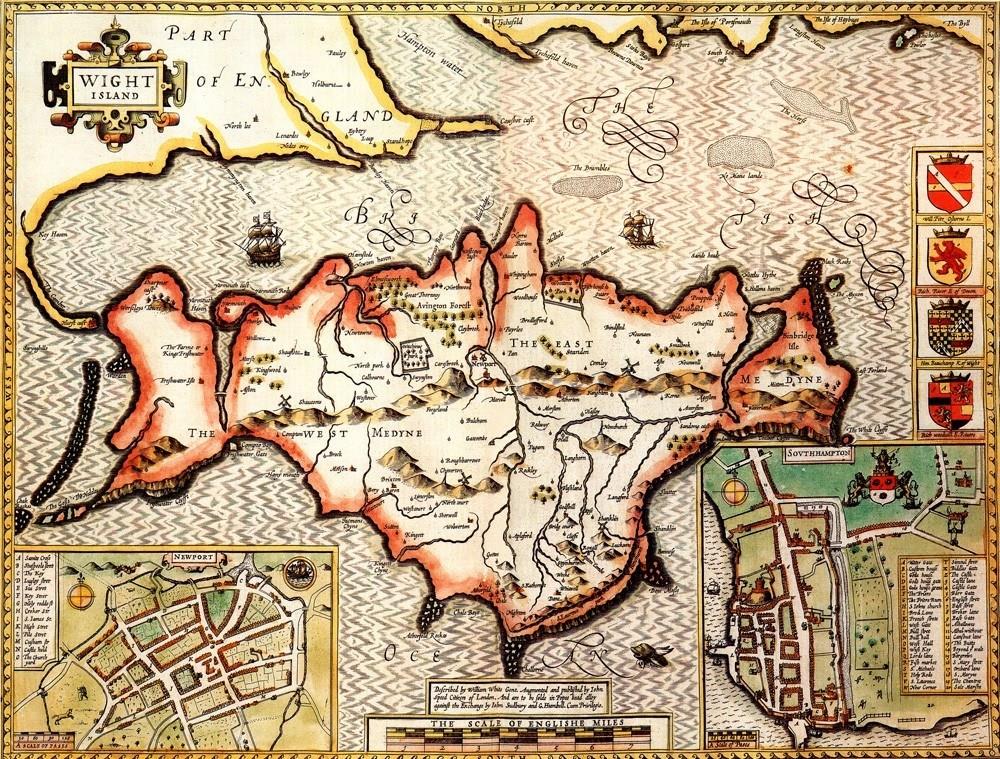
IE – please can you give a date for the larger map at the beginning of the article?
It shows that Parkhurst Forest stretched from the River Medina to Newtown and beyond to what is Bouldnor Forest. It would be nice if the MOJ gave back the 100 acres of Parkhurst Forest that were taken for Camp Hill Prison. More people on the island – so we need more places for leisure and wildlife. Please.
The map at the beginning of the article dates from 1611.
Amazing. Thank you.
it’s now known as druggy island
The Island stinks of drugs, bigger problem on the Island than most places in UK
Aswell as ignorants island
Great work, I believe Alum bay was called it because someone said it was full of alum and they were going to mine for it
Alum was mined at Alum Bay and that’s where its name comes from.
I remember an old lady telling me once. Appledercombe is derived from French meaning Apples at the end of the Valley (Combe)
“Appuldurcombe” is how we locals spell it. A highly researched book by Hallie Rubenhold (2008):- “An Eighteenth-Century Tale of Sex, Scandal and Divorce” – certainly makes for wonderful reading.
I have also heard tales of an historical couple who fell in love with Appuldurcombe, and each other, who are resident as ghosts, because they didn’t want to leave. Big house fo fill with memories, after all.
I heard that one of the Worsley’s sons was killed in the little gate house by the large iron gateway, as the gatekeeper was drying gunpowder in front of an open fire, and the whole lot exploded.
I have many history books on the Island several dating to the 1700’s.
I believe that is the meaning of the name. ‘Cwm’ is valley in Welsh (from where we get ‘combe’ in place names) e.g. Gatcombe, Bowcombe, Shalcombe. 2,000 years ago, the inhabitants of the Isle of Wight would have spoken Celtic languages something akin to Welsh.
Great article and I love the maps!