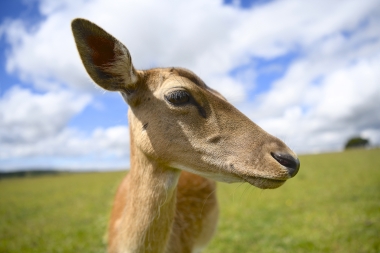
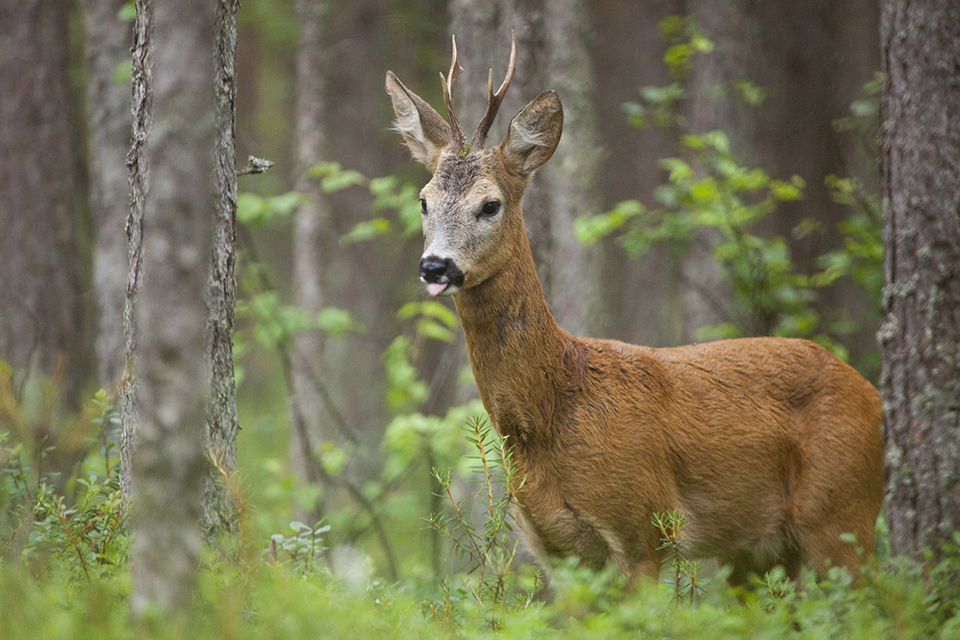
In the 2nd edition of Isle of Wight Fauna, Island Echo examines deer, which were once plentiful here but are now only occasional visitors – or do we have some wild deer living among us? Both red deer and roe deer are native to the Isle of Wight and have been present in numbers until modern times. Many will have heard of the legend of stag rock near Freshwater, reportedly named after an eponymous beast who leapt onto the rock to escape hounds. In Medieval times, there were 2 hunting forests on the Isle of Wight at Parkhurst and Borthwood. Both forests were used by the Crown and Lords of the Island for hunting – the most prized quarry being deer. At that time, Parkhurst Forest was far more extensive than today, stretching from the west bank of the Medina to Newtown Creek. The northern boundary of the forest is marked by a bank and a ditch, believed to have been built to keep deer within the confines of the forest. In the east of the Isle of Wight, Borthwood Forest was far larger than present-day Borthwood Copse. It is believed that the place name Queen’s Bower derives from a hunting lodge used by the wealthy and powerful Isabella de Fortibus – considered Queen of the Isle of Wight in the 13th century. Charles I built a hunting lodge in Watchingwell Park at the site of what is now Great Park Farmhouse. In 1650, the park was said to contain ‘nine score (180) deer’. Red deer once roamed Parkhurst Forest John Speed’s 1611 map of the Isle of Wight shows further deer parks at Wootton and in St Lawrence in the Undercliff. Documentary evidence also exists for deer parks in Shalfleet, Kingston and Knighton. In the 17th century, Sir John Oglander had a resident stag that had taken up residence on his Rowborough estate after swimming across to the Island to escape huntsmen. Every year, the stag would disappear during the mating season (rut), and Sir John believed his solitary resident stag swam to the mainland in search of does at that time of the year. It is not known for certain when wild deer disappeared from the Isle of Wight. However, Parkhurst Forest was enclosed as late as 1812. It is thought that the Island has been farmed too intensively and the remaining woodland has become too fragmented to support a significant population of wild deer over the past 2 centuries. Roe deer roamed the Island until the 19th century But deer are very strong swimmers, and there are substantial populations of red, roe, fallow, muntjac and sika deer currently living in the New Forest. These deer keep coming on vacation to the Island. It has been speculated that some may even have put down roots here and raised their young. There have been regular reports of wild deer being spotted swimming across the Solent, being washed up on beaches or seen in the Isle of Wight countryside in the present century. In 2018, a 3-year-old roe buck came ashore in Southsea, having swam across the Solent from the Isle of Wight. The young roe deer sadly died after being lassoed by a member of the public. In 2020, a driver narrowly avoided hitting a wild deer at night on The Downs Road.
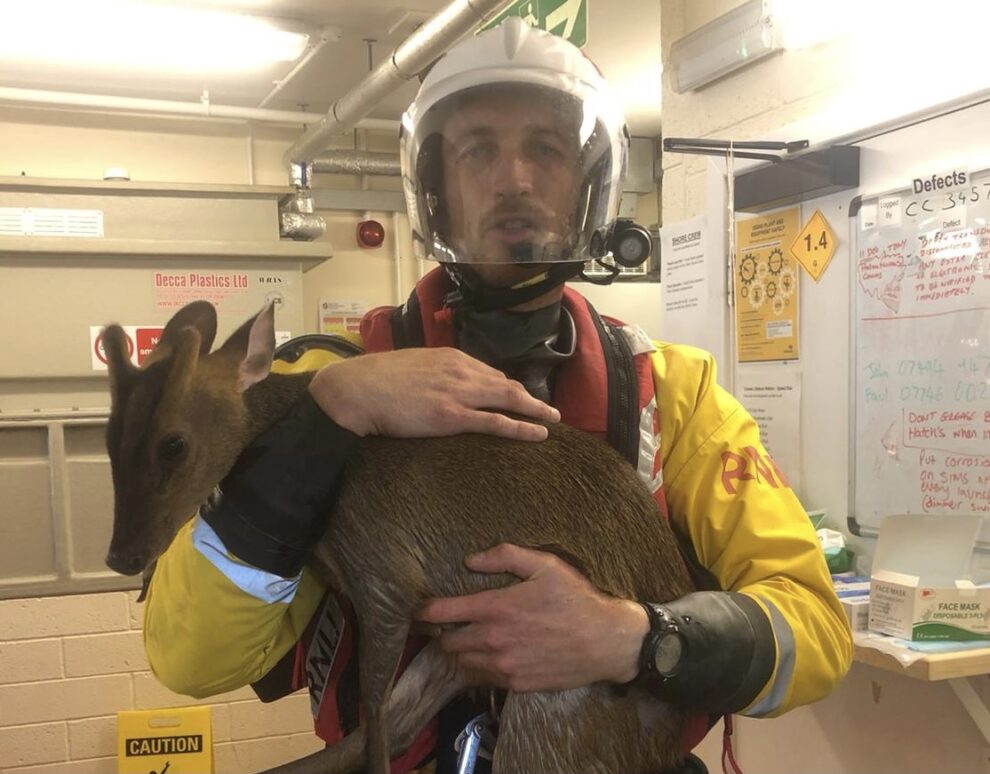
In 2021, a young muntjac deer was rescued off Cowes by the RNLI. It was believed to have swum across the Solent from the New Forest, where there is a resident population. In 2022, 2 further muntjac deer – a male and a female – were sadly found deceased off Fort Victoria near Yarmouth. Again, it is believed they had made the journey from the New Forest (only 1.5km away). Muntjac deer rescued by the RSPCA off Cowes Sightings have been claimed for wild red, roe, fallow, muntjac and sika deer on the Island over the past decade. The diminutive muntjacs have been the most frequently reported. But not everyone is enthralled by the idea of deer re-establishing themselves on the Isle of Wight after a couple of centuries absence. In 2014, the Isle of Wight Biodiversity Partnership issued the following statement:
“The impacts of deer upon woodlands are well documented. “Sustained heavy grazing pressure will lead to a suppression of the herbaceous woodland flora, a severe reduction in natural regeneration of woody species and significant damage to some canopy and understorey species. “Anything other than light grazing pressure will result in a modification of the woodland ecology, which is likely to have impacts upon a whole range of woodland dependent flora and fauna. ““English Nature consider deer damage the single biggest issue in lowland woodlands.”
Would you like to see deer return to the Island after a couple of centuries? Have you seen deer in nature on the Isle of Wight other than at the deer farm (near Newport)? Let us know in the comments…
Used to be a deer farm in Wroxall, for meat of course. Probably illegally hunted too knowing what the farm owners were like over here. No deer now of course.
Farm was actually at Godshill and was predominantly a Breeding herd with around 400 breeding hinds and 7 stags. Yearlings being raised for the venison market were sold onto mainland farms for final rearing
Colin
2 years ago
I saw one last year in Brighstone, on Lynch Lane, on the hill up towards the Strawberry Lane junction. It ran down the steep bank on the right, ran across in front of me and into the hedge on the left side. I’m not great on deer recognition but, from the size and colour, probably a Roe deer
Daniel
2 years ago
i no the article is about red deer ,but was in parkhurtst forest yesterday morning when my dog and myself was startled by I think a large boer ,are they living in parkhurst
There’s got to be at least a few Dutchmen living here.
Grunt
2 years ago
Now if you want to see any on the Isle, you can go to the deer farms in Newport and Chale.
Where they are fattened up and sent to slaughter.
Would be nice to see in wild.
Outofmymind
2 years ago
Everybody please be aware of a bloke going round trying to sell 8 legs of venison for £350 . He knocked on my door but I sent him away saying it was 2 dear.
He called at ours Trying to sell the head, which had had the eyes removed, for brawn or animal food.
I asked him where it came from and what sort of deer it was.
He said “No Idear” !
Dave
2 years ago
My Wife has a photo of a large deer in the field behind Sylvan Drive/Hunnyhill Aquatics. The photo was taken very early morning about 2 years ago from our garden.
Not only the ”DEER’, for now we have hoards of small brown legged pests, who can cause harm to people if allowed to settle here. Seen photos on the Echo of them. Best we ban anything from there coming here.


































 In the 2nd edition of Isle of Wight Fauna, Island Echo examines deer, which were once plentiful here but are now only occasional visitors – or do we have some wild deer living among us? Both red deer and roe deer are native to the Isle of Wight and have been present in numbers until modern times. Many will have heard of the legend of stag rock near Freshwater, reportedly named after an eponymous beast who leapt onto the rock to escape hounds. In Medieval times, there were 2 hunting forests on the Isle of Wight at Parkhurst and Borthwood. Both forests were used by the Crown and Lords of the Island for hunting – the most prized quarry being deer. At that time, Parkhurst Forest was far more extensive than today, stretching from the west bank of the Medina to Newtown Creek. The northern boundary of the forest is marked by a bank and a ditch, believed to have been built to keep deer within the confines of the forest. In the east of the Isle of Wight, Borthwood Forest was far larger than present-day Borthwood Copse. It is believed that the place name Queen’s Bower derives from a hunting lodge used by the wealthy and powerful Isabella de Fortibus – considered Queen of the Isle of Wight in the 13th century. Charles I built a hunting lodge in Watchingwell Park at the site of what is now Great Park Farmhouse. In 1650, the park was said to contain ‘nine score (180) deer’.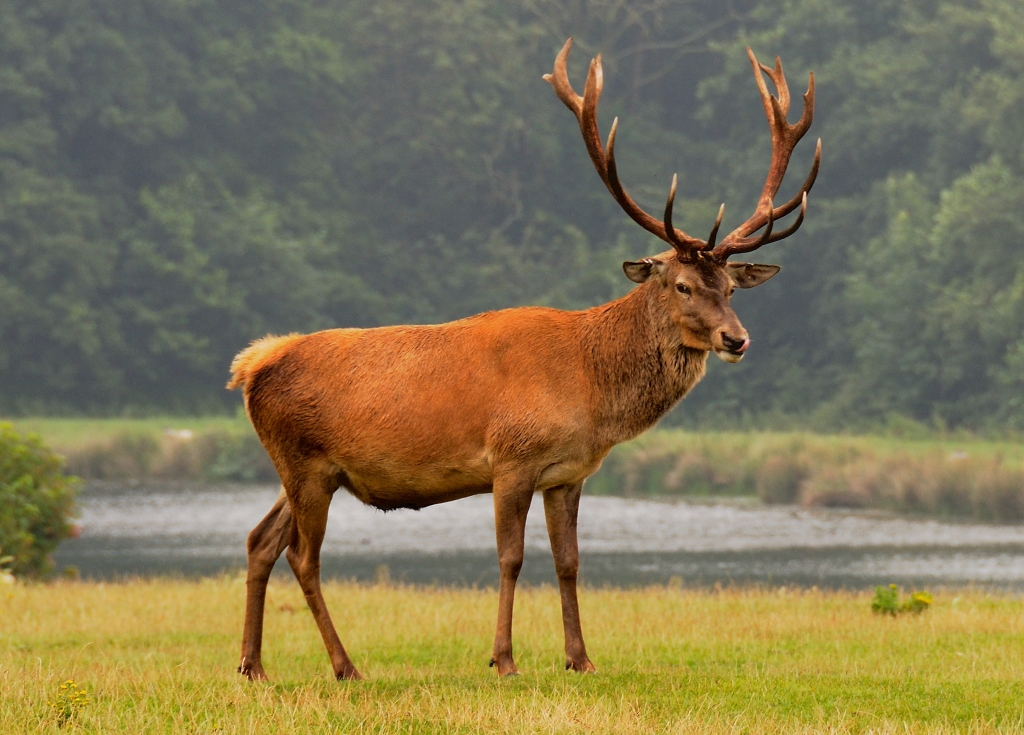









Used to be a deer farm in Wroxall, for meat of course. Probably illegally hunted too knowing what the farm owners were like over here. No deer now of course.
Farm was actually at Godshill and was predominantly a Breeding herd with around 400 breeding hinds and 7 stags. Yearlings being raised for the venison market were sold onto mainland farms for final rearing
I saw one last year in Brighstone, on Lynch Lane, on the hill up towards the Strawberry Lane junction. It ran down the steep bank on the right, ran across in front of me and into the hedge on the left side. I’m not great on deer recognition but, from the size and colour, probably a Roe deer
i no the article is about red deer ,but was in parkhurtst forest yesterday morning when my dog and myself was startled by I think a large boer ,are they living in parkhurst
Several bores on here.
There’s got to be at least a few Dutchmen living here.
Now if you want to see any on the Isle, you can go to the deer farms in Newport and Chale.
Where they are fattened up and sent to slaughter.
Would be nice to see in wild.
Everybody please be aware of a bloke going round trying to sell 8 legs of venison for £350 . He knocked on my door but I sent him away saying it was 2 dear.
He called at ours Trying to sell the head, which had had the eyes removed, for brawn or animal food.
I asked him where it came from and what sort of deer it was.
He said “No Idear” !
My Wife has a photo of a large deer in the field behind Sylvan Drive/Hunnyhill Aquatics. The photo was taken very early morning about 2 years ago from our garden.
I have seen two deer at Chillerton down. Unsure what type they were, but not small.
I d not heard of small deer.
Muntjac deer are invasive Asian pests and they cause a lot of damage.
Not only the ”DEER’, for now we have hoards of small brown legged pests, who can cause harm to people if allowed to settle here. Seen photos on the Echo of them. Best we ban anything from there coming here.