










































For a brief but memorable period in the 1970s, one of Ventnor’s oldest buildings became one of the Island’s most ambitious entertainment venues.
Few Isle of Wight nightclubs occupied a spot with a more unusual history than Coconut Grove. Long before coloured lights illuminated its dance floor, the Albert Street venue had served as a Victorian theatre, Ventnor Town Hall, a wig factory and a clothing factory. Yet for a few years in the mid-1970s, it became one of Ventnor’s best-known nightspots.
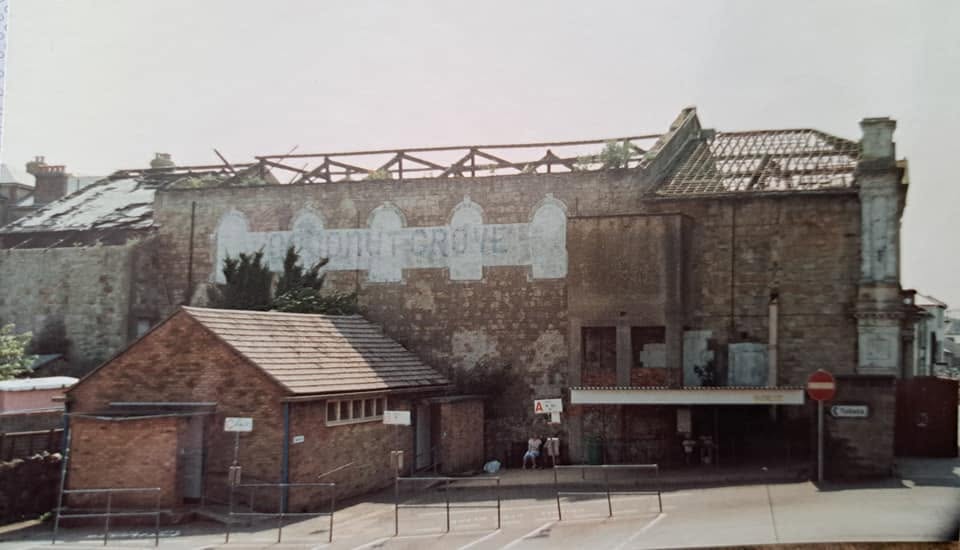
The building began life in 1877 as the Undercliff Assembly Rooms, constructed by T.R. Saunders as a theatre at a time when Ventnor was flourishing as a fashionable seaside resort. For much of the next century it played a central role in the town’s social and cultural life, later becoming Ventnor Town Hall before once again returning to entertainment use.


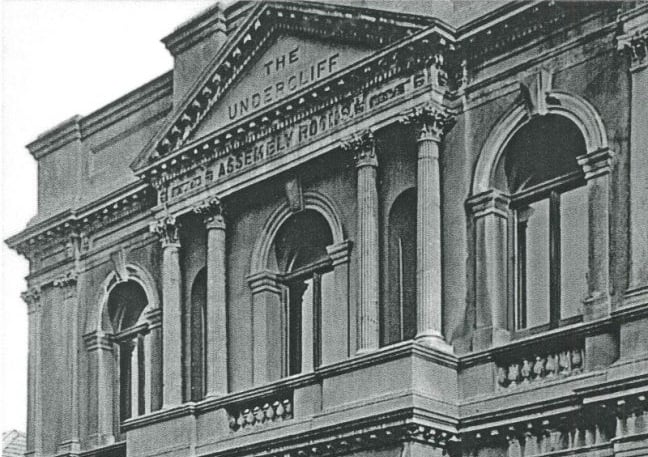
Few structures in Ventnor have reinvented themselves so often. As fashions and fortunes changed, the Albert Street landmark adapted with them, surviving long after many of its contemporaries had disappeared. By the 1970s, however, another dramatic transformation was underway.
In 1975, Isle of Wight entrepreneur Tudor “Dave” Radcliffe embarked on an ambitious £30,000 conversion of the old building. The project took around 5 months to complete and attracted considerable attention across the Island. Radcliffe was already establishing himself as one of the leading figures in Isle of Wight nightlife, with interests that would also include La Babalu in Ryde and the Eastcliff Club in Shanklin.
When Coconut Grove opened its doors, around 400 guests attended what newspapers described as a “luxury entertainment centre”. For those who remembered the old theatre and town hall, the transformation must have seemed extraordinary. The investment was substantial by the standards of the day and reflected Radcliffe’s determination to create a venue capable of attracting customers from across the Island.
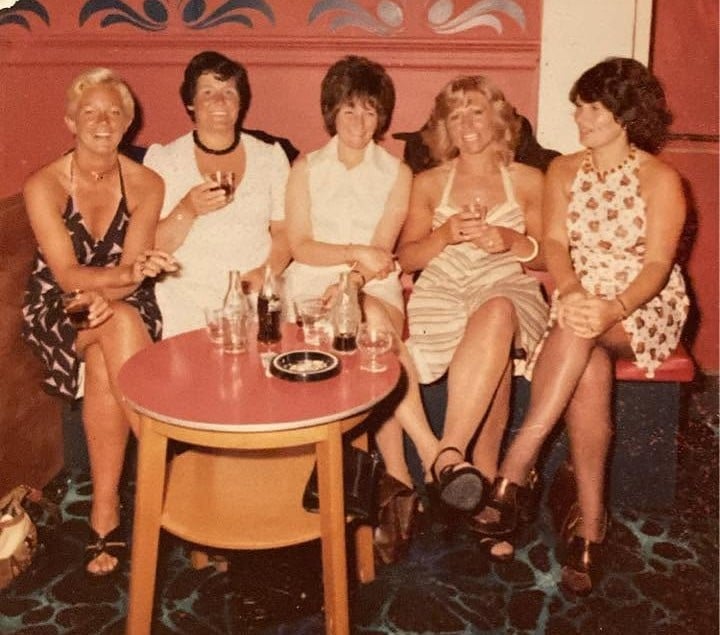
Warm murals decorated the walls, while a sophisticated infra-red and ultra-violet lighting system helped create an atmosphere unlike anything previously seen in Ventnor. A large palm-themed bar reinforced the tropical image suggested by the venue’s name and a dance floor covering around 400 square yards provided ample room for revellers. Access to the former stage was altered and the interior reconfigured to suit its new role as a modern entertainment venue.
The timing could hardly have been better. Coconut Grove arrived during the height of the disco era, when dance floors across Britain were filling to the sounds of the Bee Gees, Boney M, Donna Summer, Hot Chocolate and KC and the Sunshine Band. Against a backdrop of coloured lighting and tropical décor, the former theatre embraced a style of entertainment that was transforming nightlife throughout the country.

Behind the Victorian façade stood a thoroughly modern venue where music, dancing and cabaret combined to create something very different from the building’s previous incarnations.
Coconut Grove was promoted as far more than a place to dance. Advertisements offered stag nights, hen parties and cabaret evenings, reflecting Radcliffe’s ambition to provide a complete night out. Comedians, speciality acts and drag performers shared the bill with music and dancing, while food was served throughout the evening. For many customers, the attraction lay in spending an entire evening under one roof rather than simply visiting for a few dances.
The combination of music, dancing and live entertainment helped distinguish Coconut Grove from many venues of the period. Rather than focusing solely on the dance floor, the Albert Street nightspot offered an evening built around cabaret, speciality acts and social events as well as music. The approach reflected Dave Radcliffe’s ambition to create a modern entertainment centre rather than simply another nightclub.
The nightclub quickly became part of the town’s nightlife, bringing a new type of entertainment to a resort more commonly associated with Victorian villas, gardens and the seaside. For a few years, the old theatre building echoed not with actors’ voices but with disco music and the sounds of a generation enjoying the Island’s changing nightlife.
However, the success of Coconut Grove proved short-lived. In August 1978, fire broke out in the former theatre hall, causing extensive damage to the building. For a structure that had already survived more than a century of changing fortunes, it was a devastating setback. Contemporary reports described flames tearing through the roof and interior, bringing a sudden halt to one of Ventnor’s most ambitious entertainment ventures.
The blaze brought an abrupt end to a project that had begun with such optimism only 3 years earlier. Hundreds had attended the grand opening and considerable sums had been invested in transforming the old theatre, yet the nightclub’s life would prove to be one of the shortest chapters in the building’s long history.
Although parts of the structure survived, Coconut Grove never recovered its place in the Island’s nightlife scene. The coloured lights were extinguished, the music stopped and the venue disappeared, leaving behind memories of a brief but distinctive era in Ventnor entertainment.
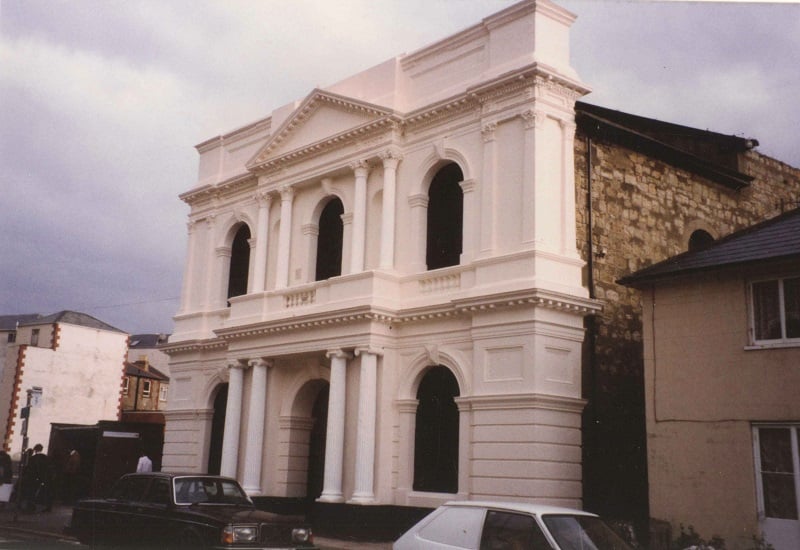
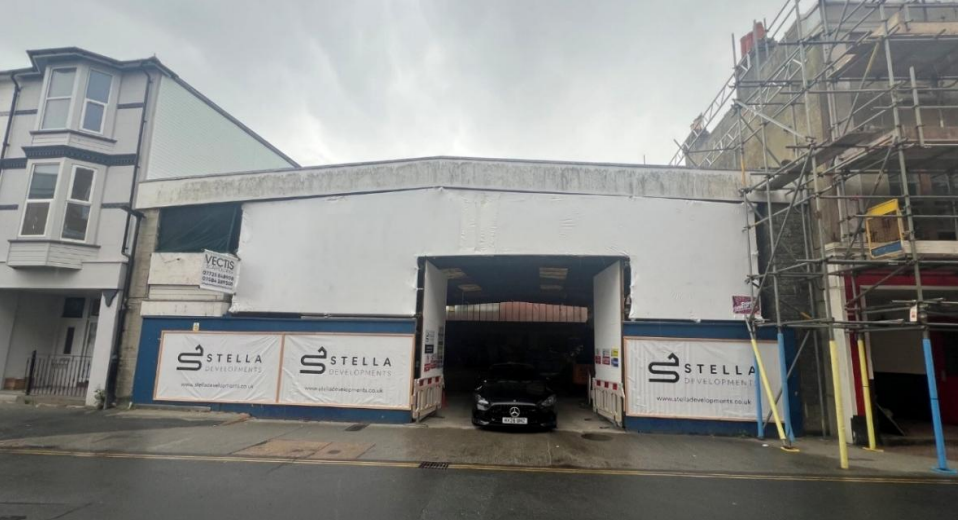
The final act came in 1990 when the interior was largely demolished and converted into flats, although the Grade II listed façade was retained. Today, passers-by can still see part of the structure that once housed Ventnor Town Hall, the old theatre and Coconut Grove itself.
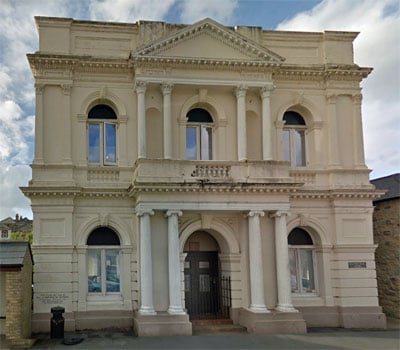
The building’s story spans well over a century, encompassing theatre productions, council meetings, manufacturing and nightlife. Yet despite all those different uses, Coconut Grove remains one of its most colourful chapters – a brief period when a Victorian landmark was transformed into a tropical-themed entertainment venue at the height of the disco era.
Do you remember Coconut Grove? Share your memories and photographs in the comments below.










Ventnor was a great place back in the day.
the 70s and 80s were the best.
Nowdays Ventnor is full of overpriced restaurants
and loads of charity shops.
Where did it all go wrong.
I remember the long bar, the lovely big dance floor and going up a few steps to the food, the DJ had a a little raised bit on the edge of the dance floor close to the steps. Comfy seating, plenty of room. Shame young adults don’t have many places to go these days. Remember my t8mes there with great fondness.
I used to do the food there 3 nights a week, The Manager was Robert