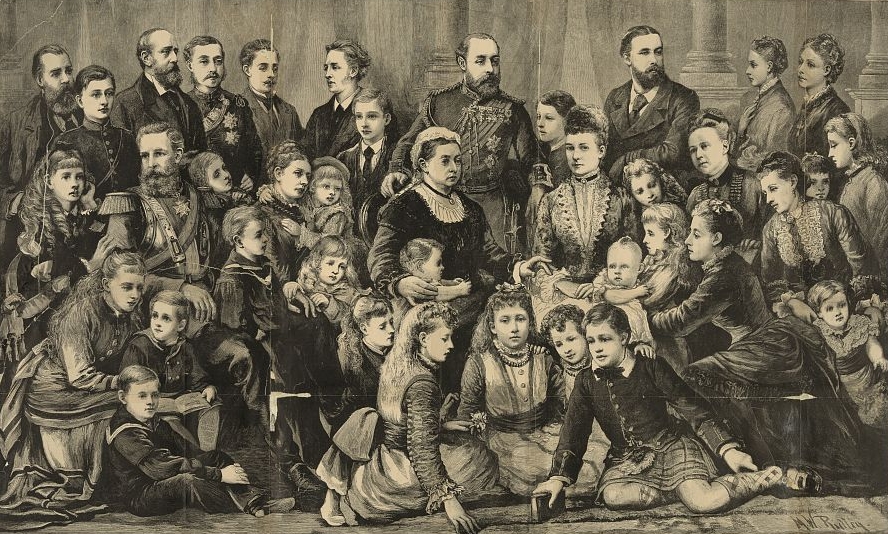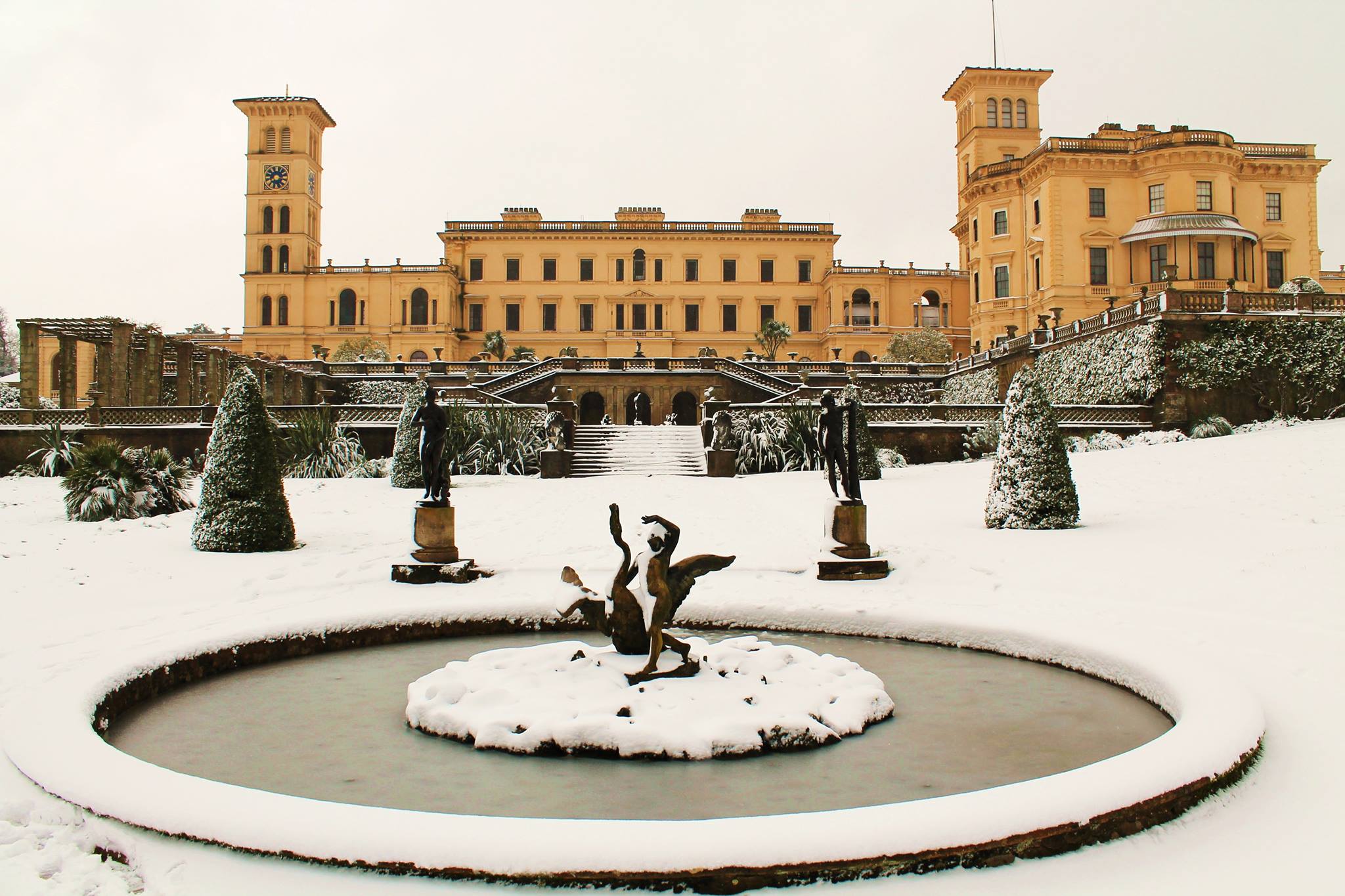




















































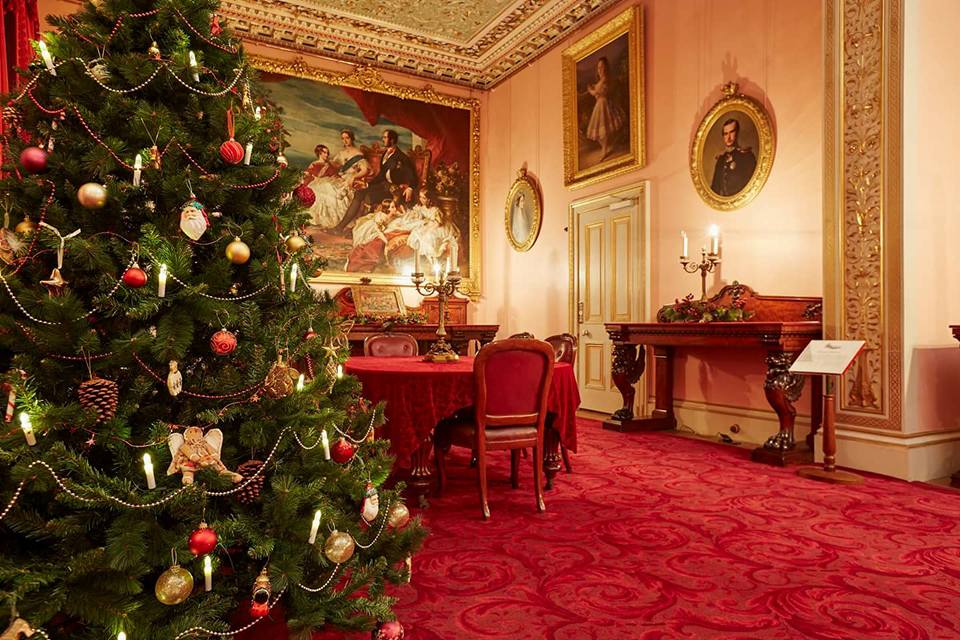
For 4 decades – from 1861 to 1901 – Queen Victoria spent her Christmases at Osborne House here on the Isle of Wight – and they were luxurious and elaborate, to say the least. Christmases at Osborne were on another scale. There were 12 Christmas trees and chimneypieces were adorned with boughs of holly, yew and fern interwoven with cloves and set with candles. Doorways were framed with holly and ivy. B.C. Skottowe described how the Queen spent Christmas at Osborne for The English Illustrated News in 1897:
“The great sideboard is loaded with gold plate which has been polished until it gleams like glass. A mighty Yule log sent from Windsor glows on the hearth. “The table glitters with plate and and glass and candles and the dessert is adorned with the unusual pomp of flags and crackers in all the glory of tinsel and gelatine.”
Queen Victoria and her husband Prince Albert were partly responsible for Christmas as we know it today. Christmas trees are a medieval German tradition, which Albert had brought with him from his native Coburg. An 1848 graphic of the Royal family around a Christmas tree appearing in Illustrated London News popularised the Teutonic tradition throughout the United Kingdom. 
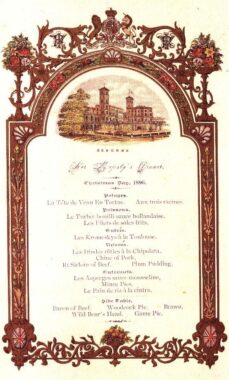


- Potages (Soups): La Tête de Veau En Tortue (head of veal and turtle), Aux trois racines (three root vegetables)
- Poissons (Fish): Le Turbot bouilli sauce hollandaise (Boiled turbot with Hollandaise sauce, Les Filets de soles frits (fried filets of sole)
- Entrée (appetiser): Les Kromeskys à la Toulouse (Toulouse style Croquettes wrapped in bacon)
- Relevés (main course): Les Dindes rôties à la Chipolata (roast turkey with sausages), Chine of Pork, Sirloin of Beef
- Entremets (desserts): Plum pudding, Mince Pies, Le Pain de riz à la cintra (Japanese rice cakes)
The Queen’s Christmas Dinner was made in Windsor Castle before being transported to the Isle of Wight where it would be reheated. The London Mail reported on the Queen’s Christmas in 1898:
“The Queen’s plum pudding is the triumph of Windsor cookery. In an enormous caldron are placed the usual ingredients, well soaked in fine old Madeira or rum, and all the cooks take their turn in stirring round this huge mass – over 200 puddings are made at Windsor. “The duly mixed mess is divided into the required number of puddings, which are then boiled for 12 hours. One of these puddings is sent to every one of the Queen’s immediate relatives and descendants. The mincemeat also involves considerable preparation; it is made according to a recipe of King James I. “The ox from whose carcass the baron of beef for the royal table is to be cut is specially fed up, and in Christmas week the enormous joint is handed over to the tender care of the cooks. So big is it that it is placed before a roaring fire at 8 o’clock in the morning and exposed to the heat until 8 at night.”
Despite all the pomp and grandeur associated with an Osborne House Christmas, the festive period was always tinged with sadness for Victoria herself. On 14th December 1861, her beloved husband Albert had died. On the same day in 1878, her daughter Princess Alice also passed away. The Queen always referred to 14th December as “that terrible day”. For the first decade of Victoria’s widowhood, Christmases were sad and sombre occasions. However with the coming of numerous grandchildren, joy returned to the Queen’s festive season. Altogether, Victoria was mother to 9 children, grandmother to 42 grandchildren, and great-grandmother to 87 great-grandchildren.