


























































Barratt Developments, comprising Barratt Homes and David Wilson Homes, has become the first major housebuilder to be commended for its targets to reduce its carbon emissions by a leading company calling for action against climate change.
The UK’s leading sustainable housebuilder, building homes across Dorset, West Sussex, Hampshire, and the IOW, has officially had its carbon emissions target approved by the Science Based Targets Initiative (SBTi). The steering committee has commended Barratt and David Wilson Homes on its impressive support of the country’s green recovery.
The SBTi is the lead partner of the Business Ambition for 1.5°C campaign, which calls for urgent action to limit global warming by 1.5°C. The company champions a science-based target setting as a way of boosting companies’ competitive advantage in the transition to a low-carbon economy as a way of tackling climate change.


Barratt and David Wilson Homes are committed to reducing its direct carbon emissions from its business operations by 29% before 2025. To achieve this, the company will reduce diesel use in its generators, vehicles, and plant machinery.
The housebuilder will also cut its indirect carbon emissions (those coming from its homes and from its supply chain) by 24% per square meter by 2030. Building lower carbon homes and using more sustainable materials will be a key part of this.
In June, Barratt also announced that it will achieve net-zero greenhouse gas emissions in its own operations by 2040 – becoming the first major housebuilder to make this commitment. It will also deliver new zero-carbon standard house types from 2030 and ensure that 100% of the electricity that it purchases will be renewable by 2025.
Jon Green, Managing Director at Barratt and David Wilson Homes said:
“We are committed to playing our part in the UK’s green recovery and are delighted that our science-based targets have been approved. We believe every business needs to take responsibility to tackle climate change and we will continue to work with all our stakeholders to safeguard the environment.”
Article continues below this advertisement

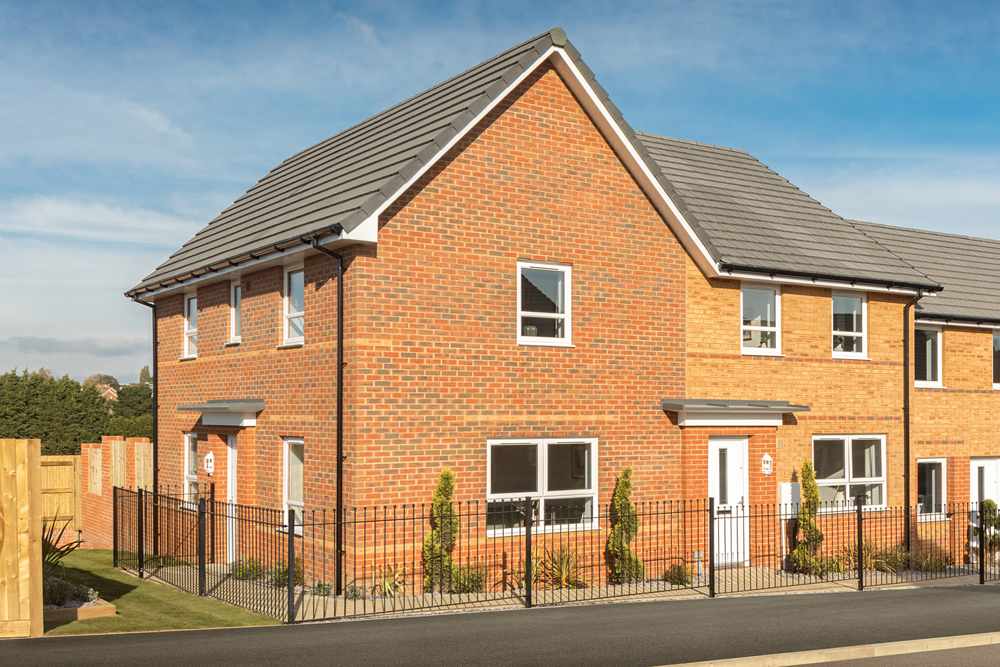
Barratt Homes and David Wilson Homes are bringing new homes to the Isle of Wight through St George’s Gate in Shide.
For more information, visit www.barratthomes.co.uk or https://www.dwh.co.uk/.












however, by virtue of actually building the house in the first place, they..
destroy the greenland that was there before house was built.
destroy the habitats of the creatures/birds and insects that were there before the house was built
cut down the trees that extract co2 from the atmosphere to make way for a house
cut down the trees that put oxygen into the atmosphere that we need to breathe
more rubbish created by building a house
more rubbish created by occupants of new house
more pollution created by new occupants driving around in their cars
more gridlock on roads
longer waiting times at Dr/dentist and shops because of more people
they are only committed to helping to concrete over the planet, destroy the environment and line theirs and the councils pockets with cash.
The UK would do far better by not filling its small land mass with so many people naturally wishing to come here to better ‘their lot’ in life, but in the process reducing our living standards, creating more pollution, congestion, and each another portion of Britain gone forever, thus we lose more of our beautiful countryside and wildlife, as even IF they don’t directly live on a greenfield site themselves, they will, by being here, force someone else to do so.
Our MP needs to raise this issue and soon, as now with rising unemployment to old excuse for having so many arrive is long over and NOT coming back
Blah blah blah. More bought promotion from morons who are destroying the environment in the first place. Something stinks as usual.
Cannot see much green now though can you??
Lots of good points re destroying the environment, AND not a solar panel to be seen!
With limited space now, ALL homes ‘where possible’ ought to be built with a cellar for either a garage use, or storage.
If the Victorians could build such without modern diggers, water proofing, and pumps for problem drainage, then I am sure such would be easy now.