




















































Island Echo takes a look at Isle of Wight Christmas traditions, some of which have survived to the present day…
The ‘Wold Hark’: the Isle of Wight Christmas Carol
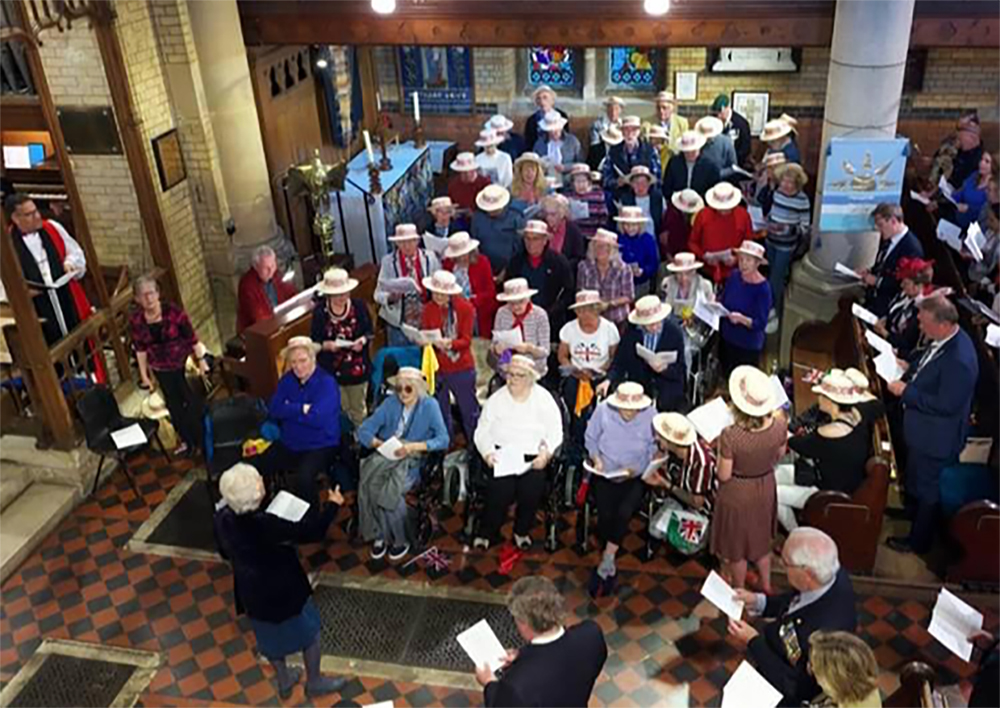
What would Christmas be without Christ? The Isle of Wight was predominantly Christian for 1,300 years: from 686AD until the present century. The 2021 census showed the number of Christians on the Island has fallen to just 47.7% of residents. The churches – sadly – are mainly empty even in the festive season. However, until recent decades Christianity was central to Christmas, and the village church would have been packed. There is one Christmas Carol that is unique to the Isle of Wight: ‘The Wold (old) Hark’ also known as ‘the Newchurch Carol’. Its lyrics were recorded by Charles Richards of Newchurch in 1863. The first verse is as follows: Hark! Hark what news the Angels bring. Glad tidings of a new born King; Who is the saviour of mankind, In whom we may salvation find The carol is still sung by Newchurch male voice choir to this day… 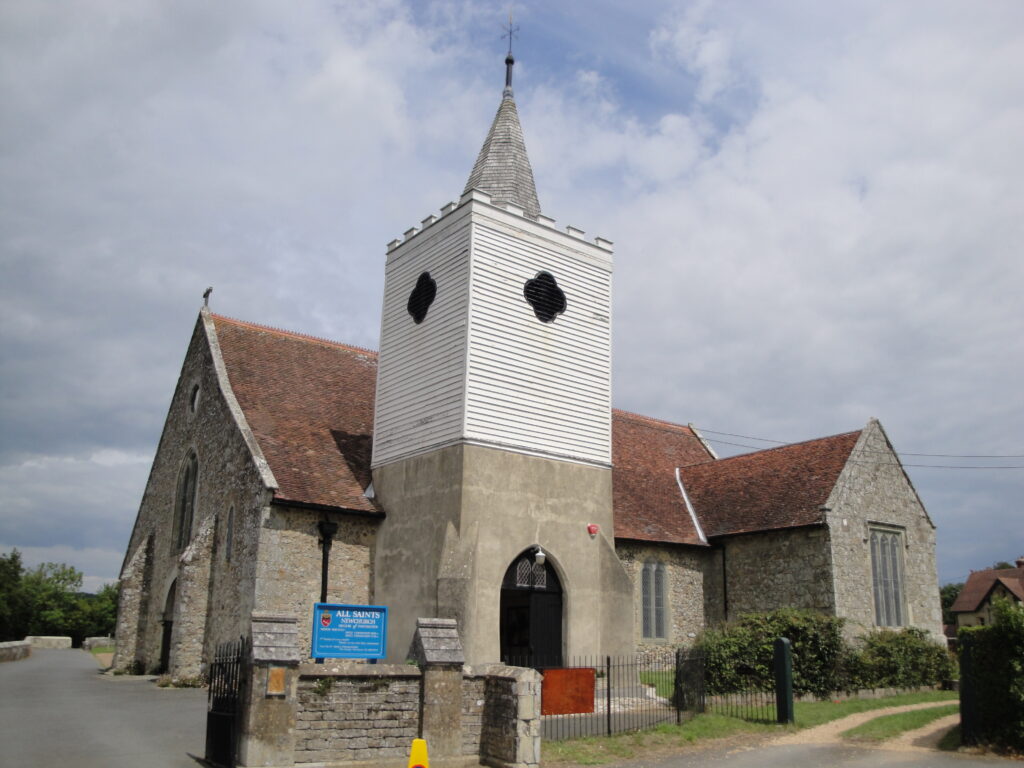
Christmas Dinner
While the gentry would feast on (for example) a hog’s head on Christmas Day, poorer folk would make do with simpler fare. In the 19th century, goose was the most popular Christmas bird. However, this was something the average family would have to save up for. Pub owners would help out with ‘goose clubs’, a kind of savings club that began around October. Every week, after collecting their wages, working men would hand over a shilling (5p) to the publican to reserve a goose for the Christmas table. Beef was also a popular Christmas dinner. This is the origin of the Isle of Wight Gilten Market – the only such market in the country – in which the winning steer would have its horns painted gold. 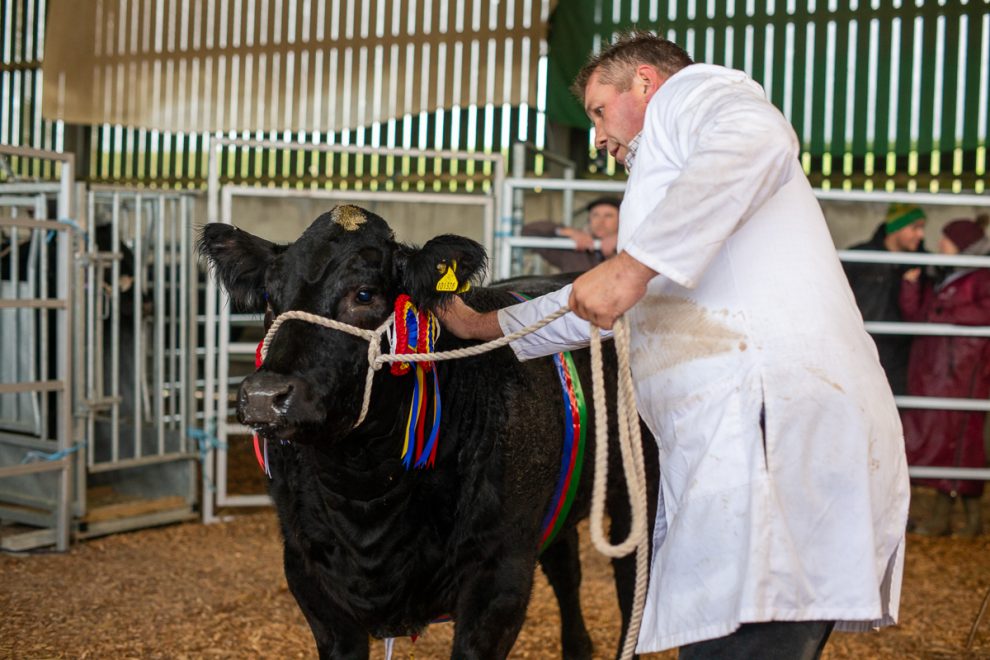

Christmas Decorations
In bygone times, there were, of course, no Christmas lights. All decorations would come from nature. Decorations would be put up late on Christmas Eve – a child would go to bed on 24th December to wake up on Christmas Day to find the village magically transformed. The plants used for Christmas decorations on the Isle of Wight were:
- Mistletoe: to be hung above a door, where a kiss could be claimed. A mistletoe berry could be removed for every kiss granted. The ‘magical’ powers of mistletoe derive from pagan beliefs from the time of the druids. For this reason, it was – at one time – banned from churches.
- Holly: which at one time was referred to simply as ‘Christmas’ on the Isle of Wight. For some Christians, the sharp leaves represented Christ’s crown of thorns, and the red berries – his blood. However, again the use of holly goes back to pagan times, as it was used by druids to celebrate the winter solstice.
- Ivy: this plant was revered for keeping its leaves in winter and associated with eternal life. Holly was considered to be the ‘male’ plant, and Ivy the ‘female’. Ivy was thought to help with the recovery of sick animals and was sometimes added to the feed of animals on Christmas morning to ward away evil spirits.
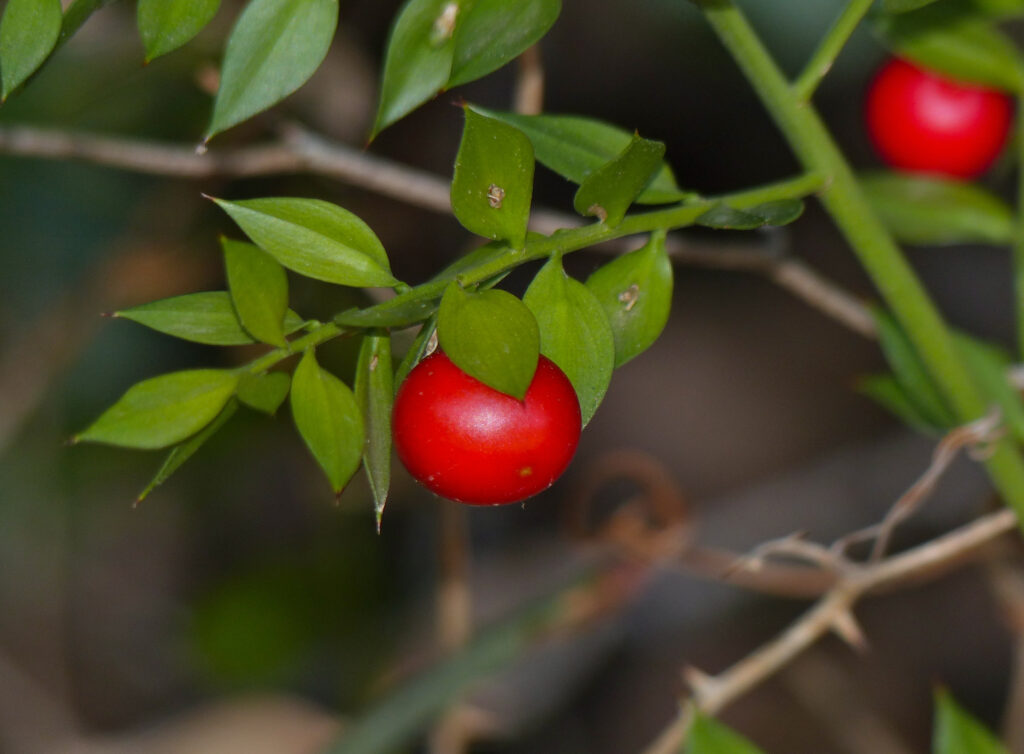
- Butcher’s Broom: this was known on the Island as ‘box’ or ‘French holly’. It is a plant of the lily family that grows in ancient woodland and produces greenish-white flowers and large, scarlet berries. In the 19th century, butchers would adorn their cuts of meat with this plant.
Mummers’ Plays
The highlight of Christmas Day on the Isle of Wight in bygone times came in the evening with the performance of the village Mummers’ Play. This was a costumed pageant and the forerunner of the modern pantomime. The Mummers’ Play often took the form of a battle between good and evil. On the side of ‘good’ were Father and Mother Christmas and St George, who were pitted against the ‘evil’ characters of the French Knight and his dragon. A script of a 19th-century Calbourne Mummers’ Play appears in William Long’s Dictionary of the Isle of Wight Dialect, published in 1886. The practice continued into the early 20th century, with the last known performance of a traditional Isle of Wight Mummers’ Play being recorded in Bembridge in 1911. Other Isle of Wight locations where Mummers Plays are known to have been performed are Brading, Brighstone, Chale, East Cowes, Freshwater, Kingston/Shorwell, St Helens, Seaview and Yarmouth. Frank Adams, who played the part of St George in the 1911 Bembridge Mummers’ Play recalled his opening lines as follows: In comes I, St George, tonight The man that wears the stars so bright I come here tonight to save that pretty maid And kill that Turkish Knight The Mummers Play tradition has been revived on the Isle of Wight in the 21st century…