






















































 The concept of a free-market economy remains relevant, especially for countries striving for sustainable economic development, and Ukraine is no exception. These conditions have become particularly pressing in light of both internal and external risks. Two examples underscore this reality: the escalating national debt and, concurrently, the inadequate allocation of funds for stadiums and infrastructure.
Understanding a free market economy
A free-market economy is an economic system in which key economic decisions are made by the market rather than the state. Market forces, such as demand and supply, competition, and freedom of choice, determine the prices for goods and services, production volumes, and resource allocation. A free-market economy promotes the efficient use of resources, stimulates entrepreneurship and innovation, and ultimately leads to stable economic growth. Does it sound like a utopia? It indeed works this way because the foundation of a free-market economy is not someone’s desire to disperse funds on questionable projects, but rather specific components.


The free market
This is the cornerstone of a free-market economy. If the market is not artificially regulated (i.e., by government intervention), decisions regarding production volume, prices, and resource allocation are made based on demand and supply. For instance, if a loaf of bread costs 50 hryvnias, it is the result of market conditions. Attempts to artificially fix this price at 15 hryvnias would simply kill businesses. This wouldn’t increase the availability of bread (but might decrease it), and the quality would significantly deteriorate. In a free-market environment, competition among enterprises stimulates efficiency and innovation, contributing to an overall improvement in the quality of goods and services.
Private property
A free-market economy is the doctrine of private property. Every individual and company is entitled to resources, means of production, and the pursuit of profit. We have already witnessed the negative outcomes of the «Everything is for the people» concept. An elementary example can be considered: municipal (i.e., «public») versus private beaches. Which area will be clean, organized, and comfortable? The answer is obvious. This is because a private owner treats it as a resource and a source of income, fostering responsibility and initiative.
Freedom of Choice
In a free-market economy, every individual has the opportunity to choose what, how, where, and to whom they will produce and sell. Whether it brings success or not is determined by the market. No government official can decide what resources and in what quantity need to be created for success. Artificial stimulation of some businesses and restrictions on others by the authorities destroy initiative and affect natural competition.
Non-interference of the state
This is a fundamental component of a free-market economy. In such conditions, the government limits its role and avoids excessive regulation. This allows market mechanisms to independently respond to changes in demand and supply, promoting the efficient functioning of the system. Currently, in Ukraine, we observe the opposite situation: almost a real socialism, where the number of officials increases, everything is regulated everywhere, corruption exceeds all limits, and entrepreneurs are perceived not as creators of the future but as «geese to be plucked». 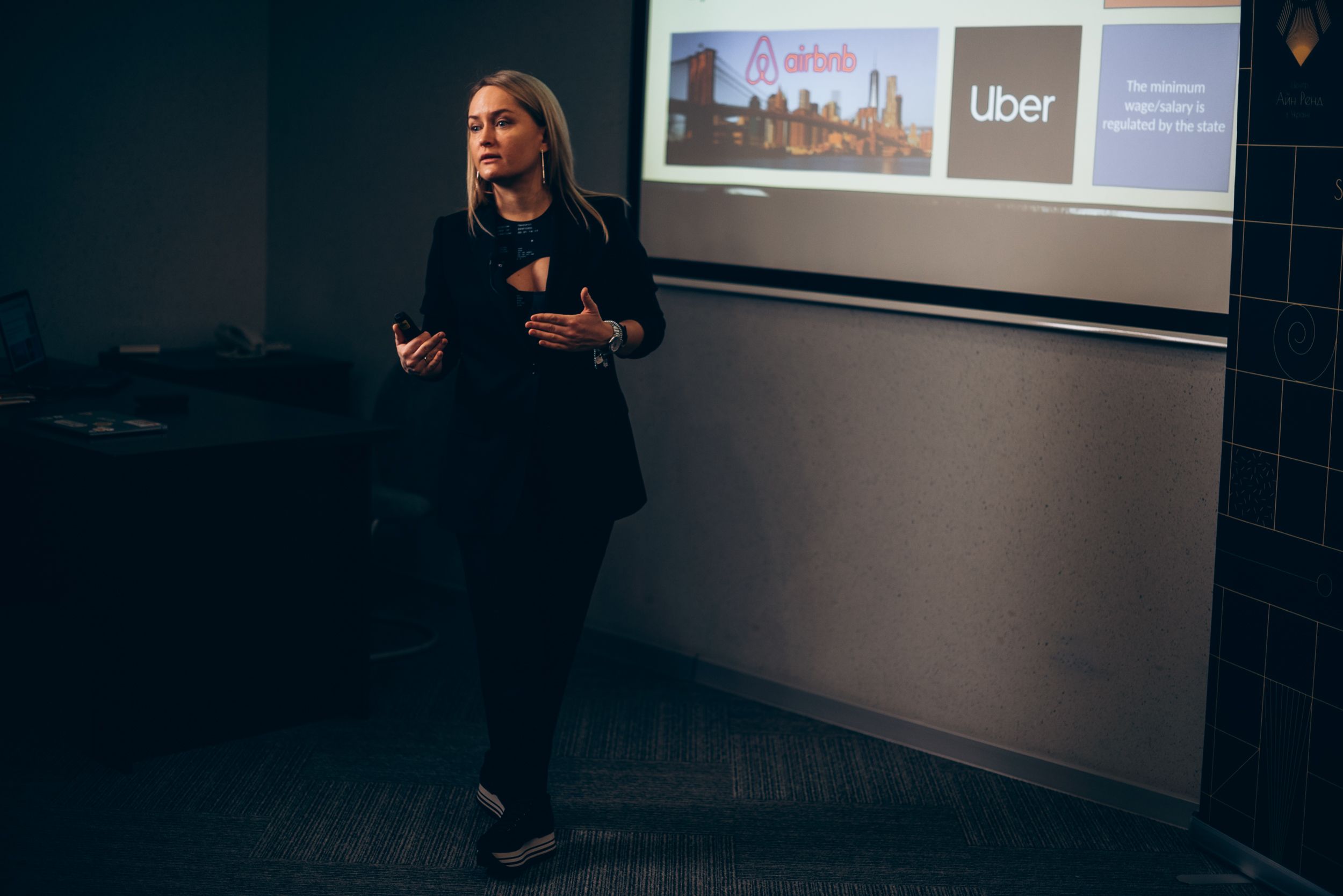
Free-market economy — is it a part of libertarianism?
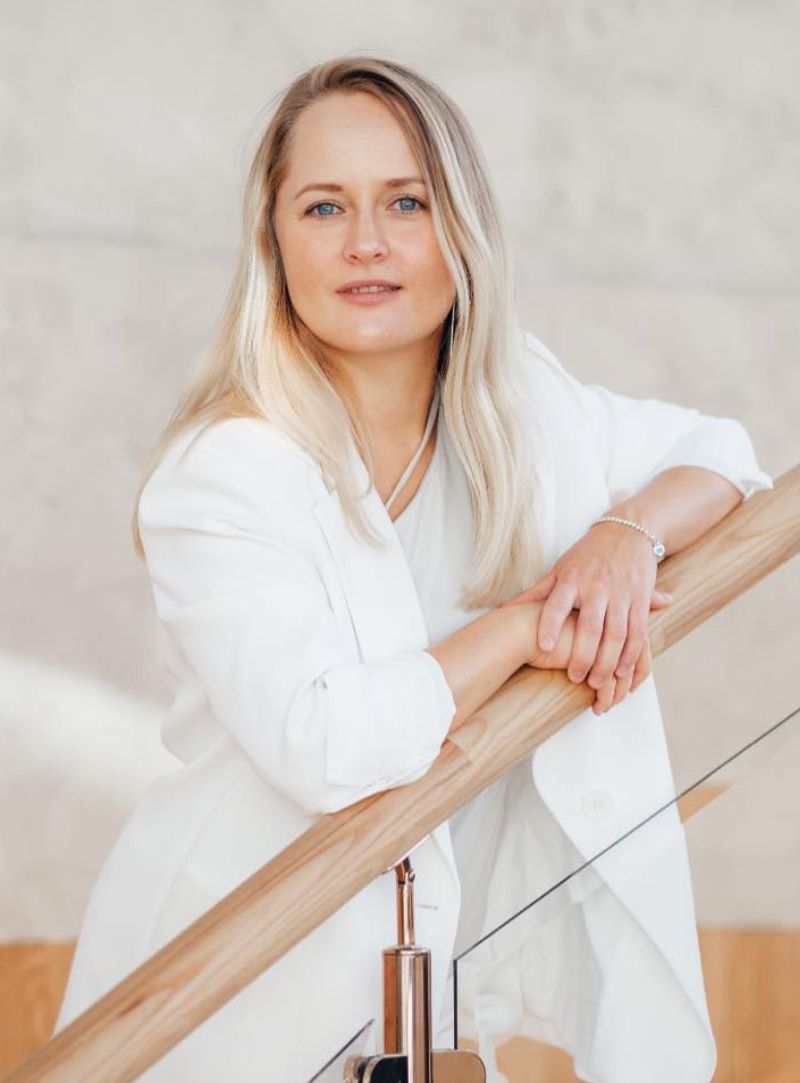
Exactly so, and such a path is the most acceptable for Ukraine if we aspire to a truly successful future. «Libertarianism is a political philosophy that advocates for individual freedom from state intervention. And a free-market economy is a necessary element of such freedom», — emphasizes Yana Matviychuk. It’s challenging to discuss the advantages of libertarianism within the confines of one article. But, briefly, it includes:

- Rational use of state resources;
- reduction of tax pressure and even abolishment of most taxes;
- minimization of state regulatory principles;
- maximum protection of private property.
Some of these principles have been implemented by the most successful countries. For example, in the United States, private property has been sacred for several centuries. We see a vivid example of this in Martin Scorsese’s film «Gangs of New York». What do we see? The main context: Native Americans find oil on the territory of their reservation, gaining significant wealth, and no «white» person can take away their property by force (so they have to act cunningly and deceitfully, but that’s another context). And what would happen in Ukraine? The state would simply «take away» this land from the people in the first months.
Free economy is not utopia: validated by successful ukrainians
Since 2013, Yana Matviychuk has been discussing business and economics on her YouTube channel, «Business Arena». She shares successful business experiences and conducts meetings with entrepreneurs and economic experts in Ukraine, including Volodymyr Popereshniuk, Eric Nayman, Serhiy Haidai, and many others. Most of them agree: state pressure on businesses and property in Ukraine is extraordinary, resembling classical socialist schemes of «take and distribute», especially lately. Honest businesses are seized, and the spoils are divided among political clans. In her videos, Yana Matviychuk expresses her support for the principles of a free economy and emphasizes the importance of creating a favorable environment for business. She identifies competition, freedom of choice, and private property as key components that help her and other entrepreneurs achieve success. «Only entrepreneurial activity can give Ukraine a «second wind» in times of war and, especially, post-war revival. We cannot live in debt forever. We need to create our own values», — emphasizes Yana Matviychuk.
Free economy: countries implementing its principles
Many countries have successfully implemented a free-market economic foundation, achieving sustainable growth and prosperity. For instance, Singapore managed to reduce the tax burden, create open conditions for international trade, and eliminate corrupt practices among officials, establishing the most competitive economy globally. However, the Singaporean model deviates from libertarianism, as the state owns key businesses and engages in planning. The advantage lies in the absence of pressure on businesses and the absence of bribery, creating favorable conditions for prosperity compared to Ukraine. Meanwhile, in Argentina, there is a chance to become a fully libertarian state and finally debunk the myth that libertarianism is utopian. In 2023, libertarian Javier Milei became the country’s president, declaring a policy of a free economy aimed at the nation’s growth and development. He announced measures such as
- reducing the tax burden on businesses and citizens;
- eliminating the state’s key role in economic regulation;
- switching from an inefficient national currency to a stable international one;
- maximizing protection of private property;
- severing ties with communist regimes (referring to Russia, Brazil, and China);
- abolishing the Central Bank;
- drastically cutting state expenditures (rational use of state resources).
His atypical policy has led international media to label him a «right-wing populist». However, Javier and his team have a genuine opportunity to prove that reducing the state’s role and embracing a free market are the foundations of economic miracles. «A free economy is precisely what Ukraine needs now. It allows people to realize their potential, create new jobs, and make every Ukrainian family prosperous. We have many talented individuals who can thrive in conditions of free competition and the absence of «goose pluckers», — emphasizes Yana Matviychuk.