































































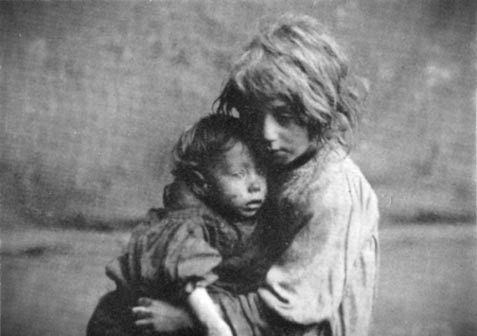

Chale girl Frances (Fanny) Stallard was sentenced to death at Winchester Assizes for the murder of her daughter Agnes on 4th July 1887.
Frances had fallen pregnant at the age of 19 to a local seaman George Gattrell. Her child was born in the local workhouse at St Mary’s.
After the birth, Fanny found work in service in Ventnor. Agnes was left with a foster mother in Newbridge.


Sadly, Frances heard from a local policeman that her child was being mistreated. She then took Agnes from her foster mother, leaving her daughter at her mother’s house in Chale.
The grandmother was unable to care for Agnes. She was the only wage earner in the house and was already supporting 2 severely disabled children.
Frances told her mother that the father’s family would take care of the infant in Lymington. She would take her daughter to 1st to Wroxall, from where she would be taken by Gattrell’s sister to the mainland.
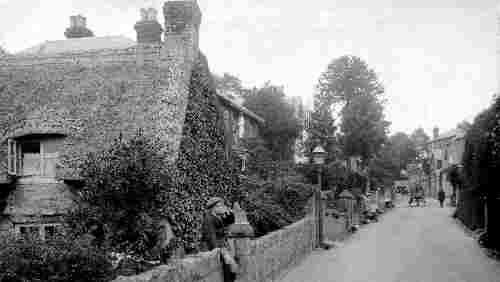
The unhappy woman set off for Wroxall with her daughter and returned without her. Following concerns for the child’s welfare, Agnes’ body was found in a culvert on a country lane between Whitwell and Roud by Police Sergeant Ransome and PC Allen.
Fanny was taken into custody for suspected murder. She apparently confessed to suffocating her child with a piece of flannel.
At the trial, the judge Lord Chief Justice Coleridge – told the jury:
“It was not their duty to be merciful. If they thought the prisoner guilty they must say so; if they thought otherwise they must also say so. They must, however, remember that it was just as important to the country that guilt should be punished as it was to the prisoner to be set at liberty.”
After an hour’s deliberation, the jury found Fanny guilty. However, the jury foreman strongly recommended mercy on the grounds of her youth, her desertion, and the general statement of the whole circumstances.
The judge donned the black cap and said in passing sentence:
“The prisoner had been found guilty of murder, and not of murder simply, but of the murder of her own child, whom she, of all other human beings, was bound to cherish, protect and love.
“She must hear from his lips that which was the sentence, not of himself, but of the law; and that was that she must die.
“The prisoner be taken to a place of execution and be hanged by the neck till she was dead.
When asked if there was any reason why the sentence should not be carried out, Frances replied negatively.
However, that was not the end of the matter. A visitor to Chale at the time – a Mrs Houstoun – got to hear about the case and campaigned on her behalf.
Mrs Houstoun found some powerful arguments in Fanny’s defence. These included:
- her child Agnes had been a sickly child since birth with nosebleeds and weak breathing
- her home circumstances were terrible with a dead and previously drunken father, a brother with severe learning difficulties and another blinded
- it was said that were it not for the kindness of neighbours, Fanny’s family would have starved
- Fanny had not been cautioned by the 2 policemen who interviewed her
- her defence solicitor had been appointed at the last minute and there were many details of the case he had failed to bring to the attention of the court.
Mrs Houstoun set about writing to newspapers and contacting MPs to save Fanny from the hangman’s noose. Over 100 MPs signed a petition for clemency for Fanny.
36 hours before the death sentence was to be carried out, Frances Stallard was reprieved from execution. Her sentence was commuted to life imprisonment.
Mrs Houstoun continued to campaign on Fanny’s behalf. To this end, she published a book Only a Woman’s Life asserting the innocence of the unfortunate girl from Chale.
She was supported by the prison chaplain who had spoken with Fanny in the condemned cell shortly before she was due to be executed.
The chaplain had written to Mrs Houstoun, saying:
“The thing concerning her which fixed itself more particularly upon my mind was her exact knowledge of the Bible.
“It gave me the very strong impression that under more favourable circumstances, she would have made an admirable Sunday school teacher.”
According to the Isle of Wight Times:
“The people of the village where she lived entirely sympathise with Mrs Houston’s efforts. Opinions vary as to her innocence or guilt, but there are no 2 opinions on the point that her punishment has been sufficient.”
6 months after Only a Woman’s Life was published, Frances Stallard was released from prison. She had been incarcerated for 12 years.
Following her release, Fanny returned to the Isle of Wight, living 1st in Ryde and then at Sandown.
She died in Brading in 1920 at the age of 66.











Thank you Island Echo – fascinating local history.
More please!
Very well said.
I echo that.
What a thoroughly miserable tale. Pass the whisky ….
Does anyone know where I can get the book would like to read it but can’t find it??
The book “Only a woman’s life; by one who saved it” (1889), its full title, was written by Matilda Charlotte Houstoun (the spelling of the author’s name is incorrect in the article above). A few of her books are available as reprints, but this one is probably of limited interest.
Contemporary newspaper reports and an Isle of Wight author have named her ‘Houston’. However, I believe ‘Houstoun’ is the correct spelling.
More about the case here: https://en.wikipedia.org/wiki/Matilda_Charlotte_Houstoun#Activism
Matilda Charlotte Houstoun was a great travel writer and women’s rights activist. Look her up on Wikipedia. A very interesting woman who lived a colourful life.
This houston woman sounds like a woke doogooder.
I actually read a little further about Houstoun and found that she was well ahead of her time. She contributed greatly to the emancipation of women and raised awareness of many social issues.
In other words a woke doogooder.
My split personality issue has arisen again. Apologies to any I have offended with my bile.
Could do with judges like that today
Sad story of poverty. Let’s hope things never return to that…