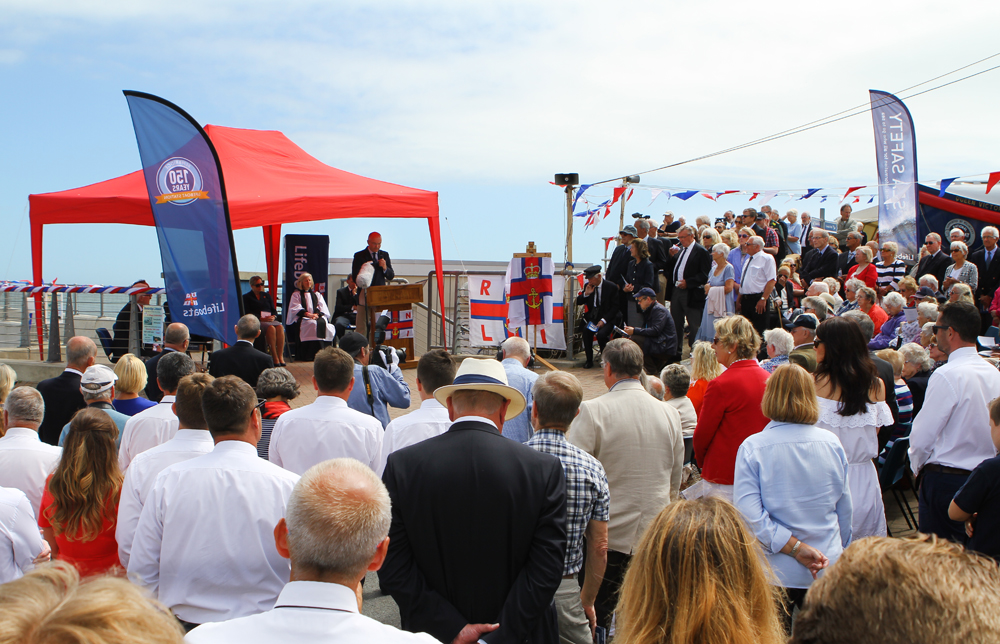





































 Brave lifeboatmen past and present, dignitaries and members of the local community came together on Saturday afternoon to celebrate 150 years of life saving by Bembridge RNLI.
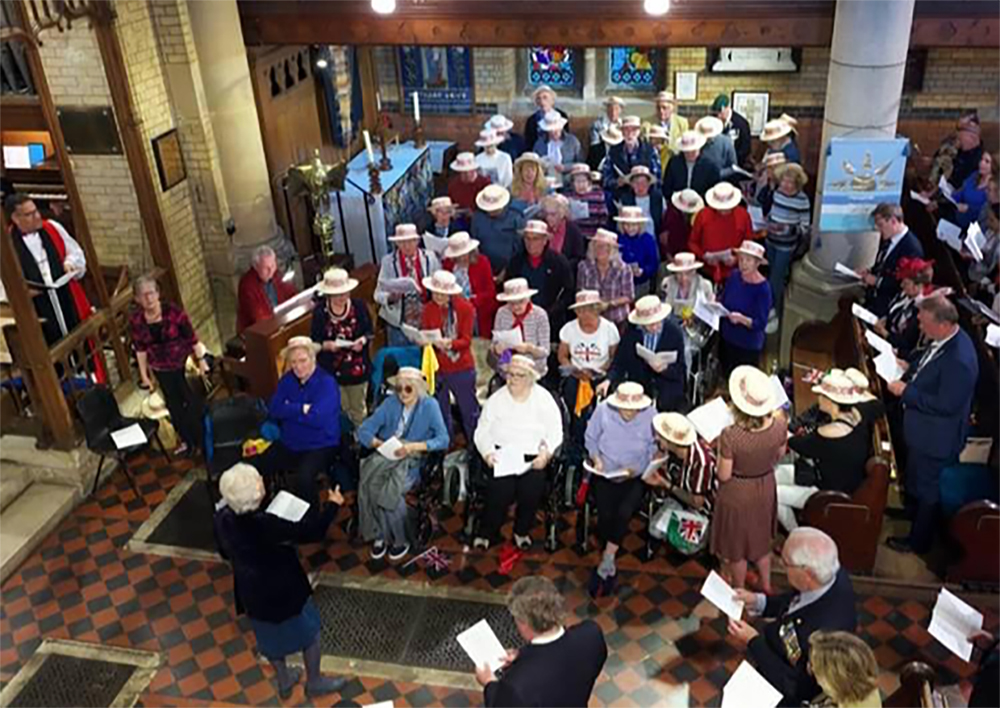
The celebration begun with a Service of Thanksgiving conducted by the Honorary Chaplain to Bembridge RNLI, Reverend Dr Amanda Bloor. Members of the lifeboat crew and guild and their families; representatives of the RNLI; the local community; past members of the crew and relatives of a number of past Coxswains congregated outside the inshore boathouse at 12 noon.
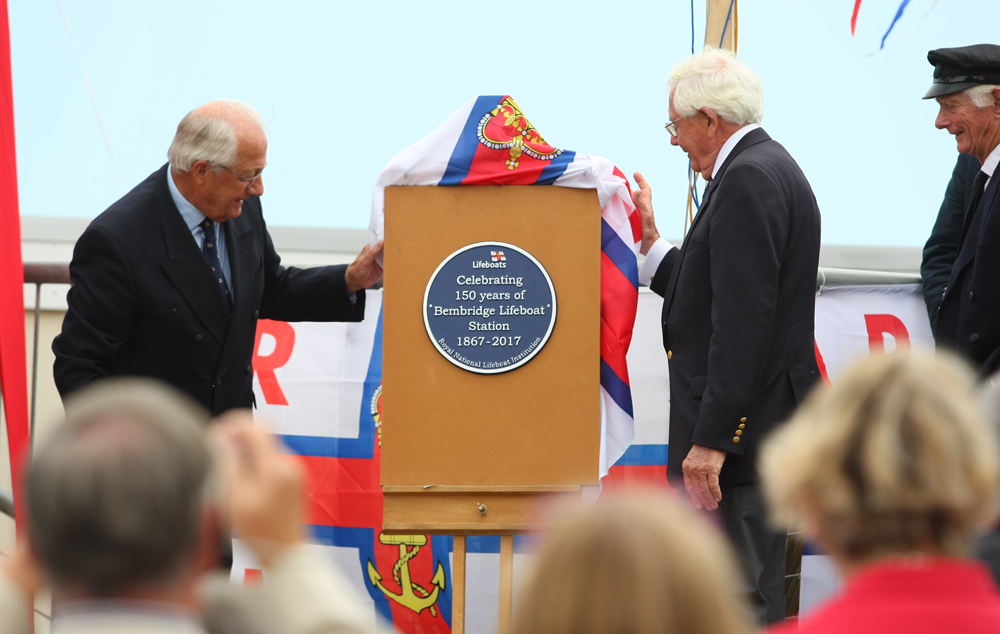
The Lord Lieutenant for the Isle of Wight and President of the Isle of Wight Lifeboat Board, Major General Martin White CB CBE JP unveiled a commemorative plaque to mark the occasion. Michael Sturrock, Trustee of the RNLI, presented a 150-year Vellum to the station.


Saturday’s event also saw coxswain Steve Simmonds recognised for his 30 years service to the RNLI. He has been coxswain of Bembridge Lifeboat since 2003.
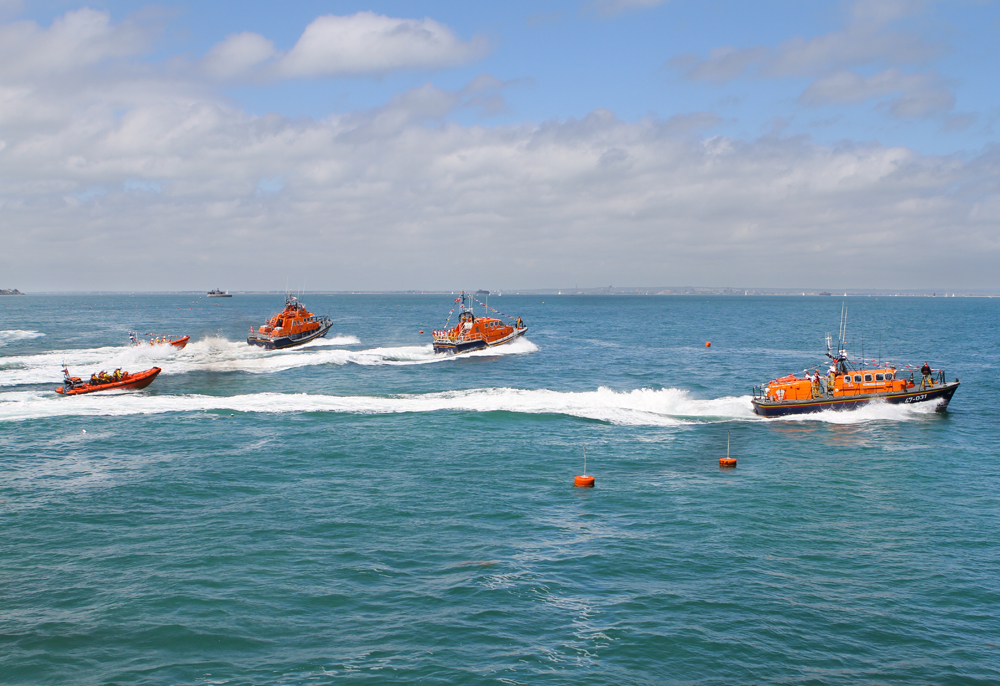
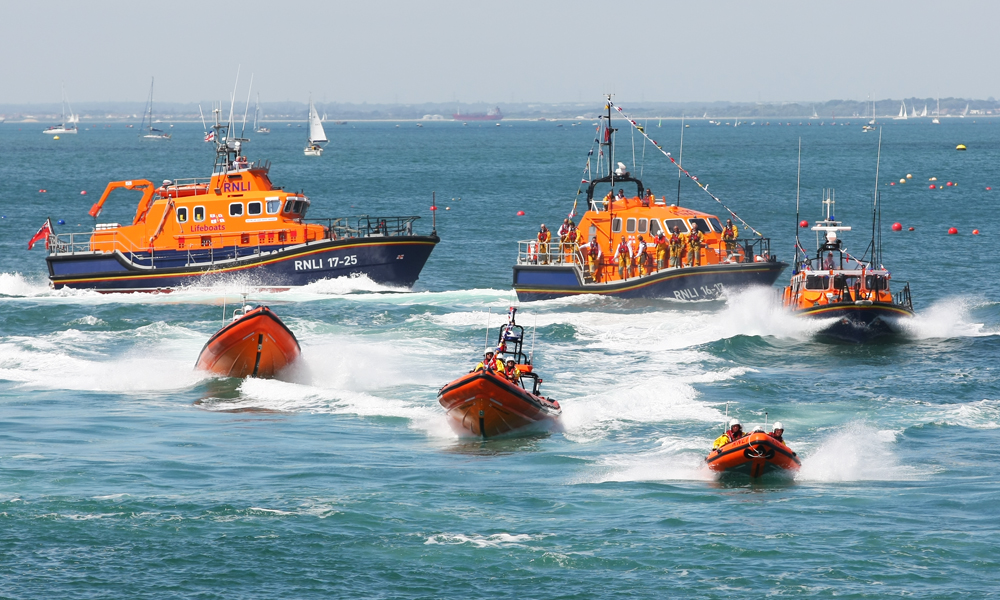
Following the ceremony, the Bembridge Lifeboats Alfred Albert Williams (Tamar 16-17) and Norman Harvey (D-778), together with lifeboats from Yarmouth, Portsmouth, Hayling Island and Selsey, sailed past the station at varying speeds and in different formations, much to the pleasure of the crowds that had gathered.
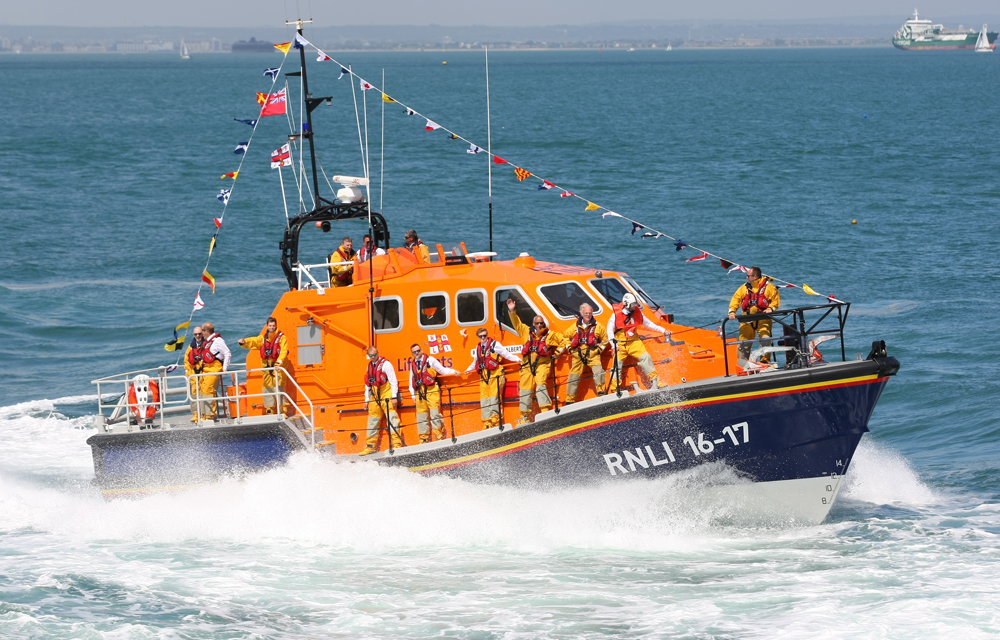
The current All Weather Lifeboat, the Tamar-class, is expected to remain in service for over 30 years with advances in technology resulting in an increased life span. The previous lifeboat, the RNLB Max Aitken III, served at Bembridge for some 23 years.
History of Bembridge RNLI
1867 – The first lifeboat service at Bembridge began. A boathouse was built at Lane End at a cost of £165 and the new lifeboat was launched by means of a carriage, drawn and handled by manpower alone. She was a ‘self-righting pulling boat’, 32 feet in length and 7 feet 6 inches in beam. She was paid for with funds raised by the citizens of Worcester and was therefore named RNLB City of Worcester. The boathouse was enlarged between 1902 and 1903 and was in use until 1922. Since 1964 it has been used to house Inshore lifeboats.

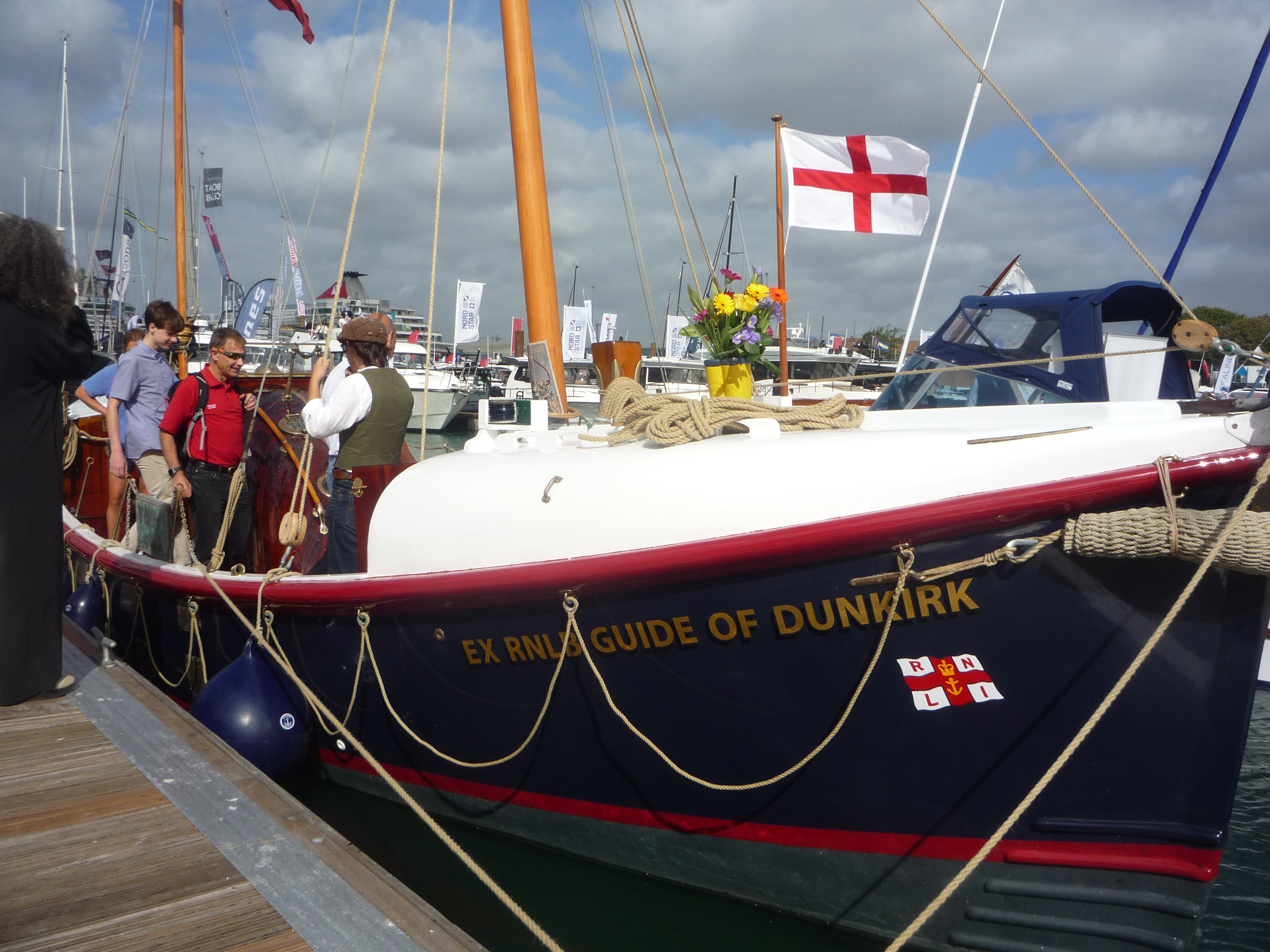
1887/1902 – The second and third lifeboats at Bembridge (1887 and 1902 respectively) were both named RNLB Queen Victoria; they were faster and better equipped than the City of Worcester, having sails as well as oars. The earlier of the two Queen Victorias survives today and was presented at Saturday’s ceremony with kind cooperation of the Isle of Wight Historic Lifeboat Trust.
1922 – The station required a motor lifeboat to replace the old pulling and sailing lifeboat. This change-over would require the construction of a new boathouse. To launch the motor lifeboat the RNLI built a concrete pier almost 200 yards in length from the shore to the outer ridge of rocks that form Bembridge Ledge. The lifeboat was named RNLB Langham (ON 676) after the gentleman donor.
1939 – Further improvements to the boathouse were undertaken to enlarge its capacity to accommodate a new Watson Class twin screw motor lifeboat, the RNLB Jesse Lumb (ON 822). Her service ended 31 years later as the longest-serving lifeboat at Bembridge. For the next 40 years she was on display at the Imperial War Museum at Duxford, Cambridgeshire but last year returned to Cowes.
1964 – Bembridge became one of the first RNLI stations to be equipped with the new D-Class inflatable lifeboat, ON D-8. This inshore lifeboat was housed in the old 1867 boathouse.
1970 – The Offshore boathouse was once again altered and improved to accommodate a new lifeboat – Solent Class RNLB Jack Shayler and the Lees (ON 1009) which served on the station from 1970 to 1987.
1987 – The station was allocated a new Tyne Class lifeboat. The Offshore boathouse doorway once again had to be altered to accommodate the bigger boat. RNLB Max Aitken III (ON 1126) was on the station until 2010. The speed of the Bembridge lifeboat leapt from 9.5 knots to a staggering 18 knots.
1994 – Further improvements were made to the station and vital major repairs made to the slipway. The old station used for the inshore boat at Lane End had work carried out in the roof space for improved crew facilities.
2009 – The RNLI decided a new Tamar Class lifeboat was to be placed at Bembridge. This required the demolition of the original Offshore boathouse and walkway.
Demolition began in May 2009; the Tyne Class lifeboat RNLB Max Aitken III was retired to the RNLI’s Relief Fleet and the station was allocated a Mersey Class RNLB Peggy & Alex Caird (ON 1124) from the relief fleet while the new station was being built. The Peggy & Alex Caird was stationed just outside the harbour on Bembridge Point and was launched across the beach by a semi-submersible fully-tracked tractor. She served the Bembridge station for just over 18 months.
The design brief for the new station was to achieve a facility which would allow the lifeboat to reach 90% of all casualties within 30 minutes of launching, at virtually any point within 10 miles of Bembridge – and in any weather.
2010 – The new boathouse and 174m (190 yards) walkway were completed by October at a cost of £7.65million and the new £2.8million Tamar Class lifeboat was deployed to the re-built station; RNLB Alfred Albert Williams 16-17 (ON 1297) became operational on 10th October 2010. The Tamar’s impressive 25 knot speed is part of the RNLI’s plan for an entire fleet of 25 knot all-weather lifeboats (ALBs) by 2019. The Tamar’s range and endurance at full speed are 250nm and 10 hours.
2011 – The Alfred Albert Williams was named by HRH the Princess Royal on 10th August 2011.
Over 2,200 lives have been saved by the lifeboat crew of Bembridge RNLI since 1867.