











































King Edward VII’s reign almost ended before it had properly begun when he narrowly escaped disaster aboard a yacht off Cowes on 22nd May 1901.
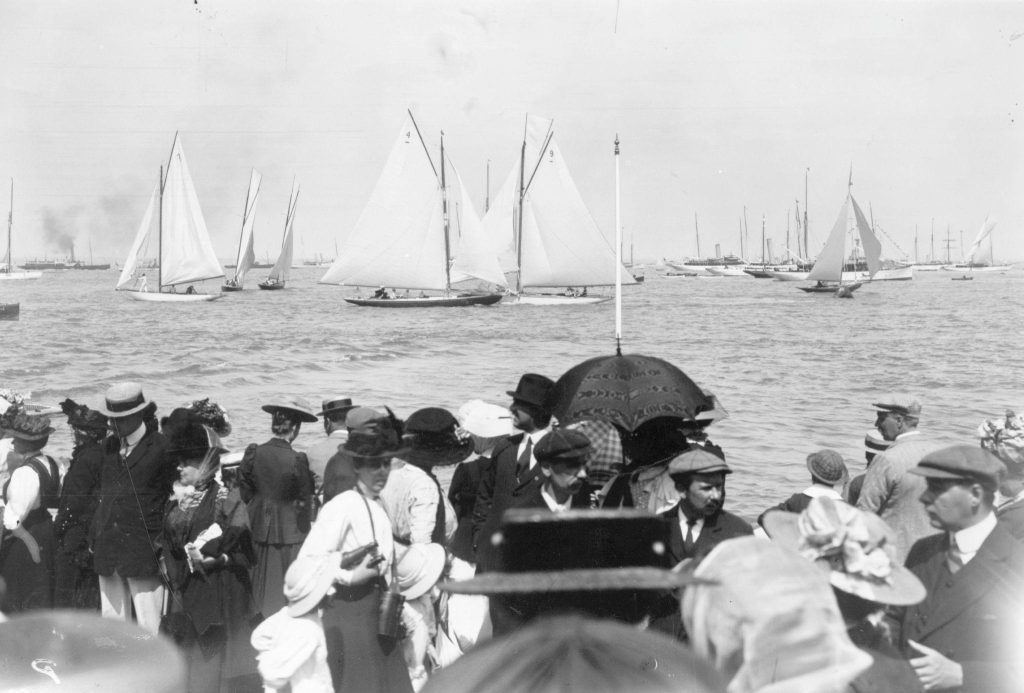
Barely 4 months after the death of Queen Victoria and his accession to the throne, the new King found himself in serious danger in the Solent, in an incident that unfolded just off Cowes, within sight of the Royal Yacht Squadron.
Edward VII was aboard Shamrock II, the latest and most ambitious racing yacht commissioned by Sir Thomas Lipton, the self-made tea magnate who had turned his fortune into a series of high-profile attempts to win the America’s Cup. Built at the cutting edge of yacht design, Shamrock II was intended to bring the famous trophy back from the United States, and like many such challengers she was undergoing intensive trials in the waters off Cowes, where the world’s fastest yachts were regularly tested.

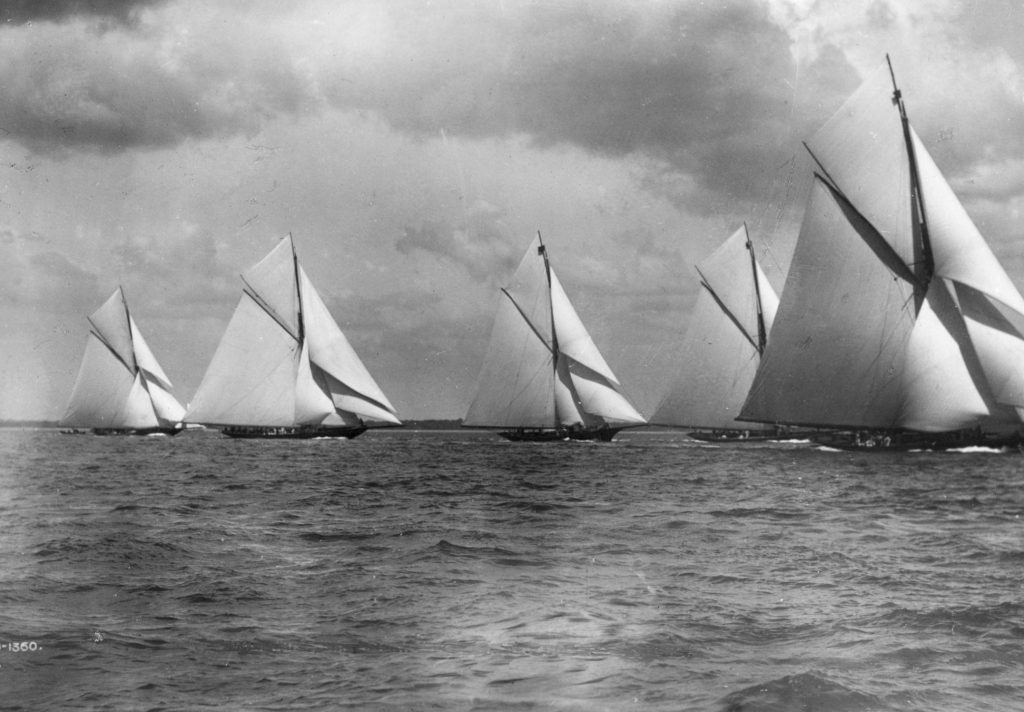
On that May afternoon, the yacht was sailing in the busy stretch between the Royal Yacht Squadron and the treacherous shallows of the Brambles Bank, an area well known to Island sailors for its shifting sands and unpredictable conditions. With yachts, steam launches and naval vessels scattered across the Solent from Egypt Point towards Osborne Bay, the waters off Cowes were alive with activity when the situation suddenly turned.
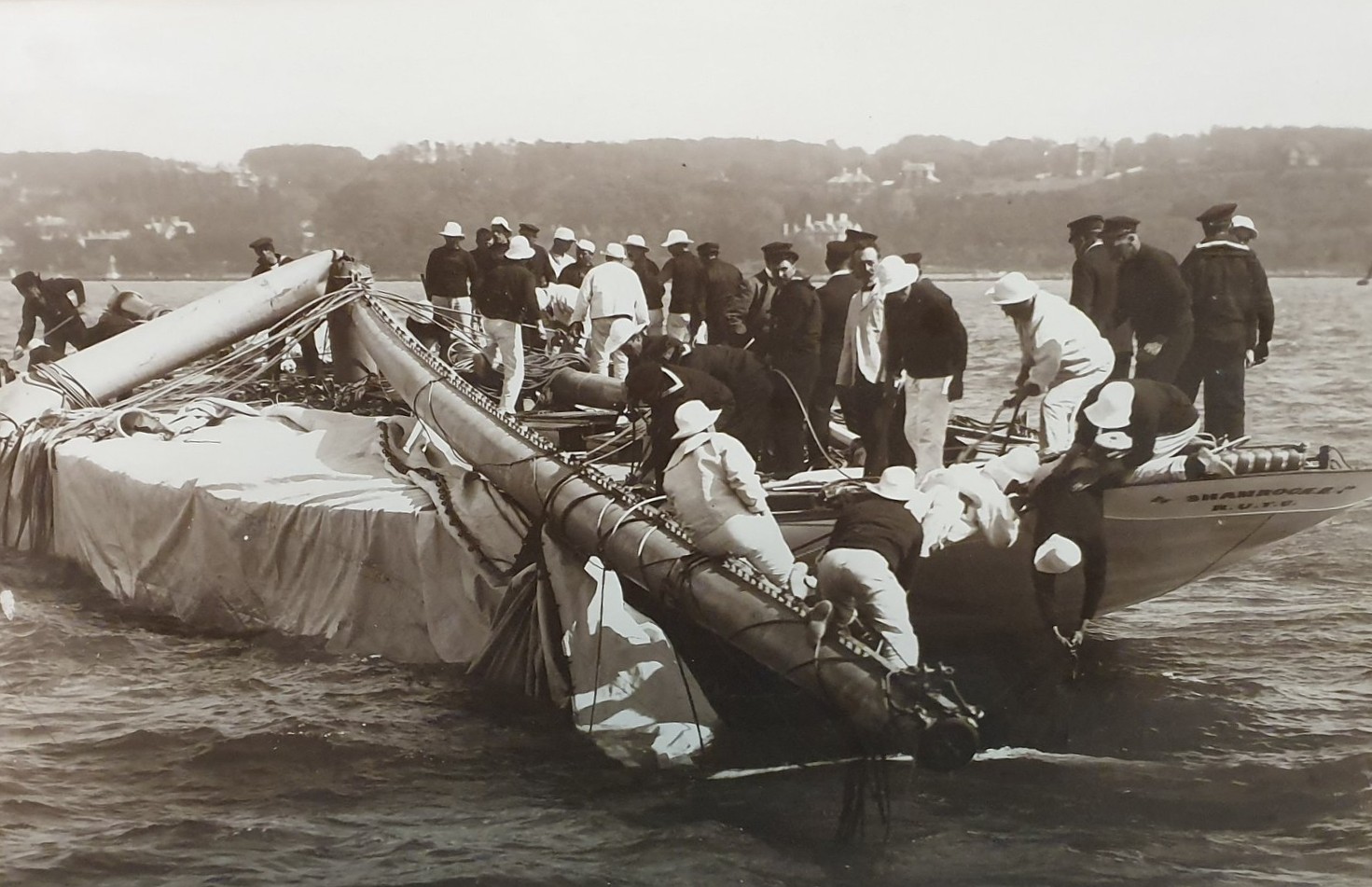
As the breeze freshened and Shamrock II pushed on through the roughening seas, the strain on her towering steel mast became too great. Without warning, it buckled at the point of greatest pressure, and within seconds the entire structure collapsed, sending spars, rigging and heavy canvas crashing down in a tangled, splintering mass across a crowded deck.
Around 40 people were on board, including crew, guests and the King himself, and the scene quickly descended into chaos as torn sails and broken rigging spilled over the side, threatening to drag the yacht into further danger in the unsettled waters off Cowes. Nearby vessels began converging rapidly on the stricken yacht, fearing a far more serious outcome.
At the centre of the danger was the King.
He was positioned near the tiller at the moment the mast gave way, seated out on deck with no cockpit protection, leaving him fully exposed to the collapsing spars and sweeping rigging. The timing was critical; contemporary accounts noted that had the yacht completed her turn into the wind just seconds later, the heavy boom might have swept across the deck with devastating force. In that instant, so early in his reign, the margin between a dramatic mishap and a national tragedy was alarmingly small.
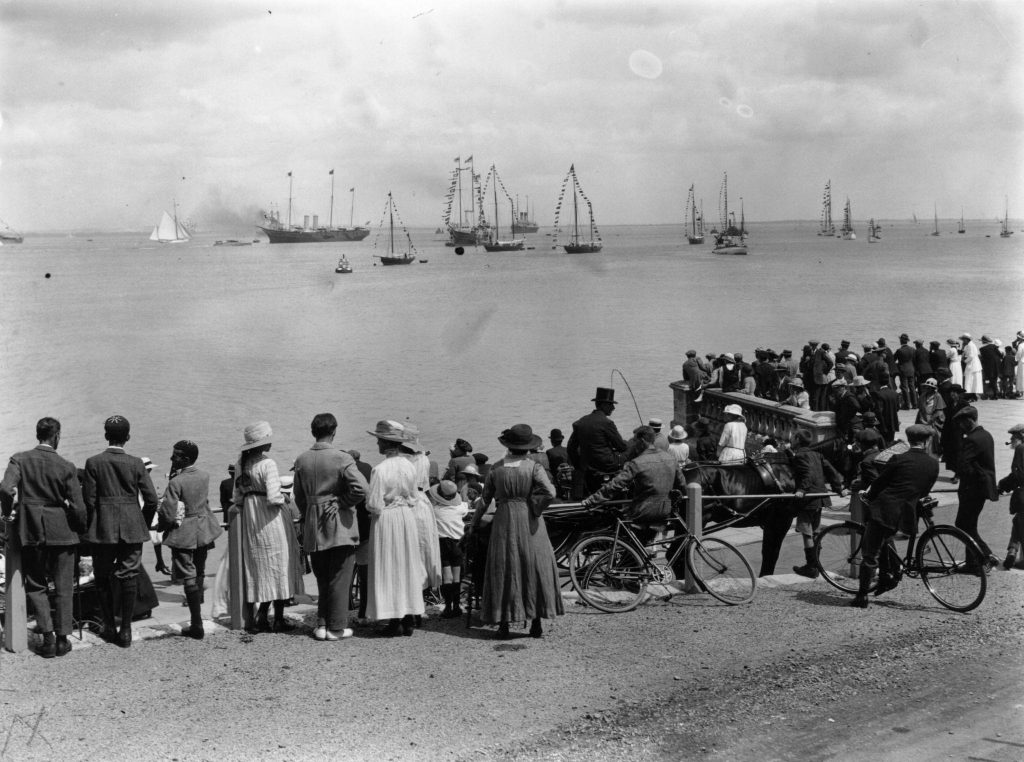
News of the incident quickly spread far beyond the Solent, with the dramatic dismasting and the King’s narrow escape making headlines across the country, briefly placing Cowes at the centre of national attention.
Yet Edward VII’s reaction was notably composed. Although “of course startled”, he “did not appear disturbed by the accident”, according to reports at the time. Remarkably, no one on board suffered serious injury.
In keeping with that composure, the King did not immediately withdraw from the scene. After being transferred to the royal yacht, he returned to circle the damaged Shamrock II, taking a close look at the broken bowsprit and wreckage as it lay in the Solent, just off the Isle of Wight’s northern shore.
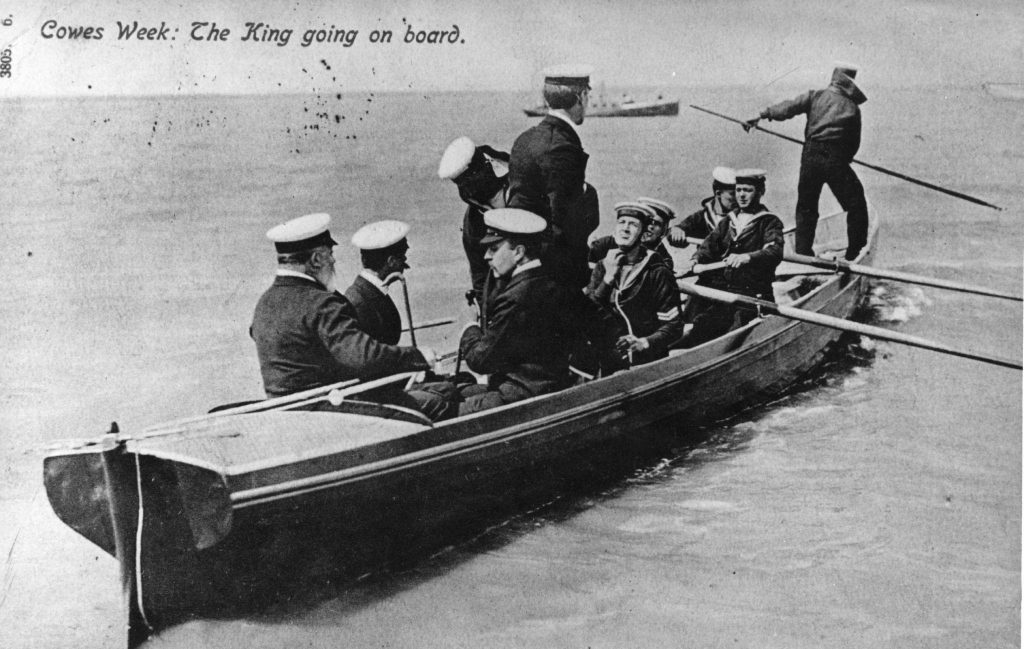
For those watching from nearby vessels or from the shoreline, it would have been an extraordinary sight – a newly crowned King at the centre of a near-disaster in one of the most closely watched stretches of water in the country.
On 22nd May 1901, within sight of Cowes and in waters he knew well, Edward VII came closer than most realised at the time to becoming a monarch whose reign might have ended almost before it had properly begun.