

















































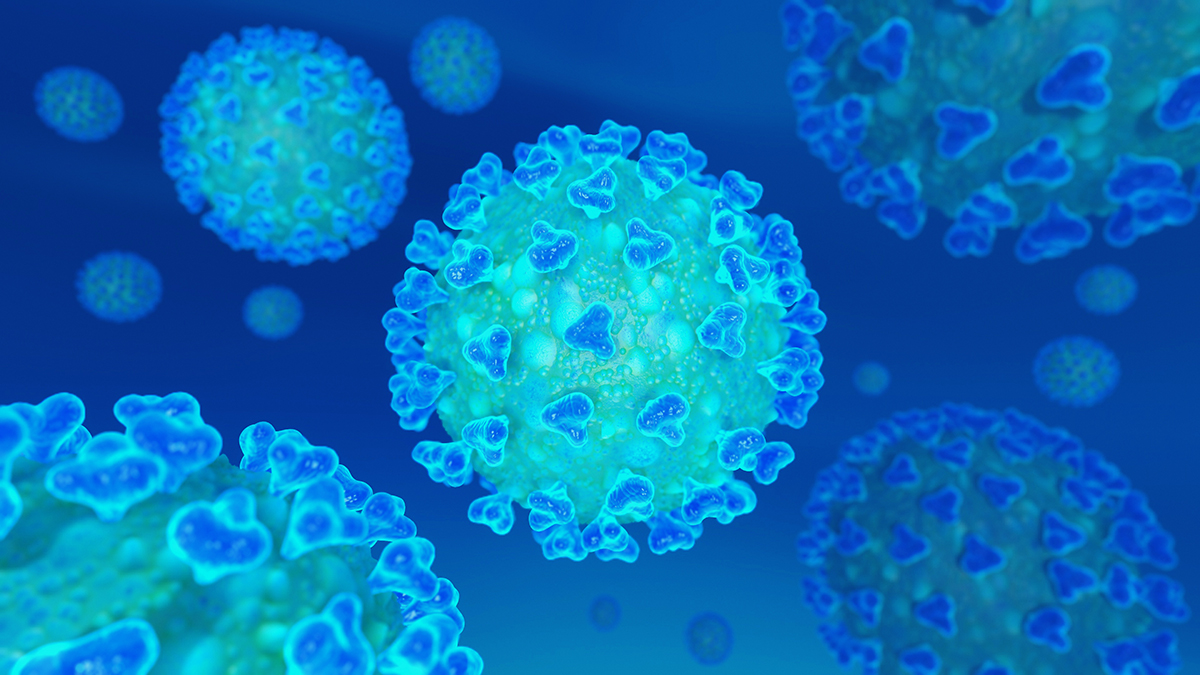

Almost 8 weeks after the first confirmed coronavirus patient was identified on the Isle of Wight, the total number of confirmed cases of COVID-19 sits at 107.
The latest figures from Public Health England show a small increase in the number of cases from 104 on Tuesday to 107 today – an increase of just 3.
NHS England report that there have now been 25 coronavirus deaths locally. It has been confirmed through the Office for National Statistics that 3 people have also died in the community – 2 in care homes and 1 at home – as of 17th April.


The latest information from the Isle of Wight NHS Trust confirms 22 people have recovered from COVID-19 and have been discharged from hospital.
This takes the total number of confirmed active cases on the Isle of Wight to 60, but not all of these individuals are thought to be in hospital.
For the latest information on coronavirus here on the Isle of Wight visit islandecho.co.uk/category/coronavirus.
Symptoms of coronavirus
Stay at home if you have either:
[mks_icon icon="fa-arrow-right" color="#e30f13" type="fa"] a high temperature – this means you feel hot to touch on your chest or back (you do not need to measure your temperature)
[mks_icon icon="fa-arrow-right" color="#e30f13" type="fa"] a new, continuous cough – this means coughing a lot for more than an hour, or 3 or more coughing episodes in 24 hours (if you usually have a cough, it may be worse than usual)
[mks_icon icon="fa-arrow-right" color="#e30f13" type="fa"] shortness of breath.
[mks_icon icon="fa-arrow-right" color="#e30f13" type="fa"] To protect others, do not go to places like a GP surgery, pharmacy or hospital. Stay at home.
The symptoms are similar to other illnesses that are much more common, such as cold and flu. Research shows it takes, on average, around 5 days for symptoms to start showing.
Use the 111 online coronavirus service to find out what to do.
[mks_icon icon="fa-arrow-right" color="#e30f13" type="fa"] Use the 111 coronavirus service for information.
Only call 111 if you cannot get help online.
How long to stay at home
[mks_icon icon="fa-arrow-right" color="#e30f13" type="fa"] if you have symptoms of coronavirus, you'll need to stay at home for 7 days.
[mks_icon icon="fa-arrow-right" color="#e30f13" type="fa"] if you live with someone who has symptoms, you'll need to stay at home for 14 days from the day the first person in the home started having symptoms
[mks_icon icon="fa-exclamation-circle" color="#dd9933" type="fa"] If you live with someone who is 70 or over, has a long-term condition, is pregnant or has a weakened immune system, try to find somewhere else for them to stay for 14 days.
[mks_icon icon="fa-exclamation-circle" color="#dd9933" type="fa"] If you have to stay at home together, try to keep away from each other as much as possible.
Read the NHS advice about staying at home.
How to avoid catching and spreading coronavirus (social distancing)
Everyone should do what they can to stop coronavirus from spreading.
[mks_icon icon="fa-check" color="#81d742" type="fa"] Do
[mks_icon icon="fa-check" color="#81d742" type="fa"] wash your hands with soap and water often – do this for at least 20 seconds
[mks_icon icon="fa-check" color="#81d742" type="fa"] always wash your hands when you get home or into work
[mks_icon icon="fa-check" color="#81d742" type="fa"] use hand sanitiser gel if soap and water are not available
[mks_icon icon="fa-check" color="#81d742" type="fa"] cover your mouth and nose with a tissue or your sleeve (not your hands) when you cough or sneeze
[mks_icon icon="fa-check" color="#81d742" type="fa"] put used tissues in the bin immediately and wash your hands afterwards
[mks_icon icon="fa-check" color="#81d742" type="fa"] avoid close contact with people who have symptoms of coronavirus
[mks_icon icon="fa-check" color="#81d742" type="fa"] only travel on public transport if you need to
[mks_icon icon="fa-check" color="#81d742" type="fa"] work from home, if you can
[mks_icon icon="fa-check" color="#81d742" type="fa"] avoid social activities, such as going to pubs, restaurants, theatres and cinemas
[mks_icon icon="fa-check" color="#81d742" type="fa"] avoid events with large groups of people
[mks_icon icon="fa-check" color="#81d742" type="fa"] use a phone, online services, or apps to contact your GP surgery or other NHS services
[mks_icon icon="fa-times" color="#e30f13" type="fa"] Don't
[mks_icon icon="fa-times" color="#e30f13" type="fa"] do not touch your eyes, nose or mouth if your hands are not clean
[mks_icon icon="fa-times" color="#e30f13" type="fa"] do not have visitors to your home, including friends and family
Advice for people at high risk
If you're at high risk of getting seriously ill from coronavirus, there are extra things you should do to avoid catching it.
These include:
[mks_icon icon="fa-times" color="#e30f13" type="fa"] not leaving your home – you should not go out to do shopping, visit friends or family, or attend any gatherings
[mks_icon icon="fa-times" color="#e30f13" type="fa"] avoiding close contact with other people in your home as much as possible
Read the full advice on protecting yourself if you're at high risk from coronavirus on GOV.UK.
Who is at high risk?
You may be at high risk from coronavirus if you:
[mks_icon icon="fa-arrow-right" color="#e30f13" type="fa"] have had an organ transplant
[mks_icon icon="fa-arrow-right" color="#e30f13" type="fa"] are having certain types of cancer treatment
[mks_icon icon="fa-arrow-right" color="#e30f13" type="fa"] have blood or bone marrow cancer, such as leukaemia
[mks_icon icon="fa-arrow-right" color="#e30f13" type="fa"] have a severe lung condition, such as cystic fibrosis or severe asthma
[mks_icon icon="fa-arrow-right" color="#e30f13" type="fa"] have a condition that makes you much more likely to get infections
[mks_icon icon="fa-arrow-right" color="#e30f13" type="fa"] are taking medicine that weakens your immune system
[mks_icon icon="fa-arrow-right" color="#e30f13" type="fa"] are pregnant and have a serious heart condition
If you're at high risk, you will be contacted by the NHS by Sunday 29 March 2020. Do not contact your GP or healthcare team at this stage – wait to be contacted.
How coronavirus is spread
Because it's a new illness, the NHS does not know exactly how coronavirus spreads from person to person.
Similar viruses are spread in cough droplets.
It's very unlikely it can be spread through things like packages or food.
Pregnancy advice
If you're pregnant and worried about coronavirus, you can get advice about coronavirus and pregnancy from the Royal College of Obstretricians and Gynaecologists.
Travel advice
There are some countries and areas where there's a higher chance of coming into contact with someone with coronavirus.
If you're planning to travel abroad and are concerned about coronavirus, see advice for travellers on GOV.UK.
Treatment for coronavirus
There is currently no specific treatment for coronavirus.
Antibiotics do not help, as they do not work against viruses.
Treatment aims to relieve the symptoms while your body fights the illness.
You'll need to stay in isolation, away from other people, until you have recovered.
More information
GOV.UK: coronavirus action plan
GOV.UK: information on coronavirus and the situation in the UK
NHS England: coronavirus for health professionals










Hard if you are a victim’s family, but still low numbers compared to most other places.
However once lockdown ends, it could well be a very different story here after a few weeks elapse and those carriers then have stricken others who then in turn pass it on to more etc etc.
Likely be very very lucky to avoid this for a year and a half before the hoped for vaccine is perhaps available.
Think we have to face facts that this isn’t going away until then.
Will be a long, hard winter to come.
Christmas shopping will be interesting trying to avoid people and imagine how many colds and flu are in schools and workplaces naturally in Winter.
To cough will empty the class, the fear factor will be immense for all, and few will be lucky or careful enough to avoid catching this at all.
Best try to enjoy now imo as these are likely for most of us on the Island now enjoying low levels of CV the good times.
I dread to think what might happen to anyone who gets tested and finds they don’t have it but are a carrier, like a typhoid Mary type. The powers that be might want to experiment on them, or at least keep them in confinement away from everyone else. . They would have to go on the run. Frightening times in less than a few months, none of us were thinking about any of this last Christmas, now it is all most of us are having to think about.;
There is no conversation to have really except stay in doors DONT go out for no reason it’s very simple
Not wishing to make this political, but do I have concerns over what could happen should Bob Seely’s plan of using the Island as an experiment regarding uplifting the lock down.
This plan has to be stopped before it starts. There must be some breach of human rights involved here. How can anyone make this decision that will undoubtedly put 1,000s of people’s lives at risk. What gives Bob Seeley that right!?? Come on all you experts in such things – what can be done to stop it happening?!?!?
Sadly it seems to be happening regardless of what any of us say, It is being feautured on the news on Radio 4 as this is what is going to happen. Not a mention of what any of us might think and feel about it. It is unbelievable this can just go ahead and no one of us can have any say in it, this is a dictatorship in action , and they have the nerve to complain about countries like North Korea or anywhere where our politicians complain about injustices being forced onto the people and violation of human rights etc, and yet that is what they are doing to us.
Please old people stay at home and stop wandering the streets bumping into everybody.
You disgusting person. We DO NOT bump into people in fact we go out of our way to avoid people. I very rarely go out but I have not been close to BUMP INTO ANYONE. Why don’;t the youngsters stay at home instead of sitting on the cliff path drinking with their mates or riding their motorcycle for non essential travel, And the government want to reward these people by bringing them out of the l;ockdown first. NO WAY will I accept that I am going to get my life back what remains of it
Obviously you’re an idiot ron!!! I agree with Jan. I’m a young 73 and haven’t left home since mid March but my husband who still goes on short local walks has seen a group of teenagers huddled together round a picnic table and others walking in groups I know it’s hard – I’m badly missed by my lovely family – but for everybody’s safety distancing must be observed where possible.
NHS England need to get real, they keep quoting those that have died in hospital and as an after-though mention that three have died elsewhere on the Island as though they’re not covered by the NHS. They are surely concerned with all health issues in England in hospital or not.
Wow ,26,000 deaths, and projected 510,000. Get the feeling you have been lied to? And please don’t say, it’s cause of lock down. Take a look at Australia and new Zealand . Both had lockdown .oz a semi lockdown easy one groups up to ten aloud etc, Nz ,can’t even get a takeaway . The charts show the same curve of infection and deaths per population. So lockdown has little effect. So explain then.