










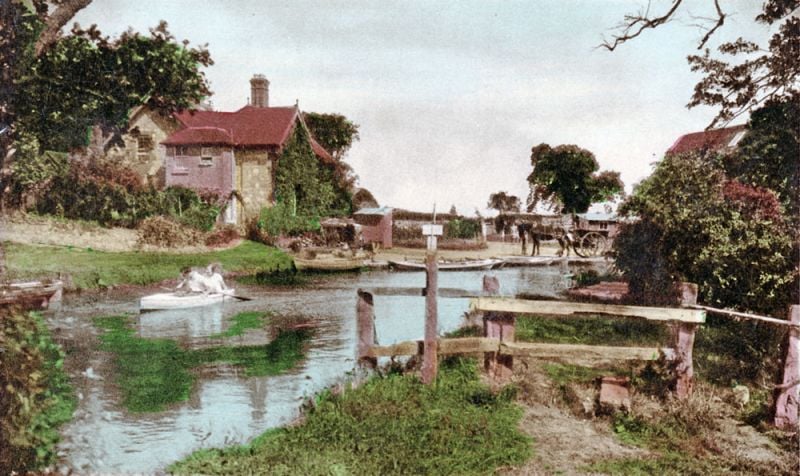
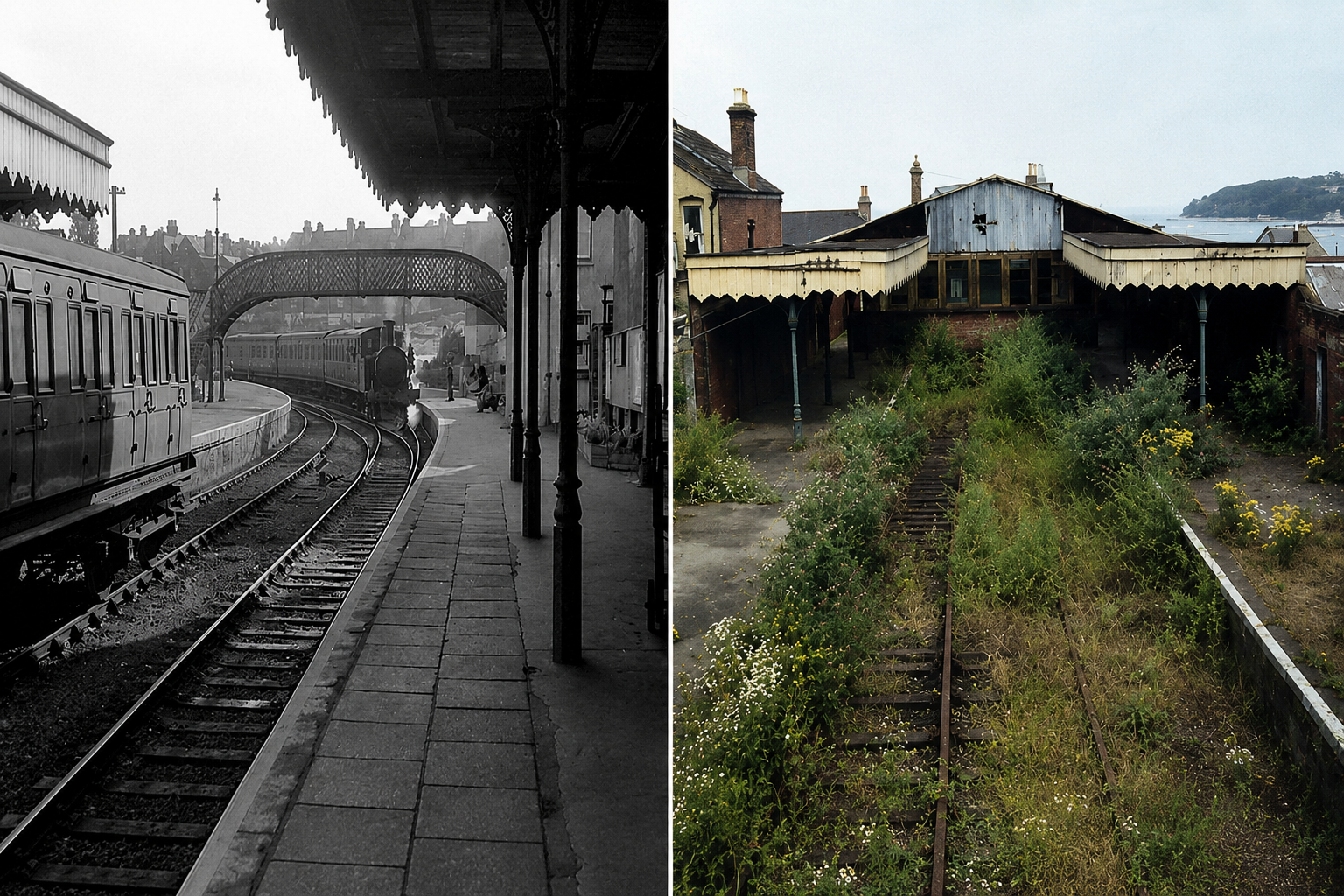




























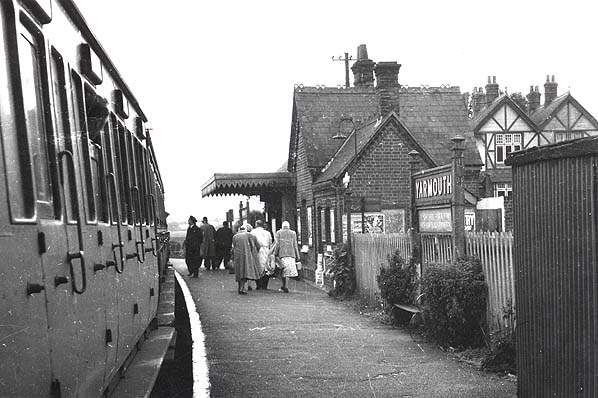

 In this week’s edition of Isle of Wight Railways, Island Echo looks at the station in Yarmouth that closed in 1953, to become a Youth Club and now Off the Rails restaurant.
West Wight has never been a densely populated area. In 1851, only 572 people lived in Yarmouth and 1,400 in Freshwater Isle (out of a total Isle of Wight population of just over 50,000).
Transport links between Yarmouth and West Wight and the rest of the Island were poor until the coming of the railway. In 1790, it was claimed that 52 gates needed to be opened and closed across roads when travelling between the town and Newport.


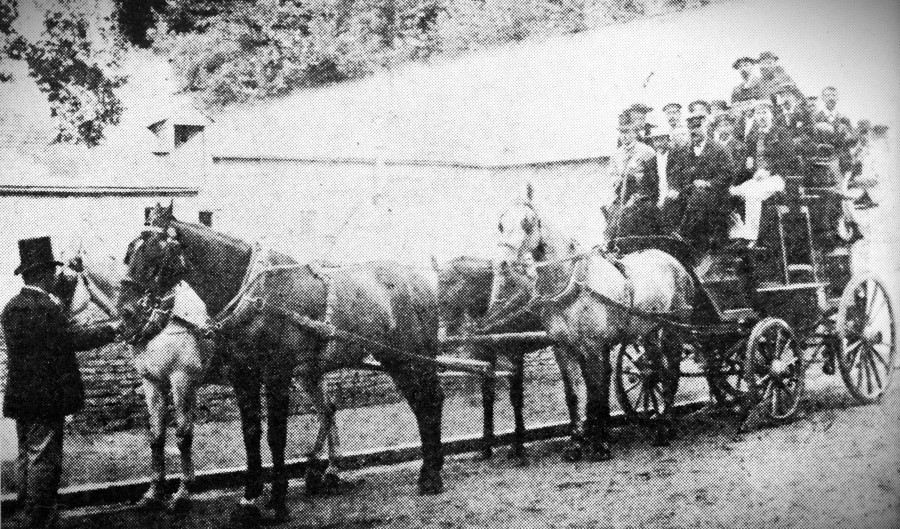
In 1830, a steam vessel began operating between Lymington and Yarmouth. It wasn’t until 1858 that the London railway reached Lymington though. The same year, the Rocket coach began a twice-daily service between Yarmouth and Freshwater, and, in 1860, a coach ran to Newport on market days.
By 1866 there was an omnibus 3 days-a-week, all year round, between Freshwater, Yarmouth and Newport. A further coach service ran between Yarmouth and the newly opened railway terminus at Ventnor.
Some liked being conveyed around the Island by horse-drawn carriage. In 1860 it was written:
“The treat of a ride on the top of a well-appointed coach, on a fine day, through beautiful country, is one peculiar to the Isle of Wight.”
Construction of the railway line to West Wight began in 1886. Originally, it was intended that the line should reach Totland Bay, but a lack of funds prevented any further extension beyond Freshwater.

By June 1887, enough of the line had been completed for a train to make its way between Yarmouth and Freshwater to mark Queen Victoria’s Jubilee. It was claimed that many of the West Wight residents on the 1st journey had never even seen a train before let alone travelled on one.
The first train to manage the whole length of the line – from Freshwater through Yarmouth to Newport – completed the journey on 10th August 1888. The line opened for goods traffic on 10th September of that year.
The formal opening of the Freshwater, Yarmouth and Newport (FYN) Railway was on Saturday 20th July 1889. It was the main event in West Wight for many a year. Yarmouth Station was decked with flags and – at 11:30 – local dignitaries were picked up at the station for the short journey to Freshwater before being conveyed by horse-drawn carriage to Totland Bay Hotel for a celebratory lunch.

Railway use on the very 1st day was encouraging, with many West Wight residents travelling to Newport for the Agricultural Show. Passenger numbers remained high for the rest of the year.
Towards the end of the 19th century, some 7 trains a day ran from Yarmouth to Newport – the journey taking just under half an hour. The cheapest ticket from West Wight to Newport were 1 shilling (5p). Taking inflation into account, the cost of the journey in today’s prices was £8.22.
But the FYN railway was never profitable. Some passengers transferred from the handful of road coaches that operated in West Wight. Farmers began sending their animals and produce by rail to Newport. But the lack of large centres of population along its route meant that financial stability was never achieved.
In 1893, the receiver was called in for the FYN. The railway was in poor condition with numerous accidents reported.
In 1901, the Yarmouth station master was seriously injured when a wagon ran over his right leg. In 1910, the-then station master – Mr Spinks – lost his right arm in a shunting accident. He was awarded 5s (25p) a week in compensation.
The track between Yarmouth and Newport caused problems for local landowners, as it was being used by a ‘notorious’ band of local poachers to access their property. In 1911, a Yarmouth resident was fined 10s (50p) for setting snares in the Westover estate – he had apparently accessed the land by walking along the railway track.
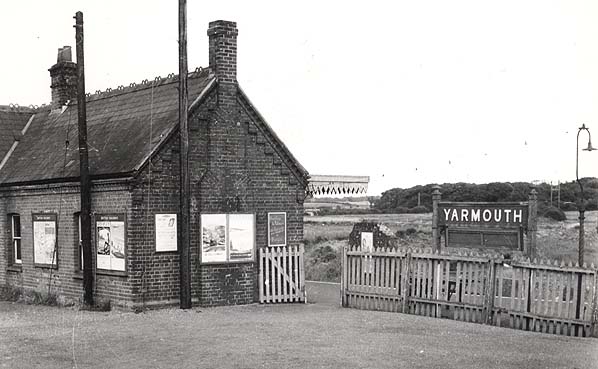
The FYN line was taken over by Southern Railways in 1923. The introduction of cheap rover tickets led to an increasing number of day trippers to West Wight. Through trains from Ryde, Sandown, Shanklin and Ventnor all ran to Yarmouth. But the West Wight line – serving a small resident population – was always a poor relation in the Isle of Wight rail network.
In 1948, all the Island railways were nationalised. By 1951, income on the FYN railway was just £7,860 as compared with an expenditure of £34,469.
The last train through Yarmouth station ran on the evening of 20th September 1953. The carriages were hauled by engine No.29 Alverstone. It carried a green and white placard announcing ‘Last Train’ with 2 Union Flags. The final train from Freshwater was said to have been packed but a few clambered on board at Yarmouth for the journey to Newport.
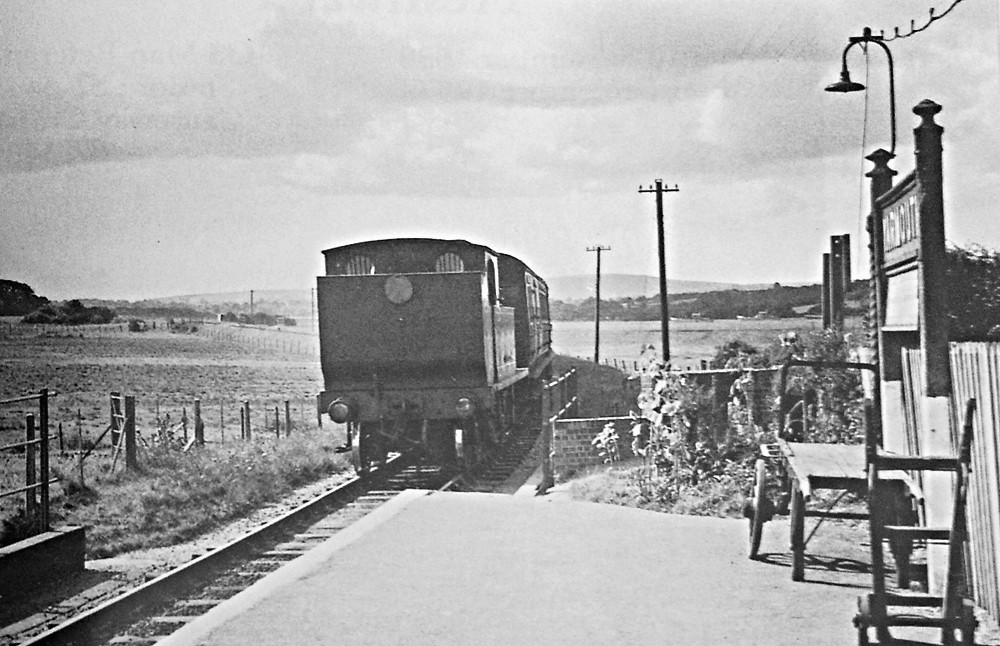
Following closure, the station remained empty until 1960, when it became used as a meeting hall and then Yarmouth Youth Club.
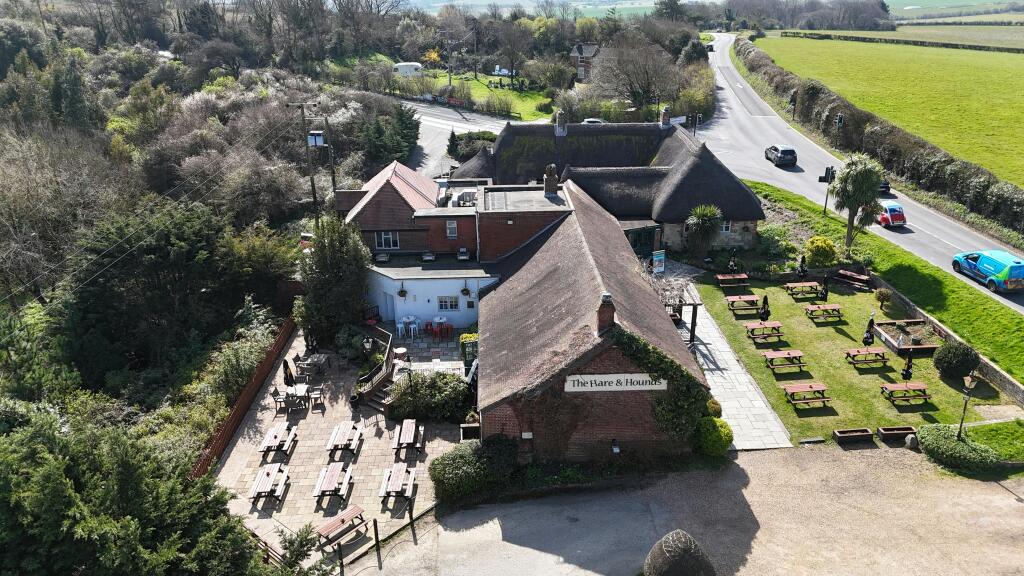
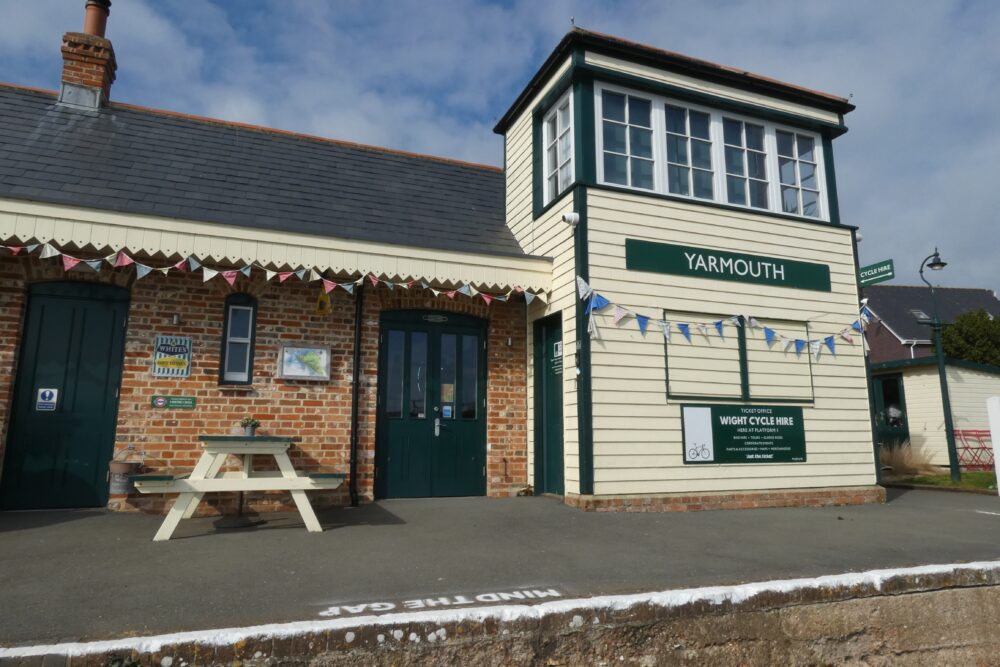
The former station was sold by the Isle of Wight Council in 2010, and the original station was reconstructed. A signal box was added to create a viewing area over the marshes, and the building given a Southern Railway theme.
In August 2014, ‘Off The Rails’ restaurant opened. Yarmouth station has now been given a new lease of life and welcomes walkers, cyclists, birdwatchers, tourists, and locals to the former transport hub.







Thank you Island Echo. It is great to read these local stories.
Like with Dr Beeching’s indiscrimative cuts – tickets sales from the Island stations would always be low because it was a destination not a starting point – people travelled to the island stations not from them.
It is the island’s biggest loss that we did not keep the trains, lines and stations running.
At least we should have kept the track system intact without selling off key parts of it for housing. This was purposely done to ensure that those rail lines could never return to compete with the bus system. A number of closed down railway lines in Germany were kept open and are now successfully used as cycle “highways”. Pedestrians can also use them, but are kept on a separate parallel track. We could have done something similar here.
It is being done, I used to live in Bristol and I worked and volunteered at a Heritage Railway. Yes one of the many stations/lines that Dr Beeching closed down. The old lines in Bristol like a lot of old lines have been turned into a Heritage Railway Lines, Cycle path & Pedestrain path. BR ripped up the lines in Bitton, Bristol with in weeks of closing it down. Around the same time that a group of people got together to try and preserve the lines… they could not lift yhe lines fast enough.
Very interesting read.
Just think if the government and councils didn’t waste so much money inflation wouldn’t be no were near £8.22 and a lot more people would use public services. But our money burns holes in government and councils pockets so inflation just keeps rising.
Must have been a beautiful journey. People were so much nicer and even the criminal gang of poachers would not be boasting, bragging and being obnoxious to all, but keep their activities as quite as possible for FEAR of being caught.
Now due to huge amounts filling the UK’s prisons, fear of breaking the law is gone forever by most
Poachers
Thought it was more of a smugglers hide out area??