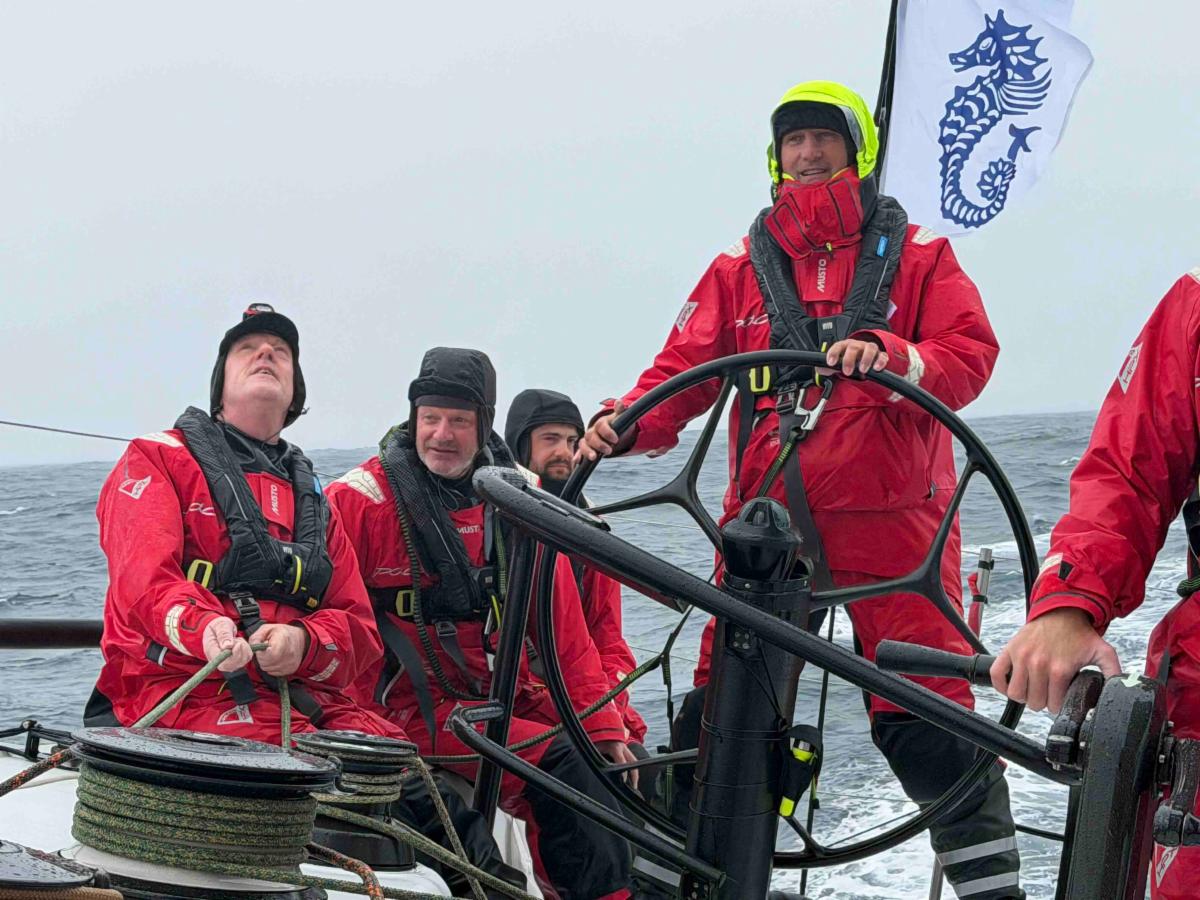




























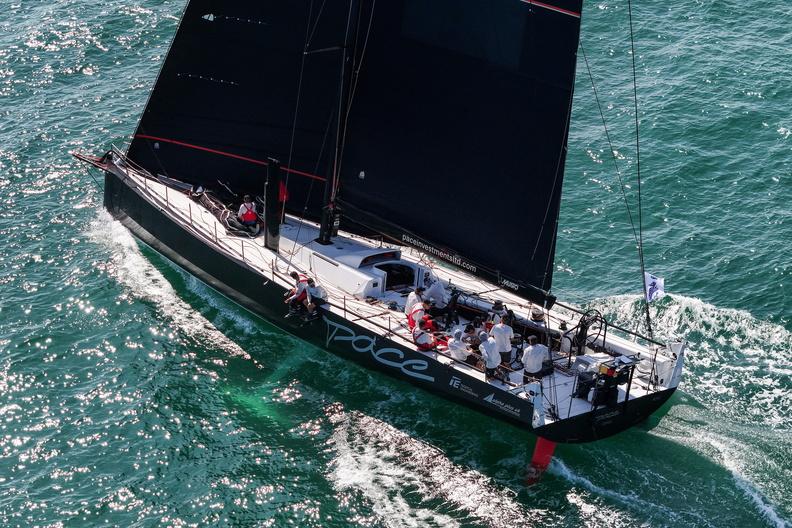
Johnny Vincent’s Volvo 70 Pace has claimed Monohull Line Honours in the 2026 RORC Round Britain and Ireland Race after an epic 1,805-mile voyage.
Pace crossed the Royal Yacht Squadron finish line in Cowes at 04:17:31 on Sunday 16th August, completing the gruelling course in 6 days, 14 hours, 47 minutes and 31 seconds.
The YB tracker recorded 2,113 nautical miles actually sailed as the crew raced around Britain and Ireland, reaching speeds of up to 27 knots along the way.

Some of the fastest sailing came off the west coast of Ireland and towards Muckle Flugga, where the Juan Kouyoumdjian-designed Volvo 70 covered an impressive 486 nautical miles in just 24 hours.
The closing stages presented an altogether different challenge.
After rounding the top of Britain, Pace headed south through the North Sea before navigating a maze of shipping separation schemes, oil and gas infrastructure, wind farms and exclusion zones.
Repeated gybes followed through the darkness before a favourable tide helped carry the yacht through the Solent and home to Cowes.

At the time of finishing, Pace was also in pole position for IRC Overall after time correction, although Vincent and his crew must wait for the remaining contenders to finish before the overall result is confirmed.
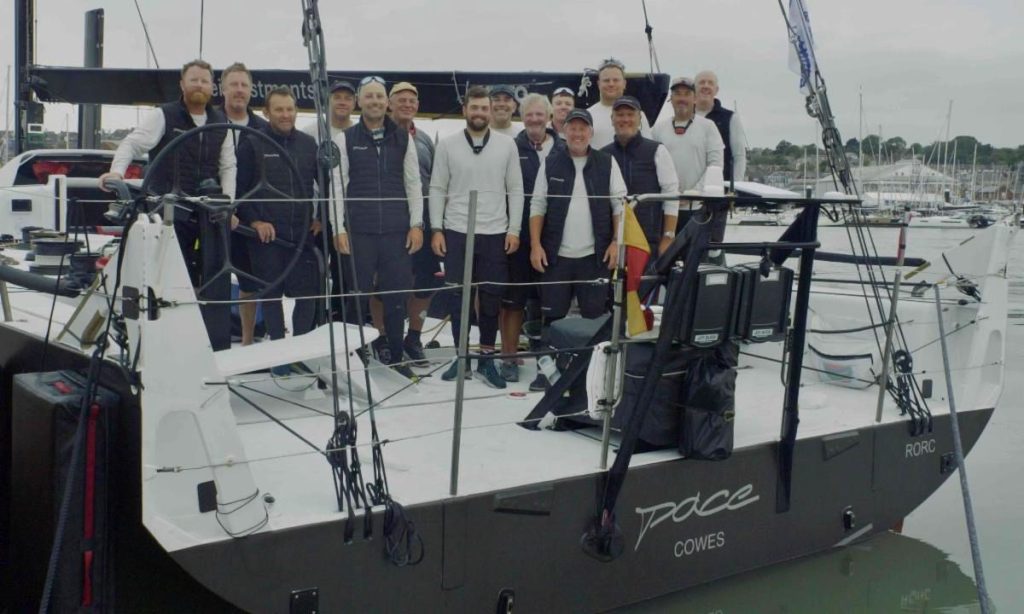
For Vincent, stepping ashore brought more than the satisfaction of taking Line Honours.
He said:
“A big sense of completion is how I would describe it. It has been a long journey and a tremendous adventure.
“It is wonderful to achieve Line Honours. The boat is really built for an adventure like this and, at times, we were doing amazing speed and that is a wonderful feeling.
“I have been surrounded by an amazing team of people. They have been kind to me, given me good guidance and taught me a great deal. I have stepped ashore feeling like a much more competent ocean sailor.”
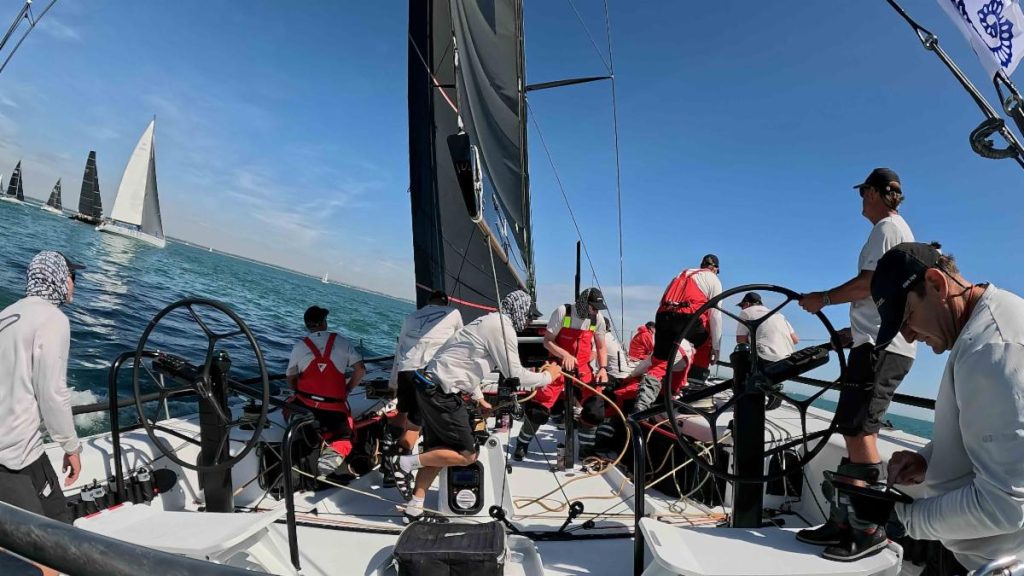
Vincent described the Round Britain and Ireland Race as 4 separate races joined together, with dramatically different conditions and challenges encountered around the course.
“You do it chapter by chapter and then reach the end of the book when you come back to Cowes. That makes it totally unique.
“The first chapter takes you through familiar Fastnet waters. Chapter 2 runs from south-west Ireland to Muckle Flugga in a completely different ocean environment.
“Then comes the North Sea, with oil platforms and gas rigs. The final chapter is probably the most challenging navigationally, with obstructions, separation zones, depth, sand and a very narrow passage through Dover.”
One of Vincent’s standout memories came during the yacht’s blistering 486-mile run.
He recalled:
“We had a good solid breeze and a fantastic wave pattern. Surfing at 27 knots is exciting for anybody. It was absolutely thrilling.”
Among the crew was navigator Jules Salter, who grew up on the Isle of Wight and has raced thousands of offshore miles during a career which included winning the 2008–09 Volvo Ocean Race aboard Ericsson 4.
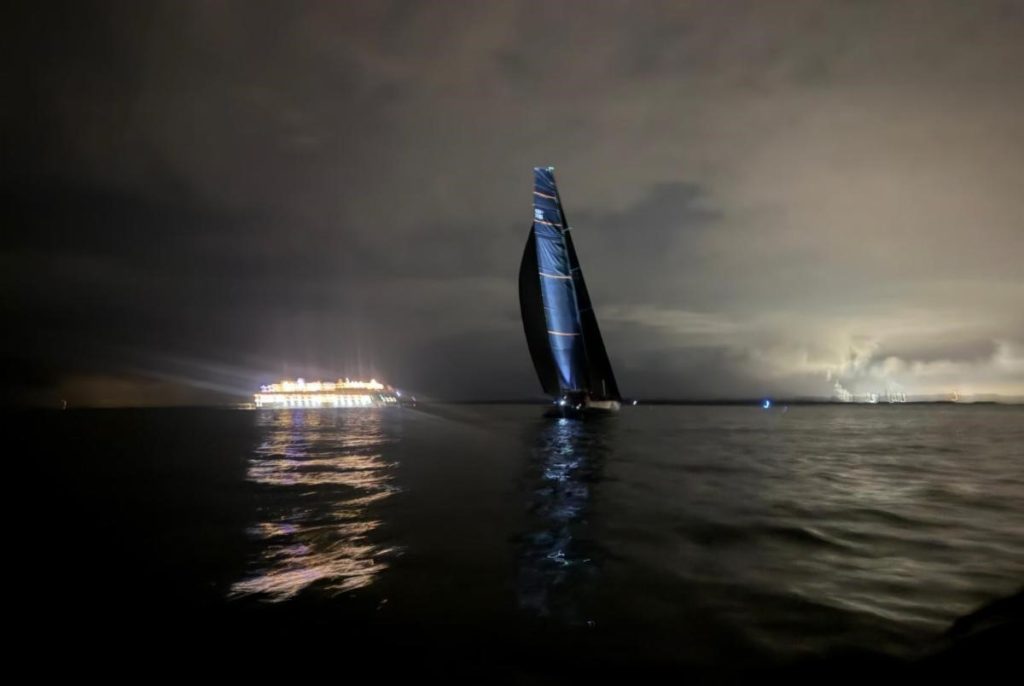
Although familiar with Volvo 70s and many sections of the British coastline, this was Salter’s first complete RORC Round Britain and Ireland Race.
He said:
“When you are racing around Britain, you are effectively turning right at every corner. You combine that with the weather and keep the boat at its fastest and most efficient angle.
“There were opportunities to push hard and to gain from a wind shift, a wind bend or something in the forecast. We tried to do that all the way around the course.”
The southern North Sea demanded particularly precise navigation, with the crew negotiating gas and oil fields, shipping lanes and wind farms while carrying out repeated gybes.
Salter said crew members could find themselves being woken just 30 minutes into what should have been a 4-hour off-watch because another manoeuvre was required.
For the Island-raised navigator, however, completing the race where it had begun made the achievement particularly memorable.
“I have raced around Britain as part of the Volvo Ocean Race and I know many pieces of the coastline, but to string it all together in one complete race is a massive challenge. It is one of the best races.
“I have grown up on the Isle of Wight, so it is very special to start and finish in Cowes. It is pretty cool to do a 2,000-mile race starting and finishing in your hometown.”
Reflecting on the adventure after returning to Cowes, Vincent concluded:
“I am a normal bloke. I am not a professional sailor. To set out on this adventure was really special. It is beginning to sink in now. It is a long way, and it has been a great journey.”