




































































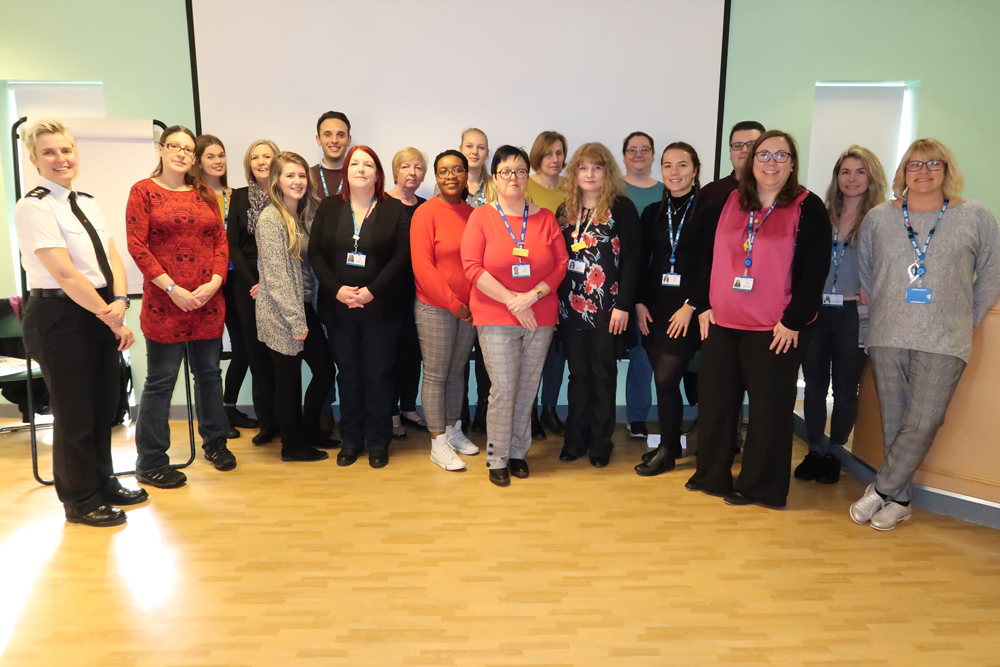

In collaboration with Hampshire Constabulary, the Isle of Wight NHS Trust recently held a training day to raise awareness of the issues faced by Lesbian, Gay, Bi-sexual & Transgender people (LGBT+).
The training focused on the challenges that people within the LGBT+ community face and gain insight into the role of becoming a ‘Diversity Champion’. This included how to have difficult conversations with colleagues and how to challenge negative cultural behaviour.
Hazel Pither, the Trust’s Operational Lead for Equality and Diversity, said:


“We hope that this training will increase staff confidence when working with patients and staff who identify as Lesbian, Gay, Bi-sexual or Transgender, by better understanding their individual needs.
“It is important that the Trust continues to raise awareness of the difficulties faced by the LGBT+ community and improve its efforts to be more inclusive.”
What is a Diversity Champion?
They are a designated person within a business who helps to create a diverse and accepting workplace culture. Someone who feels passionate about promoting diversity and inclusion.
What do they do?
There are many things a Diversity Champion could do. Some of these are:
- Start open discussions about diversity and inclusion in the workplace and gather important information about how safe and secure employees feel at work.
- Educate employees on diversity and the effects of discrimination.
- Arrange events that help celebrate diversity and inclusion, such as fun runs or bake sales with donations going to minority charities.
- Help with the reviewing of policies and workplace culture documents to ensure they speak for everyone in the business.
- Identify areas in which the business can improve its efforts to be more inclusive and help it adapt to ensure everyone has the facilities to be comfortable at work.
Why is this role important?
Creating an accepting, inclusive and educated culture is not only important to reduce the chances of discrimination, but it will also allow all employees to feel welcome, safe and valued.

Evidence shows that if someone feels happy and secure at work, they’re more likely to stick around for longer and perform better in their role. It goes without saying that an openly diverse, inclusive and welcoming workplace will attract more of the best talent and could even be the reason why someone chooses to work here at the Trust.
Further equality, diversity and inclusion training for Diversity Champions will be offered in the future.












instead of wasting their time worrying about the gender or sexual preference of those that work in the NHS, perhaps they could focus on seeing patients on time, getting a diagnosis correct, not making mistakes in operating theatres, giving patients more than a timed, ten minute appointment, getting the care packages for patients leaving Hospital organised in a timely manner and a whole multitude of other, far more important and pressing matters that need the attention of those that choose of their own free will to work in the NHS and take the pay offered each month, no matter what they do.
Fed up with all these people finding excuses not to do the jobs they are paid to do, so they can focus on vanity, socially engineered, pc claptrap.
Having someone be a diversity champion, just means that they are spending less time on the job they were originally employed to do – that being, patient care.
I didn’t see any evidence of anyone making excuses to not do their jobs in this article? If someone feels safe at work they are generally happier. Happy workers are more productive workers so isn’t that a good thing? The world’s top private sector companies recognize this which is why so many of them (including the one I work for) have diversity and inclusion prograns run by volunteers within their workforce. Studies have shown that firms who have these programs in place are more likely to attract top talent which I’m sure you’ll agree ought to be a priority for the NHS so they can improve upon the areas of concern you described.
@danny
You are missing the point – instead of spending time at work, worrying about what gender or what sexual preference the other members of staff are, perhaps they just get on with their jobs. You know, the ones they agreed to do, in exchange for the pay that they also agreed to accept.
When these volunteers are busy pushing their pc claptrap agenda, there will be a patient in a waiting room, enduring pain, for longer than necessary – because the employees are having an inclusion coffee morning.
Whilst we are on the subject – are these “volunteers” doing this work in their own unpaid time, after their contracted employed hours have been completed or are they, as I suspect, doing it whilst being paid.
Studies by whom- vested interests most likely.
I have worked in all male, all straight, nearly all female, mixed male, female, mixed straight and gay work places and you know what – the productivity, the results, the comradeship and respect for each other, was the same across all environments – we didn’t need some reject social worker telling us how to interact with people.
Does your inclusion program have those that consider themselves part of the LGBT community, attending where they learn about understanding and accepting straight people? after all, those types of programs can not be one sided.