























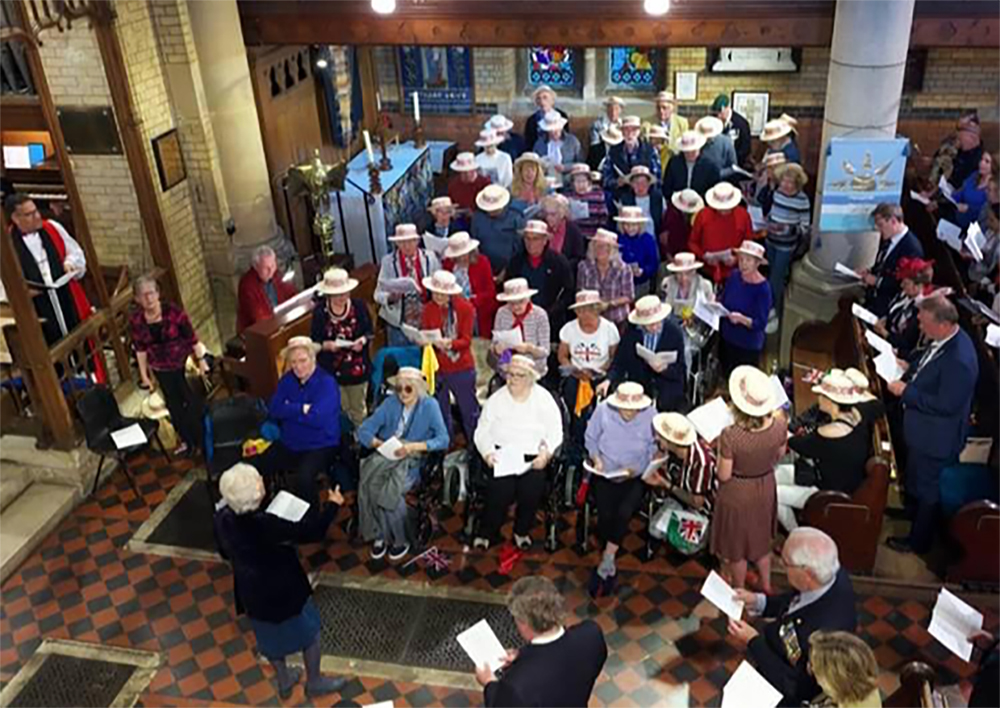







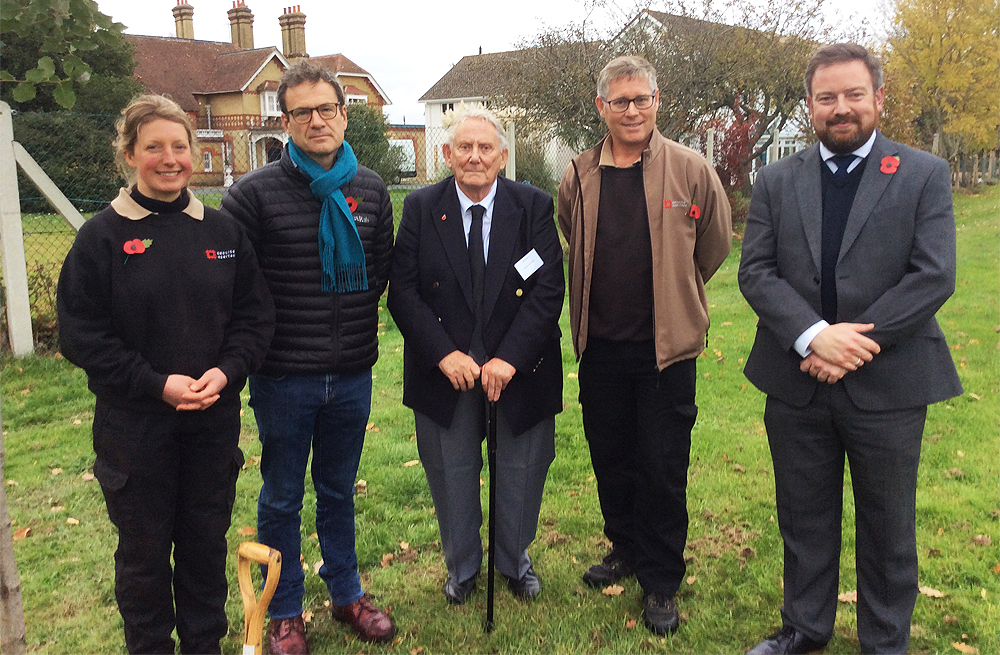

Local MP Bob Seely remembered Isle of Wight gardeners who died during the First World War – as well as his family’s famous war horse – at a memorial tree planting at Osborne House on Friday.
The 3 trees commemorate 2 Isle of Wight men who died in battle, and the now-famous Warrior, who survived.
42-year-old Ernest Owen Johnson, a father of 6 from East Cowes who was a gardener at Osborne House, died during the Battle of Cambrai. Charles Mew, from Prince Street in Ryde, was 46 when he died in the battle of the Somme in 1916.


Warrior the war horse, known as ‘the horse the Germans couldn’t kill,’ was owned by General Jack Seely, Bob’s great great uncle and is commemorated with a statue at Carisbrooke Castle.
The Isle of Wight MP planted a Holm Oak during Friday’s ceremony. Planting the other 2 saplings – a Monterrey Cypress and a Gold Birch – were Catherine Mawdsley, a historic and botanic garden trainee at Osborne and Bill Wyke, who runs the Community Kids club.
Osborne House Head Gardener Toby Beasley said the tree planting marked the end of the Battlefields to Butterflies celebration at Osborne. Initiated by Mike Fitt OBE, Chairman of the Royal Parks Guild, the project reflected the way in which, after battles ceased, wild flowers and butterflies took over.
Bob Seely said:
“It is really important to remember the gardeners who lost their lives, and it’s important to remember Warrior. A lot of horses died and he was one of the few that came back.”
Article continues below this advertisement

Warrior was posthumously awarded the PDSA Dickin Medal, the animals’ Victoria Cross, in 2014 in honour of all animals that served in World War I.