










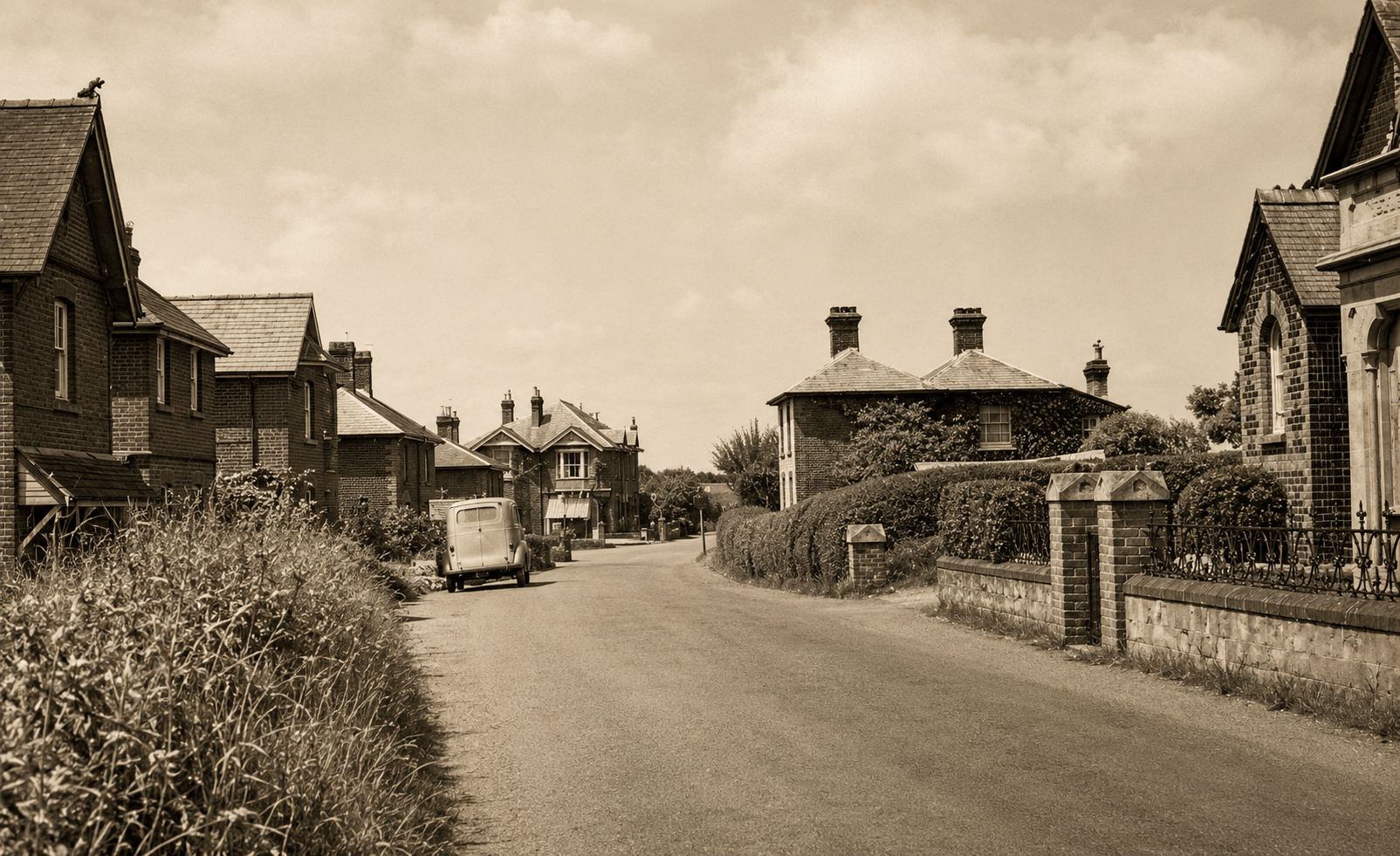











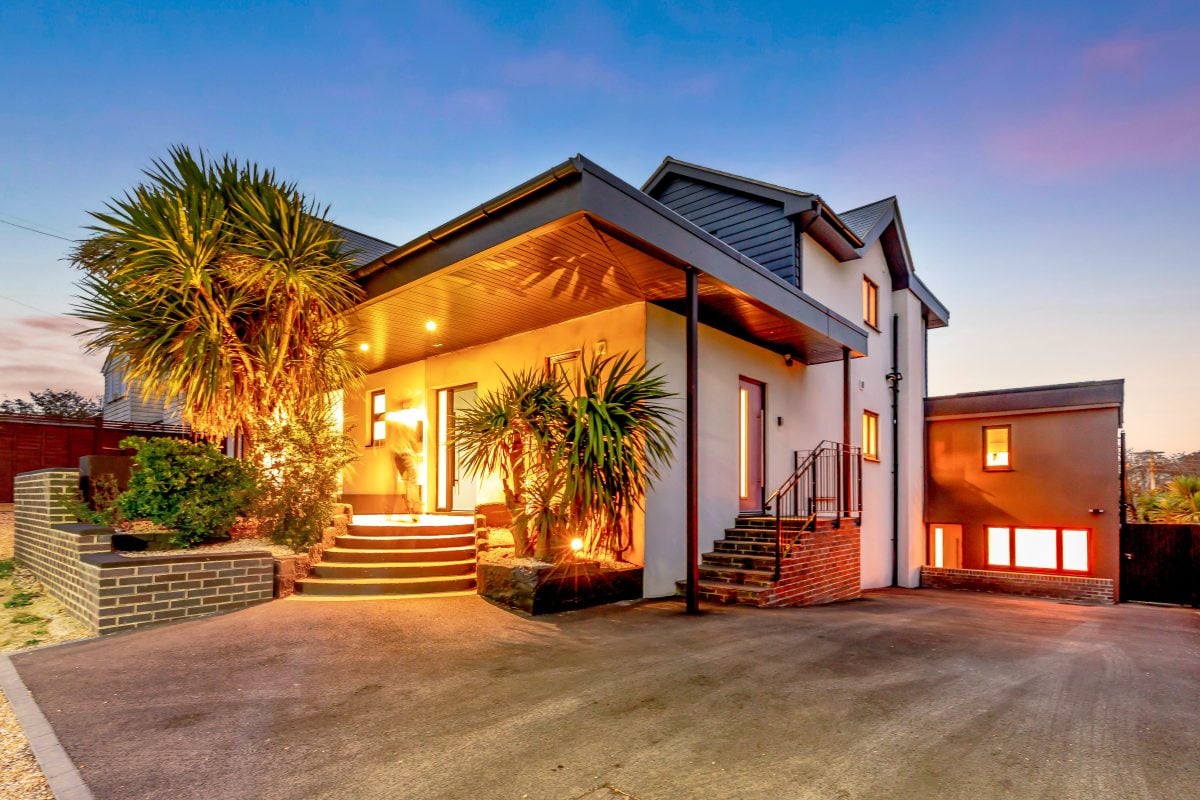






























Steynewood (or Steyne Wood) Battery appears to be a comfortable detached house, no different to other expensive properties in East Wight – but it is actually one of the best preserved surviving Victorian batteries in England.
Strangely, the battery was only armed and operational for 2 years before being decommissioned in 1899. It then became the home of the shipbuilding Thornycroft family, who built an enormous test tank in its grounds.
Steynewood battery has been described as a Palmerston Fort; however, work started on the project in 1889 over 20 years after Lord Palmerston’s death. Its function was the same as the Palmerston Forts on the Island and the Solent Forts – to protect the Solent from naval attack.


The battery was part of a line of defensive fortifications in East Wight, including other batteries at Sandown, Yaverland, Redcliff and Bembridge. It was thought it would be able to protect Portsmouth Dockyard from an enemy fleet which was out of the range of other batteries.

The battery was the brainchild of Sir Andrew Clarke, Inspector General of Fortifications and Director of Works. Oddly, for a fortification intended to protect against marauding enemy warships, it was built some distance the sea.
The high angle guns of the fort were positioned inland so they would be hidden from an enemy fleet, which would be unable to counterattack.
Sir Andrew Clarke wrote:

“For the future, we must rely as much upon concealment as upon resistance…
“Defences if skilfully designed will be indistinguishable from the ground on which they stand, and while they retain all the advantages of the defence, will offer no mark to the enemy’s fire.”
Steynewood Battery had 3 gun groups of 2 High Angle, 9-inch 12-ton guns, surrounded by a defensive line of trenches. The battery’s munitions were stored in intricate underground shell stores. It also had a guard room, cell, prisoner’s quarters and accommodation for 8 soldiers, with the remainder to be housed at Bembridge Fort.

The High Angle guns were used as their high elevation gave shells a steep angle of descent, enabling them to penetrate the lightly armoured decks of attacking ships rather than their heavily armoured sides.
Bizarrely, the soldiers manning the battery could not see their target and adjusted the angle and direction of firing based on spotters out on the cliff edge passing information back to them.
The guns were delivered to the fort in 1893, work was completed in 1894, the guns mounted in 1896 and 2 further guns put in place in 1898. The total cost of construction – including the land – was £14,591 (over £1.5million in todays values).

However, in 1899 the Steyne Wood Battery was disarmed. Why?
Tests showed that the high angle guns used took between 42 and 64 seconds to hit their intended targets. This allowed any enemy vessel plenty of time to manoeuvre out of harm’s way.
The War Office concluded:
“These guns are very slow in their fire and not very accurate.”
What became of the battery? In 1909, it was sold off for £700 (£70,000) in today’s values. The land had been bought for £1,300. Questions were asked in the House of Commons about the unprofitability of the sale.
Happily, the new occupant of Steynewood – the industrialist Sir John Thornycroft – put the site to very good use as a test facility for Thornycroft Research And Development. Before World War I, he designed and tested mortar and depth charge throwers on the site.
Sir John went on to build a massive naval test tank at Steynewood, where many vessels went through their experimental stages. He was later assisted by his daughter Blanche in designing revolutionary craft.

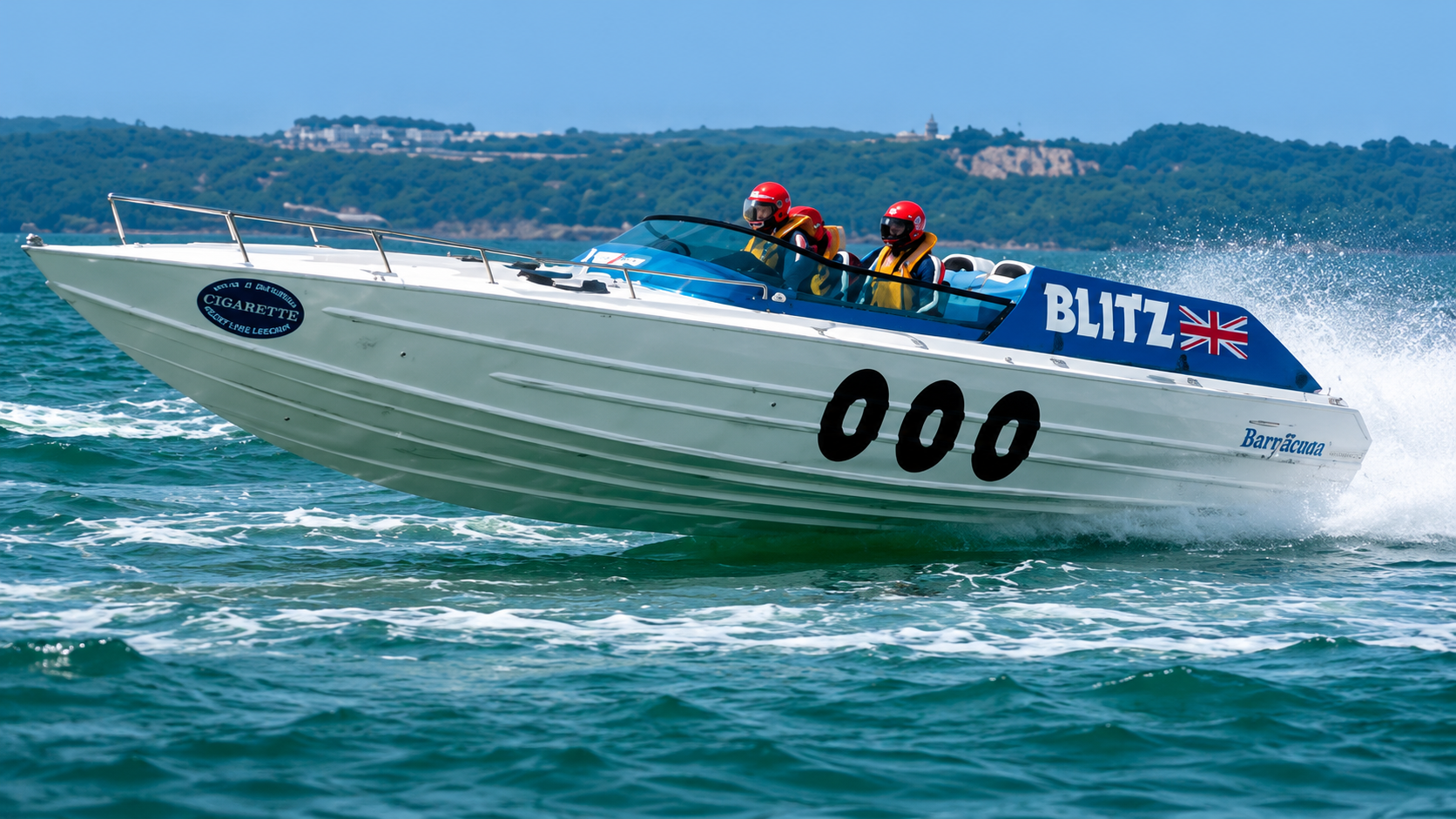
The designs developed using the test tank at Steynewood by Sir John and his daughter include racing motor boats, the Acasta and Acheron Class destroyers for the Royal Navy, motor torpedo boats, RAF rescue launches and RNLI lifeboats.
Possibly the most remarkable craft tested in Steynewood were the motor boats Mimi and Toutou, built for The Tanganyika Naval Expedition in 1915. The 2 fast but small craft captured 1 German vessel, sank a second and forced a third to scuttle in a World War I engagement on Lake Tanganyika.

The Thornycroft family retained possession of Steynewood Battery for over a century. It became a Grade II listed building in 2015, owing to it being one of the best preserved Victorian Batteries in the country. In 2022, it was put up for sale with an asking price of 2.6million.
Today, the battery is used as an upmarket wedding and events venue. An outbuilding is rented out as a holiday let.
Steynewood Battery below: