































































Island Echo examines the rags-to-riches tale of Sophie Dawes – popularly known as the Queen of Chantilly – the impoverished St Helens fisherman’s daughter who became one of the richest and most influential figures in early 19th century Europe.
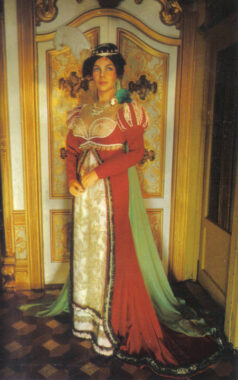
Do you remember the elegant and fashionable figure of Sophie Dawes that graced the now sadly defunct Brading Waxworks Museum?
Sophie did not always create such a sophisticated impression. Her origins are so obscure no one is certain what her original surname was or her exact date of birth. Some say she was born in 1785, others in 1790 and 1795. The generally accepted date is 1792, and her original surname was Daw.


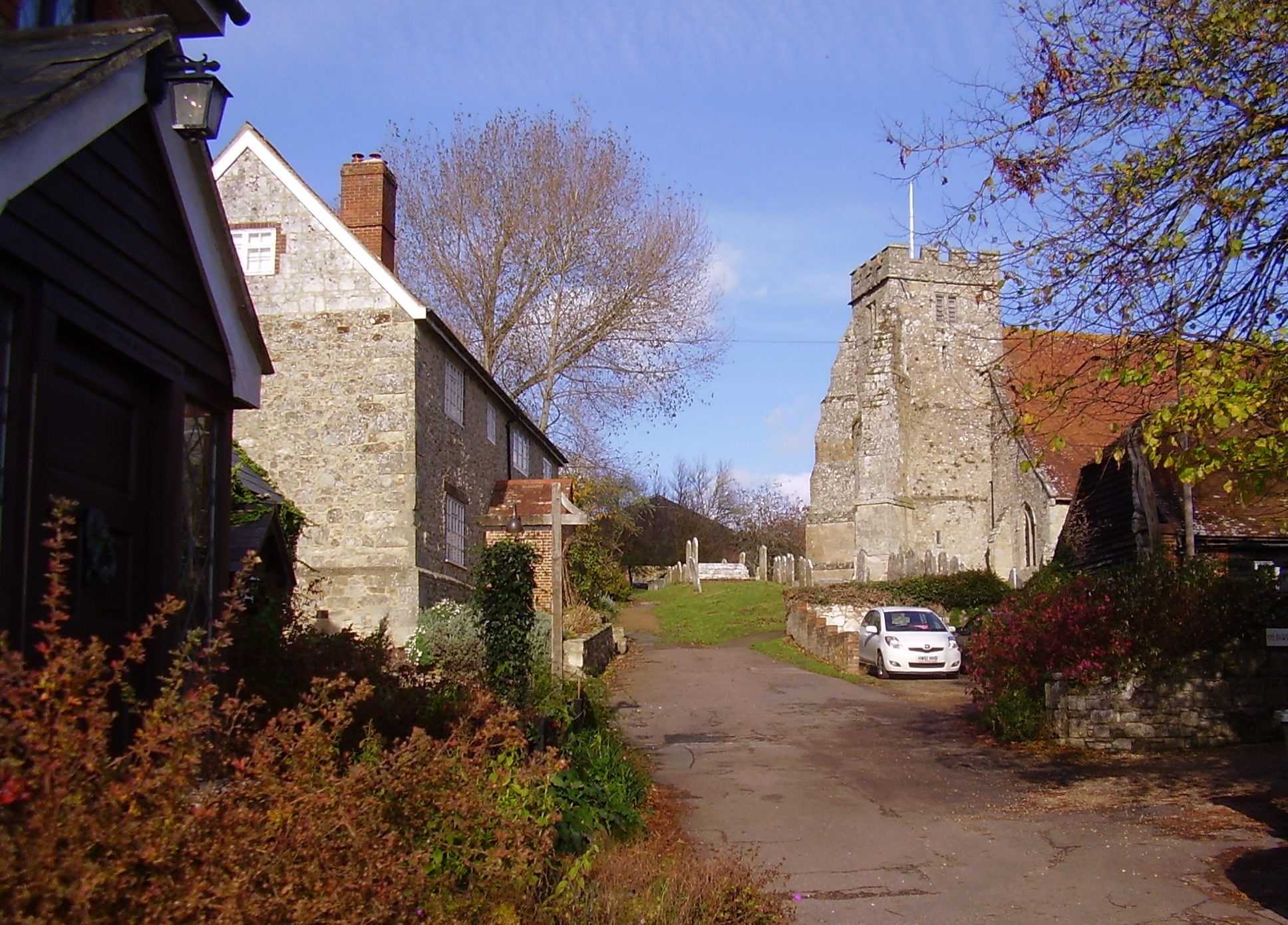
The future Queen of Chantilly was the daughter of one Richard Daw, a celebrated local fisherman and smuggler, who gave his name to the ‘Dickey Daw Banks’ and ‘Dickey Daw Gut’ passage off the Bembridge coast.
Her mother was Jane Callaway; her parents never took the trouble to tie the marital knot. She was 1 of 10 children; only 4 survived to adulthood. As a child, Sophie picked shellfish barefoot on St Helens beach.
Her Dad, Dickey, took to drink; his wife and children were forced to enter the workhouse in Newport. She was then found a position in Cliff Farm in Shanklin off Victoria Avenue. From there, she moved to Portsmouth, where she worked as a chambermaid. She then became first a milliner and subsequently an orange seller at a London theatre.
Her 1st big break came when she attracted the attention of a rich army officer, who installed her in a house on Turnham Green. When he tired of her, she was left with an annuity of £50 a year.
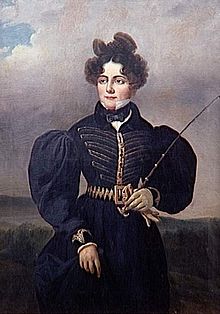
Her next assignment was as a maid in a high-class house of ill-repute, frequented by French emigres. Here, her beauty and charm attracted the attention of the valet of Louis Henri, Duke de Condé, who pointed her out to his master. One story of her life recounts the tale of the Duke de Condé playing cards with the Duke of Kent – father of Queen Victoria – with the radiant Sophie as the prize.

The Duke de Condé – then a 52-year-old rake and one of the richest men in Europe – had Sophie installed as his mistress at a house in Gloucester Road, London, in 1811. Here, the former semi-literate fisherman’s daughter was instructed on how to become an accomplished young lady, learning French, Greek, Latin and music.
In 1814 – after the fall of Napoleon – the Duke of Bourbon returned to Paris with Sophie. He passed the St Helens girl off as his natural daughter. To make Sophie respectable so that she could appear in the French court, he married her off to Adrien Victor de Feuchères – a lieutenant colonel of the Royal Guards – giving her a dowry of 18,000 francs.
The impoverished St Helens girl began to become known as “the Queen of Chantilly”.
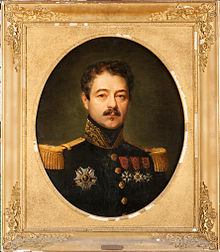
The Duke made her husband a baron. The new baroness became a person of consequence at the court of Louis XVIII. However, when Feuchères discovered the true relationship between ‘father and daughter’ he left her.
The end of her marriage was a social disaster for Sophie and her ambitions: King Louis XIII banished her from court, declaring her to be: “Naught more than a commoner street-wench yet tragically bereft of any skills of the trade”.
However, Sophie still kept her control over the ageing Condé (now a Prince after the death of his father). In 1829, she used her feminine whiles to persuade him to leave her 2million francs and the castles and estates of Boissy, Enghien, Montmorency, Mortefontaine, and Saint-Leu-Taverny. She imported members of her family, with Louis Henri making her nephew James a baron and taking care of her mother.
Sophie began to meddle in the turbulent and dangerous world of French politics, allying herself with those who came to power in the July Revolution of 1830. The most influential of these was the infamous Charles Maurice de Talleyrand. She arranged for her niece to marry Talleyrand’s nephew.
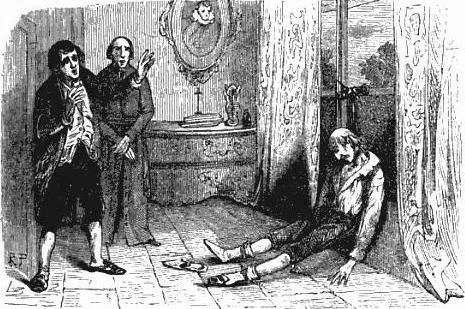
Meanwhile, Louis Henri grew restless of his mistress’ dominion and made plans to leave France secretly. But his plans to escape Sophie’s clutches came to nought: he was found dead in his chamber on 27th August 1830, with a noose of handkerchiefs around his neck, attached to window fastenings.
Sophie was strongly suspected of murdering her patron; it was rumoured that the new King Louis-Philippe I was involved in the crime and an inquiry was held, but nothing could be proven.
Gossip spread that Condé had died while practising erotic auto-asphyxiation.
The death of Condé was a massive scandal in France and Sophie – widely believed to have been the murderess – was shunned by French society. In 1831, her nephew James died (also rumoured at her hands).
Sophie Dawes returned to the Isle of Wight to bury her nephew James and commission a memorial to him in the churchyard of St Helens. She was then one of the richest women in all of Europe.
In 1838 – the year of Queen Victoria’s coronation – Sophie made a permanent return to England. She bought an estate in Christchurch and a townhouse in London. She became a pious Catholic and donated much of her immense wealth to the poor. She seemed confident that she could be as successful with the powers above as she had been in her worldly life in Paris.
Sophie Dawes died on 15th December 1840, following a sudden heart attack. Her siblings received £70,000 (£5.5 million in today’s money) from her estate. However, disposing of her immense fortune led to years of complex legal wrangles.











Thank you Island Echo for the local articles.
All very interesting!
Fascinating article. Thank you for the research.
Please keep up your good work and flow of
interesting items.
Another fascinating story in the series. However I wouldn’t exactly brand Sophie as a ‘villain’, a high-society harlot, a gold digger, an adept manipulating Madam maybe? The death of Prince Condie was clearly an aristocratic sex roll playing game that went tragically wrong. You have to admire her determination and ambition to go from rags to riches, even if it meant becoming a rich man’s mistress.
“In 1814 – after the fall of Napoleon” If only the Duke of Wellington had been told that he did not need to fight at Waterloo!
Haha… I noticed that typo too. Give the guy a break, at least he turned up for the battle a year earlier.
Napoleon was defeated in 1814. He abdicated on 6/4/1814 and was exciled to the Island of Elba. King Loius the !8th was restored but soon left after Napoleon returned on 1/3/1815 for what was to be called “The Hundred Days”. Napoleon’s army was soundly defeated at Waterloo on 18/6/1815. He was then finally exciled to St Helena, where he died on 5/5/1821.
I was going to point that out. Napoleon abdicated and Conde returned to Paris. In 1814. However, Napoleon then returned to France and was defeated at the battle of Waterloo in 1815.
I think it’s terrible.
More idiots will be along soon, something about bad driving and the floating bridge