











































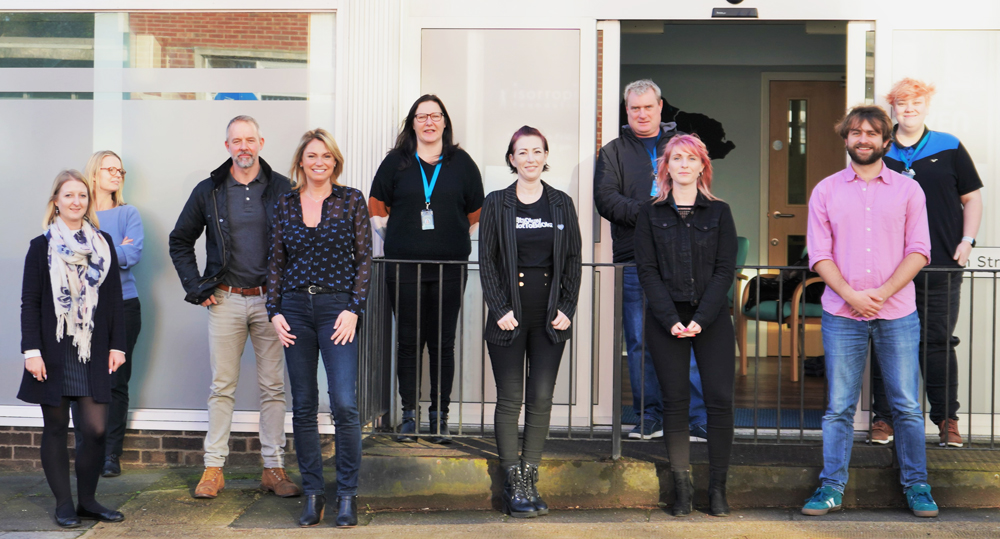

 Isorropia Foundation, the Island’s mental health wellbeing organisation, has received funding to continue its successful online support for Island residents.
The mental health wellbeing organisation has offered multiple face-to-face activities and workshops to over 1,000 people since it opened in 2019. The organisation is run by a blend of professionals and people with lived experience of mental health, who together have created a new approach designed to empower individuals to take responsibility for their own wellbeing.
Throughout the COVID-19 pandemic, Isorropia Foundation has prioritised the needs of members as well as the local community. As the country went into the first lockdown in March, Isorropia decided to rapidly transform its provision to make their programme and interventions available online and over the phone.


Ami Cripps, public and member engagement lead, says:
“As a team, we consolidated our skills to establish and invite our members to a private online Facebook area. Within days we had implemented an online structure, including daily morning videos, topic videos based around managing mental health, daily livestreams and even some interactive fun! We also worked with partners to provide telephone support to community volunteers and the vulnerable people they were supporting.”
Thanks to grant funding from WightAID, a media studio has been created to professionalize and enhance the online programme earlier this year. Now, funding from the National Lottery Coronavirus Support Fund means the workforce can be extended to reach even more people across the community.
Isorropia’s online programme has been independently evaluated by the Wessex Academic Health Science Network (Wessex AHSN). The evaluation explored how Isorropia managed the transfer of activities from a physical facility to online provision during the pandemic, the impact on members and the adaptations made to how the wellbeing model was delivered.
The evaluation member survey showed that 73% of Isorropia’s members said they didn’t use urgent mental healthcare services during the lockdown period and 70% of Isorropia’s members felt that they were receiving enough support. It suggested that the successful transition to online indicated the potential of a physical facility and online mixed service model in the future.

The daily programme of activities hosted on the private Facebook page (available 24/7) attracted 245 of the 264 members to register online, with an average of 122 members interacting each day during the week and 111 members over the weekends. It found that the adapted online services, as well as supporting existing members, enabled 60 new members to join and benefit from structured peer-led support during the initial lockdown period.
If you, or someone you know, would benefit from mental wellbeing support, speak to your GP in the first instance. The Isorropia Foundation website at www.isorropia.uk contains a number of resources and videos that may help you, and you can find their public Facebook page at https://www.facebook.com/isorropiafoundation/.