











































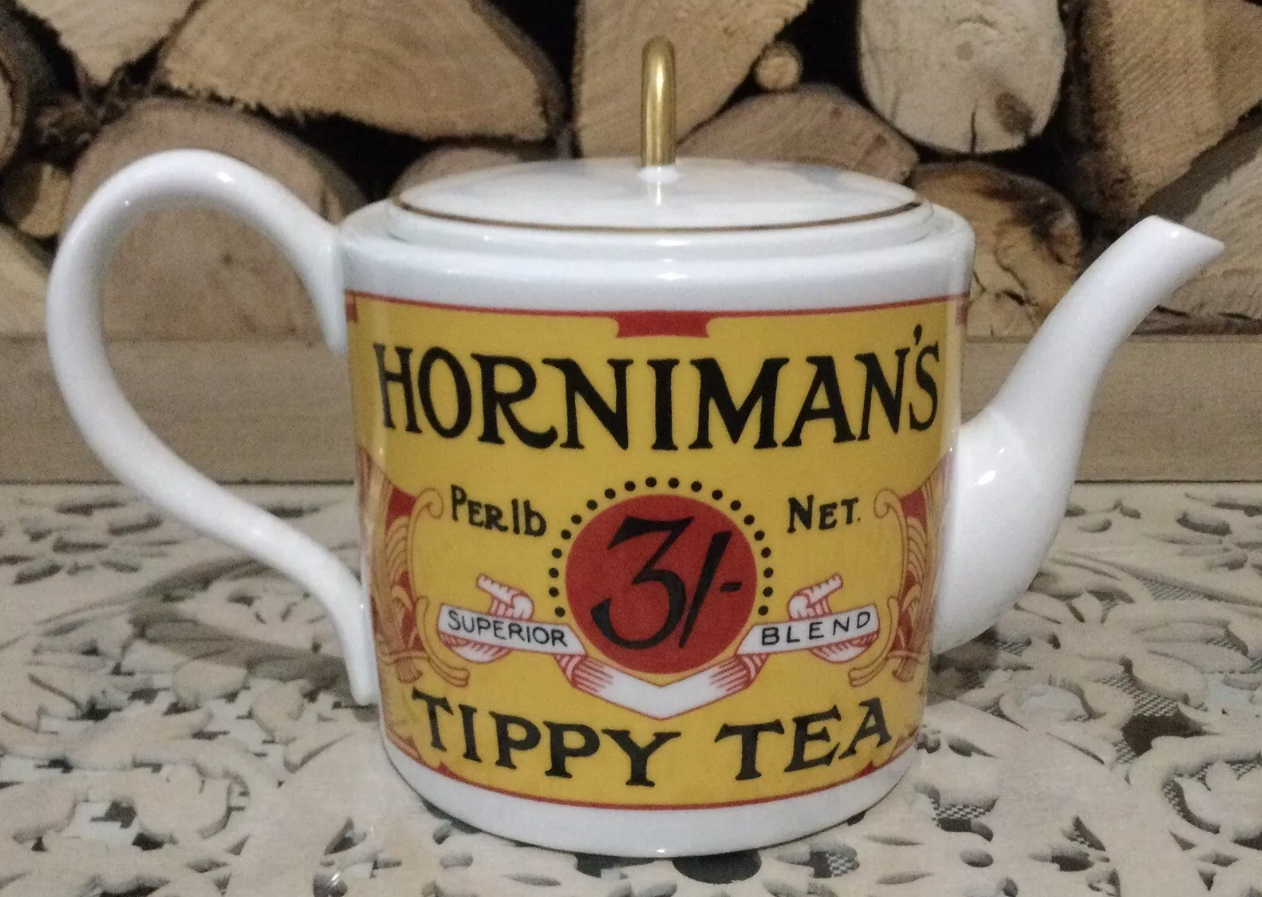

Did you know that the world’s first ever tea packets were produced in Newport?
The inventor of the tea packet – John Horniman – established the largest and most prestigious tea brand of the 19th century. The firm he created – Horniman’s Tea Company – managed to sell the refreshing beverage across all 4 corners of the earth.
The Horniman’s tea label is still popular today in Spain and South America, and his then-revolutionary product was first produced here on the Isle of Wight.
The first tea merchant to ensure that his product was clean and pure was John Horniman. Before his invention of the tea packet, tea was only sold as loose leaf. This meant dishonest traders would add other items – like dust and hedge clippings – to the tea to increase its weight and their profits.
John developed a mechanical method of filling tea packets, which were then sealed. Tampering with the tea became impossible.
John Horniman was born in Reading in 1803 to a family of Quakers. John’s early business career was initially a chequered one. He was a grocer in Birmingham, a cheese merchant in Somerset, then a draper in Northampton.
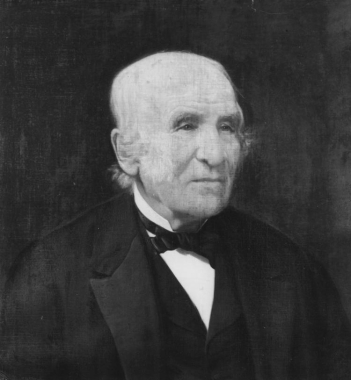
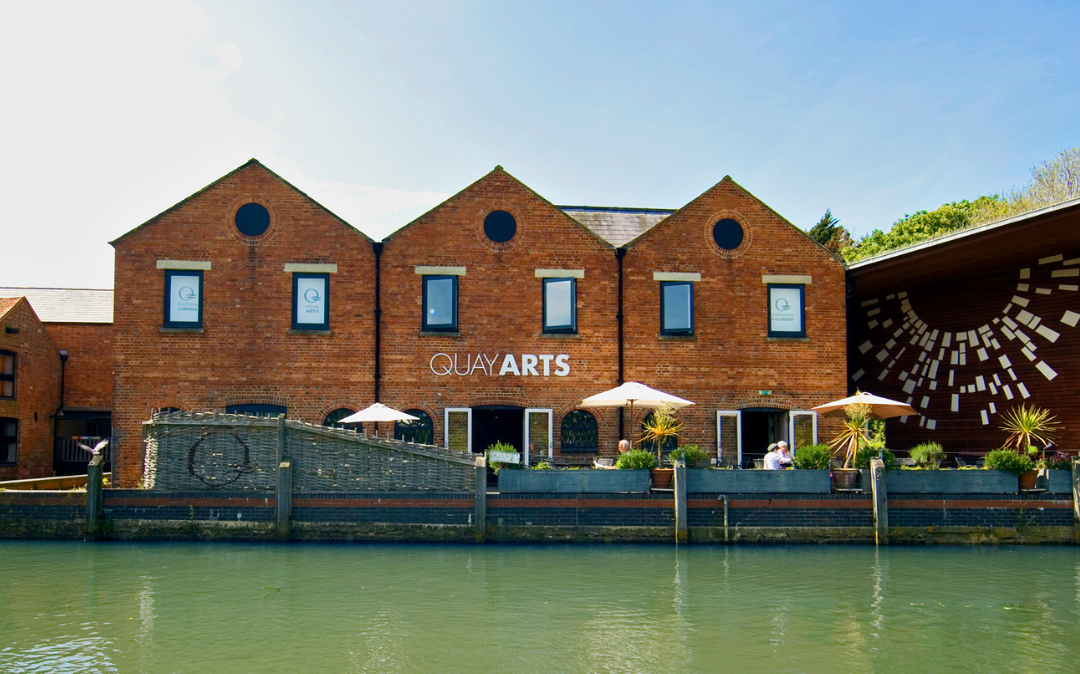
Quakers promoted products such as tea and confectionery as an alternative to more harmful products such as alcohol and tobacco. In 1825, he became a tea dealer in Northampton. The following year, in 1826, he found fame and fortune by setting up the tea trading and blending business, ‘Horniman’s Tea Company’, in the County Town of Newport.
To cope with ever increasing demand, he invented a crude tea packing machine. He would have been a familiar figure at the Quay during the first half of the 19th century riding his black horse in full Quaker attire. 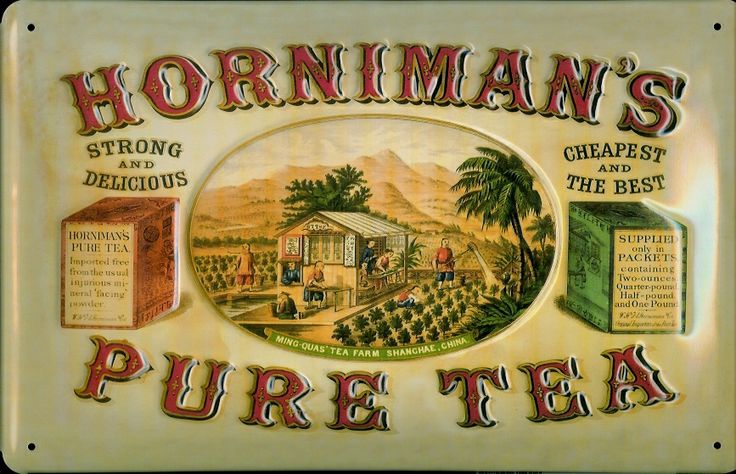 In the middle of the 19th century, the doctor’s journal The Lancet published a series of articles about the adulteration of food. The editor, Thomas Wakeley, arranged for food samples to be tested for purity, and Horniman’s tea was ‘extremely praised as passing the tests in triumphant fashion’. The Lancet found Horniman’s green tea to be the only one free of added colouring, commonly used to disguise poor quality.
The business flourished following this article, but its increasing size led John to relocate to London in 1852 to be closer to the bonded warehouses at London Docks, then the biggest tea trading port in the world.
By 1890, Horniman’s had become the largest tea firm in the world, with its packet labels printed in 9 languages. It exported over 5,000 chests of tea – each weighing 100lbs – every week. It sold 5million packets of tea annually in the UK from 4,000 outlets.
The following advert appeared in the Isle of Wight Journal (Shanklin) in 1877:
HORNIMAN’S TEA – Choice teas at very reasonable prices are always to be had in every town and village, of Horniman’s Agents. Being direct importers Messrs Horniman guarantee the purity, strength, and flavour of their teas; it is well known that much of the tea sent to England is painted or faced with mineral powder Prussinan blue, &c, to hide worthless brown leaves; the Chinese thus pass off the inferior Autumn crop as best tea.
Horniman’s Tea in tea foil packets is sold by appointed Agents, and for 40 years has been preferred for its great strength, delicious flavour, and real cheapness. Agents – Shanklin, Newnham. Confectioner; Sandown, Colenutt, Chemist; Ryde, Comden, Baker; Ventnor, Littlefield, Chemist; Brading, Riddick, Baker; Cowes, Paul, Confectioner; Freshwater, Wellington, Chemist.
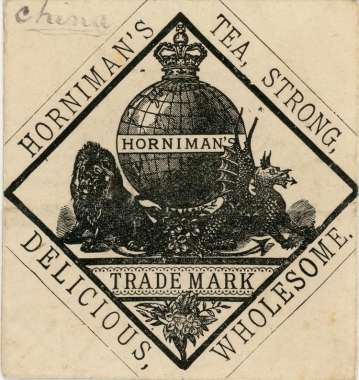 John Horniman had a keen social conscience and devoted his energies and fortune to philanthropy. He funded the Peace Society, the Anti-Slavery Society and the Howard League for Penal Reform. In 1892, he built a convalescent home for disadvantaged children.
He died in 1893, leaving a fortune of £320,000 (£35million in today’s values), much of which was donated to worthy causes. His son, Frederick John, then took over the family business.
In the course of his business travels throughout the world, Frederick began collecting a variety of curious objects, eventually turning his family home into a museum in 1890, and then in 1898, putting his collection into a purpose built museum. The Horniman Museum in South London continues to this day.
Horniman’s Tea was acquired by Lyons & Co in 1918. The brand is currently owned by Douwe Egberts.
Although it is no longer sold in the United Kingdom and the United States, it is still the the market leader in Spain with a 25% market share.
Have you tasted Horniman tea? Have you been to the Horniman Museum in London? Let us know in the comments…














A very interesting article.
Today the island still has a lot of tea leaves, and you can read about them on Island Echo in the court round-up each week.