





























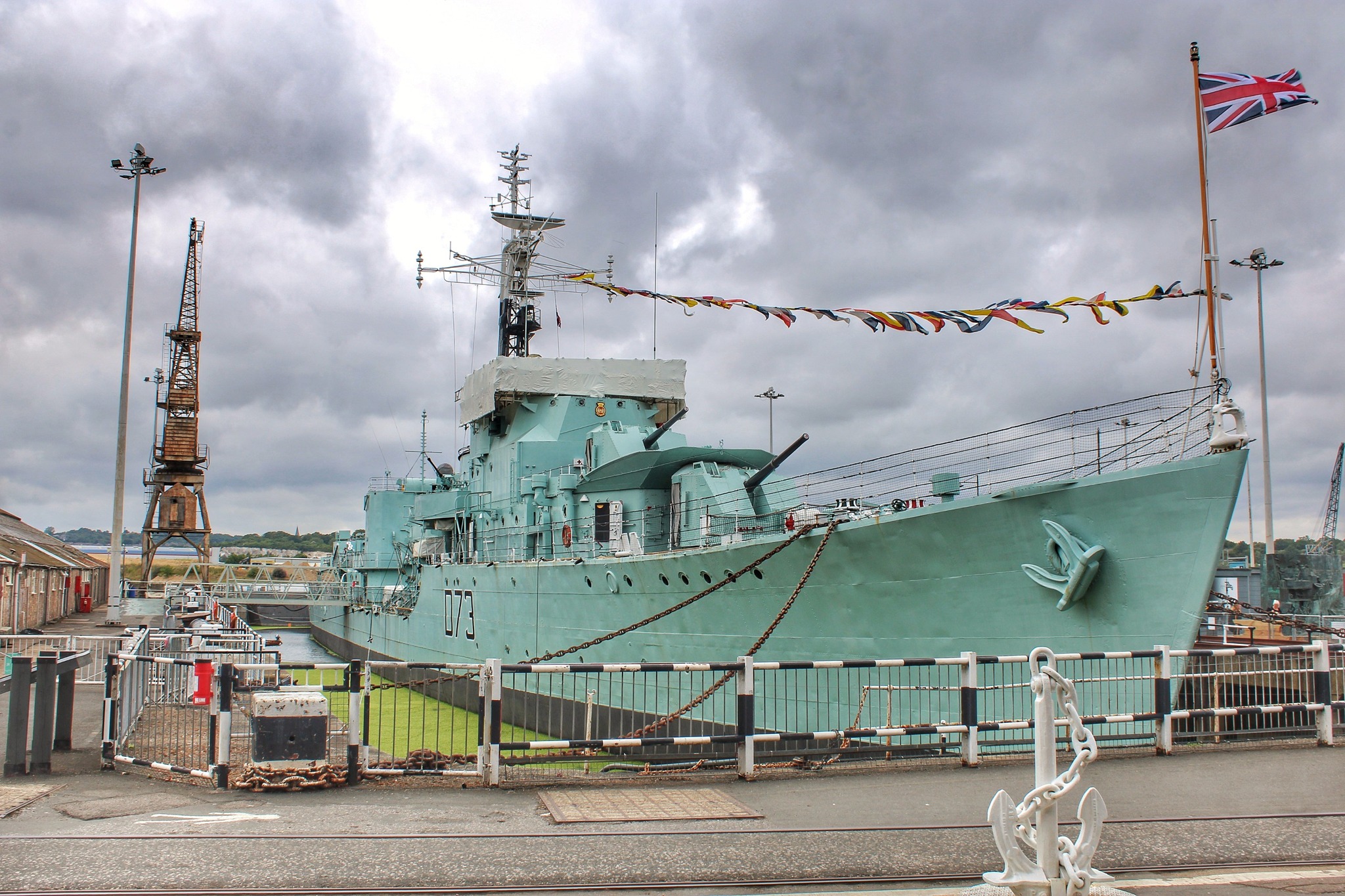

HMS Cavalier – the only surviving Royal Navy destroyer from World War II – was built by J Samuel White at the mouth of the River Medina, here on the Isle of Wight.
HMS Cavalier was 1 of 2 C C-class destroyers to be built on adjacent slipways at East Cowes, together with her sister ship HMS Carysfort. She was the first ship to be given the name ‘Cavalier’ in the Royal Navy and was 1 of 96 emergency destroyers ordered throughout the United Kingdom for the war effort in 1942.
When her keel was laid on 28th February 1943, JS White’s was still recovering from the devastating effects of the Cowes blitz the previous year. Many women were involved in her construction, as much of the predominantly male workforce were on active service at the time.


Electric welding was partially used in HMS Cavalier’s construction because women could handle this job more effectively than the heavy work of riveting. She became one of the first ships built with the forward and aft welded. The new process gave the ship additional speed.
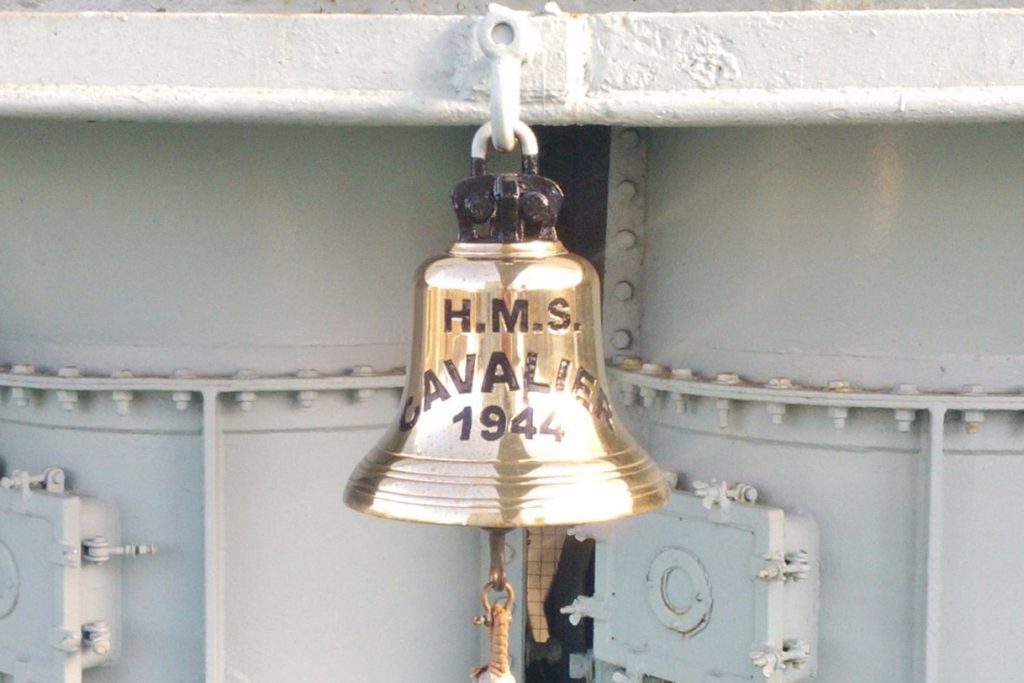
HMS Cavalier was launched by Lady Sibell Glyn on 7th April 1944, at East Cowes, before being completed on the west bank of the Medina on 22nd November that year.
The destroyer was in action off the coast of Norway very soon after being commissioned. She earned her battle honours in February 1945 when escorting a convoy of 34 ships to the Kola peninsula in Russia. The convoy suffered U-boat and aircraft attacks before being scattered in a violent storm. However, all but 3 of the vessels in the convoy successfully returned to the United Kingdom.
Her next job was to escort the troopships RMS Queen Mary and RMS Queen Elizabeth (both used as liners in peacetime) to protect thousands of American servicemen in their perilous journey across the Atlantic Ocean. HMS Cavalier was selected for her speed.
After the end of the war in Europe, HMS Cavalier was dispatched to the Far East. Here, she provided naval gunfire support against Indonesian rebels during the Battle of Surabaya. She then sailed to Bombay, where she took part in the quelling of the Indian Naval Mutiny prior to Indian independence.

She underwent a refit between 1955 and 1957, with her torpedo tubes replaced by 2 anti-submarine mortars, and 2 anti-aircraft guns fitted.
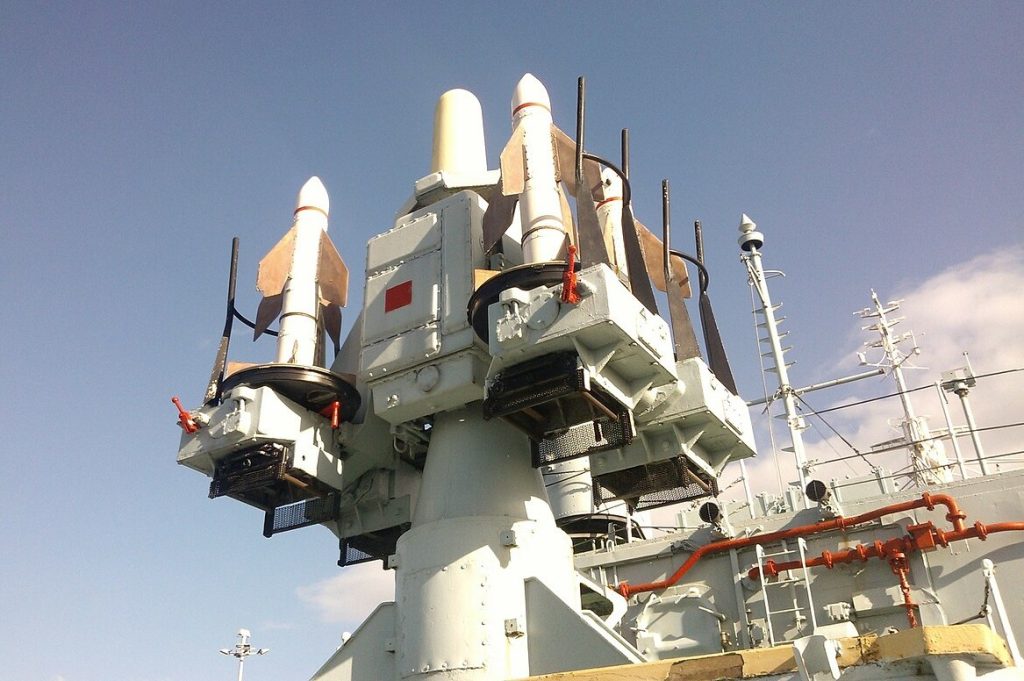
In the Spring of 1958, HMS Cavalier participated in nuclear testing near Christmas Island in the South Pacific. In 1962, she helped defend the Sultan of Brunei and his kingdom. In September 1964, she was fitted with a quadruple Seacat GW20 missile system.
HMS Cavalier was then involved in considerable drama towards the end of her active service. In September 1970, she intercepted an SOS while on night exercises in the Bristol Channel. A Scottish coaster, Saint Brendan, was on fire during a heavy storm. She put a boarding party on board before towing the coaster to safety. The ship’s company were awarded an £11,000 salvage award for their efforts in preventing the loss of the coaster’s cargo.
One of the final actions of HMS Cavalier was to earn her a proud place in naval history when a race was arranged between herself and the frigate HMS Rapid to determine ‘the Fastest Ship of the Fleet’ with a trophy donated by a national newspaper.
On 6th July 1971, the 2 ships met for the contest in perfect weather off the Firth of Forth in Scotland. Cavalier won the race over a distance of 64 miles at an average speed of 31.8 knots (36.6mph) by a mere 30 yards after a safety valve blew on the frigate.
After 27 years of service, HMS Cavalier was decommissioned in December 1971. In 1977, Earl Mountbatten of Burma instigated the first HMS Cavalier Trust to save the ship from being scrapped, with the destroyer bought for £62,000 and towed to Portsmouth. From there, she was then taken to Southampton, where she became a floating museum. She next became the centre piece of Brighton’s new marina.
In 1987, she was moved to Hebburn in Tyneside, where she was intended to become part of a museum celebrating the area’s long shipbuilding tradition – despite the fact that she was actually constructed on the Isle of Wight. However, the museum never got off the ground, and HMS Cavalier was left to languish in a derelict dry dock.
Happily, in 1998, HMS Cavalier was saved from being scrapped by Chatham Historic Dockyard for display as a museum ship. She was placed in No.2 dry dock where HMS Victory was built.
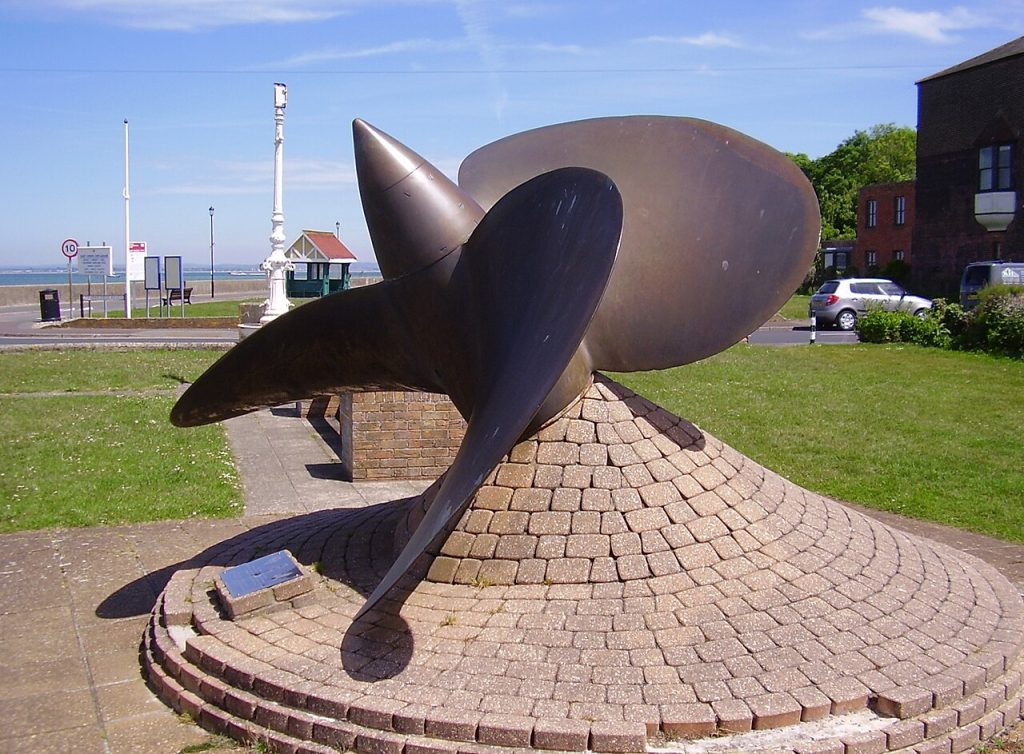
In 2007, HMS Cavalier was officially designated a war memorial for the 142 Royal Navy destroyers lost in World War II and the 11,000 men who lost their lives in those ships.
Did one of your forefathers help build HMS Cavalier? Did you serve on the ship? Have you paid her a visit in Chatham? Let us know in the comments…






Great story with an happy ending, shame she wasn’t kept on the
island.
At least Chatham is a great home for such a vessel.
I wonder if any of the women who built her on the Island are still with us? Imagine being the great-grandchild of these ladies, hearing how she was built, particularly knowing the year before Cowes was bombed, therefore, fearing it may happen again.
See HMS Manxman. Top speed 44knots.
Mine layer
HMS Manxman. 44knots.