















































 UPDATED: The Cowes Floating Bridge is to be suspended every low tide for the foreseeable future – although travel across the River Medina will be free until the beginning of July.
With the brand new, multi-million pound vessel running aground when the tide drops, the decision has been taken to pull the East Cowes to Cowes service ahead of the lowest tide. A passenger launch will be put in place each day for pedestrians – no comfort for motorists who face a continued 10 mile diversion via Newport.
Since being launched Floating Bridge No 6 has been aground several times, has faced electrical problems and has come under fire for damaging vehicles which have been unable to disembark without scraping.


Many locals have commented on the fact the Floating Bridge appears to be dragged by the tide as it flows out of the River Medina, resulting in the vessel coming into East Cowes off-course and then unable to move.
Island Echo approached the Isle of Wight Council for a statement on the matter this morning (Tuesday) following news that the passenger launch has been booked every day for the next month, but a response is yet to be given. However, the matter has been confirmed at tonight’s Scrutiny Meeting at County Hall.
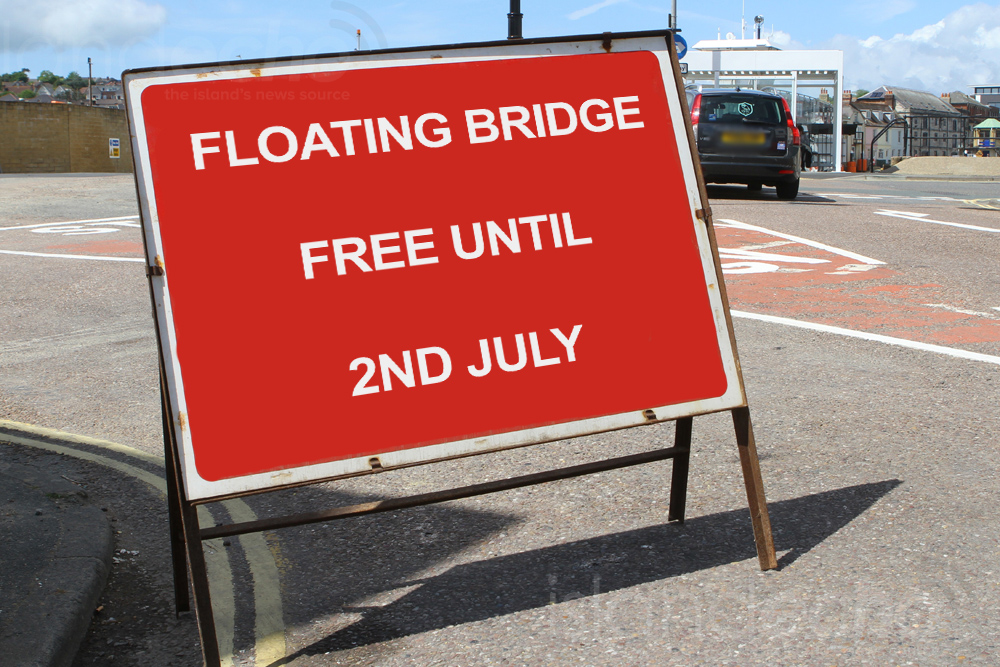
In light of the continuing disruption, which has prompted a review to be carried out, it has been confirmed that charges will not apply on the service in either direction until 2nd July – details of which are to follow.

UPDATE @ 20:25 – Isle of Wight Council Leader Dave Stewart has confirmed that a full review of all the events surrounding the purchase and provision of the new floating bridge will be undertaken by the Isle of Wight Council.
This decision follows a meeting with the Council’s Chief Executive when they discussed what had taken place over recent weeks and how they would work together to address issues that have arisen.

In the meantime, it has been comfirmed that charges for the use of the floating bridge have been suspended and free travel is now being offered for vehicles and passengers until Sunday 2 July.
A spokesperson for the Isle of Wight Council has said:
“This is in recognition of the impact of the problems the introduction of the new floating bridge has had on the lives of its regular users and the local community. It will also give those people who would not normally consider using the facility an opportunity to use it and judge for themselves whether it is something they could factor into their daily travel plans and provide feedback to the council about the facility.
“Throughout this period the council will be continuing to work to overcome the challenges it has faced in introducing the floating bridge to the Medina River crossing, especially in making the necessary adjustments to some items, such as the appropriate length of the chains, which have a significant impact on the operation of the vessel and which can only be evaluated whilst it is in use and at the varying tide heights”.
The council, together with Island Roads, is also looking into the introduction of pedestrian railings along the pavement near the new waiting area on the East Cowes side of the river, in response to concerns raised by Councillor Karl Love, the East Cowes ward councillor, and the road layout in this same area.
Councillor Dave Stewart said:
“I am as frustrated as the people of West Cowes and East Cowes that a seamless introduction of the new floating bridge to the area has not been achieved. I am, therefore, pleased that we are able to offer free use of the floating bridge in recognition that its reintroduction has been a particularly challenging period for these local communities. I also hope that people from all parts of the Island will take time to make use of the floating bridge and support the community and local businesses in the area.
“I am particularly keen that we work with the local business associations and the town councils to promote their local offer over this period. I hope that they may also come together to create a range of promotions and offers to encourage people to stop and spend some time in their communities.”

As well as announcing some immediate changes, the council has confirmed that it will be undertaking a complete review of the approach taken to the design, build and introduction of the floating bridge. The purpose of the review will, in part, be to answer the many questions posed by the local community, but also to understand how the process may have been done differently and whether a better outcome could have been achieved when the new floating bridge went back into service.
Councillor Stewart continued:
“A significant amount of public money has been invested in the floating bridge, and it is important for us to be certain that it has been spent in the best possible way. I am especially keen to understand the design and build process and the levels of stakeholder involvement in its development. When I have that information, this review will be made available for the public and for the council’s scrutiny committee to question.
“That having been said, we do now have a new floating bridge that should give at least thirty years more connectivity between East and West Cowes, and we are committed to overcoming the current issues to ensure that this goal is achieved.
“The floating bridge is one of the many pressing challenges we have inherited as an incoming administration; I am determined that we own and resolve its problems as quickly as we can and that we are clear about, and act on, the outcomes of the review to ensure we are never in this place again.
“At the end of the day this new bridge was provided through investment of substantial public funds and it is important to ensure we achieve the best value for the money paid and as far as possible meet the expectations of our community.”
Isle of Wight Council Cabinet member for infrastructure and transport, Councillor Ian Ward, said:
“The floating bridge is effectively a boat that has not had the benefit of sea trials, conducted in private. Its trials have taken place in a very public way with the expectation that things would be perfect from the off. Sadly, this has not proven to be the case, with much more to be done than might have reasonably been expected.
“I also recognise that it was designed to meet the highways arrangements proposed as part of the now stalled Solent Gateways Project and, therefore, we must adapt what we have until such time as we have greater clarity about the future of that project. In the meantime I would like to recognise the hard work and efforts of all of the staff of the floating bridge to improve its operation as quickly as possible.”
Isle of Wight Council chief executive, John Metcalfe, said:
“This has been a frustrating and disappointing start to what should be a positive investment for the Island to help our plans to grow the Island Economy. Staff have been working very hard to addresses the issues that have arisen and will continue to do so until the problems have been satisfactorily resolved.”