







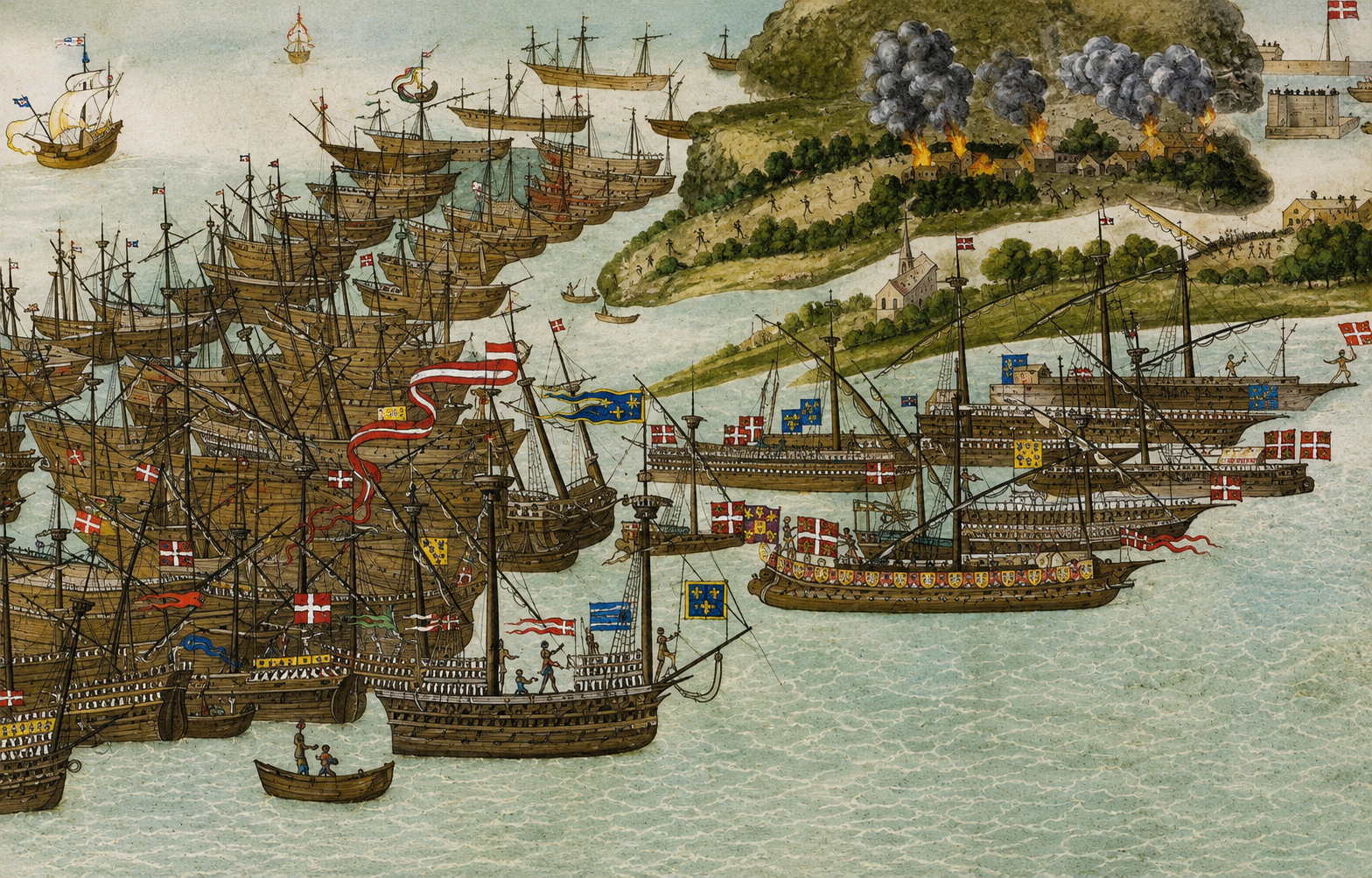
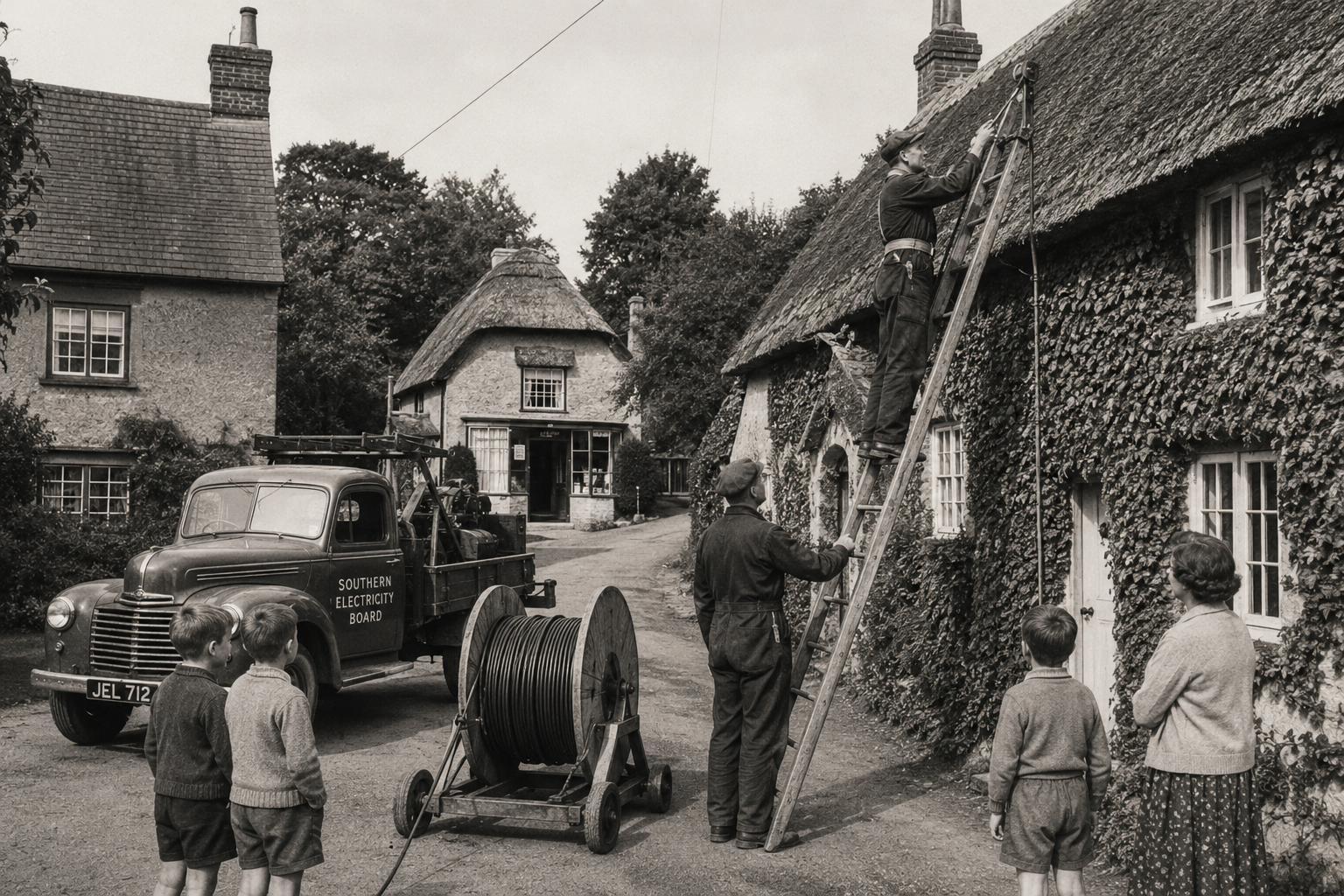
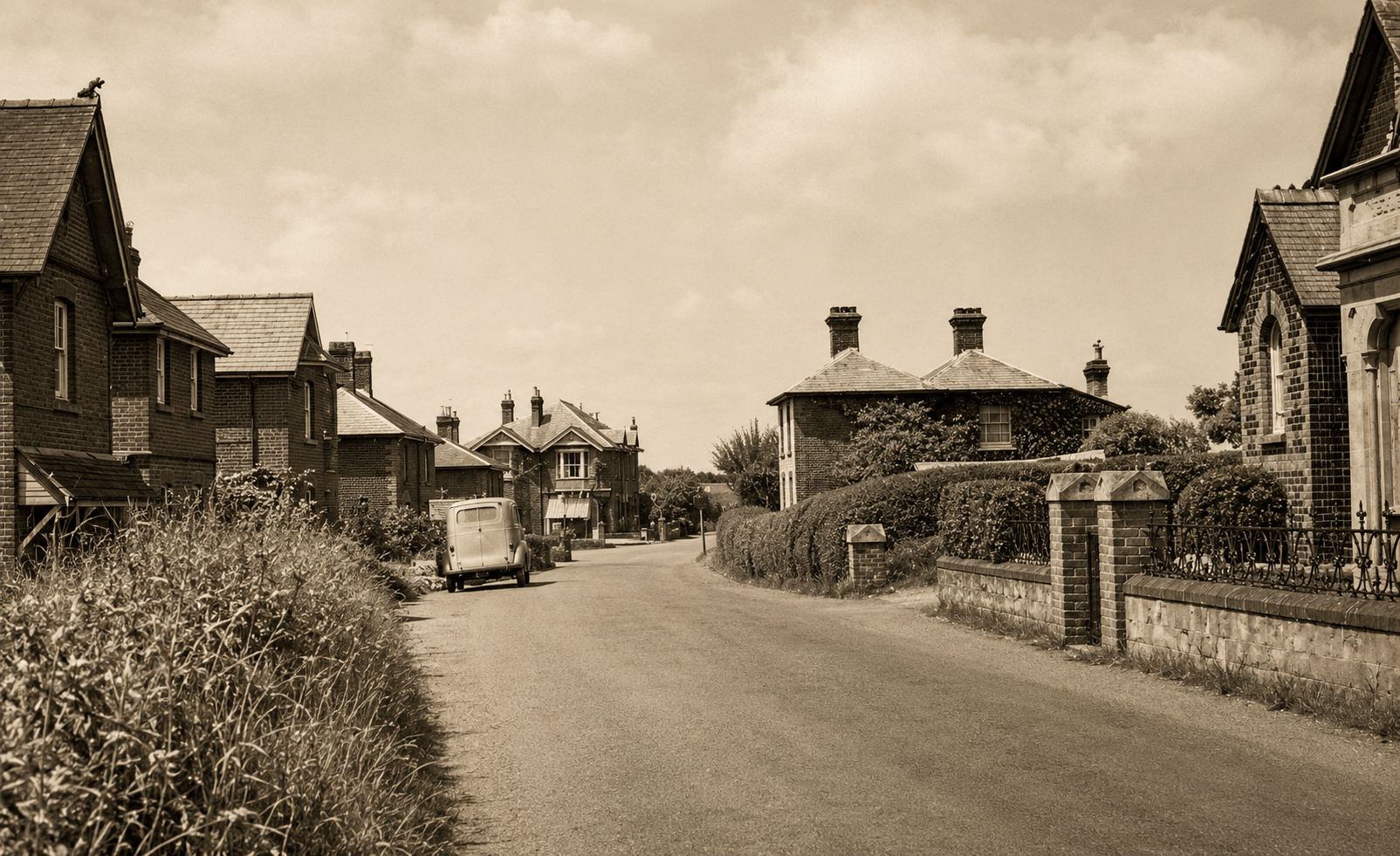































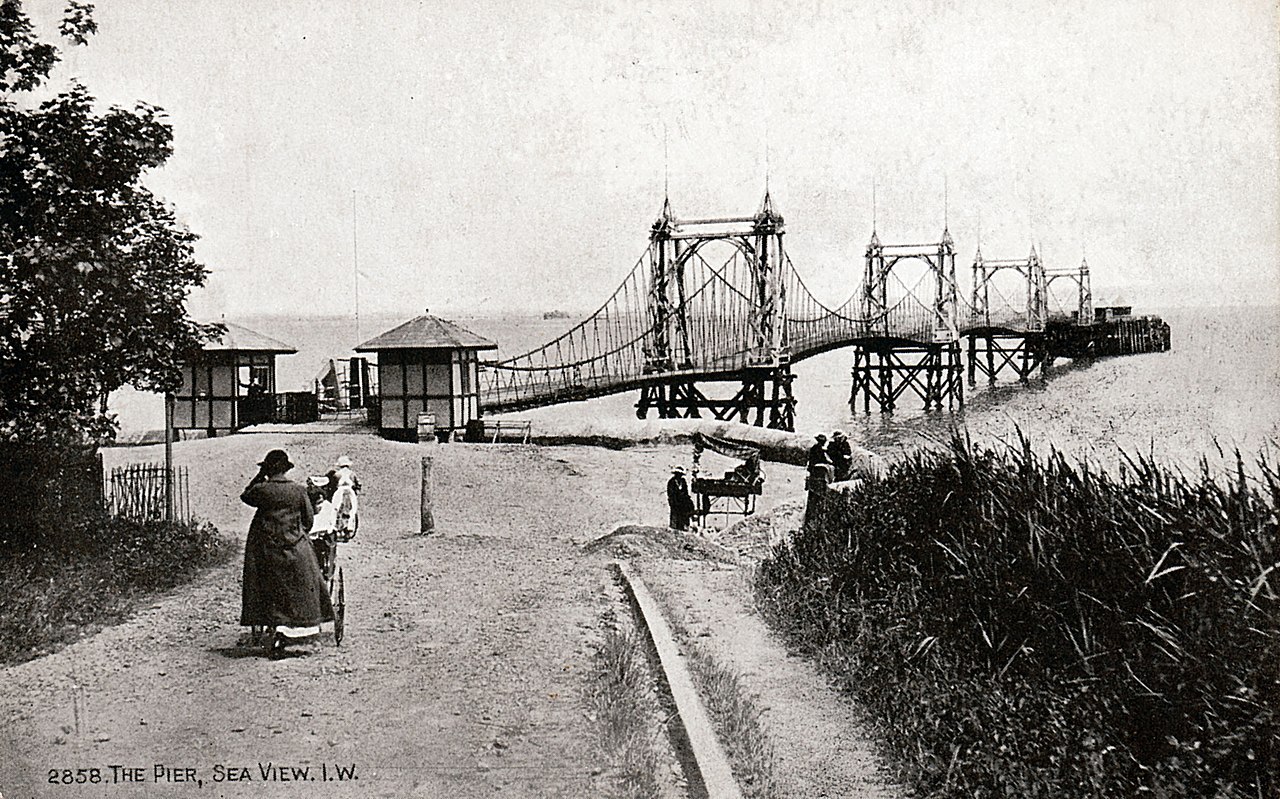


On 27th December 1951, the residents of Seaview woke up to discover 100 feet of the decking of the beautiful Seaview Pier had been washed away by the sea.
Most of us know that Shanklin Pier was destroyed in the Great Storm of 1987. But did you also know that Seaview once had a pier and that this was destroyed by a storm of similar strength over 70 years ago?
2 days after the initial damage, the Island’s north east coast suffered the worst gale for 45 years with waves over 20 feel high and 70 mph winds. The pier was totally destroyed.


Seaview Pier 1st opened in June 1881. It had been designed by local man Frank Caws (you will know of Caws Avenue) and built at a cost of £6,000.
The structure was exceptional in that it was 1 of only 2 piers in the country to be a suspension pier – the other being in Brighton.
The company were delighted that their pier was patronised by the Prince and Princess of Wales, who landed there shortly after it had opened.
In 1889, a 50ft extension and a new pier head increased its length to 1,050 feet. A larger pier head was erected in 1901 and slot machines were added.
In 1914, the pier company purchased its own steamer to run excursions. Unfortunately, they only ran for a few months before the outbreak of World War I closed the pier. The condition of Seaview Pier declined between the wars and eventually, the Royal Navy took it over during World War II.

At the end of the war, the structure was in poor condition. It was sold in November 1947 to a Mr Figgins for just £775. The new owner had intended to repair it before concluding that this would be too costly and decided to have it demolished.
In August 1948, the pier was bought by the Horwich brothers. It became the 1st pier to be listed under the Town & Country Planning Act, because of its unusual design – the only pier in the country to be so listed.

Plans were in hand to renovate Seaview Pier when it was destroyed by the violent storm, leaving only the pier head and around 100ft of promenade deck intact.
In the aftermath of the storm, thousands of planks were left floating in the sea and scattered along the shore all the way to Ryde. Locals helped themselves to the wood until the police arrived on the scene to warn them that these belonged to the Pier company but by then the planks had been carted away.
What remained of the pier was demolished in 1952.