












































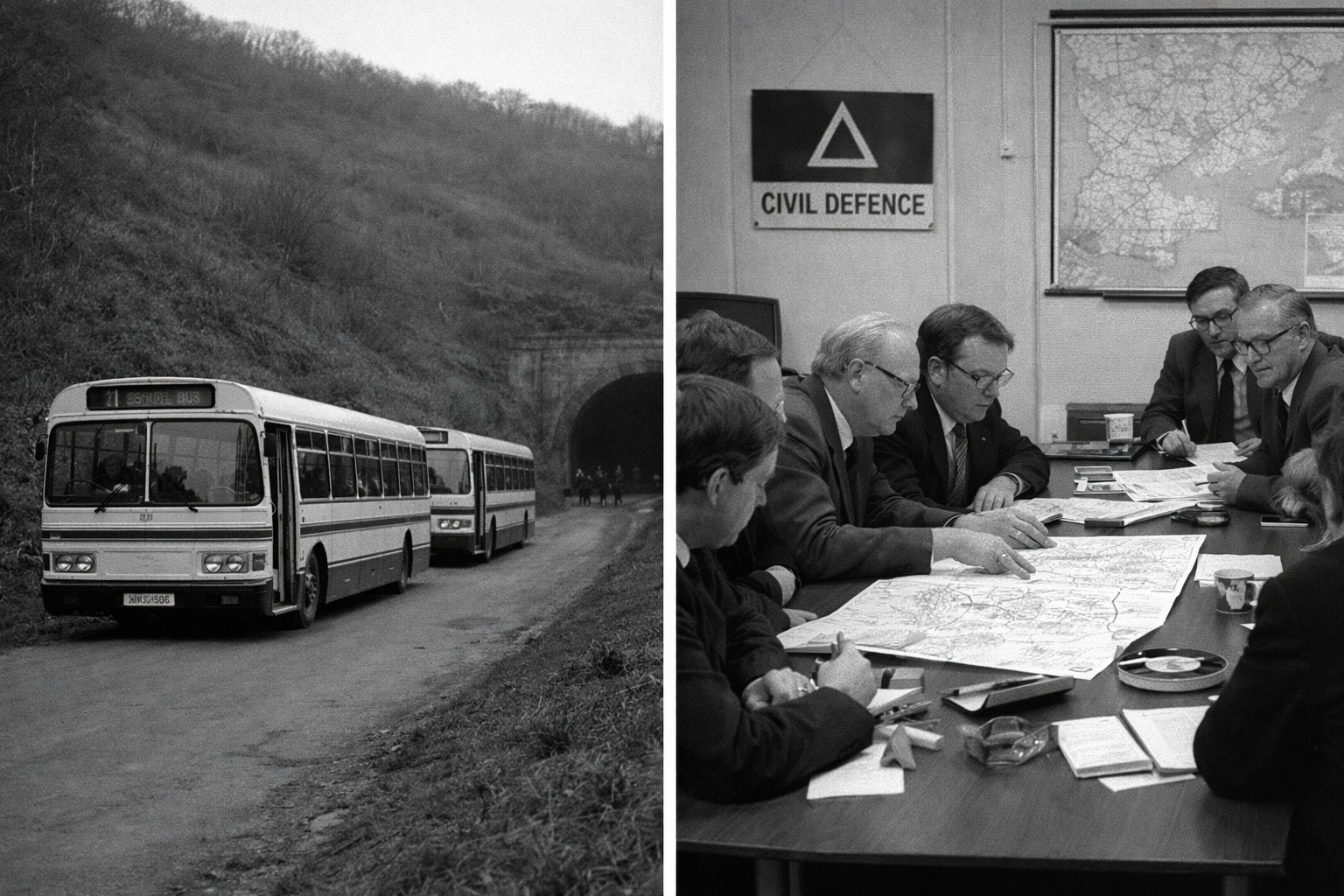

Plans to protect the Isle of Wight from nuclear attack were revealed half-a-century ago at the height of the Cold War.
In the first week of March 1976, Isle of Wight County Council outlined extraordinary measures for survival if Britain came under nuclear attack. Central to the plan was the protection of the Island’s youngest residents.
Around 15,000 children aged between 5 and 18 were earmarked for shelter in disused railway tunnels in the South Wight, including at St Lawrence and beneath St Boniface Down. The tunnels were believed to be robust enough to withstand shock waves from nuclear explosions in London and even from closer targets such as Portsmouth and Southampton.

To move the children quickly, 104 single-decker buses would be mobilised. In the event of an emergency, the education department would write to parents explaining the plan and asking permission to take children into care. Once transported, youngsters would be taken from tunnel entrances and placed under the supervision of teachers and social workers.
The reasoning was stark. Younger people were considered more vulnerable to genetic damage from low levels of radiation, and if much of the adult population was lost, they would form the basis of a future generation.
The tunnels were selected not only for their strength but for their practicality. They were close to water supplies, had air vents, and could be fitted with portable latrines and field kitchens. The Council said the shelters could be made operational within 72 hours’ notice and would offer good protection against blast, radiation and radioactive fallout.
While children were to be taken underground, the rest of the Island’s population was advised to remain in their homes. The Council warned that mass movement would cause chaos on the roads and reduce chances of survival. Residents were instead urged to follow government advice on making homes safer against nuclear attack.
The Isle of Wight was described as one of the most fortunate areas on the south coast in such a scenario. The high ridge of the Downs was believed to provide protection to the south from blast effects, while prevailing westerly winds were thought unlikely to deposit radioactive fallout across the Island.

Plans also existed to keep the Island running. A specially equipped underground shelter would allow officials to continue administering the Isle of Wight under wartime conditions.
The remainder of the Island’s population – then around 110,000 – could be billeted in the Undercliff with a reasonable chance of survival, the Council said, with holiday accommodation available for requisition if required.
Half-a-century on, the proposals stand as a vivid reminder of how real the threat once felt, and how seriously even a small island prepared for the unthinkable.









In the worlds current state with the “Mango Clown”ruling his precarious roost”not a bad idea to dust them off again!.
Very true, things ain’t looking good.
I was reading on the Express earlier that
Macron wants to deploy French Nukes in the UK.
The French connection, what happened with Brexit, did
it not happen.
These days the clouncil can’t even get a caravan moved out of a layby…. no hope if things went seriously south.
1976 wasn’t really the height of the Cold War. The Cold War started at the end of WWII and by 1972 had entered the period of detente during which the tensions diminished until the end of the Soviet Alliance ended it completely. The height of the Cold War was rather earlier in the 1950s and 60s.
Seems like only yesterday, where did those
50 years go!
Let’s hope it’s quick being near Portsmouth.
Can’t see the Tesco lorries bothering to come over after a blast to no landing facilities.
Two days of bad weather and we get cut off.