






























In this edition of Made on the Isle of Wight, Island Echo looks at the work of the famous military canoes of Fred Goatley that were built in East Cowes and featured in a number of famous war films.
Did you know that the canoes featured in the famous war films Cockleshell Heroes and A Bridge Too Far were made at the Folly Works at Whippingham?
The story of the Folly Works begins with Sam Saunders’ revolutionary invention of Consuta (from the Latin stitched together), a strong and lightweight material used in the construction of boats and aircraft in the early 20th century.


Consuta comprised of 4 veneers of mahogany planking, interleaved with waterproof calico, and stitched together with copper wire. The idea for this product came from the design of Native American canoes.
Sam Saunders patented this technique and completed his 1st boat made from Consuta – a steam launch – in 1898. In the 1900s, Saunders and his workmen relocated from Goring on the River Thames to West Cowes, where the Saunders’ Patent Launch Building Syndicate started to build folding, sectional, and collapsible boats.
When A.V. Roe (Avro) took a controlling interest in Saunders’ company in 1929 (forming Saunders Roe), a Consuta stitched-ply facility was built at the Folly on the banks of the River Medina, which later became known as Saro Laminated Wood Products. In 1939, the works made 40% of the plywood used in aircraft in the UK.

The inspired and innovative designer Fred Goatley became manager of the Folly Works in 1937. In the years before World War II, he designed a standard canoe with a detachable inboard motor known as the ‘Goatley’. This was an assault craft, carrying 10 troops, enabling them to pursue enemy forces across waterways. Hundreds were ordered by the army.
The most notable use of the Goatley came in Operation Market Garden in the Netherlands in 1944. The sadly unsuccessful operation was immortalised in the 1977 film A Bridge Too Far, starring the likes of Richard Attenborough, Michael Caine, Sean Connery and other world-famous actors.

‘Goatley’s’ featuring in a Bridge Too Far below:
Goatley then went on to design a MkII version of the craft. This was intended for commando units operating behind enemy lines. This versatile collapsible canoe could be stored aboard submarines and erected in just 30 seconds. Over 1,000 were built.
6 of the MkII craft – popularly known as ‘Cockleshells’ – were used in Operation Frankton, an attack on enemy shipping in Bordeaux, France, in December 1942. The operation was subsequently made into the 1955 film Cockleshell Heroes, starring Trevor Howard. Goatley became known as ‘Father Cockleshell’.
Cockleshell Heroes below:
The world-famous Cockleshells were further used in innumerable clandestine operations in WWII, including reconnaissance activities on the Normandy beaches prior to the D-Day landings.
Fred Goatley’s contribution to victory in World War II was immense. As well as the Cockleshells and Goatleys, he designed numerous other types of military vessels. These included an unsinkable lifeboat that could withstand bullets, a rescue powerboat, and a surf landing craft.
Author Quentin Rees said of Goatley:
“What he did for the war effort was enormous. Even to this day, he is unrecognised for his efforts.”
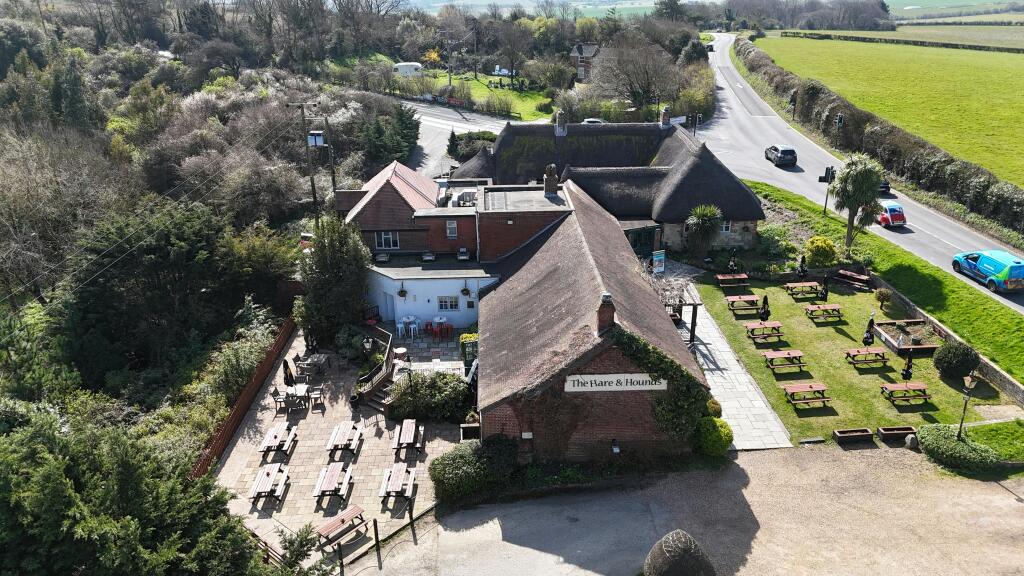
Fortunately, a plaque has been placed near the Folly Inn to commemorate this talented and influential designer.
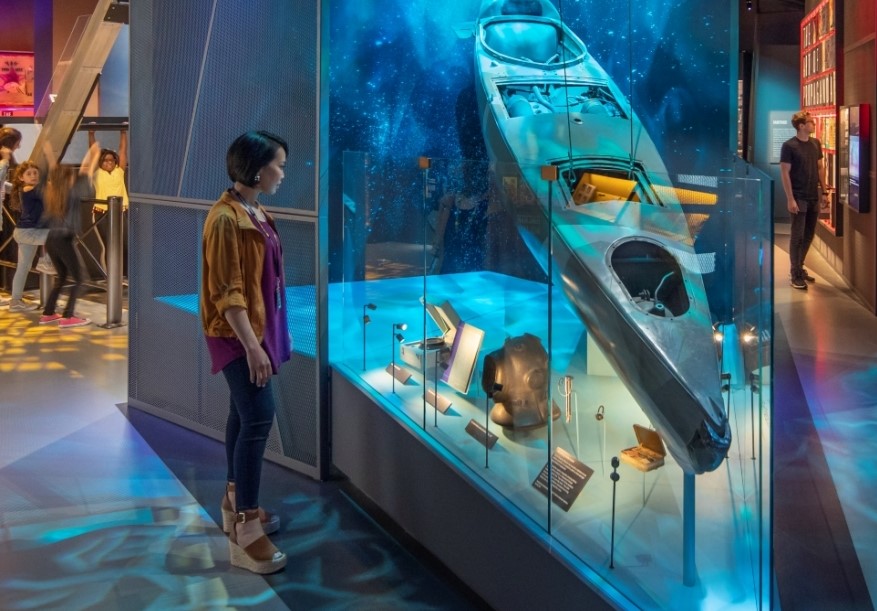
There was 1 further revolutionary craft made at the Folly Works during WWII – a submersible canoe used to attack enemy shipping using limpet mines. The aluminium electrically powered motorised submersible canoe (MSC), colloquially known as the ‘Sleeping Beauty’, was piloted by a frogman and capable of diving to a depth of 40ft. 15 were made in East Cowes.
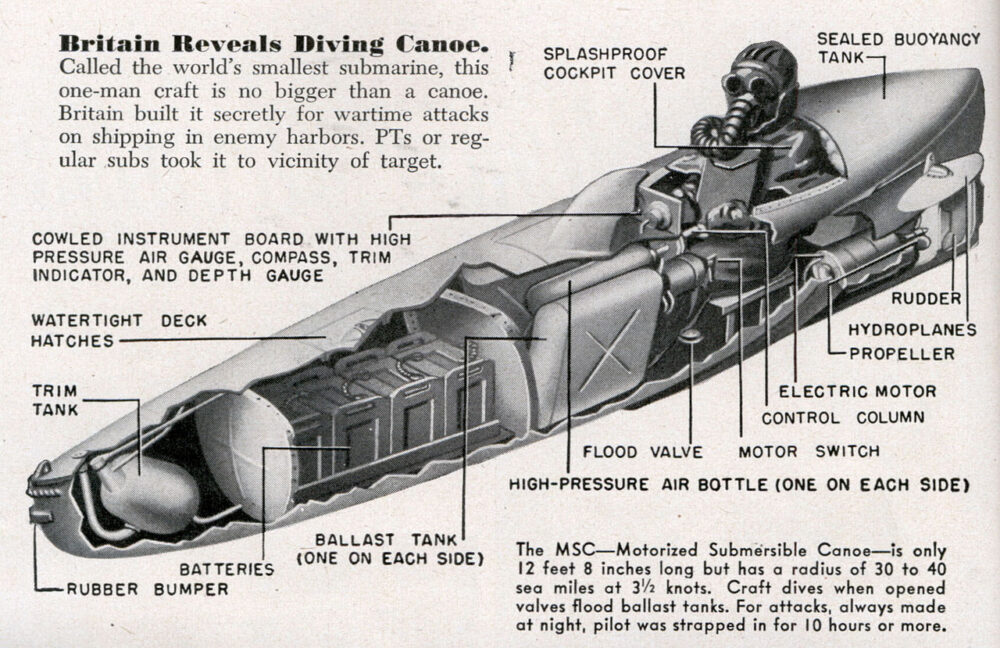
The ‘Sleeping Beauty’ had a tragic history. They were intended to be used for Operation Rimau, an attack on Japanese shipping in Singapore. This was a follow up operation to the very successful Operation Jaywick in 1943, when 7 Japanese craft were sunk or damaged, in an operation in which canoes had also been deployed.
Operation Rimeau documentary below
For reasons of secrecy, no publicity had been given to Operation Jaywick. The Japanese therefore thought their losses were an act of sabotage by the local population and wreaked terrible revenge on the unfortunate citizens of Singapore.
Operation Rimau – in October 1944 – was a further attempt to cripple Japanese shipping in Singapore, in which 3 ships were believed to have been damaged. However, none of the commandos who took part in the raid lived to tell the tale.
13 commandos were killed in firefights with the Japanese. A further 10 were captured and barbarically beheaded on 7th July 1945, just 1 month before the end of hostilities. It is said that it took guards half an hour to complete the beheadings, which sometimes required 2 or 3 blows.
The names of those executed are Major Reginald Ingleton, Captain Robert Page, Lieutenant Albert Sargent, Lieutenant Walter Carey, Warrant Officer Alfred Warren, Sergeant David Gooley, Corporal Clair Stewart, Corporal Roland Fletcher, Able Seaman Walter Falls, Lance Corporal John Hardy.
In the next edition of Made on the Isle of Wight, we shall look at the famous Saunders Roe flying boats.



Frankie Howard in Cockleshell Hero’s!!! Surely that was Trevor Howard
they also built spitfires and there’s one complete buried in concrete …..
Where? And yes please.
Please keep articles like this coming!
The story of the Italian Maiale (pigs) may interest people. The Italians have an undeserved reputation for cowardice during WW2 (actually it had more to do with the fact that most ordinary Italians had little love for the Fascists or Mussolini). Their attacks on shipping from their base ship, the Olterra, are legendary, sinking 42,000 tons of allied shipping.
https://en.wikipedia.org/wiki/Italian_auxiliary_ship_Olterra
Hi, apologies, but as this article is likely to pop up in future searches concerning ‘Sleeping Beauties’, in the interests of saving any confusion, Folly Works/Sanders Roe/Goatley had no involvement with the ‘Sleeping Beauty’ and none were ever made there.
Unfortunately a case of mistaken identity was published many moons ago and continues to be re-populated in new books.