


















































The office is dead. Long live the office.
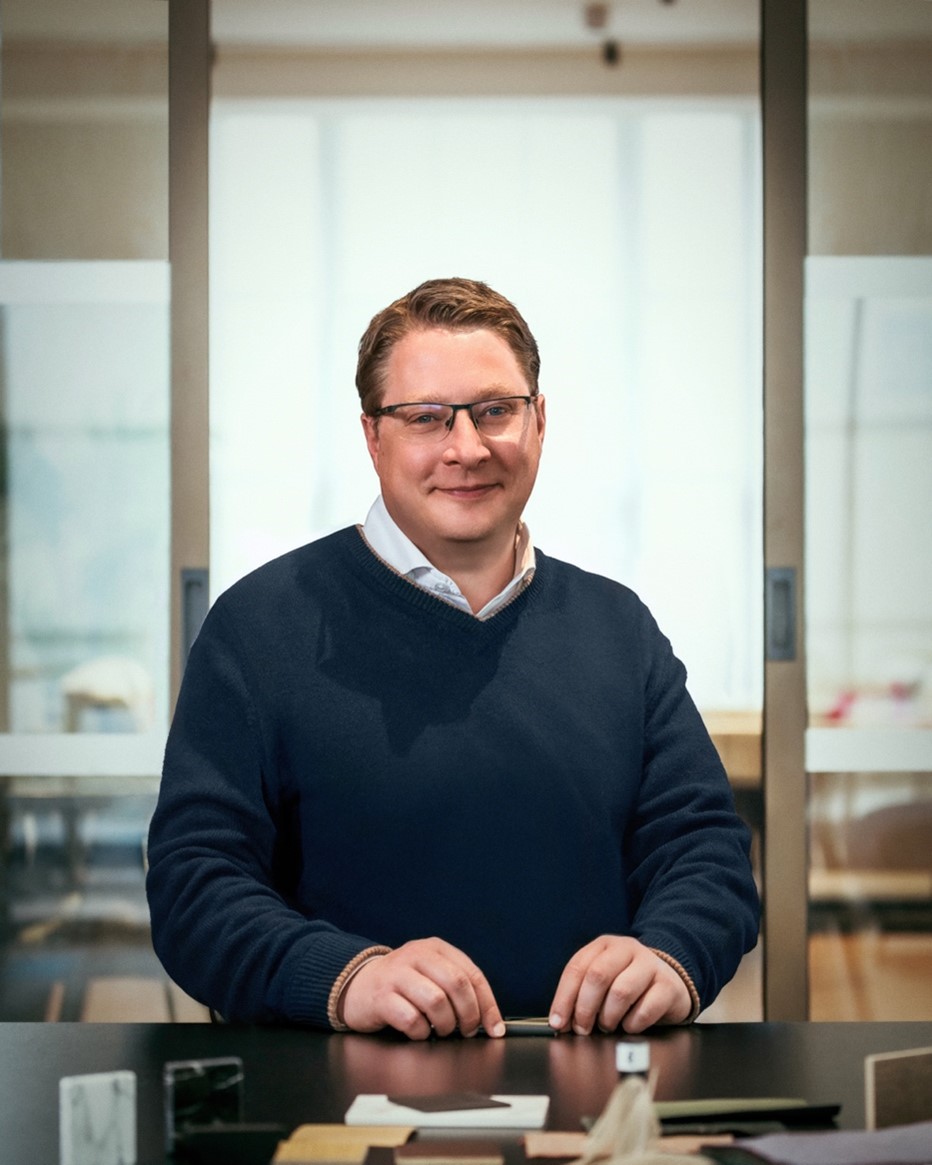
In the post-pandemic world of hybrid work and remote flexibility, the traditional office space faces an existential crisis. Rows of cubicles and sterile conference rooms no longer suffice when employees can work from their kitchen tables in pajamas. Yet Nick Millican, CEO of Greycoat Real Estate, sees this disruption not as the end of office culture, but as its reinvention.
“People are in some ways within their business, seeing working from home is competition, so they’re actively thinking about how to persuade people to make the commute,” Millican observes. This fundamental shift in perspective—from mandating presence to earning it—has become the driving force behind what he calls the experiential office: a workplace that doesn’t just house employees but actively competes for their attention and engagement.


At the heart of London’s financial district, Millican is pioneering this transformation through projects like 20 Finsbury Dials, where Greycoat and Goldman Sachs Asset Management are redefining what it means to create a workplace worth returning to. The 140,000-square-foot building represents more than renovation—it’s a blueprint for how the future of work can be designed to be irresistibly compelling.
The Competition for Employee Attention
The pandemic fundamentally altered the workplace equation. What was once a captive audience became a voluntary one, and office buildings suddenly found themselves competing not just with other offices, but with the entire spectrum of where and how people choose to work.
Millican recognises this shift as permanent: “A lot of people now have a much better view about what they need. It’s becoming a two-tier market. There are good buildings in desirable locations with modern environmental performance that are doing very well, and rents are actually going up. Then there are properties that aren’t really fit for purpose and are in the wrong location that probably need to be repurposed into something else.”
This bifurcation has created clear winners and losers in the commercial real estate market, but more importantly, it has established new criteria for what makes an office space valuable. The question is no longer whether people will return to offices, but which offices will be compelling enough to warrant the return.

Environmental performance classifications, which were once almost irrelevant for most tenants, have now become crucially important. But beyond sustainability metrics, the experiential office must deliver something that remote work cannot: a sense of place, community, and purpose that justifies the commute.
Building the Bones for Experience
Millican’s approach to creating experiential offices begins with what he calls “building the bones”—establishing the foundational elements that enable rich workplace experiences without dictating how tenants must use the space.
“As a developer, what we focus on is making sure the bones of the building enable someone to do that. So typically, we’d be very focused on provision of outside space for tenants, provision of an entrance experience that typically would have breakout space, cafe, etc., at the lower ground floor to give a bit of atmosphere and environment for tenants in a building,” Millican explains.
This philosophy recognises that different organisations have varying needs and cultures, but all benefit from flexible infrastructure that can support diverse workplace experiences. Rather than a prescriptive design that limits adaptation, the experiential office provides a platform for organisational expression and evolution.
The 20 Finsbury Dials project exemplifies this approach through its design features. The building boasts an expansive ground floor with a full-height atrium in the reception area, flooding the space with natural light and creating an impressive entrance experience. “The atrium not only adds to the aesthetic value of DIALS but also maximises natural light. It’s a great feature,” said Nick Millican.
All six floors offer large, flexible floor plates of around 19,000 square feet, designed to accommodate office layouts suited to contemporary work styles. Ceiling heights ranging from 9 to 10 feet enhance the sense of space and openness, providing the architectural foundation for diverse workplace configurations.
The Location-Experience Nexus
While building design creates the foundation for experiential offices, Millican emphasises that location plays an equally crucial role in the employee value proposition. The experiential office extends beyond the building walls to encompass the entire neighbourhood ecosystem.
“I think a lot of it is being in a location that has a lot of attractions for people’s kind of do after work or before work or at lunchtime or to make their journey and not just about the office, and I think that’s a really big drive of people,” Millican notes.
The 20 Finsbury Dials location exemplifies this strategic approach. Situated just north of Moorgate station, the building enjoys exceptional connectivity with access to major transportation lines, including the Central, Circle, Hammersmith & City, Metropolitan, Northern, and London Overground lines. The proximity to transit options ensures seamless commutes, while the three-minute walk to the Crossrail station further enhances accessibility.
But connectivity alone doesn’t create an experiential office. The location must offer the kind of amenities and attractions that make the workplace feel integrated into employees’ broader lives rather than isolated from them.
Designing for Human Well-being
The experiential office movement aligns closely with the evolving understanding of workplace wellness and human-centred design. Greycoat’s commitment to achieving BREEAM Outstanding, EPC A, and WELL Platinum ratings for 20 Finsbury Dials reflects recognition that employee experience encompasses both environmental performance and occupant health.
“Our goal is to achieve BREEAM Outstanding, EPC A, and WELL Platinum ratings for DIALS,” Nick Millican says. “These certifications are not just badges of honour — they signify our commitment to setting benchmarks in sustainable building practices that prioritise both environmental impact and occupant health.”
WELL Platinum certification, in particular, focuses on how buildings support human health and well-being through design features that address air, water, nourishment, light, fitness, comfort, and mind. This holistic approach to workplace design recognises that the experiential office must serve human needs at multiple levels.
The emphasis on natural light through the atrium design, flexible workspaces that accommodate different work styles, and integration of wellness amenities reflects a comprehensive approach to creating environments where people genuinely want to spend time.
The Technology-Enhanced Workplace
Modern experiential offices must seamlessly integrate technology that enhances rather than complicates the work experience. The renovation plans for 20 Finsbury Dials include upgrading heating, ventilation, and air conditioning systems to energy-efficient models, implementing advanced water conservation practices, and using sustainable materials in all construction retrofitting.
“We’re improving the thermal qualities of the envelope because we’re replacing all of the windows, and we’re insulating the existing facade,” explains Dan Higginson, Greycoat’s Director of Development and Leasing. These infrastructure improvements create the foundation for smart building technologies that can optimise comfort, efficiency, and user experience.
The integration of sustainable technologies also supports the broader employee value proposition. Workers increasingly expect their employers to demonstrate environmental responsibility, and buildings that visibly commit to sustainability goals help organisations attract and retain talent aligned with these values.
Meeting Evolving Tenant Expectations
The post-pandemic workplace has fundamentally shifted tenant expectations beyond traditional metrics of square footage and location. Modern tenants demand environments that reflect their own values of sustainability and responsibility, and the experiential office must deliver on these expectations.
“Modern tenants demand more than just office space; they want environments that reflect their own values of sustainability and responsibility,” explains Millican. This shift requires developers to think beyond providing functional space to creating meaningful workplace experiences.
Greycoat integrates this understanding into every aspect of its development process. The company organises wellness activities like Pilates classes and team lunches as part of a broader initiative to keep teams engaged and mentally healthy, demonstrating how the experiential office extends beyond physical design to encompass workplace culture and community building.
The Market Reality of Experience-Driven Offices
The commercial real estate market has begun reflecting the value of experiential office design through pricing and occupancy rates. Properties that successfully create compelling workplace experiences are commanding premium rents and achieving higher tenant retention rates.
“There are prime buildings in excellent locations with modern environmental features that are performing exceptionally well, and rents are actually rising,” said Millican. This market validation demonstrates that the experiential office represents not just a design philosophy but a sound business strategy.
The bifurcation between experiential offices and traditional spaces continues to accelerate, with older, less adaptable buildings struggling to compete. This creates opportunities for developers who understand how to transform existing assets into experience-driven workplaces.
Lessons for the Future of Work
Nick Millican’s approach to the experiential office offers valuable insights for organisations and developers navigating the future of work. The key principles that emerge from Greycoat’s strategy include:
- Design for Flexibility: Create architectural foundations that can support diverse workplace experiences rather than prescriptive layouts that limit adaptation.
- Integrate Location Strategy: Consider the broader neighbourhood ecosystem as part of the employee value proposition, ensuring that commuting to the office provides access to amenities and experiences unavailable elsewhere.
- Prioritise Human Well-being: Implement design features and certifications that demonstrably support occupant health and environmental sustainability.
- Embrace Competition: Recognise that offices must actively compete for employee attention and design experiences that justify the choice to work in-person.
- Build Community: Create spaces and programs that foster workplace culture and social connection beyond individual productivity.
The Transformation Imperative
As hybrid work becomes the permanent norm rather than a temporary adaptation, the pressure on office buildings to justify their existence will only intensify. The experiential office represents the commercial real estate industry’s response to this challenge—a recognition that survival requires transformation from space providers to experience creators.
Nick Millican’s vision for the experiential office acknowledges this reality while providing a roadmap for success. Through projects like 20 Finsbury Dials, Greycoat demonstrates that the future of work isn’t about choosing between remote and in-person, but about creating in-person experiences so compelling that the choice becomes obvious.
The office isn’t dead—it’s evolving. And in that evolution lies the opportunity to create workplaces that don’t just house employees but inspire them, support them, and ultimately, make them genuinely excited to come back for more.