




















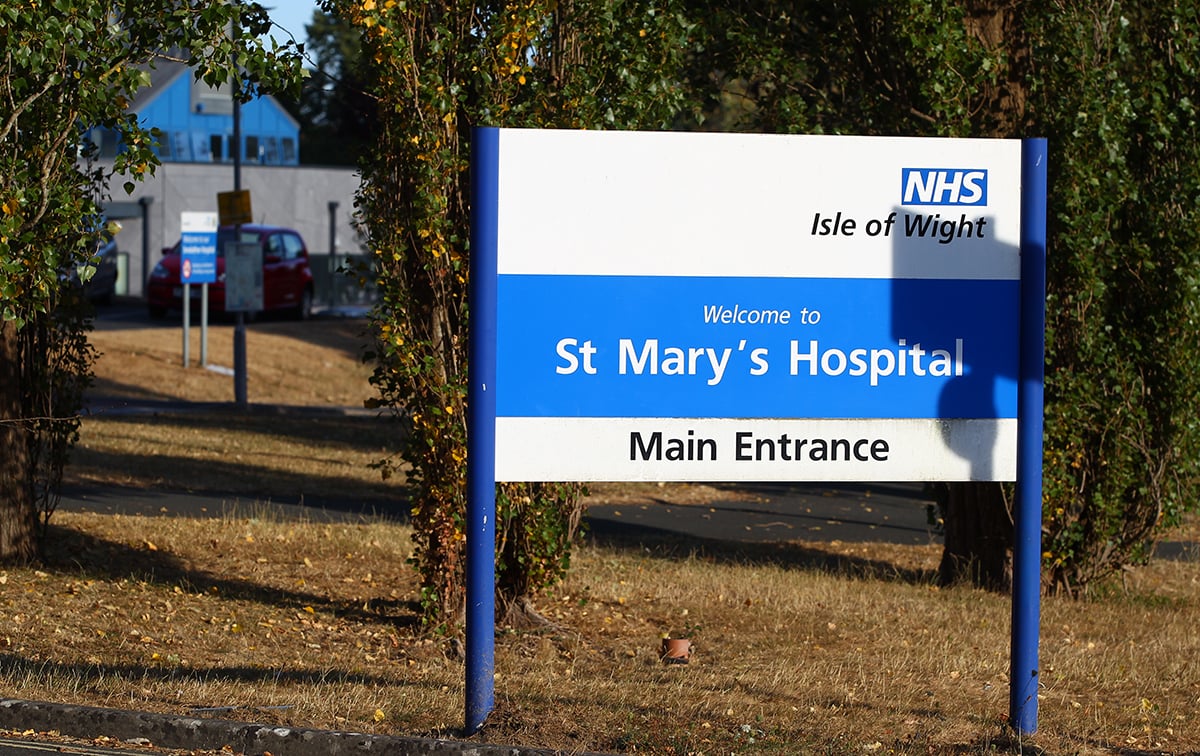

























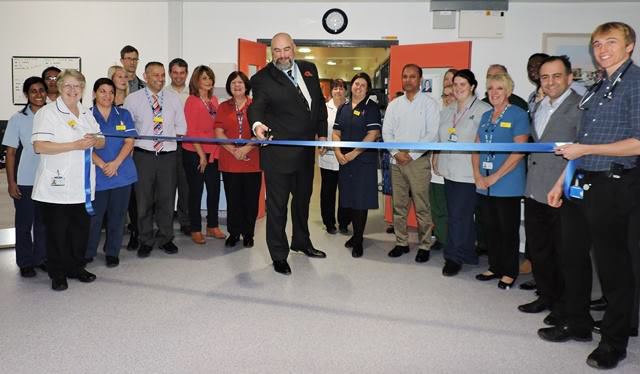

 Stroke care on the Isle of Wight is set to improve with the opening of a 4-bed Hyper Acute Stroke Unit at St Mary’s Hospital.
Stroke is the third biggest killer in the UK and the leading cause of adult severe disability. Half of all stroke survivors have a disability and 3 in 10 stroke survivors will go on to have a recurrent stroke or transient ischaemic attack (TIA). Stroke care accounts for about 5% of total spending on health care – 10% when indirect costs such as care givers are taken into account. It is therefore important that strokes are either prevented or detected early and treated promptly.
Opening the new Unit Island High Sheriff Mr Ben Roust said:


“This is an important development for patients and the Island. I want to thank everyone involved in this improvement in stroke services for Islanders. Particularly those who have undertaken additional training to enable this to happen. Despite the challenging times, health services remain an important part of Island life and it is important that we support everyone working or volunteering in the NHS.”
The hyper acute stroke unit (HASU) is a 4 bedded unit, within the Stroke Unit, giving high dependency care to all stroke patients within the first 72 hours of their stroke. All patients diagnosed with a stroke (whether they have received thrombolysis treatment or not) will be moved from the Emergency Department at St Mary’s to the Hyper Acute Stroke Unit (HASU) within 4 hours for specialist care.
Islander Robert Stringer from the Isle of Wight Stroke Club, a local charity affiliated to the Stroke Association said:
“As stroke survivors, we have always known that ‘time is brain’. Immediate diagnosis, prompt and appropriate treatment is critical in mitigating the devastating effects of a stroke. We fully support this new initiative.”
The Hyper Acute Stroke Unit (HASU) brings experts and equipment together under one roof to provide first-class stroke care 24 hours a day. This reduces death rates and long-term disability. All nursing staff working in the new Unit have received additional training in acute stroke care including monitor training and stroke assessment. They have also spent time at the Hyper Acute Stroke Unit at the Royal Hampshire County Hospital, Winchester (part of Hampshire Hospitals NHS Foundation Trust).

The area occupied by the new Unit, which is adjacent to the main Stroke Ward, has been completely redecorated. The cost of the additional monitoring equipment was £37,000.
Georgina Littlejohn, Sister in charge of the new Unit said:
“Staff have worked and trained hard to ensure that the new Unit is the best possible. Many have undertaken the additional training on top of their current duties. We believe that the creation of this new Unit will enable us to improve both response times for individuals who suffer a stroke and outcomes for those patients. The faster we can treat patients the better they will recover.”
Jeannine Johnson, Consultant Nurse and lead clinician for stroke at Isle of Wight NHS Trust added:
“Here at Isle of Wight NHS Trust were committed to providing a quality and evidence based service for stroke. The introduction of the Hyper Acute Stroke Unit at St. Mary’s Hospital will play an important part in ensuring that Islanders get the best possible treatment in the future.”
Further information about Stroke can be found on the NHS Choices website at https://www.nhs.uk/conditions/Stroke/ and the Stroke Association website at https://www.stroke.org.uk/what-stroke.