








































































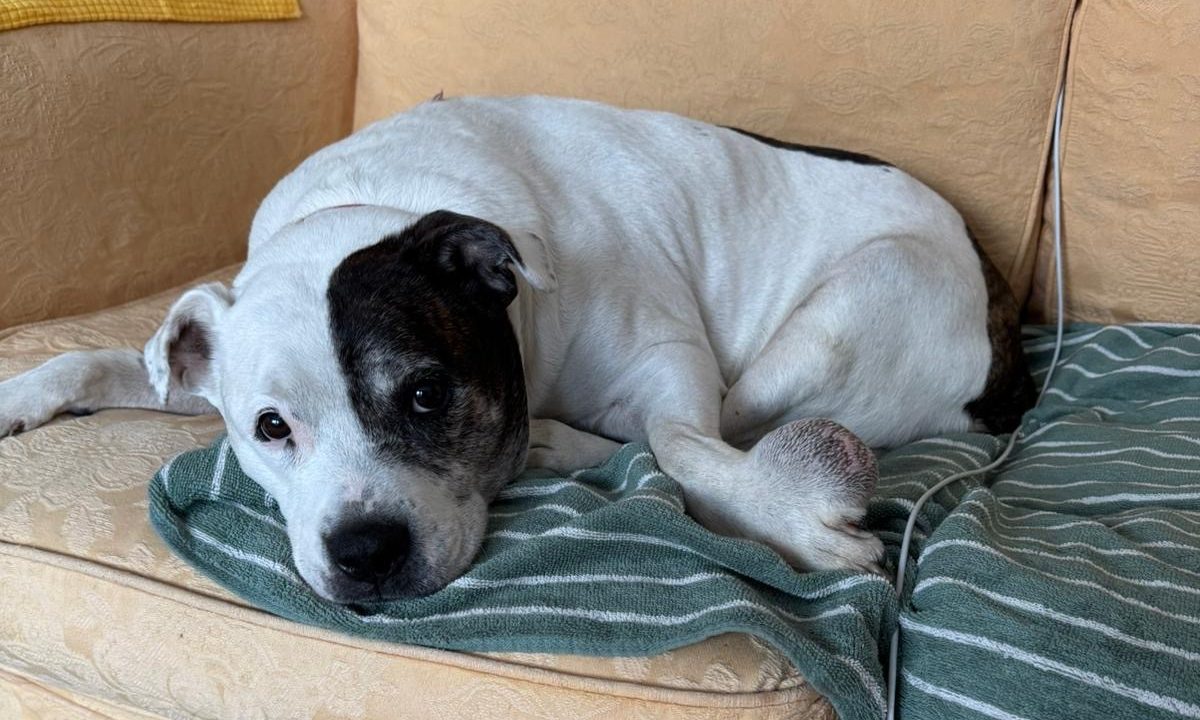

Isle of Wight animal rescue charity, Friends of the Animals, is appealing to find a home for a 12-year-old dog, Lexi, who has terminal cancer.
The charity is searching for a compassionate palliative home for Lexi, who was discovered alongside her deceased companion, where it is believed she may have been left for more than a week before being found.
Rescuers say Lexi was initially ‘shut down’ when she arrived in their care, but has since begun to come out of her shell thanks to the patience and support of her foster carer.


Despite suffering from a large inoperable tumour on her front foot, Lexi is said to enjoy the simple things in life — including curling up on the sofa, sleeping on the bed and going out for car rides.
The charity says Lexi does not need long walks and would be happiest in a quiet home with a garden and plenty of affection.

Her foster carer described her as:
“Gentle, loving, stubborn, determined, very clean and intelligent.
Article continues below this advertisement

“Her obvious physical appearance does not stop her, she just finds a way to do what she wants to do.
“She just makes me laugh… a lot.”
Friends of the Animals says all veterinary costs will be covered and hopes someone on the Isle of Wight will come forward to offer Lexi a loving palliative home for however long she has left.
Anyone interested in helping Lexi is being asked to contact the charity after 10:00 on 522511.














Ms. Mackenzie Whittaker,
Ref.: Terminal Cancer in Pets
Have heard lately, that some dogs, and other pets suffering with cancer, were treated with Antiparasite drugs like Mebendazole and Ivermectine with greate success. I live too far to help Lexi, but whoever is in charge now, should investigate the good effect of these drugs. Hope some good soul give Lexi a chance!!
Best regards!
Invernectine is a drug of terrifying potency which is a severe danger for all manner of life in water courses and should be banned.
Hello Jamie!
All drugs to cure cancer have terrifting potency, and Ivermectine has been used universally by vets, since the Nobel Price winner William Campbell discovered it.
Many people used it during the Covid pandemia, with good results, and it is still being used for that purpose.
The difference lays in the profit and costs for laboratories and the public.
Best regards.
Hi Anthony,
Thank you for taking the time to respond.
Unfortunately, this product is often used as a preventative treatment against ticks and fleas in dogs. Although its effectiveness may not be in doubt, if any dog so treated was to enter a watercourse (or any human who has been in physical contact with it was to do so), a large percentage of in-stream invertebrates downstream will be wiped out. This will have catastrophic consequences for other animals higher up the food chain.
Other, less destructive, treatments are available.
Regards.