
























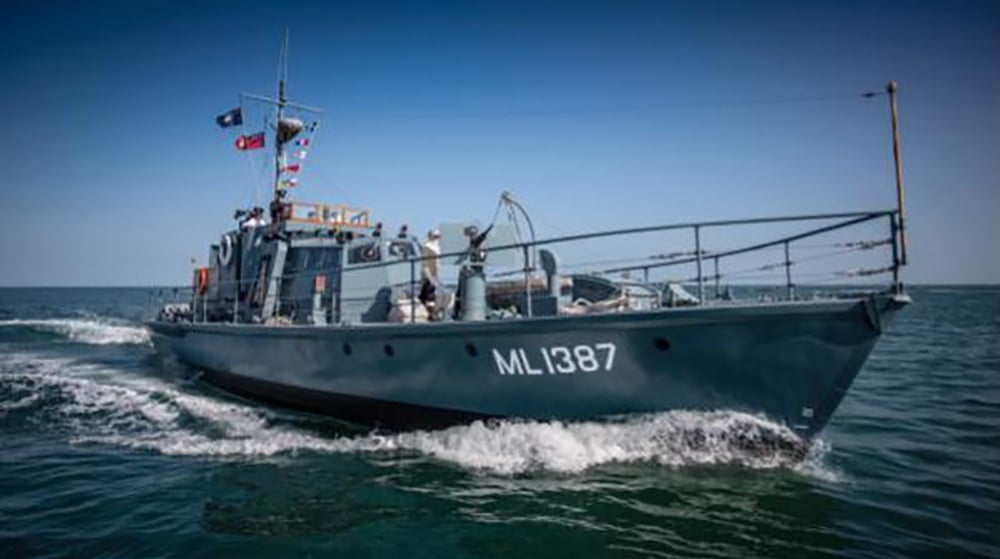












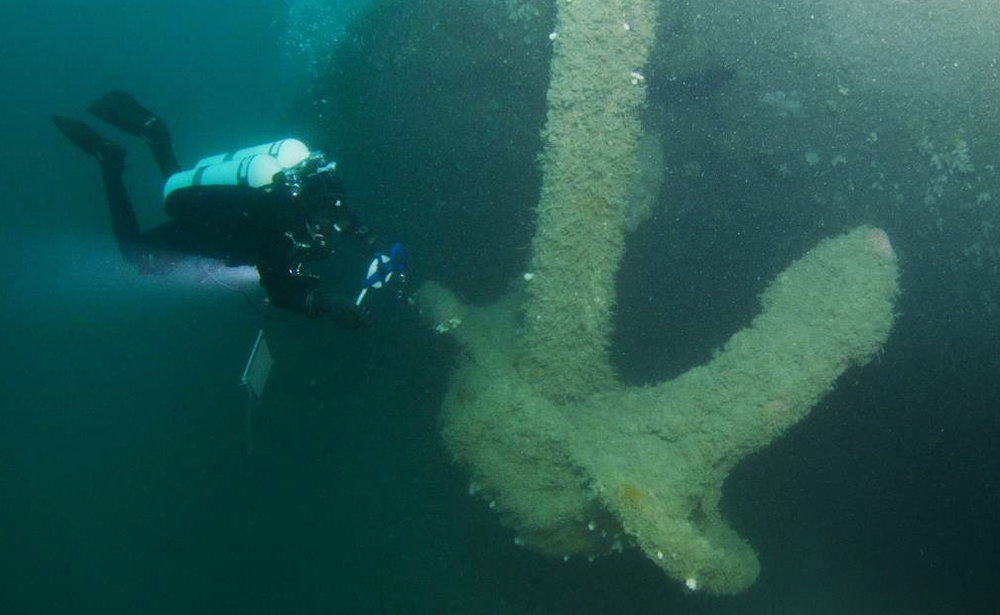

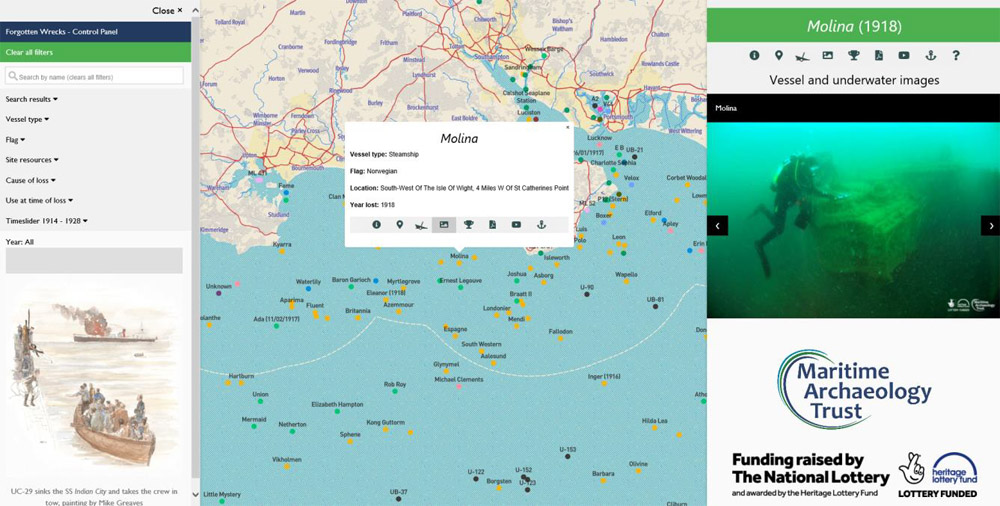
 A new interactive map, entitled The Forgotten Wrecks of the First World War, is now connecting visitors to research, images, documents, 3D models and videos about 1,100+ WWI shipwrecks and archaeological sites off the south coast of England.
This new resource brings together the results of the Maritime Archaeology Trust’s, Heritage Lottery funded Forgotten Wrecks of the First World War project. The 4-year project, coinciding with the centenary of the Great War, investigates the vital, yet little known, struggle that took place on a daily basis, off the south coast of Britain. It tells extraordinary stories of the war: stories of the ships, their crews and their communities.
Through a programme of fieldwork, research, exhibitions and outreach, and bringing together personal and family histories, with archival and archaeological research, the project records these fragile and largely overlooked sites and builds a clear picture of the nature and scale of this aspect of the war. Together these sites highlight the people and vessels from across the world drawn into the conflict off Britain’s coast: the everyday extraordinary.


Between 1914 and 1918 shipwrecks were ‘everyday’ events. There are just under 1,200 sites in the project area alone. These sites include 1,130 wrecks, as well as 39 coastal sites. Among them are ocean liners, merchant vessels and fishing trawlers, seaplane lighters, airships, submarines, troop and hospital ships. There are naval and commercial ships, steam and sail. There are ports and harbours, seaplane bases, wireless stations, quays, jetties and piers.
The scale and variety of this First World War maritime archaeology reflects the singular importance of the war at sea. Britain’s merchant fleet kept the country running during the war and everything necessary for that war, from troops and munitions to materials and intelligence, moved by sea.
This unique and important new resource for researchers, family historians and the public is accessible for free through the Forgotten Wrecks project website at https://forgottenwrecks.maritimearchaeologytrust.org/wreck-database.