









































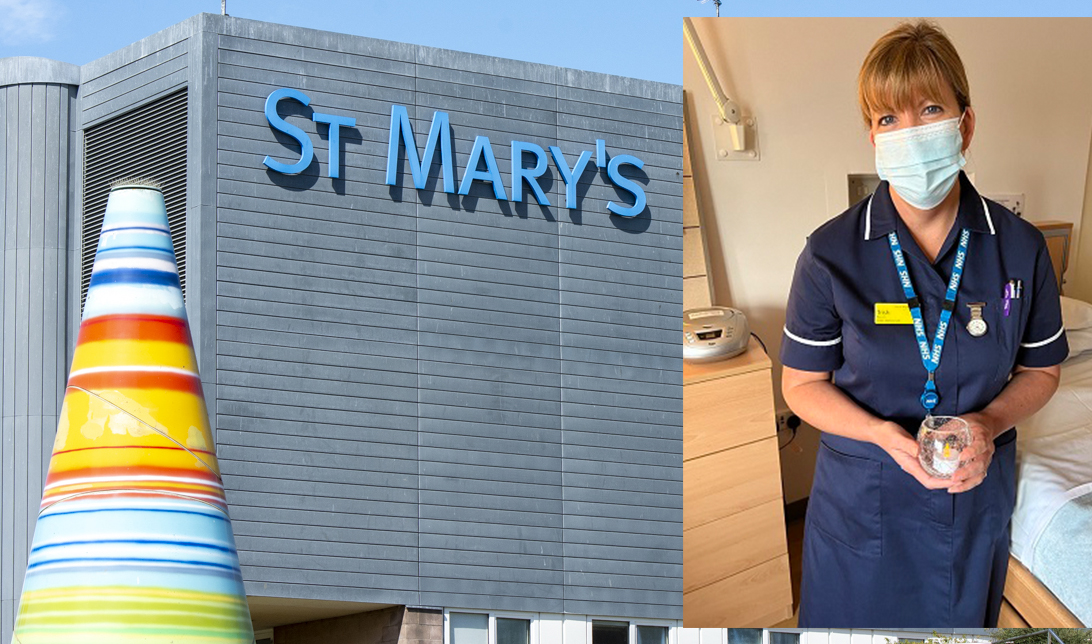

 The latest National Audit of Care at the End of Life results shows that the Isle of Wight NHS Trust continues to set the bar nationally in continuing to deliver high-quality care to people coming to the end of their life.
The latest results show the Trust has scored above the national average in every domain, including patient involvement in decision making with their care, communication with the patient, their families and loved ones and workforce.
Shane Moody, Clinical Director for End of Life Care, has said:


“The national audit results provide great assurance to our local community that we are continuing to improve end of life care to ensure if a person dies within the hospital the experience is personalised and compassionate, as well as providing the most appropriate environment to support the dying patient and their family.”
The scores further recognise the transformation that has taken place across the service over the past few years and is still rated ‘Good’ by the Care Quality Commission.
To mark Dying Matters Awareness Week (8th to 15th May 2023) the Trust has also published its latest End of Life Care Strategy 2023-2026 which has been developed in partnership with the local community.
Feedback was gathered through an extensive programme of face-to-face and online engagement to understand what matters most to them at the end of their life. The new strategy focuses on 5 key themes that are in direct response to the feedback received:
- Improved communication
- To be given choices
- To be supported
- Education
- Diversity
Juliet Pearce, Director of Nursing, Midwifery and AHPs, adds:
“The results reflect the hard work and commitment of our staff to provide the very best end of life care and support to our patients, their families, carers and loved ones.
“Our new strategy, that has also been developed in response to our 2021 NACEL results, sets out our vision to build on future care planning, developing our staff’s knowledge and skills and our ambition to provide personalised person-centred care.”
Building on the success of last year’s results to the team have implemented and embedded several improvements across the service, including:
- Bereavement follow up calls to bereaved families
- Referral to the hospital palliative and end of life care team (IPET) are seen within 70 minutes of receiving the referral
- Continued use of glass hearts to keep and support remembering their loved one, these are locally made on the IOW
- Purchase of a cuddle bed – this enables family members to be able lay with their loved one who is dying
- Since Wellow Unit was introduced in February 2020 this has reduced the number of deaths in ICU by 24% and CCU by 43%.









Very good to see this story, well done to those involved. Now if only those not receiving end of life care had such a positive experience.
Dementia patients in care homes dying from dehydration and starvation may have another take on society’s philosophy of ‘do no harm’ – if they were able to express it. End of life euthanasia is more humane. You wouldn’t do it to a beloved pet but the law won’t allow compassionate ending of life. We’re still in the dark ages when it comes to dying.
If you are lucky enough to end up in hospital then the care is very good, sadly, the care in the community is non existent. My mate died before Christmas and for nearly four years was left at home to get on with it. Trying to get some help for him was impossible and who ever you contacted, it was always the same answer, if he needs help he has to ask, you can’t ask for him. Result, he died of neglect. He was so lucky to fall down stairs, he should have done it sooner.
Sadly, my mother passed away at Saint Mary’s, and I have nothing, but thanks and great respect for the staff who cared for her in her final hours, particularly those who work in the Wellow ward. Any private hospital would be proud to have the facility, and the great empathy showed by the staff.
Deaths reduced in ICU and CCU by 24 and 43%? Isn’t that because these people are now dying in the Wellow Unit instead? I don’t see how that is a good thing? Great to see a high standard of care though, but our end of life laws in assisted dying need a damn good shake up. If only the Isle of Wight NHS trust did as well in other areas.
What a load of b@llocks
It really comes to something when your local hospital is recognised nationally as a good place to die.
People die there because they don’t know how to treat people.
I have seen their level of care, I would not take my dog there for treatment.
When a serious accident takes place on the Island the persons usually survive if
treated on the mainland.