



































































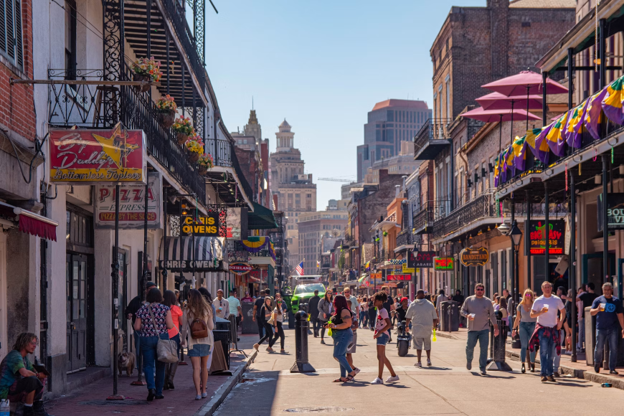

New Orleans has been crowned the world’s best food city, beating global culinary hotspots including Dubai and San Sebastián in a new study.
Travel connectivity provider Nomad eSIM analysed 40 cities around the world to discover which destinations offer travellers the strongest overall food experience.
The study considered global search demand, food-related activity on Instagram and TikTok, restaurant density, Michelin Guide representation, meal affordability and the range of cuisines available. Figures were adjusted per 100,000 residents, allowing smaller cities to compete fairly with major global destinations.


NEW ORLEANS TAKES THE TOP SPOT
New Orleans ranked first with an overall score of 33.7 out of 40.
The Louisiana city recorded the highest food-related search demand in the study, alongside the strongest social media performance per resident. More than 137,000 food-related Instagram and TikTok posts were recorded per 100,000 residents.
It also achieved the second-highest restaurant density score and performed strongly for Michelin Guide representation.
The city’s distinctive culinary identity, shaped by Creole, Cajun, African, French and Spanish influences, has given rise to internationally recognised dishes including gumbo, jambalaya, po’boys and beignets.
However, travellers may need to budget carefully, as New Orleans received just 2 out of 40 for meal affordability.

DUBAI RANKS SECOND
Dubai followed closely behind with a score of 32.2 out of 40.
The city performed particularly well for social media activity, restaurant density and cuisine diversity. With more than 10,000 restaurants and food from communities around the world, Dubai received the highest cuisine diversity score in the index.
It also offered more competitive meal prices than several traditional food capitals and has developed a growing Michelin Guide presence.
SAN SEBASTIÁN COMPLETES THE TOP 3
San Sebastián in northern Spain placed third, scoring 31.8 out of 40.
The Basque city received 39 out of 40 for both Michelin Guide density and global food-related search demand. It also achieved an impressive restaurant density score of 38 out of 40 despite having a much smaller population than many of the destinations included.
San Sebastián is particularly renowned for its pintxos culture, with visitors able to move between traditional bars sampling small dishes as well as dining at internationally recognised Michelin-starred restaurants.
Its social media performance and cuisine diversity were lower than those of some larger destinations, but its distinctive regional identity helped secure its place among the world’s leading food cities.
THE RANKING ALSO DELIVERED SOME SURPRISES
Taipei finished fourth, placing ahead of several destinations traditionally associated with food tourism. Its combination of affordable dining, high restaurant density and celebrated street-food culture helped it secure a leading position.
At the opposite end of the ranking, São Paulo finished 40th. Although the Brazilian city has one of the world’s largest restaurant scenes, its sizeable population reduced several of its per-capita scores.
Guadalajara placed 39th, while Lagos ranked 38th. Both have distinctive local food cultures but recorded lower results across measures including restaurant density, Michelin recognition and international search demand.
The findings show that travellers do not necessarily need to visit the world’s largest capitals to enjoy an exceptional food break. Smaller destinations can offer a greater concentration of restaurants and make it easier to experience several standout venues during a single trip.
Nomad eSIM helps travellers stay online seamlessly, making it easier to find Michelin-starred dining, discover local favourites, translate menus, book reservations and navigate unfamiliar neighbourhoods. Wherever their passion for food takes them, Nomad keeps them connected.