





















































Dog owners across the Isle of Wight are being reminded that their pets must be kept on leads on public roads, pavements and verges – with the Council warning that the rule can be enforced even where signs are not displayed.
The requirement forms part of the Isle of Wight Council’s Public Spaces Protection Orders (PSPOs), which include a number of measures governing dogs in public places.
Under the order, dogs must be kept on leads on all public roads, including adjoining pavements and verges, within the Isle of Wight Council’s boundaries.


The reminder comes after a man was found guilty at the Isle of Wight Magistrates’ Court on 6th August of 2 counts of failing to keep his dog on a lead on land covered by an Isle of Wight Council PSPO. The offences took place between 11th November and 3rd December 2025.
He was fined £660 and ordered to pay £85 costs and a £264 surcharge – leaving him with a total bill of £1,009.
The dogs-on-leads requirement also applies to limited-access roads used only by certain services. The Council has highlighted Appley Walk and Garden Walk across Ryde seafront as examples. The routes pass Appley Tower and continue towards Puckpool.
Temporary signs have been in place in key areas, including Ryde seafront, for several months to inform dog owners of the restrictions. However, the authority has stressed that signs are not required for the dogs-on-leads element of the PSPO to be enforced on roads, pavements and verges.
Public Realm Officers regularly patrol areas covered by the orders and will engage with dog owners to explain the rules where necessary.

Officers do not have the power to seize dogs but can issue Fixed Penalty Notices as a last resort when a PSPO is breached. Repeated non-compliance can result in legal action through the courts.
Separate restrictions mean dogs are not permitted within fenced children’s play areas at any time.
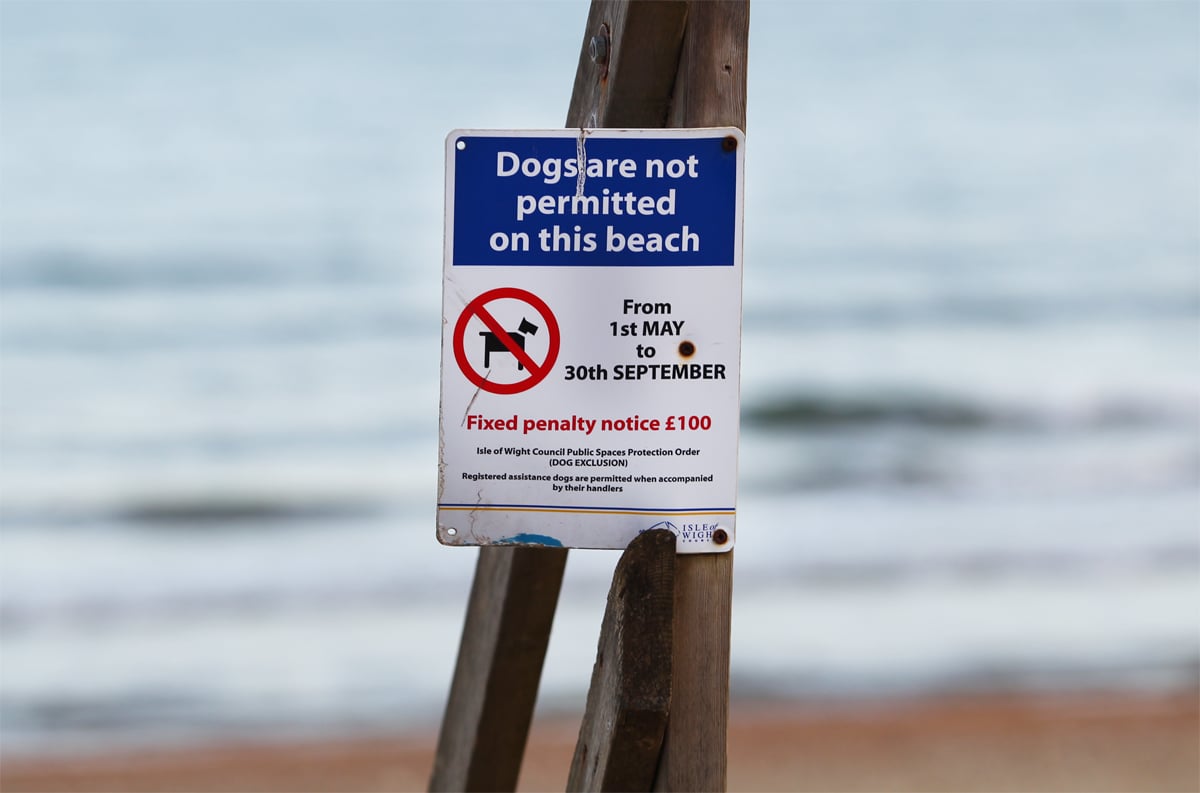
There are also seasonal dog exclusion zones on selected Isle of Wight beaches, although these are separate from the island-wide dogs-on-leads requirement.
Exemptions are in place for people who are registered blind or rely on trained assistance dogs.