









































King Edward I spent years trying to bring the Isle of Wight under direct Royal control, but one determined woman repeatedly stood in his way.
For more than 30 years, Isabella de Fortibus ruled the Island from Carisbrooke Castle as Lady of the Isle, exercising powers that few women in medieval England ever possessed. Edward recognised the Island’s strategic importance and repeatedly tried to acquire it, but Isabella defended her inheritance with remarkable determination. Only during her final illness in 1293 did Edward finally achieve his ambition.
Born in 1237, Isabella was the daughter of the powerful de Redvers family, hereditary Lords of the Isle of Wight. Like many noble daughters, her future was decided long before she was old enough to influence it.


At the age of 11, she married William de Fortibus, Earl of Albemarle, in a match arranged to unite two of England’s greatest noble families. Such early marriages were common among the medieval nobility, although consummation was generally delayed until puberty. Family alliances and inheritance mattered far more than personal wishes. Childhood ended with the wedding ceremony, and Isabella entered England’s aristocracy before she had reached adulthood.
By the age of 23, Isabella had given birth to six children: four sons and two daughters. Then, everything changed. Her husband, William de Fortibus, died unexpectedly in 1260, leaving her widowed. Before she had time to come to terms with her loss, her brother Baldwin died without children. Within little more than two years, she had lost both her husband and her brother.
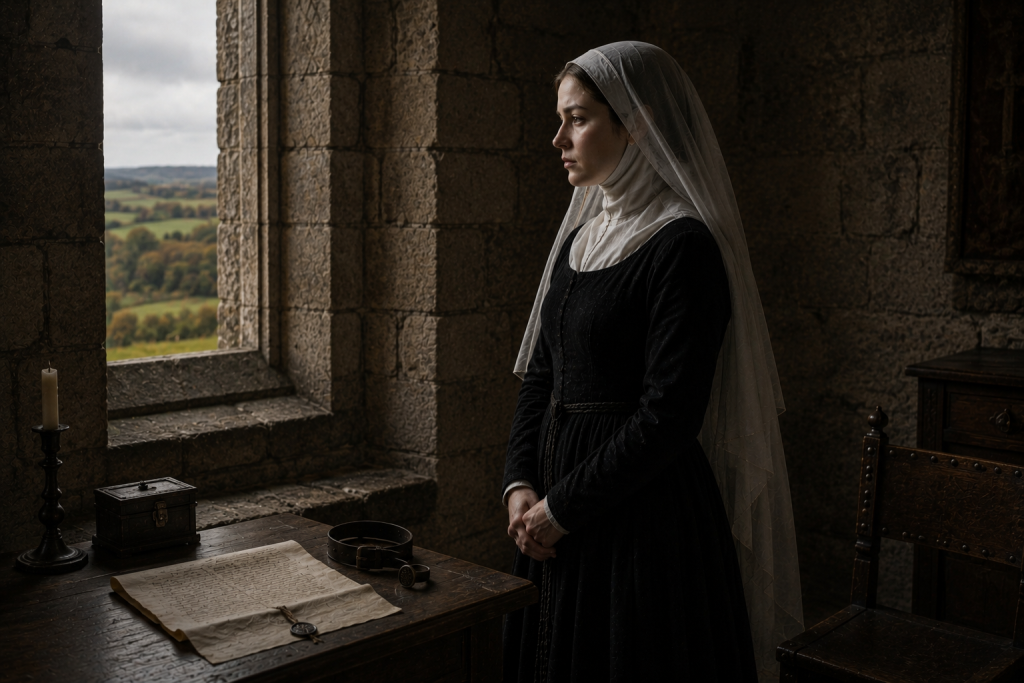
Grief quickly gave way to responsibility as the young widow inherited one of England’s greatest estates, became Lady of the Isle of Wight and suddenly found herself the most sought-after bride in England. Any man who married her would gain control of vast tracts of land and, with them, the Isle of Wight itself.
Her wealth has been estimated to be equivalent to around £1 billion in modern terms. Her lands stretched across much of England and included castles, manors, forests, farms, mills and prosperous towns. Thousands of tenants paid rents to their lady, placing Isabella among the richest people in medieval England.

Determined to stamp her authority on the Island, Isabella transformed Carisbrooke Castle into both a magnificent residence and the centre of her rule. From there she governed the Island, appointed officials, settled disputes and welcomed visiting nobles. The great hall echoed with feasts, court hearings and meetings with estate officers, while servants bustling through the kitchens and the castle chapel reflected the prestige of its mistress.
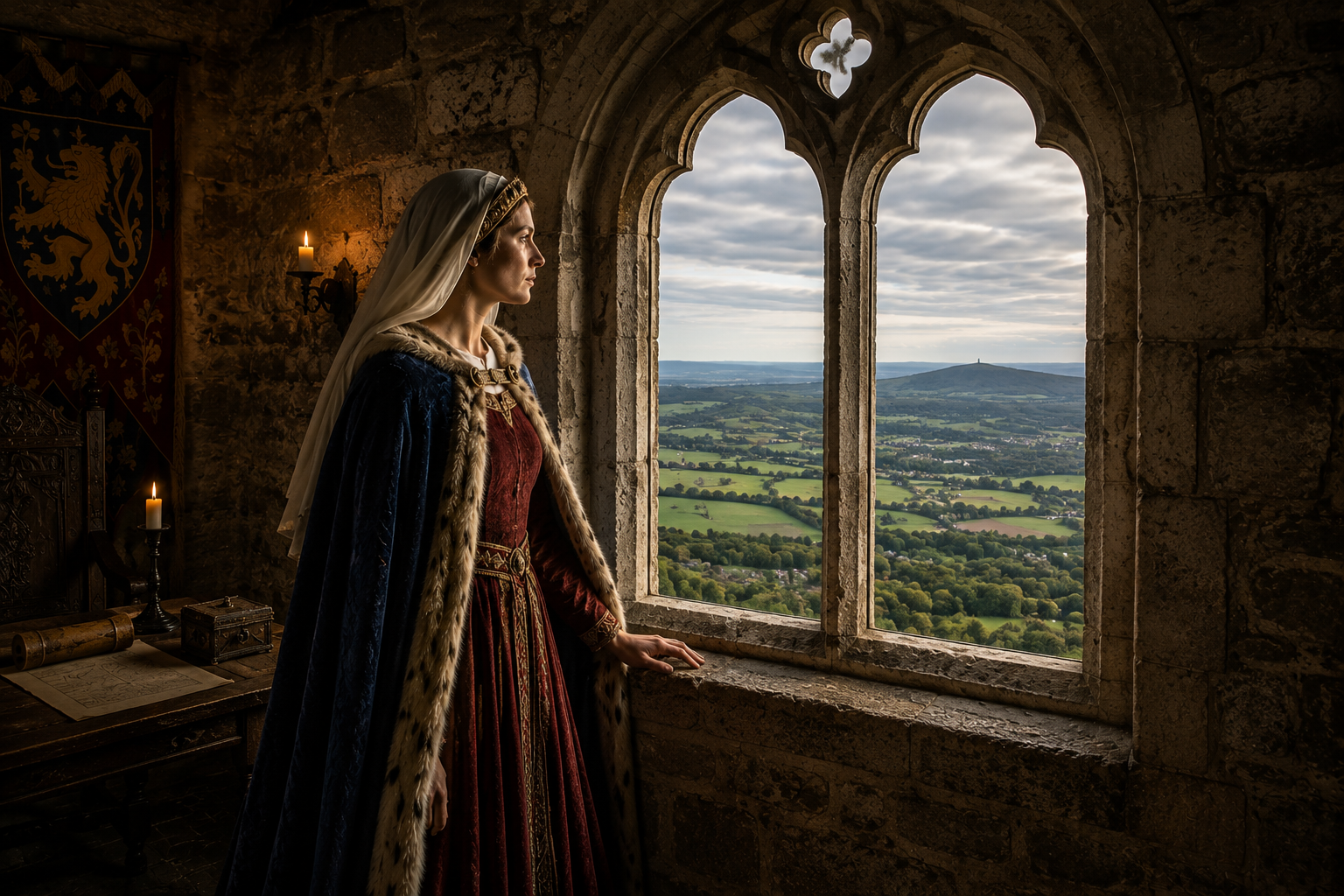
She enlarged the great hall, improved the private apartments and rebuilt parts of the castle that survive today. High in the domestic apartments, a large stone window long associated with Isabella still overlooks the countryside that once formed part of her estate, offering one of the finest surviving links with the last Lady of the Isle.
Simon de Montfort the Younger became one of Isabella’s most determined suitors. According to tradition, Isabella escaped his pursuit by taking refuge in a nunnery before slipping away to safety. Even King Henry III attempted to arrange her marriage to his son Edmund, a match that would have brought her inheritance under royal influence. Isabella refused them all, remaining mistress of her own lands at a time when few women enjoyed such independence.
Yet there was another side to the Lady of the Isle. One day, a desperate father arrived with seven hungry children he could no longer feed. Rather than turning them away, Isabella welcomed the children into her household, where they were clothed, educated and given the chance of a new life.
Behind her wealth and power lay profound personal sorrow. Isabella outlived every one of her six children. The last, her daughter Aveline, died in 1274, leaving the Lady of the Isle alone with immense possessions but no surviving heir. The vast inheritance she had fought to preserve would never pass to one of her own children. For all her wealth and power, there was nothing she could do to alter that.
Edward I was not a king accustomed to failure. He knew the Isle of Wight guarded the approaches to the Solent and was determined it should belong to the Crown. Yet year after year she refused to yield, frustrating one of medieval Europe’s most formidable rulers.
In the autumn of 1293, while travelling from Canterbury, Isabella fell gravely ill. Taken to one of her many manors at Stockwell in Surrey, Edward’s representatives finally secured the purchase of the Isle of Wight only days before she died on 10th November 1293.
Edward I had finally achieved his ambition, but only after the woman who had resisted him for more than three decades was gone. Isabella was the last person to rule the whole Isle of Wight in her own right. No single individual has done so since.