





















































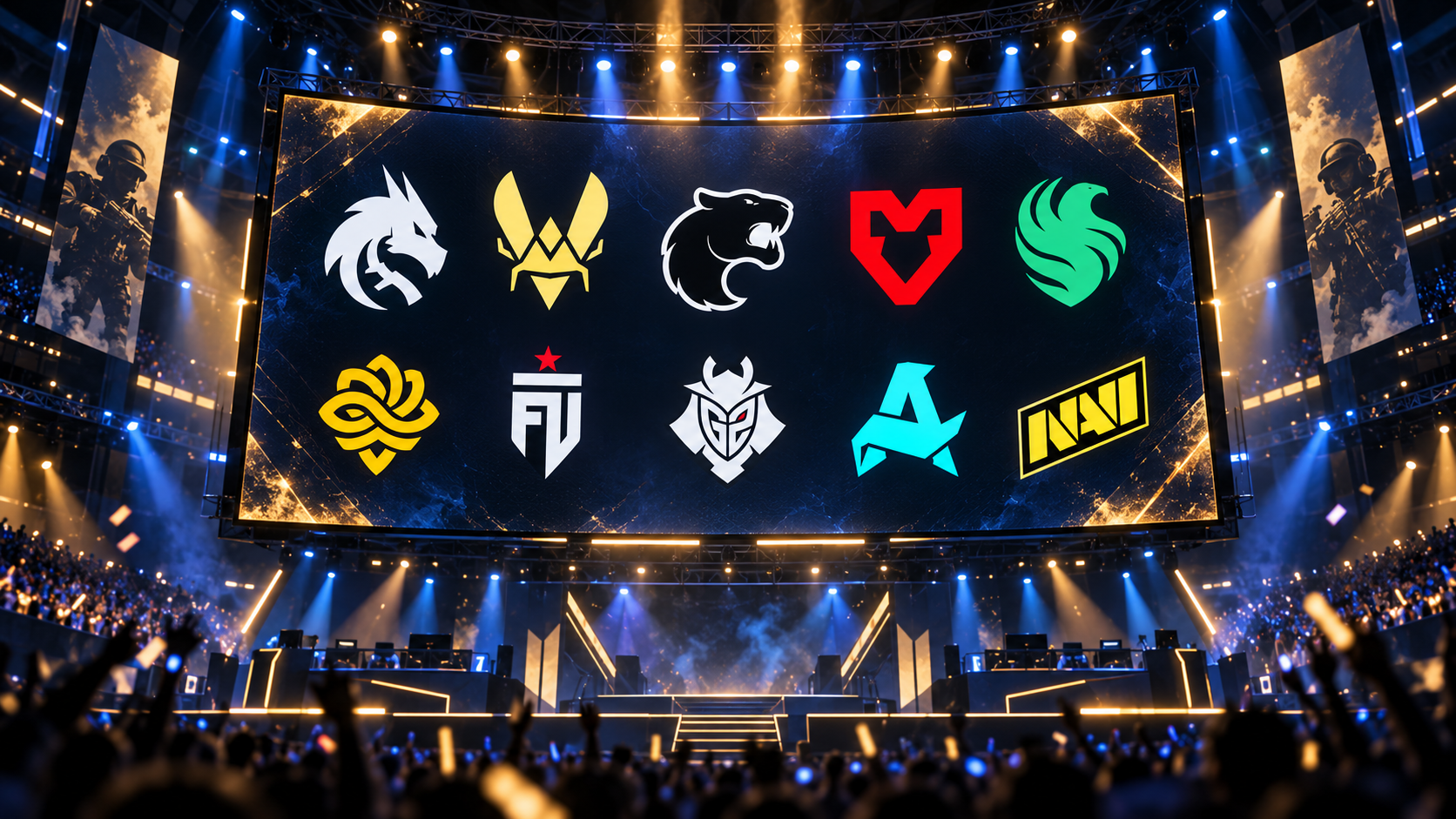

Over more than two decades, Counter-Strike has developed a large professional scene built around international tournaments, teams, sponsors, broadcasts, and millions of viewers. The biggest events now involve substantial prize money and organisations competing across a full season. Yet among dozens of tournaments, one type of event has always stood apart. The Major remains the main championship in Counter-Strike, even when other tournaments offer larger prize pools. Its importance comes from its position within the competitive scene and from what qualification, participation, and victory mean for teams and players.
What a Major Is
A Major is the highest-level Counter-Strike championship officially supported by Valve, the company behind Counter-Strike and Steam. Two Majors are held each year. Valve selects an external tournament organiser and approves the host location, while the organiser handles the venue, production, broadcast, and event schedule. A CS2 Major is therefore part of Valve’s official competitive system rather than simply another tournament on the annual circuit. A similar distinction exists in football. The 2025 FIFA Club World Cup distributed $1 billion in prize money, while the 2026 FIFA World Cup has a $655 million prize pool. The larger payout doesn’t give the Club World Cup the same status as the World Cup.
Why the Major Doesn’t Need the Biggest Prize Pool
The scale of a Major is visible in its audience. The IEM Cologne Major 2026 reached 2,752,353 peak viewers, setting a new record for Counter-Strike. With an audience of that size and its position at the top of the competitive scene, the Major might be expected to offer the largest prize pool in the game. In practice, several other Counter-Strike tournaments offer comparable or larger payouts:


- Major: $1.25 million
- Esports World Cup: $2 million
- PGL Cluj-Napoca: $1.25 million
- IEM Kraków: $1.25 million
- BLAST Open: $1.1 million
What the Winner Gets
Winning a Major isn’t limited to the official prize fund. Teams and players can receive money from several sources connected to the tournament, while the title can also affect future contracts and sponsorships:
- Prize money: The champion receives $500,000 from the official $1.25 million prize pool.
- Team and player stickers: Major participants receive official stickers with team logos and player autographs. Fans can buy them inside CS2 and apply them to weapon skins. For the winning team, each player can receive around $42,000 to $48,000 from the tournament item system.
- Career and contracts: A Major title becomes a permanent part of a player’s competitive record and can strengthen their position in salary negotiations, transfers, sponsorships, and personal brand deals. Transfers involving leading CS2 players can exceed $1 million.
Compared with the Esports World Cup, the difference goes beyond the headline prize pool. EWC offers $2 million in total prize money, while a Major winner receives $500,000 from the prize fund and can add around $420,000 to $480,000 through tournament-related revenue. Combined, the potential total ranges from around $920,000 to $980,000, or close to $1 million, before considering future contracts and sponsorships.
How Teams Qualify
Teams reach a Major through the Valve Regional Standings, usually shortened to VRS. This is Valve’s ranking system for professional Counter-Strike teams. It tracks recent results from official tournaments throughout the season and gives more weight to stronger opponents and higher-level events. Teams are ranked within their regions, and the standings are used to decide which 32 teams receive places at the Major. Valve uses a specific ranking cutoff before each Major to determine the final field. The ranking is also connected to a team’s five-player roster, the group of players officially competing for the team, so major lineup changes can affect its position. VRS also determines where qualified teams start. Lower-ranked teams enter Stage 1, while stronger teams can begin directly in Stage 2 or Stage 3.
What Happens at the Event
A Major is played as a LAN event, which means all teams travel to the host city and compete at the venue rather than playing online from different locations. The tournament lasts almost three weeks and is divided into three stages followed by the playoffs. Sixteen teams start in Stage 1, eight more join in Stage 2, and another eight enter in Stage 3. During each stage, three wins move a team forward and three losses eliminate it, ending its Major run. Stage 1 and Stage 2 include best-of-one matches, where one map decides the winner, while advancement and elimination matches use best-of-three series, where the first team to win two maps wins the series. Stage 3 is played entirely as best-of-three. Eight teams then reach the single-elimination playoffs, similar to knockout rounds in football, where one series loss ends the run. The grand final is best-of-five, meaning the first team to win three maps becomes the champion.
When and Where Is the Next Major?
The next CS2 Major will take place in Singapore from November 25 to December 13. PGL, an esports tournament organiser, will host the event, bringing a Counter-Strike Major to Southeast Asia for the first time. The field will include 32 teams selected through the Valve Regional Standings on November 2, with ranking position determining which stage each team enters. The tournament will use three stages, gradually reducing the field before eight teams advance to the playoffs at the Singapore Indoor Stadium. The playoffs will run from December 10 to 13, with the tournament ending in a best-of-five grand final.

The Value of the Title
Counter-Strike now has the structure of a professional sport, with international teams, seasonal tournaments, rankings, qualification systems, player transfers, sponsors, and large audiences. The Major sits at the top of that structure. Teams spend the season earning the results needed to qualify, then compete through several stages for the main championship title in the game. Prize money and tournament-related income add financial value, but they are only part of what a Major victory brings. For players, it becomes one of the most important achievements on their career record. For organisations, it confirms that their roster has won the highest-level event Counter-Strike offers.