










































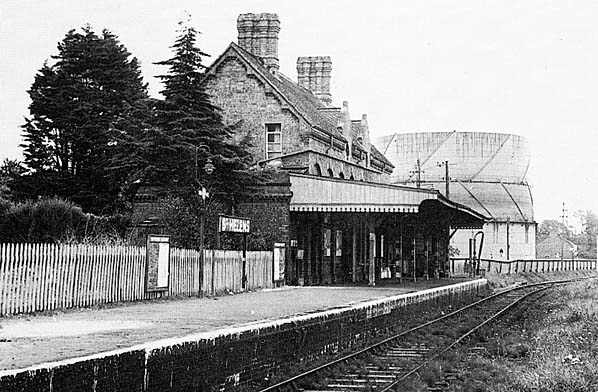

In the 1st of our series on Isle of Wight Railways, we look at the railway at St Helens, which was the main commercial docks on the Island until Medina Wharf was rebuilt in 1928.
Since the 17th century, there had been various schemes to drain and reclaim Brading Marshes. None of these had been successful until the Brading Harbour Improvements and Railway Company obtained powers in 1874 to construct a 2-and-a-half-mile railway from the station at Brading to Bembridge across the reclaimed land, with an intermediate stop at St Helens.
The scheme took 8 years to complete, opening to passenger traffic on 27th May 1882. The service was then operated by the Isle of Wight Railway, who bought the line outright for £430 on 2nd August 1898. The line initially proved very popular and was especially busy on Summer weekends. The first passenger excursion on the opening day saw 300 St Helens and Bembridge villagers taking advantage of a free trip to Ryde.



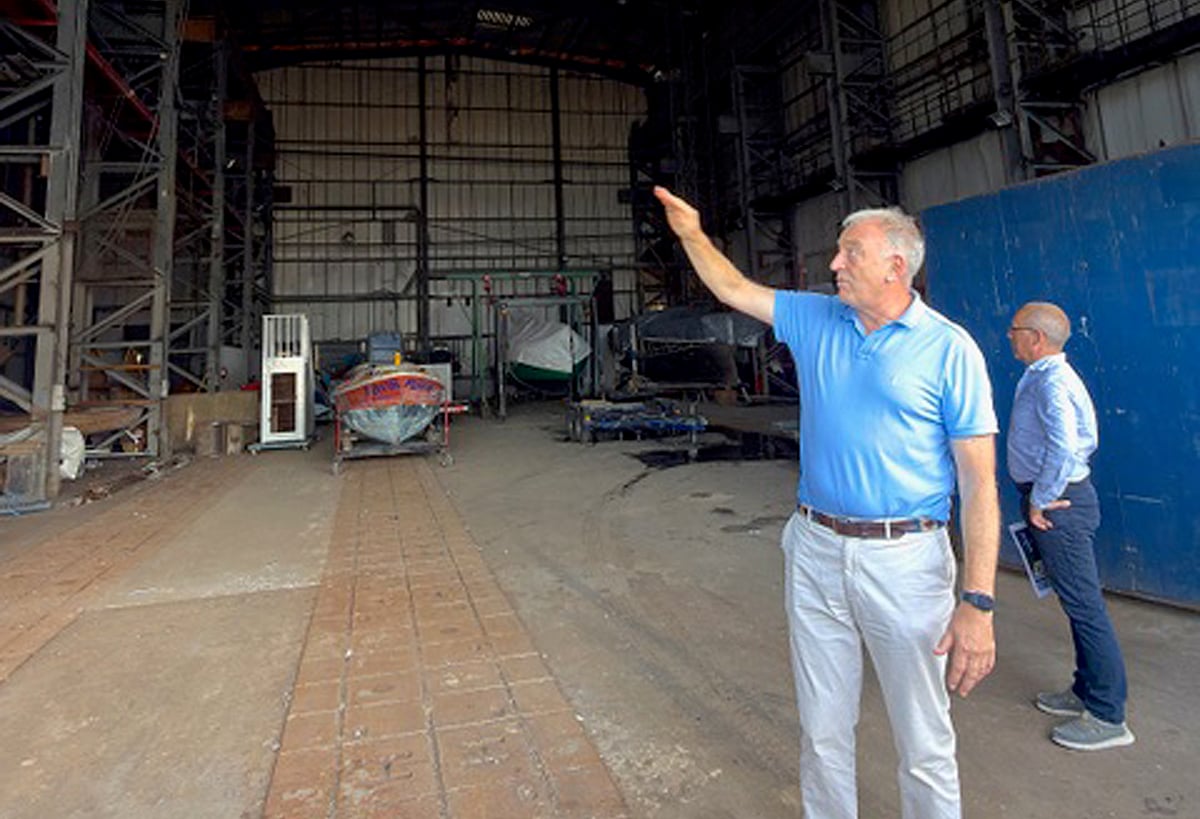
A signal box at St Helens station controlled a short branch down to St Helen’s Quay at Brading Harbour, which served as the main commercial docks on the Island at the turn of the 20th century. The sidings at North and South Quay were some of the most complex seen on the Island. The reason for such sidings was the need to constantly replenish the coal stocks that kept the Island warm and the trains running. Additionally, there was a further siding for Carpenter’s brickworks.
Between 1882 and 1888, a ‘floating railway’ operated between the wharf in St Helens and Langstone Harbour on Hayling Island. Railway goods wagons would be loaded onto a boat with rails on the boat itself.
The PS Carrier or ‘floating railway’ was originally designed as a vessel to cross the River Tay in Scotland. However, when the Tay Bridge was built, she was transferred to the Forth as a spare vessel. Then, in 1882, the Carrier was sold for the sum of £3,400 for use between Langstone Harbour and St Helens.
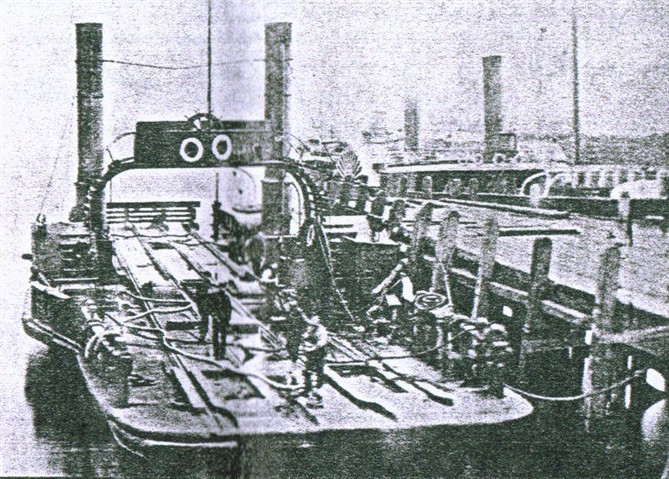
There were major problems with the route due to the erratic sea conditions in the Solent and the design of the craft. The last recorded trip was in March 1888. Just a year before, in 1887, the floating railway was deployed as a public viewing platform for Queen Victoria’s fleet revue.
The peak year for St Helens’ Wharf was 1913 when up to 20 vessels would be berthed at any one time. In 1923, West Quay was rebuilt so its 10t crane could deal with heavy goods. In 1926, North and South Quays were rebuilt to a total length of 800ft.

However, after Medina Wharf was improved in 1928, goods traffic all but disappeared from St Helens. The coal screens fell into disuse and were removed to the mainland. Brading Cement Company ceased trading, and the bill for materials carried by the railway was written off as a bad debt. The only goods traffic left for St Helens Wharf was coal for the nearby gasworks.
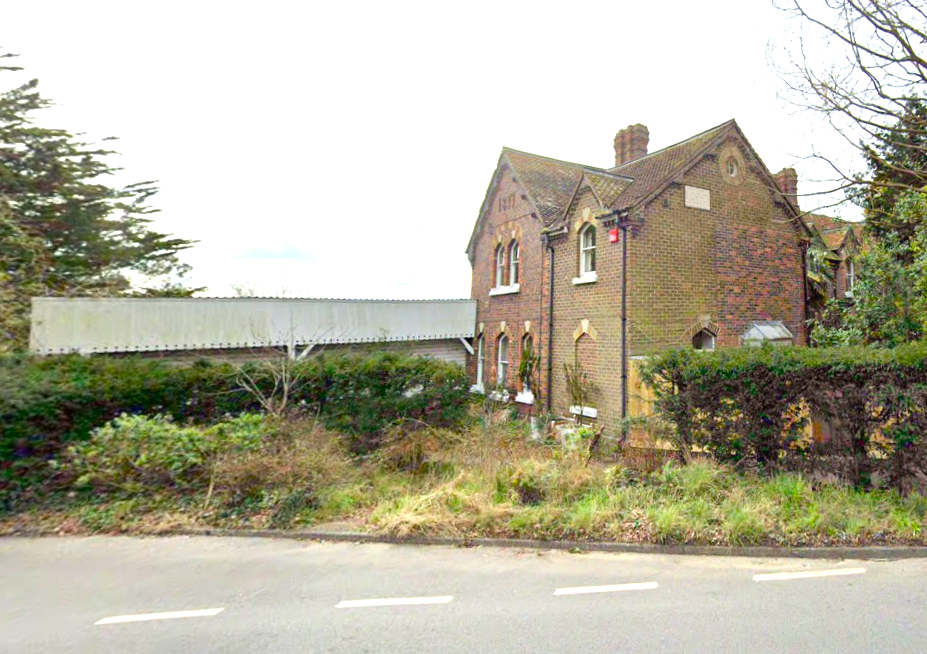
Various mishaps happened on the railway line at St Helens over the years. On 12th June 1885, there was a fatality at Carpenter’s brickyard when the guard was crushed between a wagon and a coal shed. In 1904, a train hit a cow that had been grazing on the golf links next to St Helens station. In 1911, a further train hit a motor car belonging to a Mr Gilbert Nugent at a level crossing in St Helens.
In 1931, the stationmaster, Thomas George Clayton Weeks, was sentenced to 18 months’ imprisonment for theft and forgery. He had created fictitious wage sheets for casual workers at the Southern Railway quay and robbed the company of around £3,000 (£216,900 in 2023) in just 4 years. It was reported that he had been spending about £5 (£400 in 2023) per week on drink and made presents of joints of beef to various villagers, spending over £400 at 1 butcher’s shop.
Shortly before 22:00 on 20th September 1953, the final train passed through St Helens’ station. Upwards of 300 people were on board. Crowds thronged the platform as a bugler played the last post.
Many at the time regarded the closure as au revoir rather than goodbye. Hopes that the line would reopen the following Summer season were, sadly, never realised.
Coincidentally, today (New Year’s Day) marks the 100th anniversary of Southern Railway.
The Southern inherited 3 independent railway companies on the Island: the Isle of Wight Railway, Isle of Wight Central Railway, and Freshwater, Yarmouth and Newport Railways. With cross-Solent shipping and the later addition of Southern Vectis buses also part of the Southern’s empire, the company had a key influence on the Island’s transport.