






















































 Schools on the Isle of Wight are helping to reduce the impact of heavy showers on local sewers – by slowing the flow of rainwater across their roofs and play areas.
Nettlestone Primary School and Haylands Primary School are embracing a number of innovative sustainable drainage installations which will reduce the risk of flooding and in turn help Southern Water cut the use of storm overflows.
By slowing the flow of water from hard surfaces like classroom roofs and playgrounds, sewers are less likely to see huge jumps in volume in short timeframes – which can go on to trigger storm water releases into the sea and local rivers in order to protect homes, businesses, schools and communities from flooding.


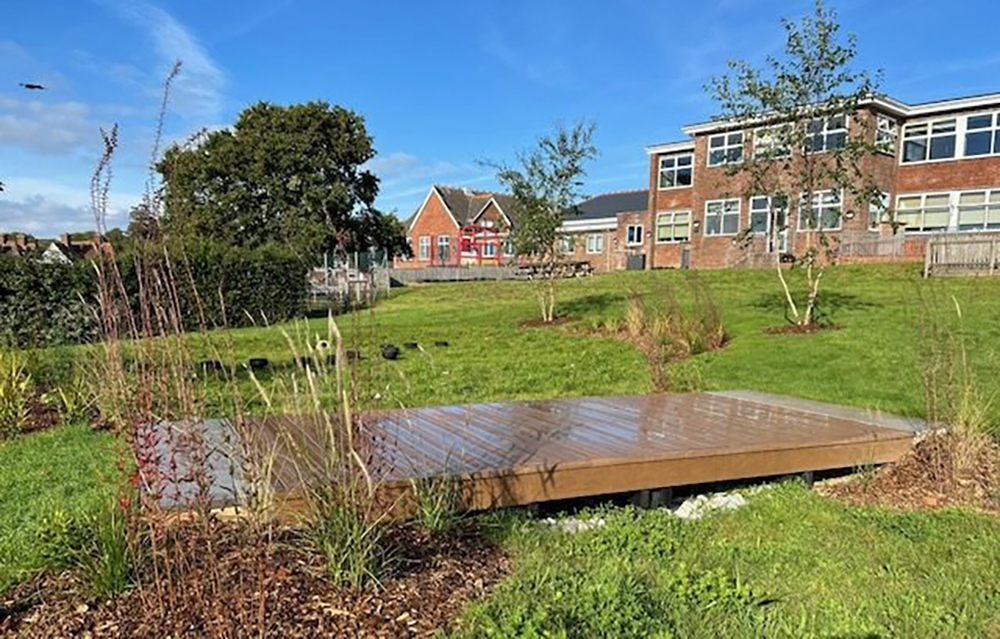
Both schools are having specially created swales installed in their grounds – long shallow channels, set in meadow grassland and home to other plants too. These hold water flowing down slopes on the site, allowing it to sink into the grass, rather than just running straight off into drains or becoming standing water.
They will also benefit from unique planters – also known as raingarden planters – which sit underneath drainpipes. These store surface water for a short while before it slowly returns to Southern Water’s network.
The schools are among more than 40 others across the region that had Sustainable Drainage System (SuDS) installed as part of Southern Water’s £1.7million joint initiative with the Department for Education.
The schools on the Isle of Wight that took part and are now benefitting are listed below:
Ryde Academy; Bembridge Primary School; Brighstone Church of England Primary School; The Bay School; Cowes Primary School; Northwood Primary School; Dover Park Primary; Oakfield Primary School; Binstead Primary School; Chillerton and Rookley Primary School; Yarmouth Church of England Aided Primary School; Wootton Community Primary School, and Holy Cross Primary School.

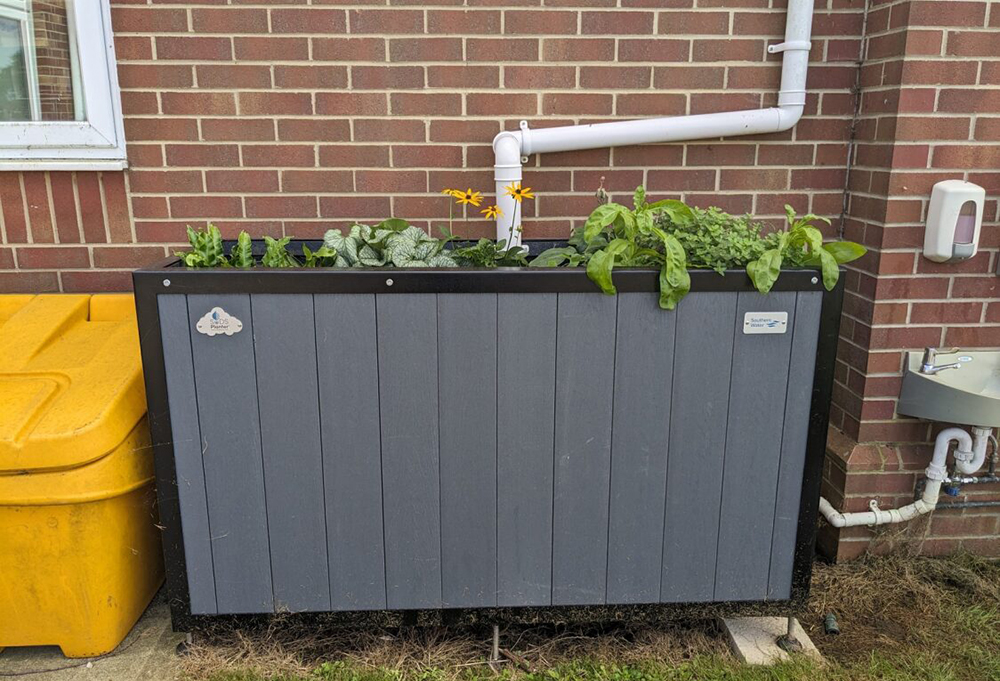
Southern Water will soon be announcing the next phase of the project, with more than 50 more schools signing up to take part.
Nicole McNab, Southern Water’s Clean Rivers and Seas Task Force Strategic Communications and Partnership Delivery Lead, said:
“Schools like Nettlestone and Haylands are playing a big role in our work to reduce storm overflows across our region. Their help is making a real difference in reducing the amount of water entering our network and helps us ensure healthier rivers and seas. We’re looking forward to replicating these fantastic projects in more schools across our region in the coming months.”













Fortunately it is easy to trick the gullible young into thinking they are ‘saving the planet’, what is more of a concern is the naive older people falling for such guff.
People will really think this costly exercise will help, yet will happily see countless, endless people arrive here and not ‘worry’ that they will all need a roof, all use water, all add to our strained infrastructure, and just ‘play’ at trying to do some good.
Get real, lets deal with the large problems, rather than fool our children into thinking ‘life’s problems are easily solvable, otherwise they will get a very rude awaking in the ‘real world’.
All for keeping children’s minds innocent, but lets not lie or brainwash them into thinking wrongly either
Correct. Schools used to be their to teach our children the fundamentals at such an age, now the P.C brainwashing starts instantly.
This is, or ought to be, a deeply worrying trend, as the parents should be the ones who teach their children about current affairs and world problems, not some Government paid teachers forced curriculum agenda.
We used to think that China and Russia were the corrupt led countries, yet at least their leaders don’t pretend to be anything else.
A walk around any classroom for infants will show in prominent places books on gender, race, climate change, it is no small wonder half the teens now have ‘alleged’ mental health issues.
Let the small children have their innocence, short lived as it is
Even better. dig a large hole at the pottom of the down pipe and fill it with large pebbles. This is what’s known as a soak away.