



































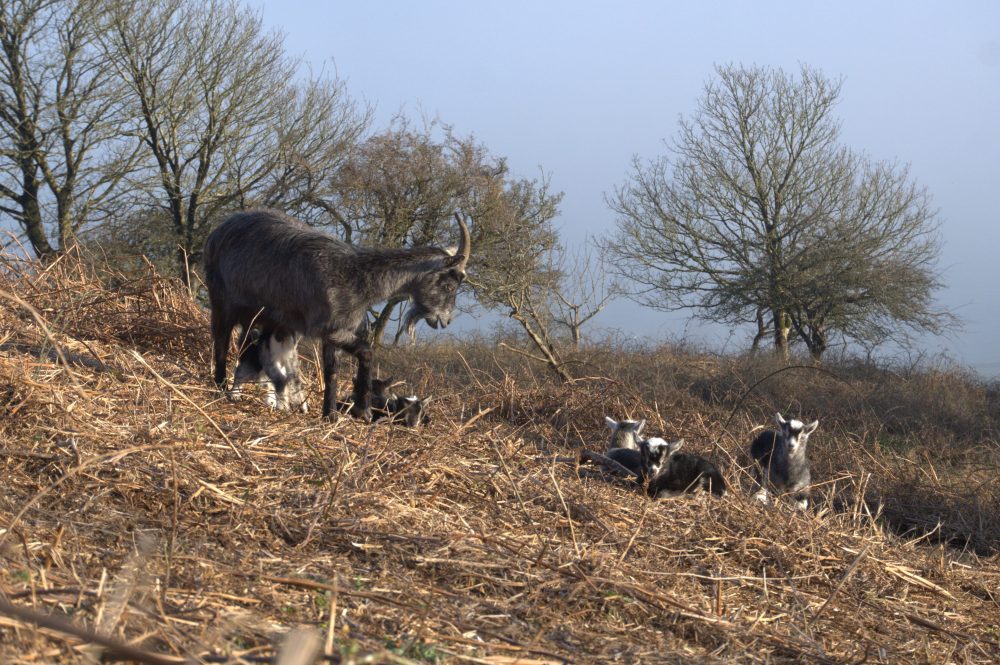

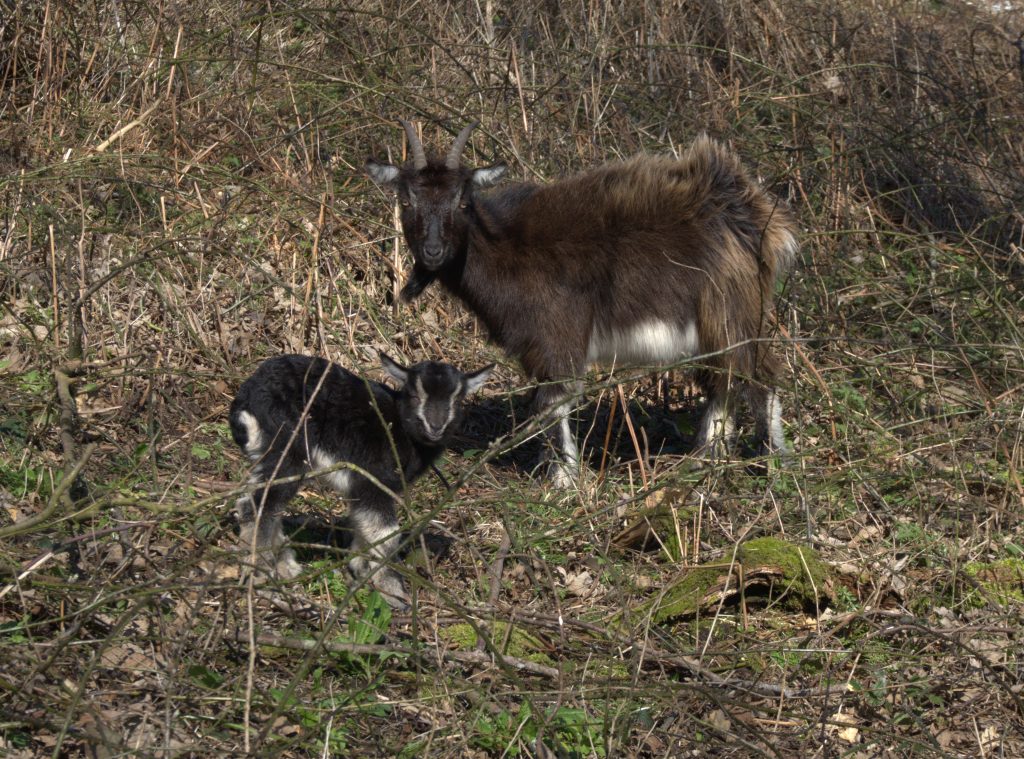
If you’re visiting Ventnor Downs this spring, you may be lucky enough to catch a glimpse of baby goats frolicking on the grass and in the bracken.
Over the past 2 weeks, nanny Old English goats from this ancient breed have been giving birth to their kids. Seeing the youngsters finding their hooves on this steep downland setting has been a real joy for the National Trust’s team of countryside rangers and volunteers who help to manage the downland.
The goats, which live wild, play a vital role in caring for this special landscape. Their grazing helps keep the invasive holm oaks under control, protecting the rare chalk grassland and allowing its flower-rich turf to thrive. This means that the many native plants and animals that rely on it, such as horsershoe vetch and the Adonis blue butterfly, can flourish.


National Trust ranger Ian Ridett:
“It’s been a real tonic witnessing the arrival of our goat kids, after such a wet and miserable winter. With the prolonged rain into early spring, we were a little concerned that the kids may struggle, but so far, it’s looking good, and they’ve recently had a bit of warm sunshine, which would have helped.
“Suddenly, there are signs of spring everywhere on the downs, with over-wintering butterflies appearing – peacocks, red admirals and brimstones – along with primroses and celandines. It’s really heart-warming to see.”
This is an extremely vulnerable time for the goat kids and their mothers, and there have already been several incidents of attacks by dogs. The Trust hopes that new legislation strengthening protections for livestock, with increased penalties and powers to prosecute whilst supporting responsible dog ownership, will help reduce incidents in the future.
The National Trust is appealing to walkers to keep dogs on leads at Ventnor and across its other countryside sites. This will not only help give the kids the best possible start in life but also protect other wildlife that is particularly at risk at this time of year, such as ground-nesting birds like skykark and meadow pipit.
The goats on Ventnor Downs are an ancient breed that were originally released in the Cheviot Hills in Northumberland in the 1860s. In 1976, three Cheviot goats were transported to the Valley of the Rocks in Devon where they bred and became a well-established herd. In 1993, the National Trust collected nine of these goats and brought them to the Isle of Wight where they help to control the spread of invasive scrub including holm oak trees, and protect this rare chalk grassland landscape.
The goats live a wild existence but every autumn they are rounded up by National Trust staff and volunteers for a health check, when that year’s kids are also tagged.













Excellent. Thank you
WHAT A WONDERFUL WORLD LET’S LOOK AFTER IT
It’s really great to see the goats back on the downs and thriving with their young. I enjoy having them about and they are doing a good job. its nice to have some good heart warming news, which unfortunately seems to be in short supply of late.