







































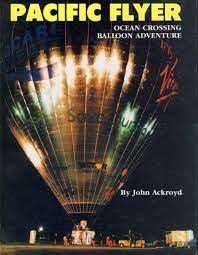
 In the 4th part of Made on the Isle of Wight, we look at the contribution Ryde designer John Ackroyd and Isle of Wight engineers made to a series of world-beating balloons.
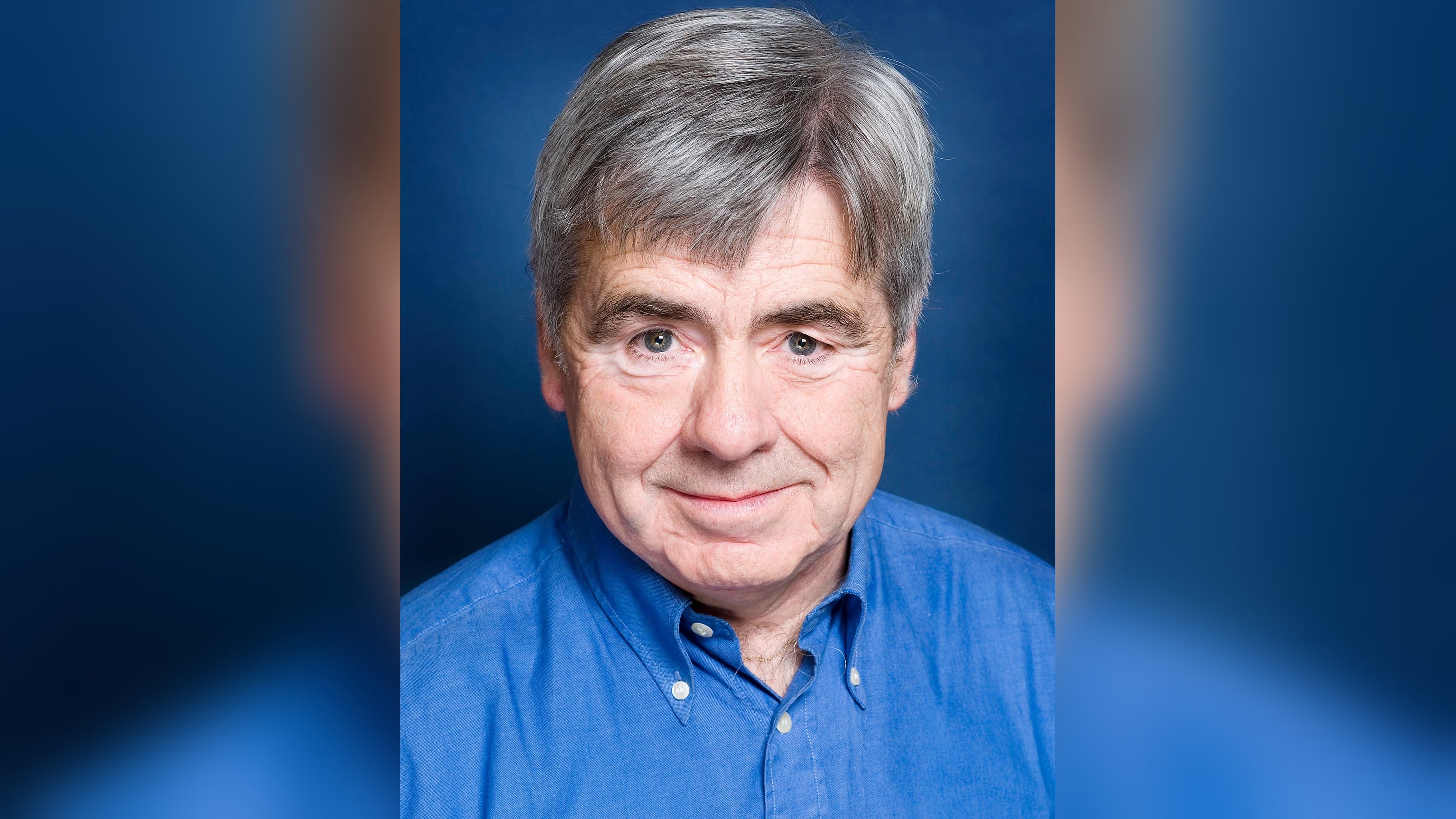
John ‘Ackers’ Ackroyd had already designed the world’s 1st modern electric car, which was partly made at the Somerton works near Cowes. He then went on to design the world land speed record-breaking car Thrust2 – built at Fishbourne – as previously covered by Made on the Isle of Wight.
In the early 80s – following his success with Thrust2 – Ackers saw an advert for a pressure capsule designer for the Endeavour balloon attempt: a super-pressure helium balloon intended to make a circumnavigation of the southern hemisphere of the globe to and from Australia.


Never a man to turn down a challenge, John Ackroyd set about designing and then building a balloon capable of long-distance flight.
The capsule for Endeavour was made from Kevlar composite and fabricated by Island Plastics in East Cowes. A scaled-down prototype of the balloon set records for its class flying over Australia in November 1984.

The launch of the Southern Hemisphere circumnavigation attempt was set to take place in 1985 from Perth, Western Australia. However, at this point, the project had run into financial difficulties and had to be abandoned.
Ackers was undaunted. Further record-breaking ballooning projects soon followed.

In 1987, the Virgin Atlantic Flyer – also designed by John Ackroyd – became the 1st and only hot air balloon to cross the Atlantic, covering 3,075 miles in 31 hours and 41 minutes. The balloon flew in the jetstream to become the fastest manned balloon with an average crossing speed of 97 mph and a peak of 153 mph.
Fortunately, at this stage of Ackers’ venture into balloon designing, lack of funds had ceased to be an insurmountable problem. The Virgin Atlantic Flyer was sponsored by Virgin Atlantic Airways to promote their transatlantic and Japanese flights. Virgin’s chairman Richard Branson was an active participant as co-pilot of the balloon.
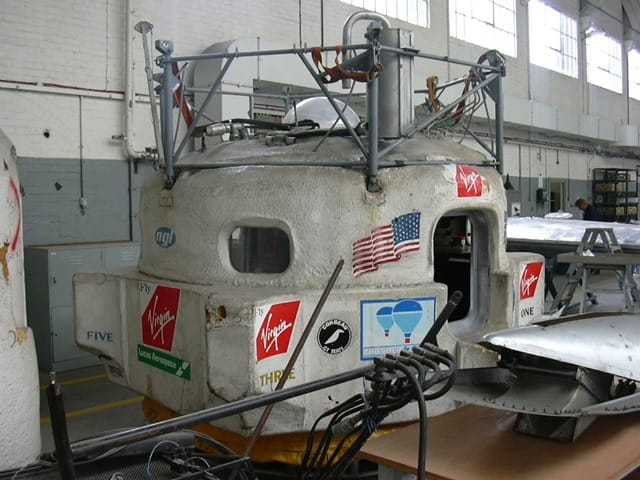
The transatlantic flight was not without its moments of drama. As the balloon was approaching Ireland at the end of its transatlantic flight, co-pilot Per Lindstrand jumped from the capsule into the sea. The lightened balloon took off again with Richard Branson on board and climbed high into the sky. With Per in the water and Richard in the balloon, it descended, and Richard was plucked from the water by helicopter. Only then could he tell his rescuers that Per was in the sea. Fortunately, Per was also found and rescued.
The next world record balloon attempt was Stratoquest in 1988. This broke the world altitude record for a balloon by reaching a height of 64,997ft (twice that of Mount Everest). To reach such a height entailed designing a capsule to withstand near-space conditions: temperatures of -70C and a complete lack of oxygen.
Ackroyd’s 3rd record-breaking balloon was Virgin Pacific Flyer, built with the intention – as the name suggests – of crossing the world’s greatest ocean.
On 15th January 1991, Per Lindstrand and Richard Branson began their Pacific crossing by hot air balloon in Miyakonojo, Japan. 2 days later they landed on a frozen lake in Yellowknife, Canada.

Virgin Pacific Flyer had completed the longest flight in lighter-than-air history: 6,761 miles. Their voyage had set new world records for distance and duration as well as their own speed record. The Virgin Pacific Flyer remains the largest hot air balloon ever built.
Ackers attempted further revolutionary balloons but sadly without the success of Virgin Atlantic Flyer, Stratoquest and Virgin Pacific Flyer.
In 1993, he failed in his attempt to design a helium balloon capable of global circumnavigation: Earthwinds. His follow-up venture – Virgin Global Challenger – was also unsuccessful in its attempted round-the-world flight in 1998, having broken its moorings in Marrakech, Morocco, before coming to ground in Algeria, then in the midst of a bloody civil war.
In the preface to his autobiographical book Pacific Flyer, John Ackroyd quoted former US President Herbert Hoover, who had written:
“The great liability of the engineer compared to men of other professions is that his works are out in the open where all can see them.
“His acts, step by step, are in hard substance. He cannot bury his mistakes in the grave like the doctors. He cannot argue them into thin air or blame the judge like the lawyer. He cannot, like the architects, cover his failures with trees and vines. He cannot, like the politicians, screen his shortcomings by blaming his opponents and hope the people will forget.
“The engineer simply cannot deny he did it. If his works do not work, he is damned …”
Ackers was awarded the Freedom of Ryde in 2018. He sadly passed away on 21st January 2021 aged 83.