


























































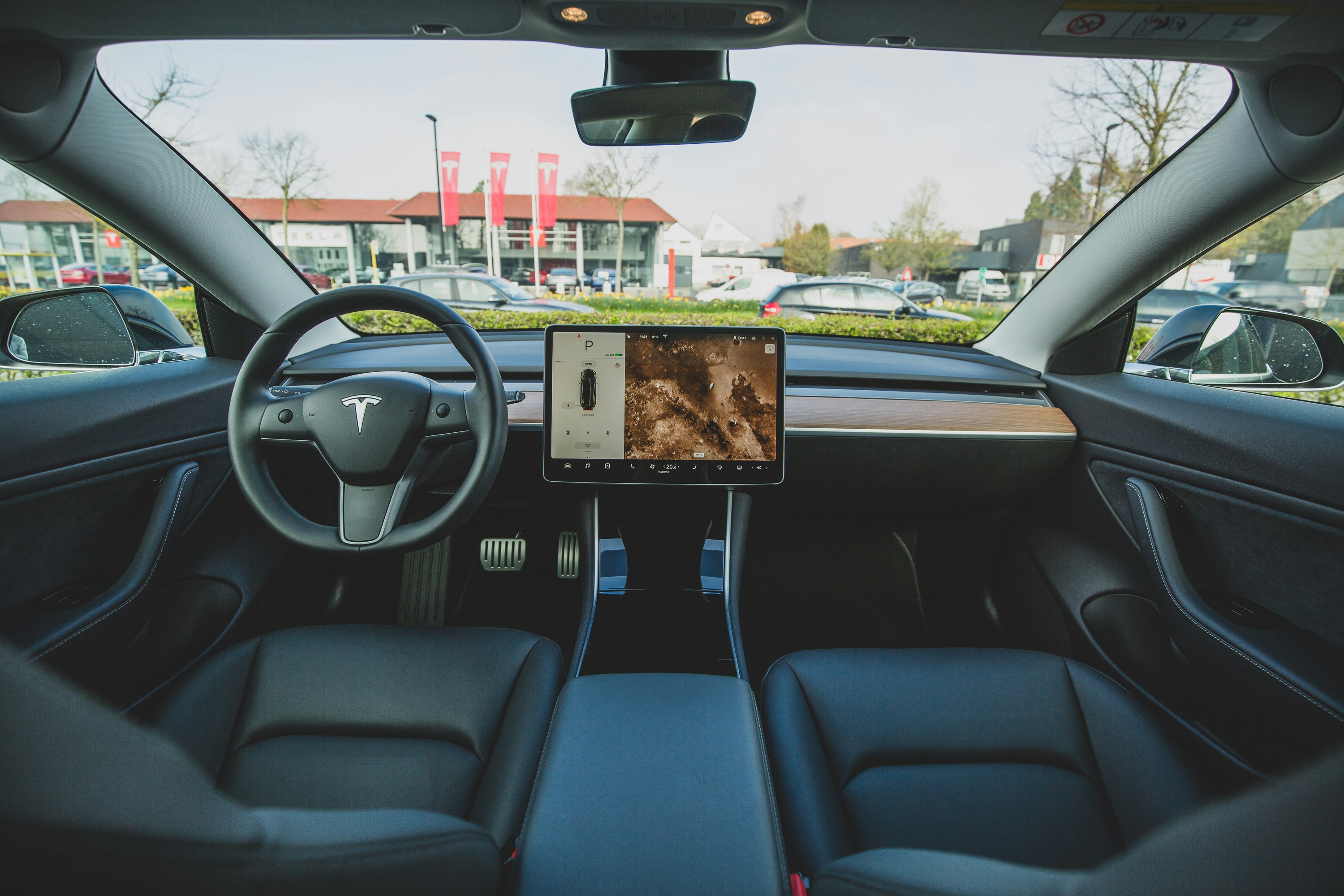

Elon Musk, the CEO of Tesla (TSLA), is no stranger to making ambitious statements. Over the years, he has promised game-changing innovations, some of which have materialized, while others have remained out of reach. From the Hyperloop, which never came to life, to his infamous claim about taking Tesla private with “funding secured,” Musk’s words often spark controversy and excitement.
Yet, he has also delivered on major promises—take the Cybertruck, which finally became a reality in 2023 after years of anticipation. Now, Musk has made one of his boldest claims yet. During Tesla’s fourth-quarter earnings call, Musk stated:
“I’m not saying it’s an easy path, but I see a path to Tesla being the most valuable company in the world by far. Not even close, like maybe several times more than — I mean, there is a path where Tesla is worth more than the next top five companies combined.”


To put this into perspective, the five largest U.S. companies—Apple, Microsoft, Nvidia, Alphabet, and Amazon—hold a combined market capitalization of nearly $15 trillion. Tesla’s current valuation stands at $1.2 trillion, meaning Musk believes the company could grow more than 10 times its current value. But how realistic is this goal?
As industries continue to evolve with technological advancements, shifting consumer behaviors, and global economic trends, understanding investing predictions for 2025 becomes crucial for investors looking to navigate the market effectively. Expert insights can provide valuable perspectives on which sectors may experience rapid growth, potential downturns, or emerging opportunities, helping traders and investors make more informed decisions
What’s Musk’s Plan to Get Tesla to $15 Trillion?
Musk didn’t provide a step-by-step explanation, but it’s clear that full self-driving (FSD) technology and Tesla’s robotaxi network are at the heart of his vision.
According to Musk, today’s personal vehicles are underutilized, operating for only about 10 hours per week. If Tesla’s self-driving cars become fully autonomous, they could be used 50 to 55 hours per week, generating far greater value. He described this transformation as “the largest asset value in human history.”
But how can this translate into a $15 trillion valuation? One way to analyze this is by comparing Tesla’s potential robotaxi business to Uber, the world’s largest ride-sharing platform.
Uber is expected to generate around $160 billion in gross bookings annually, and this figure continues to grow. However, Uber only keeps a fraction of this revenue, as most of it goes to the drivers. If Tesla’s self-driving fleet replaces human drivers, it could capture the entire revenue from ride-sharing.
Assuming Tesla’s robotaxi business achieves Uber’s $160 billion revenue level and operates with an 80% gross margin, the company could generate $128 billion in gross profit. This figure is far higher than Tesla’s current $17.5 billion gross profit in 2024.
If we take it a step further and assume a 50% operating margin, Tesla’s annual operating income from ride-sharing alone could reach $80 billion. Adding this to Tesla’s existing vehicle business, Musk’s vision starts to make some financial sense.
However, does this justify a $15 trillion valuation?
Is Tesla’s $15 Trillion Valuation Possible?
Even if Tesla’s net income reaches $100 billion, a $15 trillion valuation would still require a price-to-earnings (P/E) ratio of 150. While Tesla currently trades at a high P/E ratio due to growth expectations, it is unlikely that investors would continue to justify such an extreme valuation in the long term.
For comparison:
- Apple (AAPL) trades at a P/E ratio of around 30,
- Microsoft (MSFT) trades at 35,
- Even high-growth tech companies like Nvidia (NVDA) hover around 50-60 P/E.
Expecting Tesla to sustain a 150 P/E ratio indefinitely would require near-unlimited growth, which is nearly impossible in real-world market conditions.
What Could Hold Tesla Back?
Even if Tesla makes huge advancements in self-driving technology, several factors could slow down or derail its path to a $15 trillion valuation:
- Regulatory Barriers – Many countries have strict regulations on autonomous driving, and achieving global approval won’t happen overnight.
- Technological Challenges – Full self-driving has yet to be perfected, and despite Musk’s optimism, achieving near-100% safety remains a challenge.
- Market Competition – Other automakers and tech giants are aggressively pursuing self-driving technology, including Google’s Waymo and China’s Baidu.
- Infrastructure & Adoption – Even if Tesla perfects self-driving technology, it needs mass adoption to create the ride-sharing ecosystem Musk envisions.
Could Tesla 10x? What’s the Realistic Outlook?
Over time, Tesla could certainly see substantial growth. A decade ago, no company had even reached a $1 trillion valuation, and today, there are nine trillion-dollar companies in the U.S. alone.
However, Musk’s claim that Tesla could exceed the combined value of the five largest companies is highly ambitious. No single company in modern history has dominated the stock market to that extent, and it’s unlikely any will.
While Tesla’s advances in autonomy and artificial intelligence could bring significant upside, investors should remain cautious. Musk’s forecasts often lean toward best-case scenarios, and real-world execution tends to be more complex.
Rather than focusing on sky-high valuations, investors should keep an eye on Tesla’s fundamentals, technological progress, and actual milestones in autonomous driving. While Tesla’s future is undoubtedly exciting, it remains to be seen whether Musk’s boldest prediction yet will ever become a reality.