


















































Warning road signs are a vital component of the road safety system. They alert drivers in advance to potentially hazardous sections of the road, giving them time to prepare and reduce the risk of accidents. Such signs indicate sharp bends, dangerous junctions, slippery sections, approaching level crossings, uneven road surfaces and other hazards present in a specific area. The driver’s task here is to spot the warning in good time, adjust their speed and manoeuvres, and exercise increased caution.For further information on warning signs, please visit the website signs-en.com.
Key characteristics of warning road signs
Warning road signs play a key role in ensuring road safety, as they inform the driver in advance of potential hazards on the road. Their main purpose is to give the driver the opportunity to prepare for changes in the road situation and take measures to prevent accidents. Unlike prohibitory or mandatory signs, which explicitly indicate the need to perform or restrict certain actions, warning signs merely signal a potential hazard and encourage increased vigilance.
Visually, most such signs are designed as an equilateral triangle with a red border and a white background. A black pictogram is placed on the white background, indicating the type of hazard. For example, this may be an image of a pedestrian to warn of a crossing, an animal to indicate the possible presence of wildlife on the road, or arrows and lines to indicate sharp bends, uneven surfaces or narrowings of the carriageway. Such graphics allow the driver to instantly recognise a hazard from a considerable distance and prepare to adjust their driving.


Another important characteristic is the placement distance. Warning signs are positioned at a distance from the hazardous section that allows the driver sufficient time to reduce speed and alter their course. The distance depends on the type of road, the speed limit and the nature of the hazard. Furthermore, signs must be clearly visible at all times of day and in various weather conditions; therefore, reflective materials and bright colours are often used so that their outlines stand out clearly against the background.
IMPORTANT! A driver who correctly interprets such a sign can slow down in good time, change lanes, increase the distance or be prepared for emergency braking, which significantly reduces the risk of a road traffic accident.
Types of warning signs
Warning road signs are varied and classified according to the nature of the hazard they indicate. Their main purpose is to warn the driver in advance of a potential danger and allow time to adjust speed and manoeuvres. Accordingly, there are several main categories of such signs, each with its own distinctive symbols and purpose:
- Dangerous bends and changes in road direction. These include signs warning of sharp bends, hairpin bends, sudden curves and a series of bends. They are particularly important on high-speed roads, where an unexpected change in direction can cause an accident. These signs help drivers to slow down in advance and negotiate the bend safely.
- Hazards related to road surface conditions and terrain. These include signs for ‘uneven road’, ‘artificial unevenness’, ‘slippery road’, ‘potholes’ and ‘roadside requiring caution’. They inform the driver of potential difficulties related to the physical condition of the road, to prevent loss of control of the vehicle. Upon seeing such signs, the driver usually reduces speed and adopts a more cautious driving style.
- Signs warning of encounters with other road users or objects. These include, for example, ‘pedestrian crossing’, ‘children’, ‘cyclists’, ‘exit from adjacent area’ and ‘animals’. They indicate an increased likelihood of people, animals or vehicles appearing on the road and require vigilance and readiness to stop immediately.
- Junctions, narrowings and interchanges. This group includes signs informing drivers of approaching dangerous junctions, road narrowings, roundabouts and junctions with minor roads. They allow the driver to choose the optimal route and speed in advance to pass through the junction safely.
- Level crossings and other engineering structures. These signs warn of railway crossings, the presence of barriers or signals, tunnels, bridges and other structures where driving requires extra caution. They help the driver assess the distance, the speed of the train and the need to come to a complete stop.
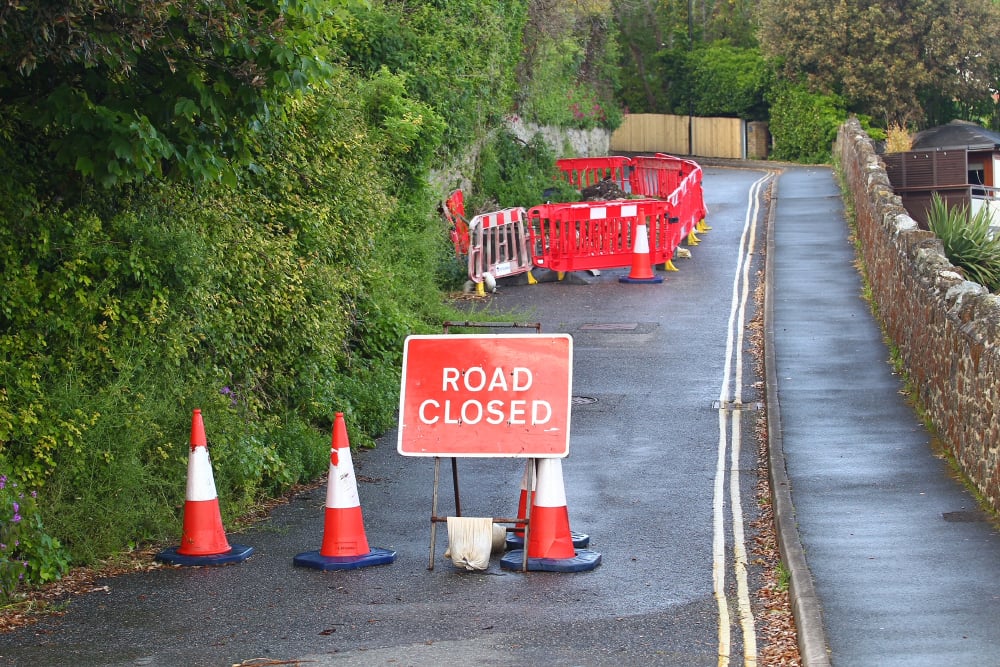
- Other warning signs that do not fall into the previous categories but indicate specific hazards. For example, falling rocks, crosswinds, roadworks, reduced visibility or draughts on bridges.
What should you do when you see such signs on the road?
Warning road signs play an important role in ensuring road safety, but their effectiveness depends directly on the driver’s actions. When encountering such a sign, the main task is not simply to notice it, but to correctly assess the situation and take appropriate action:
- The driver must reduce speed, even if the road appears safe. This is particularly important on high-speed roads or in conditions of limited visibility, such as in rainy weather, snowfall or fog. Reducing speed allows the driver to maintain control of the vehicle and prepare for unexpected changes in road conditions.
- The driver must keep a close watch on the road, surrounding vehicles, pedestrians, cyclists or animals that may appear suddenly.
- If a sign warns of a sharp bend, a slippery road or uneven surfaces, it is important to hold the steering wheel firmly and be ready for smooth but precise manoeuvres.
- If warned of a pedestrian crossing or an area with children, you must switch to ‘standby mode’ in advance and be ready to come to a complete stop at any moment.
- Increase the distance to the vehicle in front. This gives you more time to react, reduces the risk of a collision and allows you to safely navigate a potentially hazardous section of road.
- In heavy traffic, it is important not to make sudden lane changes or overtake, as this can lead to an accident.
NOTE! If a warning sign indicates specific infrastructure, such as a level crossing, bridge or tunnel, the driver must follow the Highway Code and take note of additional signals: barriers, traffic lights, and distance markers to the structure.

It is essential to maintain speed control and use the vehicle’s assistance systems. For example, disabling cruise control on hazardous sections, using dipped headlights in poor visibility, and maintaining a safe driving path. When driving on slippery or uneven roads, it is important to avoid sudden braking and sharp turns of the steering wheel to maintain the vehicle’s stability.
Warning signs are only effective if the driver behaves consciously and responsibly; therefore, attentiveness and the ability to anticipate hazards remain the key tools on the road.