








































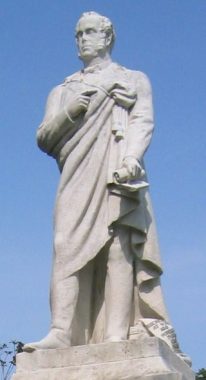
In the first of our series on Isle of Wight MPs, we examine the sometimes controversial life of Henry Temple (Viscount Palmerston) – twice British Prime Minister and MP for Newport in 1807 and 1809.
Palmerston – who was born in 1784 – was arguably one of Britain’s great leaders. He was the oldest person ever to become PM for the first time at the age of 70, back in 1855. He was also the first Liberal Prime Minister.
He held high office (Secretary for War, Foreign Secretary, Prime Minister) almost continuously from the age of 25 until his death at 81, at a time when the United Kingdom was at the height of its imperial splendour.


When Palmerston died in 1865, another Prime Minister – William Gladstone – said of him:
“Death has indeed laid low one of the most Towering Antlers in all the forest.”
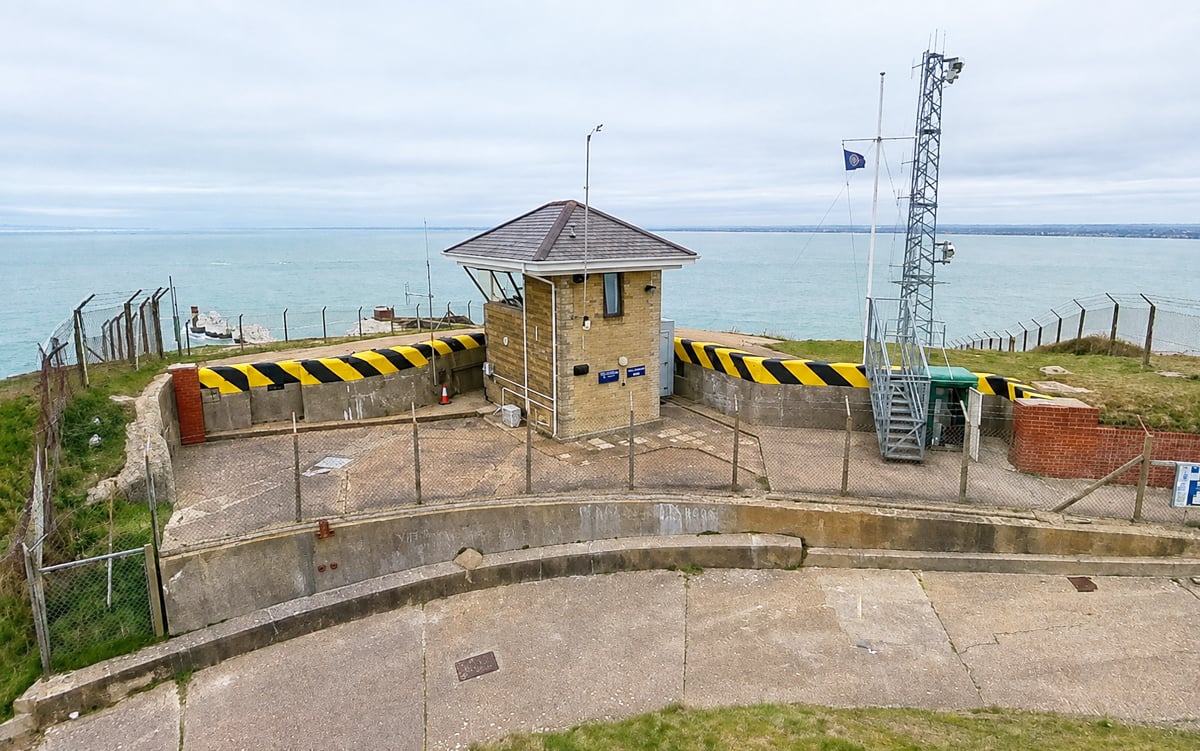
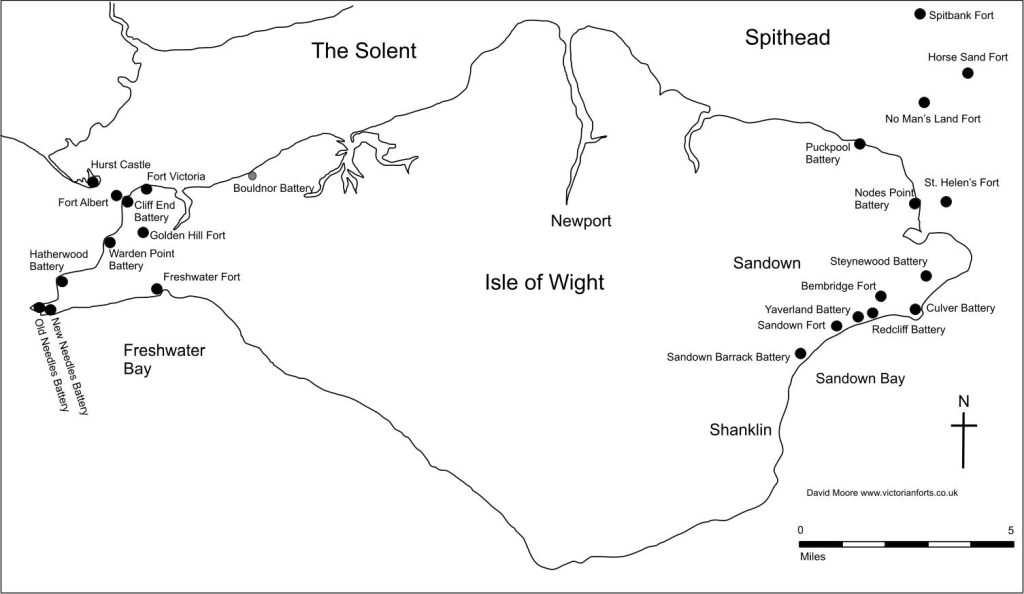
Pam (as Palmerston was affectionately known) is best remembered on the Isle of Wight for ‘Palmeston’s Follies’: the forts built both on the Island and in the Solent to protect Portsmouth against possible French attack.
Palmerston’s early connection to the Isle of Wight was far from noble. In 1806 (at the tender age of 22) he had paid a bribe of £1,500 (£110,000 in today’s values) to become the MP for Horsham. However, the legality of his election was challenged.
The following year (1807), Sir Leonard Holmes arranged for Palmerston to become MP for his pocket borough of Newport. One of the conditions set by Holmes was that Palmerston was not allowed – even during election campaigns – to actually visit the town.
However, Palmerston made numerous visits in subsequent years, inspecting the army barracks at Parkhurst, the fortifications around the Island and – of course – visiting Her Majesty Queen Victoria at Osborne House.
Palmerston was said to have had a prickly relationship with Her Majesty The Queen, partly due to allegations of sexual impropriety. His improper conduct led to his being given the nickname ‘Lord Cupid’. On one occasion, he was accused of entering a room of 1 of Victoria’s ladies-in-waiting, Lady Dacre, and ‘forcing his attention on her’ while visiting Windsor Castle.
In 1839, Palmerston married his long-term mistress Emily Lamb. He was 55; she was 52. The young Queen Victoria believed it ‘unseemly’ that couples in their 50s should marry.
He even found himself embroiled in scandal at the age of 79 when was named in a divorce case and accused of having an affair with the wife of a journalist. Although the case was dropped, Palmerston never denied the allegation.
Rumour suggests that Palmerston died attempting to seduce a maid at a billiard table at his Brocket Hall home, although the official line is that he died of a chill.
Queen Victoria wrote of Palmerston in her journal:
“We had, God knows! terrible trouble with him about Foreign Affairs. Still, as Prime Minister he managed affairs at home well, and behaved to me well. But I never liked him.”
Palmerston was the absolute antithesis of a 21st-century ‘woke’ politician. He simply believed the main objective of the Government’s foreign policy should be to increase Britain’s power in the world. He was a keen user of ‘gunboat diplomacy’, relying on Britain’s naval strength to assert his demands on other countries.
As Secretary of War, Foreign Secretary and then Prime Minister, Palmerston oversaw the United Kingdom – then the world’s most powerful nation – fight (and generally win) numerous conflicts. His abrasive attitude led to a further moniker: Lord Pumice Stone. The major conflicts during which he held high office include:
- the Napoleonic Wars against France
- First and Second Opium Wars against China
- The Don Pacifico Affair (during which the British navy blockaded Athens)
- The Crimean War against Russia
Palmerston’s most memorable and eloquent speech was on the Don Pacifico Affair, which concerned an attack on a British Gibraltarian by an antisemitic mob. He compared the British Empire with the former Roman Empire and declared that any British subject ought everywhere to be protected by the strong arm of the British government against injustice and wrong.
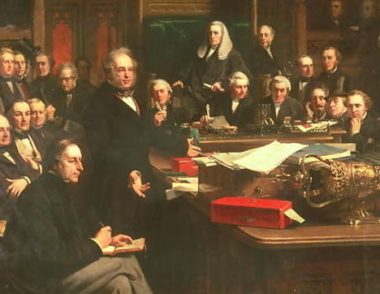
Palmerston declared:
“As the Roman, in days of old, held himself free from indignity, when he could say, Civis Romanus sum, so also a British subject, in whatever land he may be, shall feel confident that the watchful eye and the strong arm of England will protect him from injustice and wrong.”
Palmerston displayed both ‘liberal’ and ‘conservative’ attitudes. As an Anglo-Irish absentee landlord, he evicted 2,000 of his Irish tenants during the Irish Famine. On the other hand, he hated slavery and ensured the British navy was used vigorously against the slave trade.
He died at 10:45 on Wednesday 18th October 1865, just 2 days before his 81st birthday. He was awarded a state funeral and buried at Westminster Abbey.
Marquess of Lorne, Son-in-law of Queen Victoria, said of Palmerston:
“He loved his country and his country loved him. He lived for her honour, and she will cherish his memory.”
Another Prime Minister, Gladstone recounted a story about Palmerston’s patriotism:
“A Frenchman, thinking to be highly complimentary, said to Palmerston: ‘If I were not a Frenchman, I should wish to be an Englishman’; to which Pam coolly replied: ‘If I were not an Englishman, I should wish to be an Englishman.”
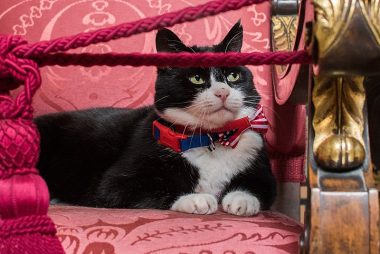
Palmerston is commemorated on the Isle of Wight by Palmerston Road and Palmerston Grange (hotel) in Shanklin. He is also remembered nationally in the name of Palmerston the cat, resident Chief Mouser of the Foreign & Commonwealth Office (FCO) at Whitehall in London.
In the next edition of Isle of Wight MPs, we shall examine the life of another famous Newport MP who became Prime Minister: Arthur Wellesley, Duke of Wellington.









So Pam died while potting the ball what colour was it white black brown blue or green he certainly knew his way around the table
A very unpleasant and ruthless man, but a very good, unbiased report. I look forward to your future articles.
Thank you IE for interesting articles that have local connections.
Fascinating.