









































To the unsuspecting mainlander, much confusion can be brought by an Isle of Wight’er speaking even the most ‘simple’ of sentences – after all, all we have to say is the word ‘somewhen‘ to provoke bemused looks and lengthy discussion on whether or not we are actually speaking English.
The Isle of Wight, like many areas, has not only its own accent but also its own dialect. With the Island’s native accent often described as something between that of Somerset and that of Dorset, it can be a challenge for those unfamiliar with it to decipher when at its strongest.
Whilst times are changing and the Island’s unique approach to the English language is dying out, many of us born and bred here have reminiscent memories of family members who most likely would have no luck in an English Language speaking exam. Even experienced teachers who passed specific English courses at grade-university.com can be confused about that.


We’ve compiled a list of some of the Island’s favourite bits of lingo in tribute – but what’s yours?
The Isle of Wight Dictionary – written by caulkheads for all those grockles out there!
- Somewhen – Firstly, it is a word, probably… Somewhen is often used interchangeably with anywhen (which is also definitely a word…). For those unaware, it simply means ‘at some point’, or ‘at some time yet undecided’.
- Grockle – Mainlander, or person who is not from the Isle of Wight but is visiting or on holiday.
- Gurt – Large, big.
- Twank – To beat or to thrash… (behave!).
- Aaterclaps – Something disagreeable happening after a dispute is thought to have been settled by those involved – a bit like someone slapping you after you’ve already apologised for eating the last KitKat.
- Sluttish – Dull, drizzly, cold weather (not what you thought, right?).
- Nammet – Lunch or a small amount of food.
- Bufflehead – Not quite the sharpest tool in the box, if you know what we’re saying.
- Nipper – A child or younger person.
- Chucky pigs – Woodlice.
- Latter Lammas – Slow.
- Funch – To push or thrust.
- Rattletrap – An old vehicle that has seen better days.
- Overner – A name for someone not native to the Island – a mainlander. Usually someone who has recently moved across.
- Anewse – Very much like or very nearly the same as.
- Buffle Headed – Someone who is a bit on the dim side…
- Idle – Saucy, wanton, or flippant.
- Long Dog – A greyhound.
- Slackumtrance – A slovenly or dirty woman.
- Nit – Not yet.
- Pinchfart – Stingy
- Cri-me-gemminy – To exclaim in a surprised fashion.
- Dismolish – Demolish or destroy.
- Flustration – To be frightened.
- Maggoty – Whimsical or fond of experiments.
- Skitterways – Wonky.
- Twickered – Tired or weary.
- Mallishag – A large caterpillar.
- Gally-Bagger – Scarecrow.
- Yoppul – Incessant gabble.
So where did it all come from?
To understand the accent, and its accompanying dialect, one has to delve back through the ages and into history – but in order to spare you from getting carky (annoyed), we’ll keep it brief.
The dialects spoken in Southern counties of England all mainly stem from the time in which the areas were part of the Saxon Kingdom of Wessex which existed between 519AD to 927AD – hence the similarity between accents and dialects in some areas. However, like all good things, the Kingdom soon came to an end with its communities splitting, and it is from this point that the Island’s drawl really fashioned its own path.
Many of the Island’s unique colloquialisms were constructed due to the difference in the pronunciation of certain sounds and phoenymes. For example, clasp would be pronounced clapse, and wasp would be pronounced wapse. Elsewhere, tenses are also sent askew: the past tense of drink should be drank, but in Isle of Wight speak, it is replaced with drinked.
This on top of the somewhat isolated nature of the Isle of Wight soon led to multitudes of new words being created for even the dullest of everyday objects – with some quite similar to the normal English word (butter fingers became buttervingers, for example), and others in a new league of their own.

So, that was quite comprehensive, but surprisingly, there are quite literally hundreds more words – although most haven’t been uttered for quite some years now. What are your favourite Isle of Wight dialect words or phrases?





It used to be shuffelpigs but apparently its chuckypigs…
I’ve always thought an overner was someone who wasn’t born on the Island
Overner, always thought it came from “over tnere” while pointing to the mainland.
Yes your correct nipper
It’s odd I’ve only heard four of them: somewhen, overner, gurt and grockle. And I was born here and lived here always, but then I hardly ever meet anyone else who was. Most people I meet have all come from somewhere else in the country. I don’t know where all the ‘true’ Islanders live, but hardly any in some areas.
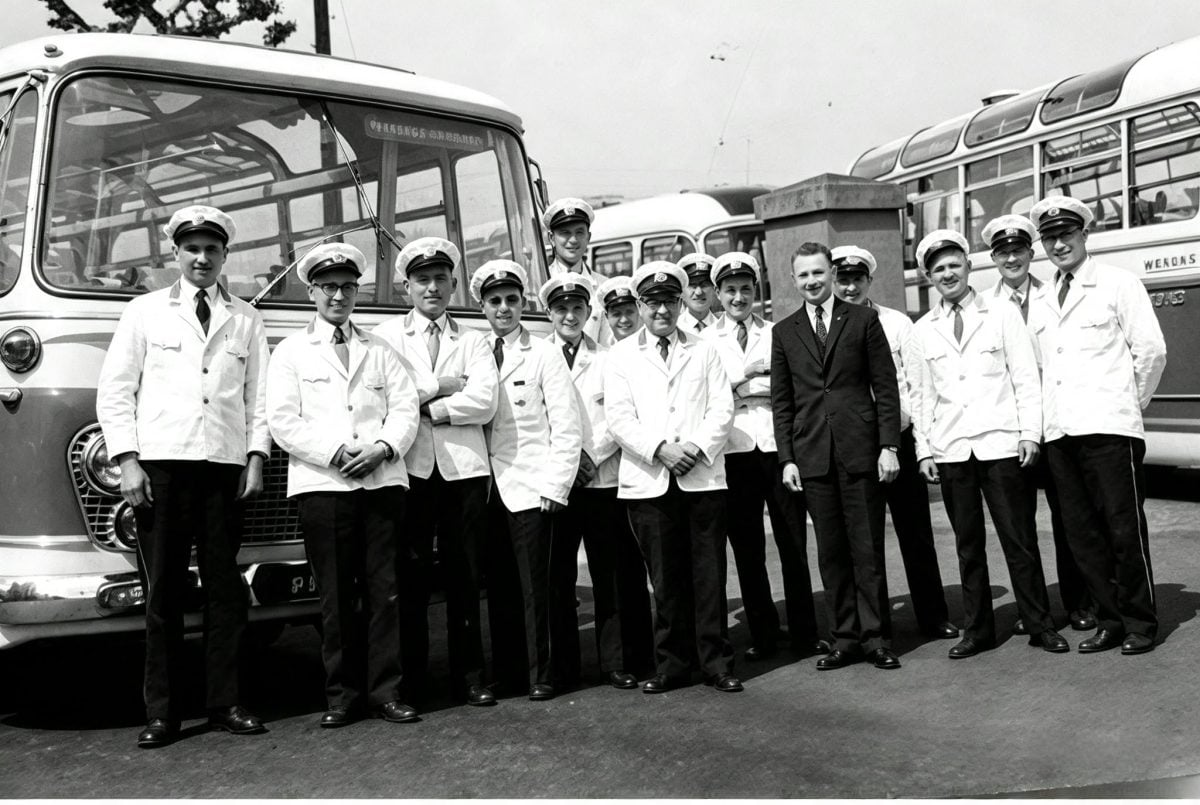
Oh and forgot to mention ‘nipper’ of course! I was always hearing that. Used to apply to a boy, now I think it’s used to apply more generally. I remember the bus called that.
Nipper anyone under 99 years of age either being complementary to an old person make em chuckle
As an Islander born and bred here over 70 years ago, I find it odd that I am only familiar with about 8 of the listed words.
Why no “corkhead” for an islander? or “scran” for food?
The dictionary of Isle of Wight Dialect by William Henry Long (Google it) gives a comprehensive insight into it and I have to say that it includes a vast number that I am not familiar with.
Scran is Navy for food or Royal Marines
Scran is military Siang for food across certainly the army and the navy (can’t comment on the RAF).
It should be caulkhead. Caulk was the stuff pressed in-between the planks of wooden ships with tar to keep them from leaking.