






















































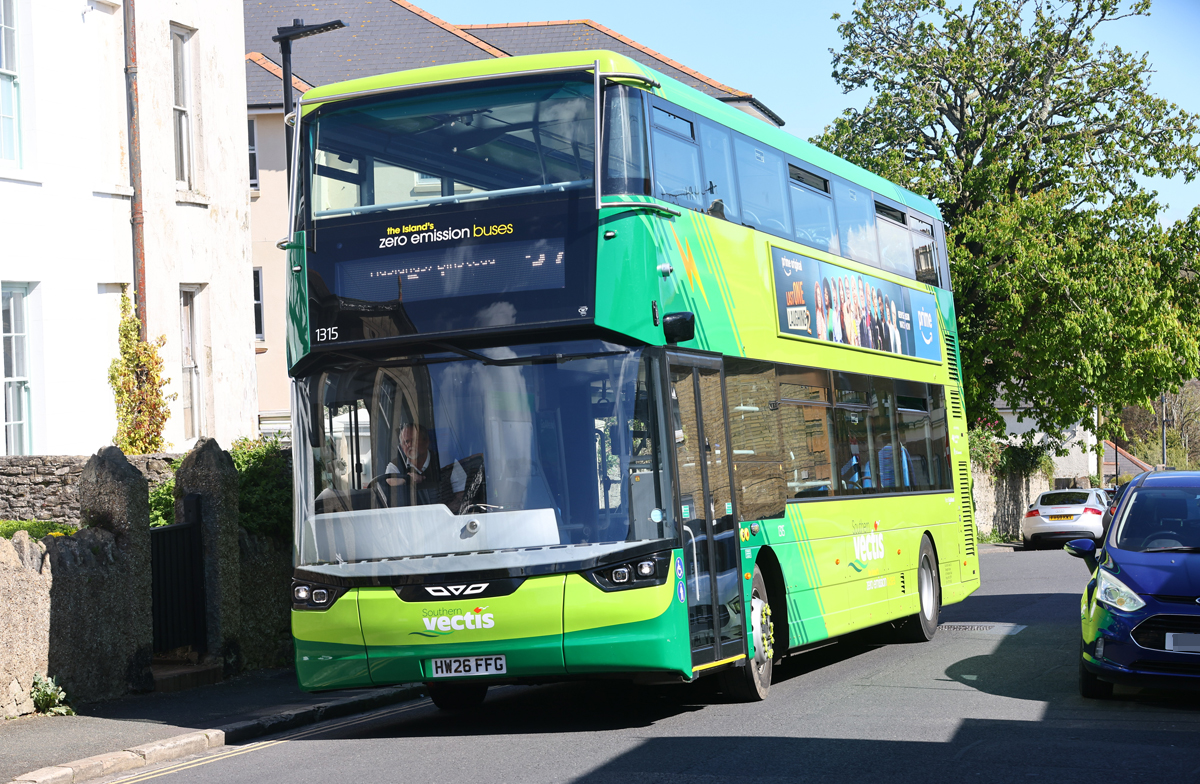

Southern Vectis’ new zero-emission electric buses have made an excellent start, covering more than 200,000 miles to date.
The 31 brand-new buses, manufactured in the UK by Wrightbus, are already having a significant impact, providing greener and cleaner journeys on the Island, according to the bus operator.
Richard Tyldsley, General Manager at Southern Vectis, says:


“We’re pleased to report that the significant investment from Southern Vectis, Isle of Wight Council and the Department for Transport’s Zero Emission Bus Regional Area scheme, is already beginning to pay off.
“Journeys on these buses are quieter and more comfortable – but that’s only part of the story. Since entering service on 16 March, our electric double-deck fleet has covered 234,000 miles – delivering around 260-280 tonnes of CO savings, compared to a modern Euro 6 diesel equivalent.
“This represents a 75 percent reduction in operational emissions, supported by strong real-world energy efficiency”.
Richard adds:
“In terms of logistics, introducing this new fleet – including the electrical infrastructure at our depot in Newport – has been better than expected. Services are running smoothly, and we expect this to continue over the coming months and years”.
Article continues below this advertisement

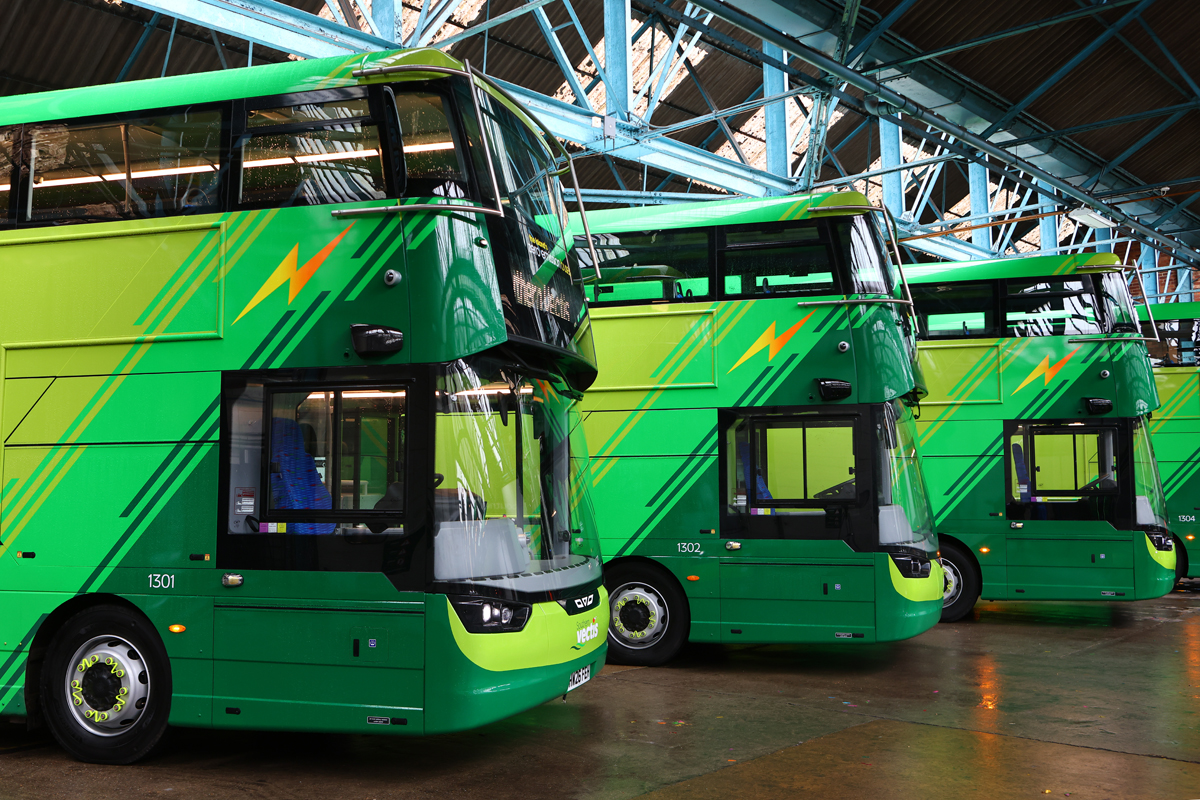
By 2028, the Isle of Wight fleet will expand to 54 electric buses, Richard explains:
“We will be welcoming still more electric buses to the island in winter 2027 – taking the total to 54, which is most of the main network fleet. This will help us improve the environment still further.
“I’d urge people living on and visiting the Isle of Wight to travel with us on these impressive new vehicles – as this will have a major impact on the Isle of Wight’s overall carbon emissions.”







Open the North sea oil fields to full capacity. Let’s make Britain Great again.
Zero emissions my backside.
Energy cannot be created or destroyed only harnessed and transformed from one form to another. Zero emissions are a myth and are not achievable.
Yawn
And that’s why you’re a scientist, Einstein Not.
Net zero is not absolute zero and was never touted to be.
There is a constant supply of energy coming from the sun, most days I have noticed. You don’t have to dig it up, just capture/harness it.
The fossil fuels in the ground ultimately came from the same source, sun, vegetation, rotting down, over time turning into liquid black gold.
You might not be able to create energy but it isn’t all here yet and hopefully will keep coming.
The biggest problem is the “Energy” companies who want you to keep buying “their” fuel. They don’t want us to harvest our own fuel, free energy direct from the sun (albeit you have to have the equipment to do it). The big companies of course want to control even that by taking charge of smart meters. They don’t want to let go.
Final line, there are too many people, the population is a problem, and don’t even mention the hot topic at present, “sewage”.
If the UK government nationalised the North Sea, took full ownership of the oil, and tried to build the infrastructure to use it purely for domestic fuel, the financial and physical cost would be astronomical.
To completely re-engineer the system for state-owned energy independence, the UK would be looking at **upwards of £50 billion to £90 billion** in brand-new infrastructure costs alone.
Here is how those eye-watering costs break down:
### 1. Re-tooling and Building Refineries: £40bn – £80bn
Because the UK’s current refineries are designed for heavy, sour crude imported from abroad, we cannot process most of our own light, sweet North Sea oil. Industry analysis indicates that building new domestic refineries or massively overhauling existing ones to process North Sea oil natively would cost between **£40 billion and £80 billion**.
### 2. New Oil Rigs and Production Platforms: £1bn – £3bn+ per field
Building a single, modern semi-submersible drilling rig or permanent production platform for the harsh environment of the North Sea costs anywhere from **£600 million to over £1.5 billion** just for the structure itself. Deepwater drilling, pipelines to connect them to the mainland, and initial site setup quickly push the cost of unlocking a single new major oil field past **£3 billion**.
### 3. The Time Cost: 15 to 20 Years
You cannot buy energy independence off the shelf. Planning, permitting, building modern refineries, and commissioning deep-sea oil platforms takes between **15 and 20 years**. By the time the infrastructure was actually finished, global energy markets will have moved on entirely.
### The Bottom Line
Even if we completely owned the oil, spending **£80+ billion** on rigs and refineries to extract a dwingling, finite resource makes no economic sense. It would mean sinking massive amounts of public money into a dying asset, when that same investment could build complete energy independence via a domestic g
reen grid.
Then why do Norway do it and we buy their fuel?
Milibands love child has spoken…
I finally think the drivers have mastered accelerating and braking.
Some interesting journals in the early days.
So as if by magic, every driver can now accelerate and brake smoothly? Nothing to do with the digital v analogue mechanics of the new buses themselves which respond better to the human foot?
that’s going to make a big difference against the likes of India, Pakistan, India etc who don’t do anything. There’s no point at all our little speck on the globe is going to make any difference until everyone does it.
Woppie do da day, so they’ve cut down emissions on the road, but what about the increase in electric charging required. Then there is the lithium batteries and how they are obtained, you should see how they dig it up, massive holes left not exactly eco friendly is it
Exactly no one wants to talk about lithium mining and how just making one of these huge batteries uses more carbon than my car will give out in its lifetime.
But digging holes doesn’t cause entire populations to suffer from lung disorders, does it? The pollution difference is immense, as is the drop in respiratory illnesses.
There very quiet does sv have stand by generators in case of mains failure
Yet the majority of the buses only have an handful of
passengers on them.
Single decker buses are more ideal for the Island.
Plugging EVs I for one was all for EVs until they took
away the benefits for EV drivers.
Zero road fund etc was great, dirty diesel now for me.
And sod everyone else’s lungs, eh? Speaks volumes for you as a person that does.
Your lungs aren’t my problem, you can always move to the countryside