



























In autumn 2025, 4.1 in every 100 children of school age on the Isle of Wight were home educated, against 1.5 across England, according to Department for Education figures. More than four in ten of those Island children were in year 10 or 11. For those families, one practical question comes early: where will your child sit GCSEs, and does exam day mean a ferry?
How many children are home educated on the Isle of Wight?
The DfE counted 690 children in elective home education on the Isle of Wight on census day in autumn 2025, up from 610 in autumn 2024. That’s a rate of 4.1 per 100 children, against 1.6 across the South East and 1.5 across England.
The Island’s figures lean towards older children. Of the 690, 140 were in year 10 and 150 in year 11, which together make 290 children at GCSE age.


Mental health was the most reported reason on the Island, at 26%, compared with 16% across England. Philosophical or preferential reasons came next, at 21%, and for 26% the reason was unknown.
The DfE classifies these figures as official statistics in development. The collection only became mandatory in autumn 2024, and the department states that changes over time are partly due to improving data quality.
Where can a home-educated child on the Isle of Wight sit GCSEs?
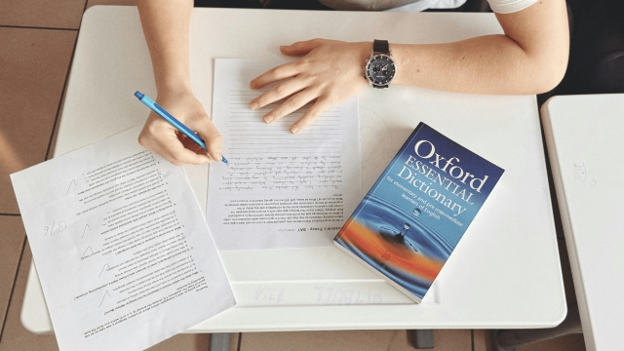
A home-educated child sits GCSEs as a private candidate, at any exam centre that agrees to accept them, on the Island or on the mainland. No centre has to take private candidates. Schools fill their own exam halls first, and subjects with coursework, practicals or speaking tests are harder to place, because the centre has to supervise or authenticate that work.
Some online providers take the search off your hands. CloudLearn, which runs online GCSE and A-level courses, finds a partner centre and books the entry as part of its courses, with exam fees charged separately. If you use a service like that, ask where the centre is before you commit. You want to know early whether exam day includes a crossing.
If it does, plan the crossing like part of the exam. Exams run in morning and afternoon sessions, and a morning paper on the mainland can mean an early boat or a night away. Build that into the family calendar for May and June.
What’s the GCSE timeline for summer 2027?
For an Island student sitting GCSEs in May and June 2027, the entries need arranging in late 2026. CloudLearn asks for at least six months’ notice for written exams. Its booking information lists late fees from 29 January and high late fees from 26 February for the summer series, and individual centres can set earlier deadlines.
| When | What to do |
|---|---|
| Now to December 2026 | Choose subjects and specifications. Find a centre, on the Island or mainland, or a provider that books one. |
| By late 2026 | Book exam entries for summer 2027. |
| 29 January 2027 | Late fees start for summer entries, per CloudLearn’s booking information. |
| Spring 2027 | Timed past papers and a full mock in each subject. Book ferry crossings for exam days. |
| May and June 2027 | Written exams. |
| August 2027 | Results. In 2026, GCSE results day was Thursday 20 August. |
Many home-educating families choose International GCSE specifications, where most subjects are assessed by a written exam alone. Fewer assessment parts means fewer trips to the centre.
Can a home-educated Island teenager go back to school or college?
Yes. Families move in both directions: DfE figures for 2024/25 show 28,100 children in England returned to school during the year, while 78,000 started home education. If your child wants to go back, apply for a place through the Isle of Wight Council’s in-year admissions process.
At 16, a further education college is the other route back into a classroom, on the Island or the mainland. Colleges enrol students who were home educated, and they run English and maths resits for anyone who needs them.
Keep a record of what your child studies and any exams they sit. It makes the move back far smoother.
How did Island pupils do at GCSE in 2026?
For families with children still in Island schools, the summer 2026 results are worth knowing. CloudLearn analysis of provisional DfE key stage 4 data for 2025/26 shows 56.1% of pupils in the Isle of Wight’s state-funded mainstream schools reached grade 4 or above in both English and maths, against 66.5% across England’s state-funded mainstream schools. In English alone, the Island figure was 65.1%, against 76.4% for England.
That leaves about 400 Island pupils who finished year 11 without a grade 4 in English, and about the same number in maths.
Those who stay in education until 18 will keep studying both subjects. Under DfE rules for 2026/27, 16 to 18 year olds without a grade 4 in maths or English must continue studying them as a condition of their college’s funding. Adults aged 19 and over without a grade 4 can study English and maths free at a further education college, which is also its own exam centre.
Frequently asked questions
Does a home-educated child have to sit GCSEs?
No. There’s no legal requirement for a home-educated child in England to sit exams. Most families still aim for English and maths, since colleges and employers commonly ask for them.
Can a home-educated child sit GCSEs at an Island school?
Sometimes. A school can accept private candidates but doesn’t have to. Ask the exams officer directly, and ask early in the school year.
Has the law on home education changed?
The Children’s Wellbeing and Schools Act 2026 received Royal Assent on 29 April 2026. It creates a compulsory Children Not in School register and requires local authority consent before some children can be withdrawn from school. These parts come into force on dates set by the government, so check the Isle of Wight Council’s website for the current position.