






























































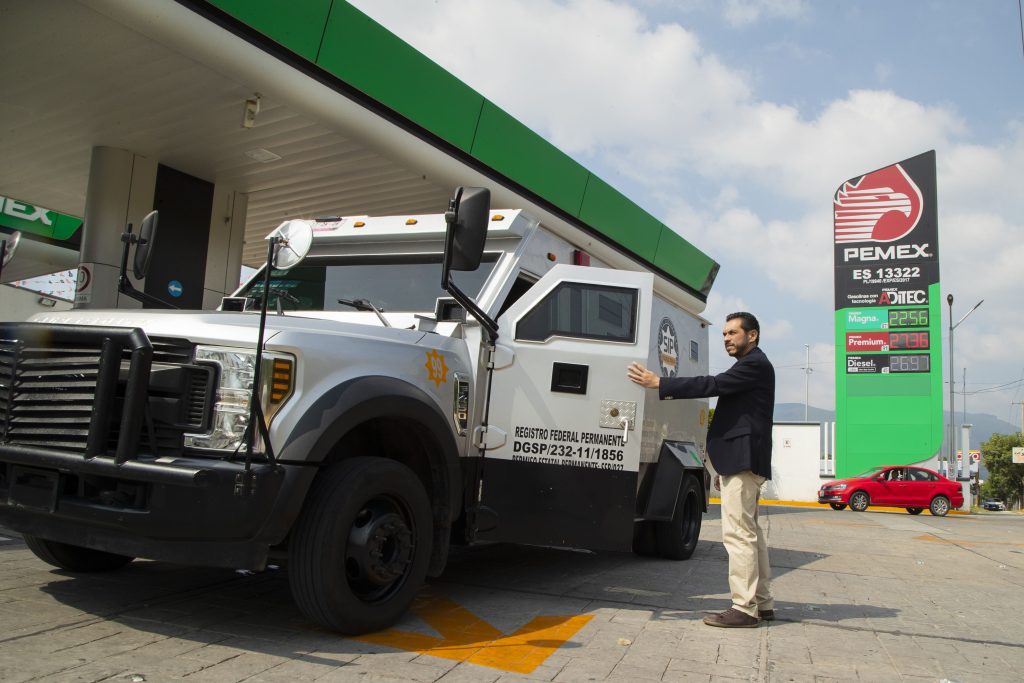
Across Mexico, hundreds of fuel station permit applications are stuck with the federal regulator. And many belong to stations that are already built. Nothing can be sold until the permit arrives.
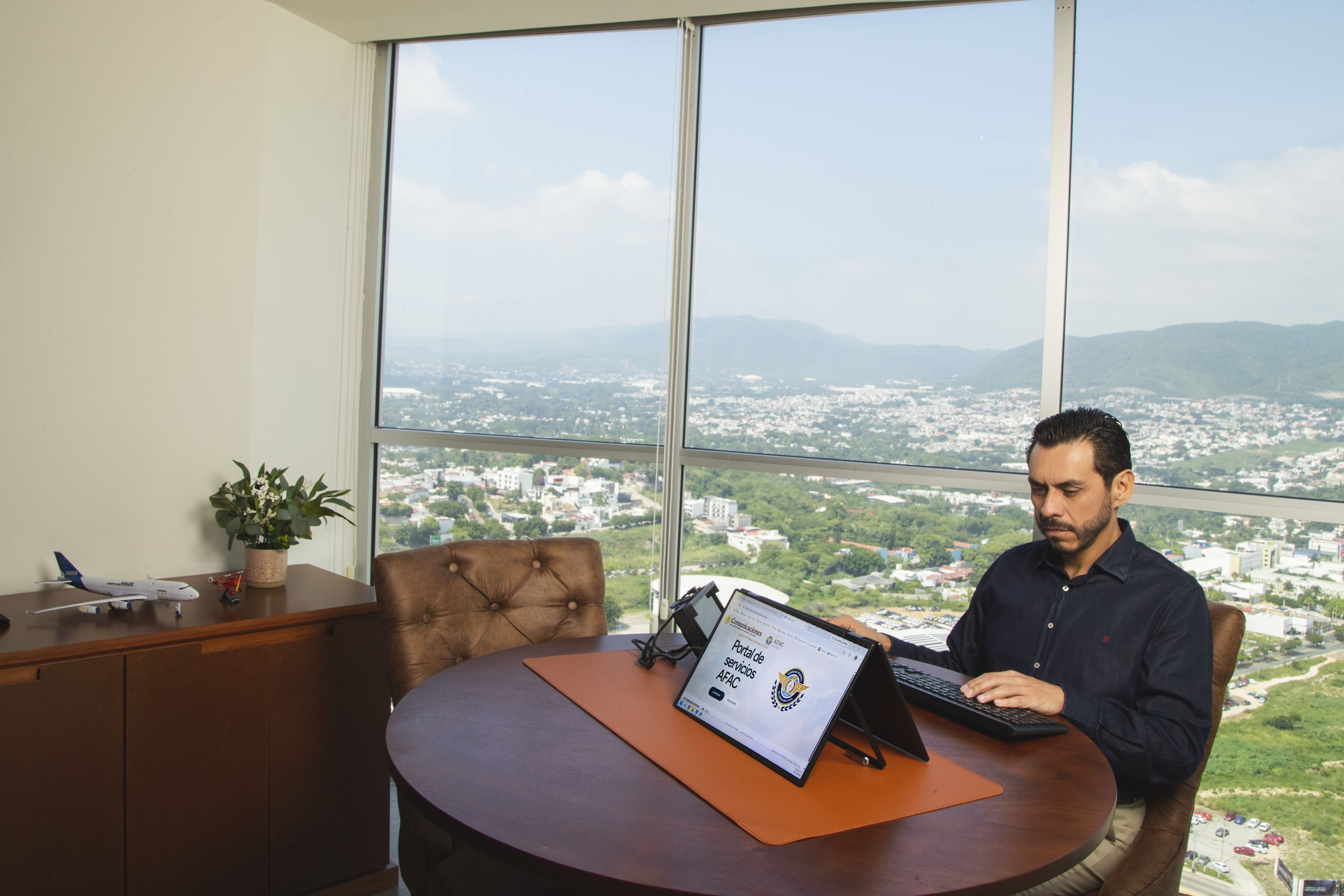
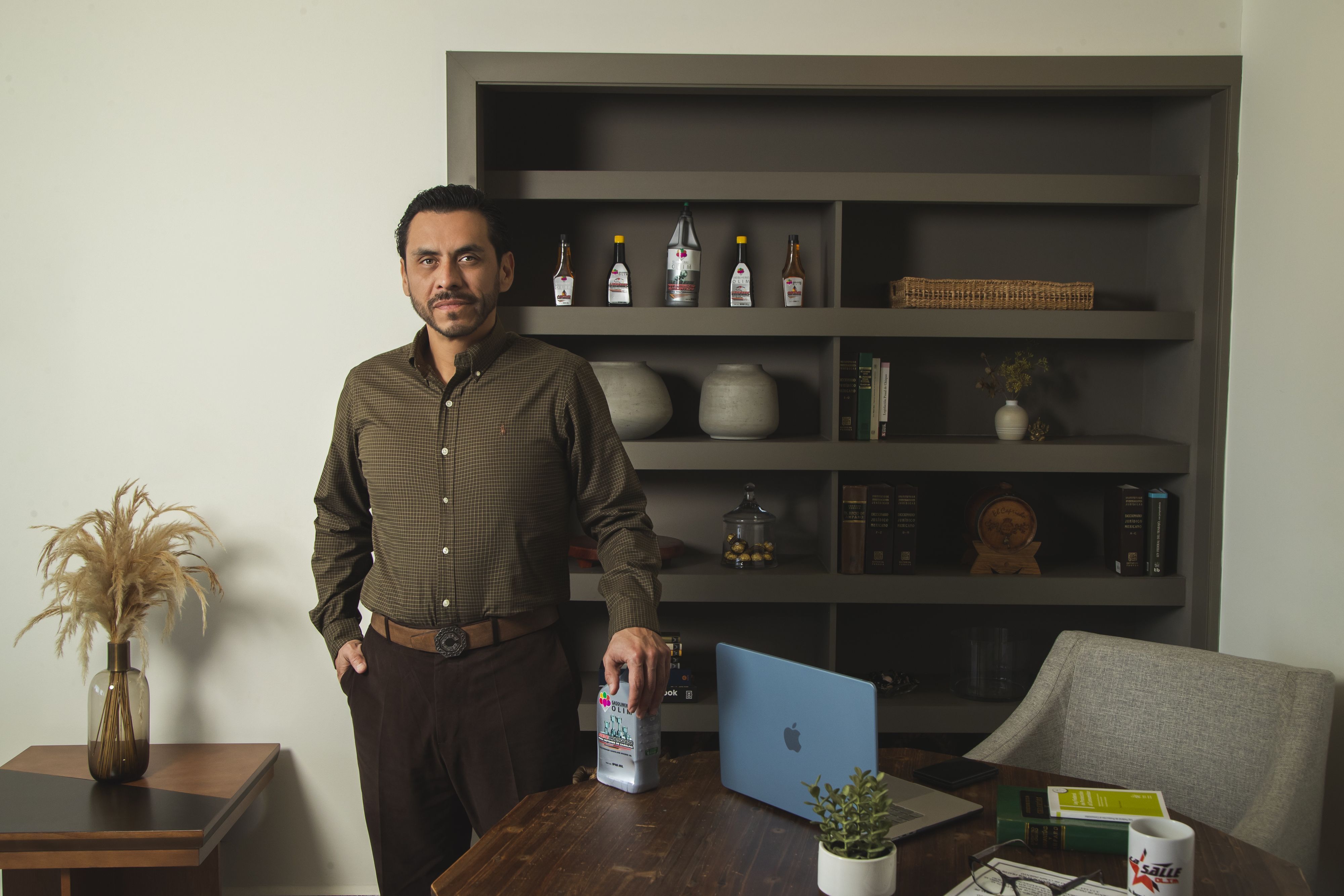
Óscar Liévano Moreno, a Chiapas fuel operator and the founder and chief executive of O6 Energy LLC, has watched that problem from the inside. He explains: “We have service stations with finished infrastructure that are completely stalled because federal authorities simply aren’t issuing resolutions.”


His answer has been to stop waiting. Over several years, he has paired strict regulatory compliance with constitutional injunctions, known in Mexico as amparos, to force the regulator to decide.
The Size of the Backlog
The scale is documented. Onexpo Nacional published research by the consultancy PetroIntelligence. The report counted 316 retail fuel permit applications filed from 2024 to September 2026, saying they were still pending. These pending applications had an estimated investment of MXN 5,431.38 million.
And according to PetroIntelligence’s analysis, most 2024 and 2025 applications already had fully built stations, representing MXN 4,537.61 million in investment already spent.
The report put the consequence plainly: “Each pending authorization delays the start of operation of new infrastructure and inhibits investment.”
The cause is partly institutional. In March 2025, Mexico abolished its CRE. It transferred its powers to a new National Energy Commission (CNE), under the Law of the National Energy Commission published in the Diario Oficial de la Federación on March 18, 2025.

A February 2025 agreement in the Diario Oficial de la Federación had already suspended new filings at the CRE. Then a July 2026 Onexpo report added the CNE’s office had stopped receiving new applications altogether.
For operators, the wait is expensive. Liévano says: “Arbitrary administrative delays held up each station for 12 to 24 months, tying up working capital and creating opportunity costs estimated at millions of dollars in potential product sales.” Those figures are his own estimate. By his account, one station he built in 2021 for MXN 18.6 million stayed closed until October 2026.
Liévano believes investors feel it too. He says in his experience: “The biggest frustration I hear constantly from investors is having millions of dollars sunk into infrastructure that can’t operate because of regulatory inefficiency.”
What Used to Happen
For years the standard response was patience. Liévano describes that habit bluntly: “Historically, business owners would just wait out the political and bureaucratic timelines, taking multimillion-dollar losses in the process.”
Liévano, who has worked in the energy sector since 2006, says the bottlenecks first drew him to the problem: “I was drawn to the structural inefficiencies and regulatory bottlenecks that hinder the development of energy infrastructure in Mexico.”
The turning point wasn’t a single dramatic refusal. Liévano reveals that: “systematic delays and retroactive changes to regulatory criteria in response to permit-update applications were an issue. They made it clear that constitutional litigation was the only way to safeguard corporate assets.”
The Method
Liévano gives his approach a formal name: “My approach focuses on ‘Strategic Constitutional Litigation for Hydrocarbons.’”
It has two halves, and he insists that both are needed. The first is compliance: the technical and environmental files have to be complete and defensible before any lawyer is called. The second is the court. As he puts it: “Instead of taking a passive stance with the authorities, I combine flawless technical and environmental compliance with the aggressive promotion of juicios de amparo (constitutional injunctions). This forces the authorities to issue resolutions under the mandate of a federal judge.”
An amparo is a Mexican constitutional action that lets a person or company ask a federal judge to protect them against an authority’s act, or failure to act. In permit disputes, a successful amparo can oblige the regulator to resolve a file it has left untouched.
In practice, he says, the cases follow a recognizable route: “In cases involving service stations facing unjustified delays in obtaining or renewing permits from the National Energy Commission (formerly the Energy Regulatory Commission), including matters reflected in federal permit case files, the process involved filing indirect amparo proceedings to challenge permit denials and unfounded operating restrictions. This resulted in constitutional protection and the release of permits needed to begin commercial operations.”
In his view, what separates this from ordinary lobbying is where the pressure comes from: “This differs from the standard approach because we don’t rely on public relations or corporate patience; we rely on federal courts.”
The principle is simple: “The main principle guiding this method is that strict regulatory compliance must be backed by aggressive legal tools to protect the investment.”

One case on the record
The clearest public example is his own. In September 2026, the trade site Energy News reported that the CNE’s Technical Committee had approved three retail fuel permits in August 2026, in compliance with amparo rulings. One was for a station in Chiapas held by Óscar Liévano Moreno, linked to case file PP/86588 and amparo 1379/2024-IX, heard by the Third District Court for Amparo and Federal Trials in the state.
Energy News drew a wider conclusion from the decision: “The agreement shows that litigation remains a decisive route for unblocking regulatory files in the fuel market, particularly when permits initiated before the former Energy Regulatory Commission were left without a final resolution.”
The same report also urged caution. It noted that the agreement did not explain why the applicants went to court, and that a CNE permit does not replace the municipal, environmental, and safety approvals a station still needs before it can open.
Liévano’s own account starts earlier. He says the station was finished in 2021 and the application was rejected twice before February 2024.
He recalls: “We spent three years trying to obtain the permit.” However one detail mattered later: “The rejection decisions expressly preserved our right to reapply.”
According to the official record, he refiled in March 2024, and the CRE refused the permit in November that year. The rejection was due to whether he had filed a required social impact assessment. To combat that, in December 2024 Liévano filed amparo 1379/2024-IX.
However, while it was pending, a constitutional decree of December 20, 2024, and laws published on March 18, 2025, replaced the old regulator with the CNE. This is according to the Diario Oficial de la Federación.
It resulted in good news. The district court ruled for him in a judgment signed in August, 2025, ordering a new decision because the requirements had been met.
Then in June 2026, an appeals court unanimously rejected the CNE’s appeal (857/2025), holding that a permit cannot be refused on mere suspicion.
In another positive twist of fate, the CNE granted permit CNE/PL/891/EXP/ES/2026 for ten years.
Liévano was notified of the resolution in September 2026. The file first went to its Technical Committee, a step he considers improper for a court-ordered permit.
Liévano says supply came next: “Subsequent steps were then required with Petróleos Mexicanos to arrange the supply of gasoline and diesel. Finally, the station opened to the public on October 2026.”
He calls the day: “a bittersweet victory.” saying seeing it open after five years of trying, with nearly two of them in federal court, was satisfying, but he was frustrated that the State spent public resources blocking a project that complied with every rule.

What This Means for the Wider Record
Liévano counts five amparos for his fuel companies, all concluded in 2026: “Two were over permits and three challenged information demands from a regulator that the Constitution had abolished. Together they unblocked the storage and marketing permits the group needs to operate.”
Besides 1379/2024-IX, he cites 358/2025-1-A, 323/2025, 326/2025 and 347/2025, which he says ended in administrative decisions on August 26. Of 358/2025-1-A: “It involves similar conduct by public officials representing the National Energy Commission.”
He applies the method first to his own group, Gasolineras OLiM, and says he has also shared it in advisory work. In Liévano’s words: “I use this approach directly in the expansion of my own corporate group (Gasolineras OLiM and subsidiaries).”
Agustín Ruiz Mendoza chaired the Energy and Hydraulic Resources Commission of the Chiapas Congress from October 2021 to September 2024, the same period in which Liévano served as an energy advisor to the commission.
Ruiz says: “In March 2024, while beginning the permit application process for a new service station, Mr. Liévano anticipated difficulties and advised me about the possible effects of the proposed reforms. He explained that changes to laws and regulations without a clear timetable for the new legal framework could delay permits and the opening of new businesses.” He adds: “He also warned that uncertainty could deter private investment, delay job creation, and affect businesses connected to service-station operations.”
On why he sought that advice as Commission Chair, Ruiz says: “He could assess proposed measures not only by their legal terms but also by their likely effects on actual business operations.”
Who Else is Doing It
Liévano does not claim the tactic as his alone: operators in associations such as AMEXGAS and ONEXPO have shared similar legal proposals, he says, but he knows of none who has taken the same route to court.
He blames fear: “The vast majority of investors wrongly assume that defending themselves in court means ‘picking a fight’ with the head of the sector, SENER or the CNE, and they fear reprisals.”
Liévano rejects that reading: “Litigating is not a quarrel, and it is not personal. It is a strict exercise of the rule of law: showing the authority, before a judge, that its actions do not comply with the law.”
He expects the publicity to bring more: “Since this is a recent ruling that was publicized in September 2026, the attention given to this case will likely lead others to use the same strategy.”
Francisco Javier López Palacios, Legal Director and legal representative of AMEXGAS, the Mexican association of LPG distributors, has known Liévano professionally for about twenty years.
He describes being asked for a review in early 2025: “In February 2025, I requested his opinion on the proposed constitutional reform for the hydrocarbons sector.”
López Palacios says: “This review involved examining the draft Hydrocarbons Sector Law, the State-Owned Public Enterprise Law, the Law of Petróleos Mexicanos, and the Law of the National Energy Commission. His opinions compared the proposed changes with the regulations then in force, assessed potential positive and negative effects if the laws were enacted as drafted, considered possible harm to companies in the sector, and examined how criteria for processing new permits might affect them.”
He adds: “He also identified proposed changes that industry representatives could put forward from the perspective of sector businesses.” Liévano says those went, with other participants’ contributions, into a single collective report that the association delivered, not a separate paper of his own.
The regulator has since acted on one disputed point. On October 14, 2026, the Diario Oficial de la Federación published a CNE agreement setting criteria for permit terms for applications filed under the repealed Hydrocarbons Law and still unresolved, capping retail station permits at 20 years.
The agreement says it responds to final rulings from specialized federal courts in Mexico City. Liévano believes his case added to the pressure, though the agreement does not cite it, and he argues the text wrongly refers to a repealed law and regulation.
The Limits
Litigation against a regulator carries risks, and Liévano lists them without much hedging: “The main risks are temporary conflict with regulatory bodies and the upfront cost of legal fees. I would not recommend this approach when direct, expedited technical dialogue can resolve the dispute within a reasonable timeframe.”
His idea of a good day is modest: “A relaxed one, with no problems and no notices.” For operators sitting on finished stations, the choice he describes is between two kinds of cost: legal fees now, or lost sales for a year or two.
Liévano concludes that a modern energy company cannot treat that choice as an afterthought: “The main lesson learned was that a modern energy company must have a legal department focused on strategic litigation as part of its core business model, not as an external element.”
Asked whether he ever thought about giving up during the years of rejections and hearings, Liévano says: “Without a doubt. … Giving up would have meant yielding to the abuse of power and setting a terrible precedent. The need to safeguard my fundamental rights and to establish protective case law for the sector was what kept me immovable.”