


























































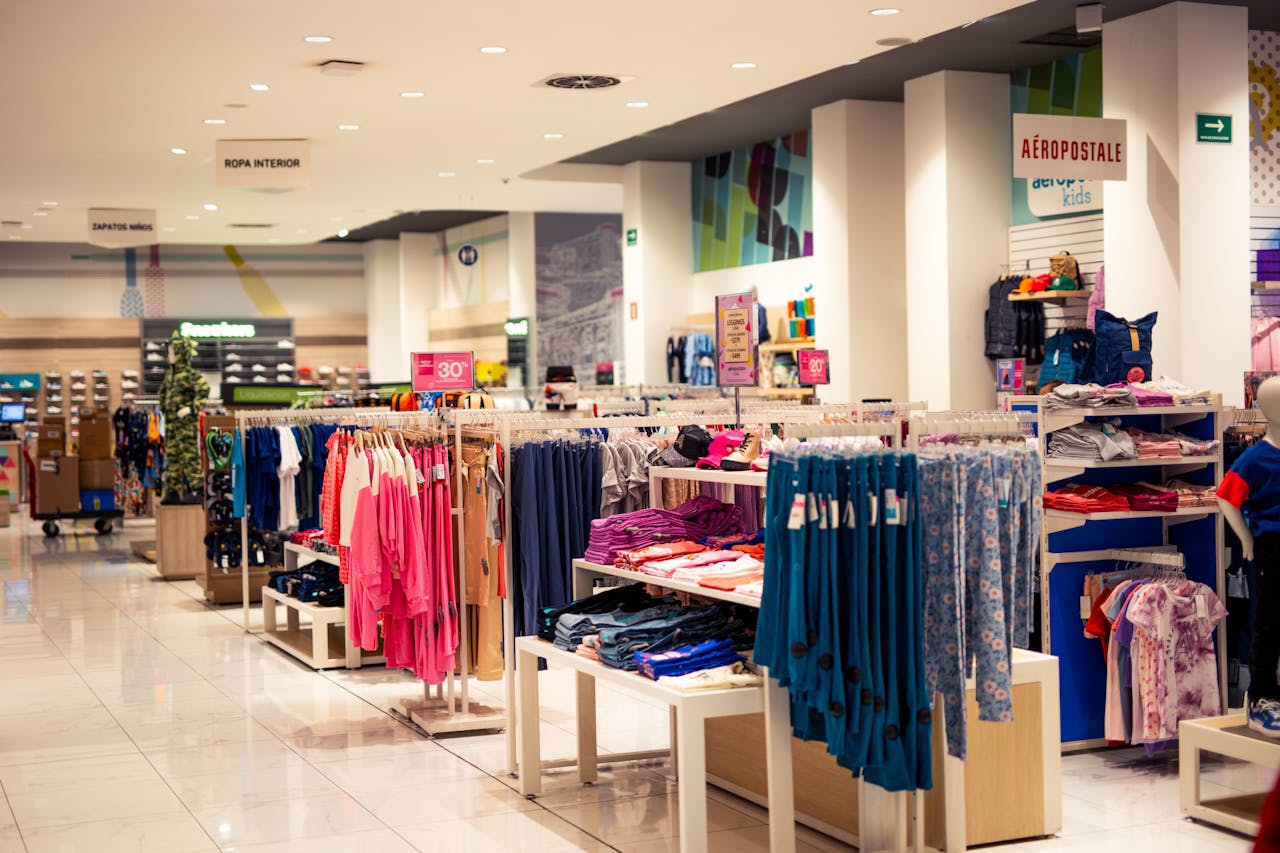

There was a time when the high street felt like it had everything. Department stores stacked floor to ceiling, specialist shops tucked between chain restaurants, and the reassuring sense that if you could not find it locally, it probably did not exist. That era has not just faded – it has been comprehensively overtaken by something better.
The rise of specialist online retailers has changed the fundamental logic of shopping. Where the high street once rewarded proximity and footfall, the internet rewards depth, expertise, and focus. And for consumers who know what they want – or want to be guided by someone who genuinely does – the specialist retailer has become the obvious first port of call.
This is not simply a story about convenience, though convenience is certainly part of it. It is a story about what happens when a retailer commits entirely to one area, builds real knowledge around it, and serves customers who care enough to seek out that knowledge rather than settle for whatever happens to be on the nearest shelf.


The Expertise Gap the High Street Cannot Close
Walk into a large chain retailer and ask a detailed question about a product in almost any specialised category. The experience is rarely satisfying. Staff turnover is high, training is broad rather than deep, and the incentive structure rewards selling volume over matching customers with the right product. It is not a criticism of the people involved – it is a structural limitation of the model.
Specialist retailers operate differently. When a business sells only within one category, or a tightly defined set of related categories, knowledge accumulates in a way that simply cannot be replicated by a generalist. The team understands the product range intimately, knows how different options compare, and can speak to edge cases and nuances that a high street assistant would not even know to consider.
This expertise gap is especially pronounced in product categories where the differences between options are not immediately obvious to a casual buyer – where formulation, sourcing, storage, or specification genuinely affect the outcome. In those spaces, access to real knowledge is not a nice-to-have. It is the difference between a purchase that delivers and one that disappoints.
Depth of Range and the Freedom to Choose
The high street is governed by shelf space. A retailer with a physical footprint can only stock what fits, what sells quickly enough to justify the square footage, and what does not require specialist storage or handling. The result is a perpetual compression of choice – a curated selection designed for the average customer, which suits nobody particularly well.
Online specialist retailers face none of those constraints. A focused operation can stock the full breadth of a category – every variant, formulation, size, and specification – without the overhead that makes range an impossible luxury for physical stores. For the customer, this means genuine choice rather than the illusion of it.
In the room aroma and lifestyle product space, for example, the difference between a specialist’s range and what a generalist might offer is stark. Prowler Poppers, which has been operating as a dedicated UK retailer since 1997, stocks a comprehensive selection of alkyl nitrite-based room aromas across multiple formulations and strengths – something no high street outlet could practically replicate. Customers can compare options, read detailed product information, and make an informed choice rather than simply taking whatever happens to be available.
That kind of range is only possible because the entire business is built around it. There is no competing shelf space, no pressure to prioritise fast-moving generalist lines over specialist ones, and no incentive to simplify the offering for the sake of operational convenience.
Trust, Accountability, and the Long Game

One of the less discussed advantages of specialist retailers is the accountability that comes with focus. A business whose entire reputation rests on one category has far more at stake with every transaction than a generalist platform hosting thousands of unrelated sellers. When quality slips, when a product underperforms, or when a customer has a problem, the specialist has both the knowledge to address it and the motivation to do so quickly.
This accountability tends to produce better outcomes across the board – in product sourcing, quality control, customer service, and the honesty of product descriptions. Specialist retailers cannot afford to be vague or misleading about what they sell, because their customers tend to know enough to notice.
The Competition and Markets Authority has highlighted the growing issue of misleading product listings and fake reviews on large online marketplaces – a problem that disproportionately affects generalist platforms where oversight is difficult at scale. Specialist retailers, operating in defined niches with engaged and knowledgeable customers, are far less susceptible to this kind of drift. The community around a specialist retailer tends to self-regulate through genuine, informed feedback in a way that anonymous marketplace reviews simply cannot replicate.
The Service Difference
Customer service in retail has become something of a dark art. Automated responses, offshore call centres, and deliberately labyrinthine returns processes have made dealing with a problem feel like a project in itself. For many shoppers, this has become an accepted frustration – an unavoidable cost of the convenience that online retail otherwise provides.
Specialist retailers, particularly those that have built their business over decades rather than scaled rapidly on venture capital, tend to approach service differently. When a team genuinely understands its products and its customers, service becomes less about following a script and more about solving a problem with real knowledge. Queries get answered properly. Issues get resolved without the customer having to escalate through multiple tiers of automated deflection.
According to research highlighted by the Institute of Customer Service, customer satisfaction levels in the UK have been under sustained pressure, with large organisations consistently scoring lower than smaller, more focused businesses. The pattern reflects something intuitive: companies that do less tend to do it better.
What Loyalty Really Looks Like
The ultimate measure of a retailer’s quality is not what it promises – it is how many customers come back. Repeat purchase rates in specialist retail consistently outperform those of generalist platforms, and the reasons are not hard to identify. When a customer finds a retailer that knows its subject, stocks what they need, handles their order with care, and treats their privacy with respect, the calculus for shopping elsewhere becomes difficult to justify.
This loyalty is not manufactured through points schemes or discount codes. It is earned through consistent competence and genuine understanding of what the customer actually needs. In a retail landscape increasingly dominated by platforms that treat customers as interchangeable data points, that kind of relationship stands out.
The high street, for all its cultural resonance, was never really about convenience or expertise. It was about geography – the accident of what happened to be nearby. The internet removed that constraint entirely, and in doing so, handed the advantage to those who had the most to offer. In retail, that almost always means the specialist.