




























































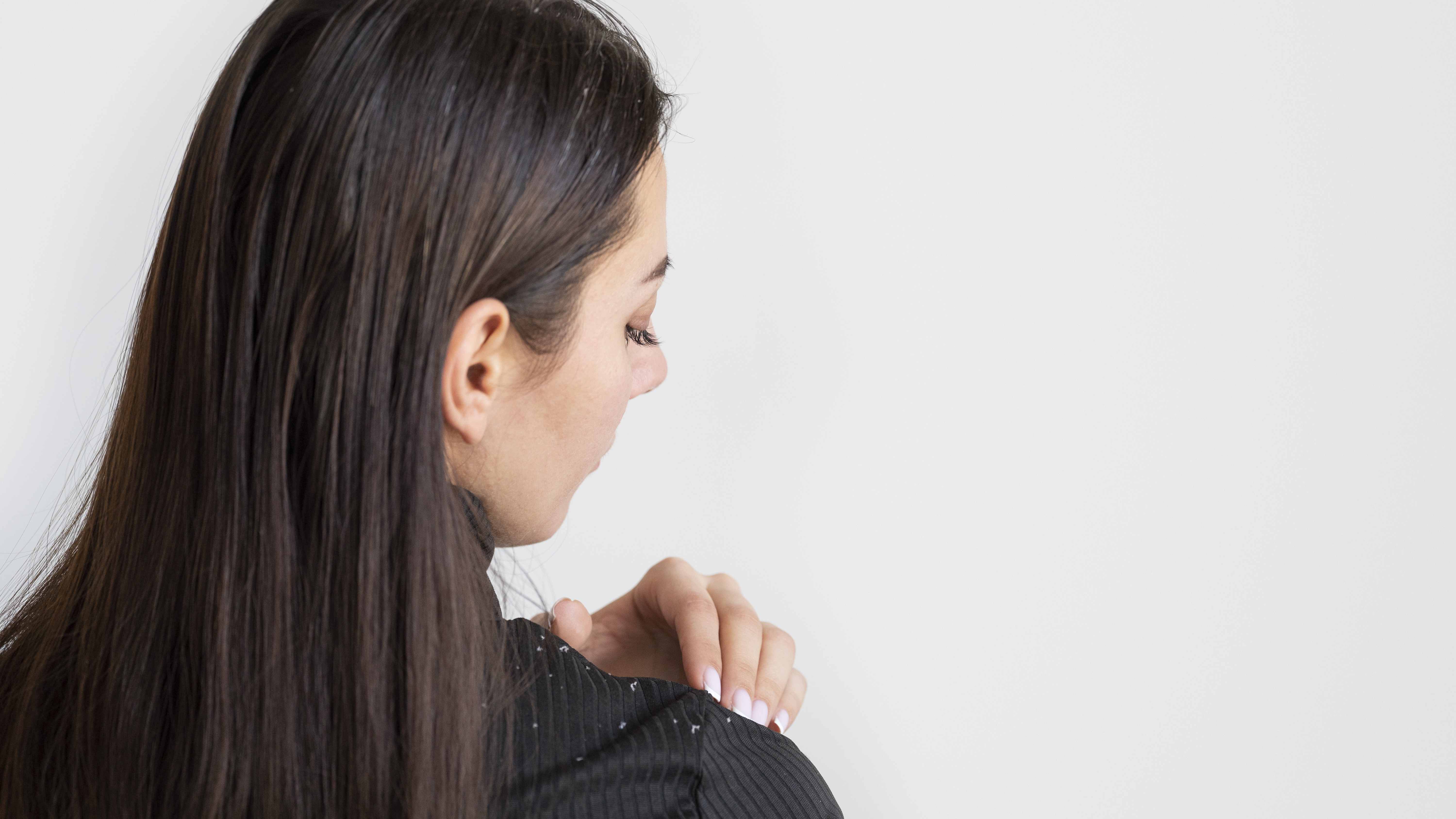

Visible white or yellowish flakes on clothing and an itchy scalp rank among the most frequent dermatological complaints in adults. Far from a simple hygiene issue, the process reflects a precise interaction between the scalp’s lipid environment, resident yeast species, the structural integrity of the outermost skin layer and genetically influenced immune responses. Understanding each component explains why some people experience persistent flaking while others remain unaffected under identical conditions, and why effective management requires more than surface-level cleansing.
Scientific investigation over the past two decades has moved the explanation beyond the outdated “dry scalp” model. Current evidence centres on three interlocking factors: metabolic activity of Malassezia yeast, altered sebum composition, and compromised barrier lipids in the stratum corneum. Addressing these mechanisms simultaneously produces more durable reduction of flakes and discomfort than any single approach.
What Exactly Is Dandruff?
Dandruff represents the mildest clinical expression of a continuum that includes seborrheic dermatitis. It manifests as loosely adherent white or greyish-yellow scales that detach from the scalp surface, frequently accompanied by mild pruritus but without marked erythema or inflammation. The flakes result from clusters of corneocytes that have undergone accelerated turnover and failed to desquamate as individual invisible cells.


Prevalence studies indicate that approximately 50 percent of the adult population experiences dandruff at some point. Incidence peaks in adolescence and early adulthood, when sebaceous activity is highest, and again after the age of 50. Men report symptoms more often than women, consistent with androgen-driven sebum production. Seasonal variation is well documented: colder, drier months increase transepidermal water loss and intensify flaking, while humid conditions can favour yeast proliferation.
Importantly, dandruff is not contagious and does not signal poor hygiene. The same Malassezia species colonise virtually every human scalp; only the combination of microbial activity with host susceptibility generates visible symptoms.
The Central Role of Malassezia Yeast
Lipophilic yeasts of the genus Malassezia, particularly M. restricta, M. globosa and M. furfur, form a permanent component of the healthy scalp microbiome. These organisms are unable to synthesise certain long-chain fatty acids and therefore rely entirely on host sebum as a nutrient source.
When local conditions permit overgrowth, Malassezia secretes lipases and phospholipases that hydrolyse sebum triglycerides. The hydrolysis releases unsaturated free fatty acids, of which oleic acid is the most thoroughly studied. In sensitive individuals these fatty acids penetrate the stratum corneum, disrupt lipid organisation and provoke a local inflammatory response. Keratinocytes respond by accelerating their proliferation cycle, shortening the normal 28-day transit time from basal layer to surface. The result is parakeratosis and the formation of visible scale clusters.
Additional research has identified Malassezia-mediated lipoperoxidation of sebum components such as squalene. The resulting peroxides further damage barrier lipids and amplify irritation. Recent multi-omics analyses also show concurrent shifts in bacterial populations, with elevated Staphylococcus species relative to Cutibacterium, indicating that overall microbial dysbiosis contributes to the clinical picture.

- Malassezia density alone does not determine severity,
- the quantity and type of free fatty acids generated matter more,
- host immune recognition of these metabolites decides whether inflammation occurs,
- barrier status modulates how readily the metabolites reach living keratinocytes.
Sebum Production and the Scalp Microenvironment
The scalp contains a high density of sebaceous glands that continuously secrete a complex mixture of triglycerides, wax esters, squalene and free fatty acids. This lipid film supplies both the substrate for Malassezia and the hydrophobic environment that favours its growth. Individuals with higher sebum output therefore provide a more favourable niche for the yeast.
Environmental and physiological factors modulate sebum quantity and quality:
- androgen levels increase glandular activity,
- stress elevates cortisol, which can indirectly influence sebum composition,
- infrequent shampooing allows progressive lipid accumulation and microbial proliferation,
- occlusive hairstyles or headwear create warm, humid microclimates that accelerate yeast growth.
When sebum is metabolised by Malassezia, the residual free fatty acids alter the physical properties of the remaining lipid film, making it more irritating and less effective as a protective barrier.
Barrier Dysfunction in the Stratum Corneum
Quantitative lipid analyses of dandruff-affected scalp skin consistently reveal a marked reduction in free ceramides, cholesterol and free fatty acids compared with non-dandruff controls. Ceramide 1 is particularly depleted, while the relative proportions of certain shorter-chain ceramides rise. These changes impair the ordered lamellar structure that normally prevents excessive water loss and blocks external irritants.
The compromised barrier permits greater penetration of Malassezia metabolites, which in turn sustains the inflammatory signal and further accelerates keratinocyte turnover. A self-reinforcing cycle develops: barrier damage allows more irritation, irritation speeds cell production, excess cells form scale, and scale removal can itself disrupt remaining barrier lipids if performed too aggressively.
Histamine reactivity testing has shown that dandruff sufferers exhibit heightened itch responses, consistent with a sensitised and barrier-impaired epidermis.
Individual Susceptibility and Common Triggers
Not everyone with detectable Malassezia develops dandruff. Genetic factors influencing epidermal barrier proteins, immune recognition pathways and sebum composition determine individual thresholds. Certain HLA subtypes have been associated with increased risk of seborrheic dermatitis, the more inflammatory end of the same spectrum.
Common external and internal triggers that push susceptible individuals past their threshold include:
- cold, low-humidity weather that increases transepidermal water loss,
- psychological stress that elevates inflammatory mediators,
- hormonal fluctuations,
- use of harsh surfactants that strip residual barrier lipids,
- infrequent cleansing that allows sebum and scale to accumulate,
- certain medications that alter sebum production or immune function.
Recognition of these triggers allows targeted prevention once the acute flaking has been controlled.
Distinguishing Dandruff from Related Scalp Conditions
Accurate identification prevents mistreatment. The table below summarises the principal clinical differences.
| Feature | Dandruff | Seborrheic Dermatitis | Scalp Psoriasis |
| Scale appearance | Fine white or greyish, loosely adherent | Greasy, yellowish, more adherent | Thick, silvery-white, micaceous |
| Underlying skin | Minimal or no erythema | Visible redness and inflammation | Sharply demarcated red plaques |
| Distribution | Confined to scalp | Scalp plus face, eyebrows, chest | Scalp, often extends beyond hairline; may involve elbows, knees, nails |
| Itch intensity | Mild to moderate | Moderate to severe | Often intense, may include burning |
| Primary driver | Malassezia + mild barrier impairment | Malassezia + stronger inflammatory response | Autoimmune keratinocyte hyperproliferation |
When thick silvery plaques, nail changes or lesions outside the seborrheic distribution are present, professional evaluation is required to exclude psoriasis or other differential diagnoses.
Evidence-Based Strategies to Stop Flaking
Effective regimens simultaneously reduce Malassezia density, remove excess scale and restore barrier lipids. Clinical guidelines and controlled trials support the following approaches.
Antifungal agents that limit yeast proliferation remain the cornerstone. Zinc pyrithione, selenium sulfide and ketoconazole have demonstrated consistent reductions in both Malassezia counts and clinical scores. Natural multifunctional actives such as sodium caproyl/lauroyl lactylate combined with triethyl citrate (Dermosoft® Decalact) show comparable in-vitro activity against Malassezia furfur and have been incorporated into dermocosmetic formulations.
Keratolytic agents accelerate the detachment of already-formed scale. Salicylic acid at appropriate concentrations softens intercellular cohesion without excessive irritation. Urea provides dual keratolytic and humectant activity: it loosens scale while attracting and retaining water within the stratum corneum, thereby supporting barrier recovery.
Complementary use of a cleansing step followed by a conditioning or leave-on barrier-support step improves both efficacy and tolerability. Formulations that combine an antifungal component active against Malassezia with salicylic acid and urea, such as those available in the DermzLabs anti-dandruff collection, exemplify this multi-pathway strategy. They focus on microbial control, gentle scale removal and lipid restoration without reliance on topical corticosteroids.
Practical application principles derived from clinical experience include:
- apply medicated shampoo to wet scalp and leave in contact for the recommended time (usually 3–5 minutes) before rinsing,
- use two to three times weekly during active flaking, then reduce to once weekly for maintenance,
- follow with a non-stripping conditioner or barrier cream if the scalp feels tight,
- avoid aggressive mechanical removal of scale, which can further damage the barrier,
- monitor for irritation and discontinue any product that increases redness or burning.
Long-term control also benefits from lifestyle adjustments that reduce triggers: managing stress, avoiding prolonged occlusion of the scalp, and selecting mild surfactants once the acute phase has resolved.
Why Barrier Repair Completes the Picture
Reducing yeast load and clearing scale address the immediate drivers of flaking, yet incomplete barrier recovery allows rapid relapse. Restoring the ceramide-cholesterol-fatty-acid matrix of the stratum corneum decreases susceptibility to residual free fatty acids and environmental stressors. Ingredients that supply barrier lipids or support endogenous lipid synthesis therefore form an essential third pillar of management.
When these three elements–antifungal action, controlled keratolysis and barrier support–are coordinated, the self-reinforcing cycle of irritation, hyperproliferation and scale formation is interrupted. The result is progressive reduction of visible flakes, diminished itch and a more resilient scalp surface capable of maintaining equilibrium under normal environmental challenges.
The science of dandruff demonstrates that flaking is the visible endpoint of measurable biochemical and microbial processes. Targeting those processes with precision, rather than merely washing away the flakes, yields lasting improvement in both appearance and comfort.